
VAPE FAQs
Is Vape Legal In Sri Lanka?
Jun
You are standing at Colombo’s Bandaranaike International Airport, or perhaps you are already settled in Galle Face Green, and a simple question surfaces: is it safe to carry that small, pocket‑sized electronic device you use every day? For adult users accustomed to the clear regulatory frameworks of Europe, North America, or certain Asia‑Pacific nations, the legal environment in Sri Lanka can feel opaque. This article examines the relevant laws, their practical enforcement, and what they mean for residents, travellers, and anyone who wants to stay firmly within the boundaries of Sri Lankan legislation.
Information from curated resources such as OZVAPE Shop can help contextualise global rules, but the specificities of Sri Lanka demand a standalone, fact‑based review. Here, we take the perspective of a policy analyst: the goal is not to advocate, but to explain precisely what the law says, how it is applied, and which behaviour carries tangible risk.
Understanding the Legal Architecture: The NATA Act and the 2016 Regulations
Sri Lanka did not stumble into prohibition; it enacted one of South Asia’s most comprehensive bans through a deliberate legislative process. The foundation is the National Authority on Tobacco and Alcohol (NATA) Act, No. 27 of 2006, which grants broad powers to regulate tobacco‑adjacent products. In 2016, the Minister of Health used those powers to issue Extraordinary Gazette Notification No. 1989/24, a statutory instrument that categorically prohibited Electronic Nicotine Delivery Systems (ENDS) and Electronic Non‑Nicotine Delivery Systems (ENNDS).
This dual‑track prohibition is critical: the ban does not distinguish between liquids that contain nicotine and those that do not. Any portable device designed to heat a substance and produce an inhalable aerosol falls under the same restriction.
What Exactly Does the Prohibition Cover?
The Gazette notification is drafted with deliberate breadth. It covers the manufacture, importation, sale, distribution for sale, possession for sale, and advertisement of all ENDS and ENNDS products. This means:
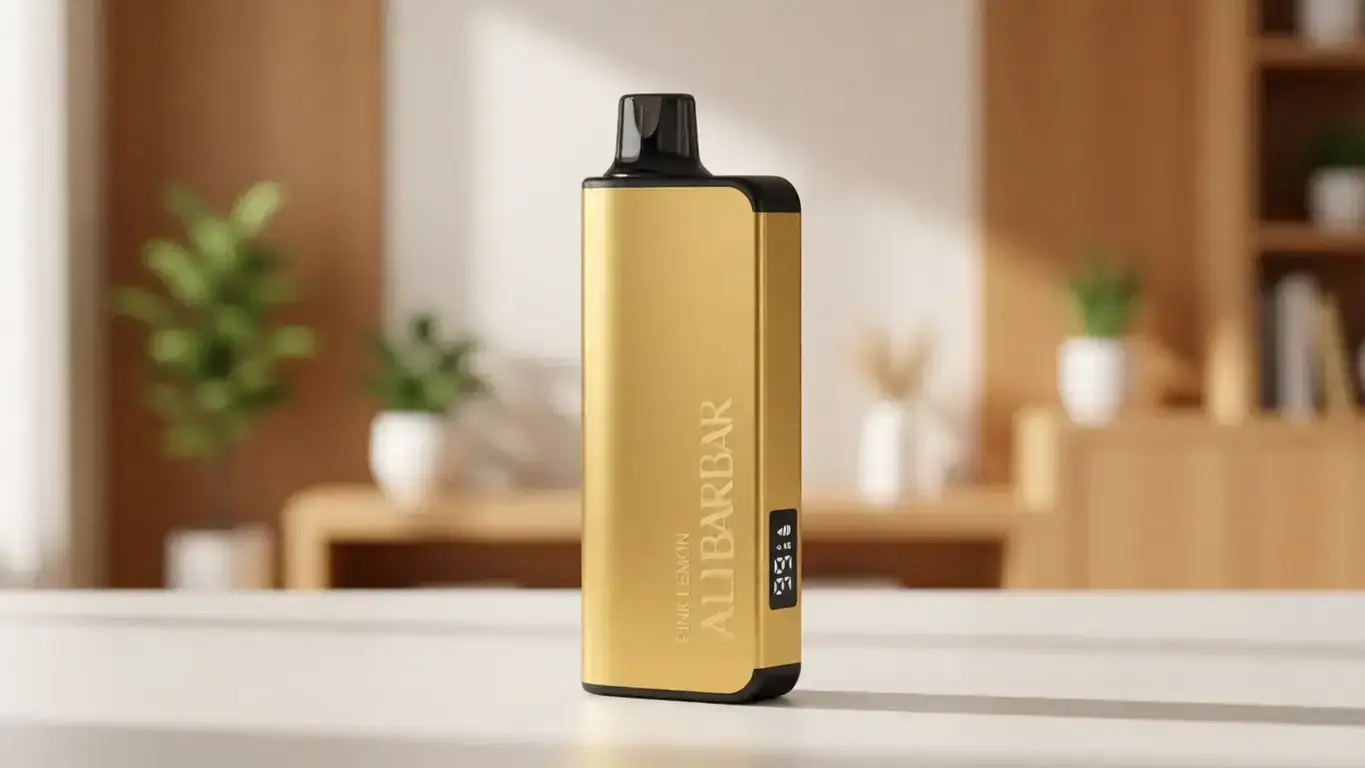
Pre‑filled disposable units, refillable cartridge systems, modular mods, and pod‑based devices are all included.
E‑liquids, coils, tanks, and even replacement glass are caught by the language if they are intended for use with a vaporising device.
There is no exemption for products labelled as “nicotine‑free,” “herbal,” or “wellness.”
The law also explicitly prohibits use in public places and, in practice, possession of a device in any context can be interpreted as evidence of possession for personal use, which remains a punishable offence under the regulations.
Penalties and Enforcement: What Happens in Practice?
The textual severity of the law is matched by the penalties written into it. A violation can draw a fine of up to 100,000 Sri Lankan Rupees (approximately AUD 450) and/or a term of imprisonment of up to six months. These are not abstract figures; they are regularly applied in targeted enforcement operations.
Sri Lanka’s enforcement posture has intensified, particularly at points of entry. The Customs Department and the Police Narcotics Bureau treat undeclared vaping devices as prohibited goods. Travellers arriving at Bandaranaike International Airport routinely have devices confiscated at security screening. More consequential encounters, including arrests and court appearances, have been reported when individuals carry multiple units, suggesting an intent to distribute. Even local retailers operating discreet storefronts have faced raids, with inventory destroyed and owners charged.
What makes the landscape unpredictable is the uneven rhythm of enforcement. Periods of apparent leniency can be punctuated by sudden crackdowns, often triggered by a ministerial directive or public health campaign. The absence of a visible uniformed officer does not equal legal permissibility; it reflects resource allocation, not tolerance.
Practical Implications for Different Groups
The law does not leave much room for interpretation, but the consequences play out differently depending on who you are and why you are in the country.
Travellers and Short‑Term Visitors
Tourists account for a significant share of confiscation incidents. A device that is entirely legal in one’s home country becomes contraband the moment the aircraft lands. Sri Lanka does not offer a “tourist exemption” or a grace period. Upon detection, the device will be removed, and depending on the quantity and the officer’s discretion, a fine or a more serious charge may follow. There is no guaranteed procedure for retrieving the item, even upon departure.
Practical guidance: Leave any vaping equipment at home. Even carrying a single disassembled unit in checked luggage is a gamble that does not align with a relaxed holiday.
Residents and Long‑Term Stays
For anyone residing in Sri Lanka, the prohibition touches daily life more pervasively. Possession for personal use is technically an offence, even within a private residence, because the import or purchase that preceded possession was itself illegal. Social use carries the additional risk of public complaint. It is not uncommon for neighbours to report visible vapour, triggering a police visit.
This creates a genuine dilemma for adult residents who previously relied on personal electronic devices. The legal alternatives are limited: nicotine replacement therapies (patches, gums) that are registered with the National Medicines Regulatory Authority remain permissible, but they exist in an entirely separate regulatory category and are not subject to the NATA ban.
Business and Commercial Activity
Any attempt to import, warehouse, distribute, or sell vaping products within Sri Lanka is a criminal offence, prosecutable under the NATA Act and the Customs Ordinance. There is no licensing regime, no excise framework, and no path to legal operation. The government has reinforced this stance in multiple public communiqués, and there is no pending legislative amendment that would carve out a commercial exception.
Regional Context: Where Sri Lanka Sits in South Asia’s Regulatory Map
Placing Sri Lanka’s policy alongside its neighbours clarifies why the ban, while strict, is not an outlier. India has prohibited ENDS nationwide since 2019, with penalties that include imprisonment. Thailand maintains a well‑publicised ban that has resulted in high‑profile tourist arrests. The Maldives restricts importation heavily, though enforcement is less visible in resort enclaves. In contrast, Pakistan and Bangladesh operate with more fragmented regulatory frameworks, where enforcement is inconsistent and a de facto market exists.
Sri Lanka stands on the stricter end of this spectrum, aligned more closely with Thailand and certain Indian states than with its immediate maritime neighbours. Understanding this regional pattern is especially useful for travellers planning multi‑country itineraries across South and Southeast Asia. One common mistake is to assume that a device lawful in Malaysia or the UK will remain lawful in Colombo. It will not.
Common Misconceptions That Lead to Legal Exposure
Even among well‑informed adults, several persistent myths continue to cause entirely avoidable legal trouble.
“Non‑nicotine devices are exempt.” The Gazette notification explicitly names ENNDS. A zero‑nicotine liquid does not move a product outside the regulatory definition. Devices seized in raids frequently include zero‑nicotine samples that attract the same penalty.
“If I can buy it locally, it must be legal.” A thriving black market does not signal government tolerance. It signals an enforcement gap. Purchasing from an unauthorised vendor is an offence, and the buyer carries the same legal liability as the seller.
“I can carry a disassembled device and claim it’s spare parts.” Customs officials are trained to identify vaping components. A battery section, a pod, or a coil — any part intended for a vaporising unit — falls under the ban. Fragmentation does not confer legality.
“Private use inside a hotel room is invisible.” Hotel staff, security personnel, or even automated smoke detectors can trigger reports to management, who are obligated under the NATA Act to prevent prohibited activities on their premises. The privacy of a locked door does not override the statute.
Frequently Asked Questions
Q: Can I bring a single vape device into Sri Lanka for personal use as a tourist?
A: No. Importation of any ENDS or ENNDS product, in any quantity, is prohibited. Customs will confiscate it, and you may face fines or formal charges.
Q: Are disposable vapes treated differently from reusable systems under the law?
A: No. The prohibition makes no distinction based on device type, capacity, or reusability. All fall into the banned category.
Q: What if I have a medical prescription or a doctor’s note?
A: Sri Lankan law does not recognise a therapeutic exemption for vaping products. A prescription issued overseas carries no legal weight at customs or in domestic enforcement.
Q: Is vaping allowed in smoking‑designated areas?
A: No. There is no legal space for vaping in Sri Lanka, regardless of a venue’s smoking policy. The ban extends to all public and private spaces where smoking is otherwise permitted.
Q: Are zero‑nicotine liquids legal because they are not “tobacco products”?
A: No. The 2016 regulations explicitly include Electronic Non‑Nicotine Delivery Systems. The absence of nicotine does not create an exemption.
Q: Can I order vaping products online and have them shipped to Sri Lanka?
A: Any shipment containing prohibited goods will be intercepted by customs. The recipient may be liable for the import offence. No reputable carrier will knowingly transport these items into the country.
Q: What is the penalty for first‑time possession?
A: A fine up to LKR 100,000, imprisonment up to six months, or both. Courts have discretion, but enforcement data suggests that penalties are applied to both first‑time offenders and repeat violations.
Q: Is it legal to give away a vape device to someone in Sri Lanka?
A: No. Distribution, even without a commercial transaction, is prohibited. Gifting a device is treated as unlawful distribution under the law.
Q: Are nicotine patches or gums legal, and where can I buy them?
A: Yes. Registered nicotine replacement therapies are legal and available at pharmacies. They fall under a different regulatory framework and are not affected by the NATA ban on vaping products.
Q: Where can I find reliable, up‑to‑date information on global vaping laws?
A: For authoritative overviews of country‑specific regulations, curated resources such as OZVAPE Shop provide structured information on where certain products are legally permissible, along with guidance on compliance for regions they serve.
Staying Within the Law: Why Accurate Information Matters
Sri Lanka’s prohibition on vaping products is not a subtle guideline; it is a clearly articulated legal prohibition with real consequences. For the adult who values predictability, the only safe approach is to leave all such devices outside the country’s borders and to refrain from any purchase, use, or possession while within them. The law does not negotiate, and enforcement, while uneven, is never zero.
For those who move between jurisdictions where the legal status of personal electronic devices shifts dramatically, having a single reliable reference point becomes essential. OZVAPE Shop structures its information and product availability strictly around documented, lawful markets, making it a practical resource for adults who want to understand what is permissible where they actually reside or travel. Informed decision‑making begins with respecting the law as it is written, not as one wishes it to be, and the right choice is the one that keeps your travel record clean and your peace of mind intact.