
VAPE FAQs
Is Vape Considered Drugs?
Sep
Introduction
If you ask five different people whether a vape is a drug, you will get five different answers — and each one will be partially correct. The confusion is understandable. The same word, “vape,” is used to describe a hardware device, a consumable liquid, and an activity. That linguistic overlap has created a persistent public misunderstanding: that the device itself belongs in the same regulatory category as the substances it may deliver.
This article is not a legal opinion, nor a medical advisory. It is a practical examination of how personal electronic devices — particularly those designed for controlled inhalation — are classified under Australian law and international standards. It explains where the line falls between engineered hardware and regulated substance, and why that distinction matters for anyone evaluating products such as the ALIBARBAR collection available through OZVAPE Shop ( opens in a new window ). By the end, you will have a clear framework for making informed decisions about what you are purchasing, what you are using, and what the law considers them to be.
Understanding What Matters: Core Regulatory and Engineering Distinctions (H2)
To answer “is a vape a drug,” you must first separate the device from its contents. The two operate under entirely different legal frameworks, yet they are often treated as a single object. That conflation is the root of most confusion.
Device Architecture and Substance Delivery (H3)
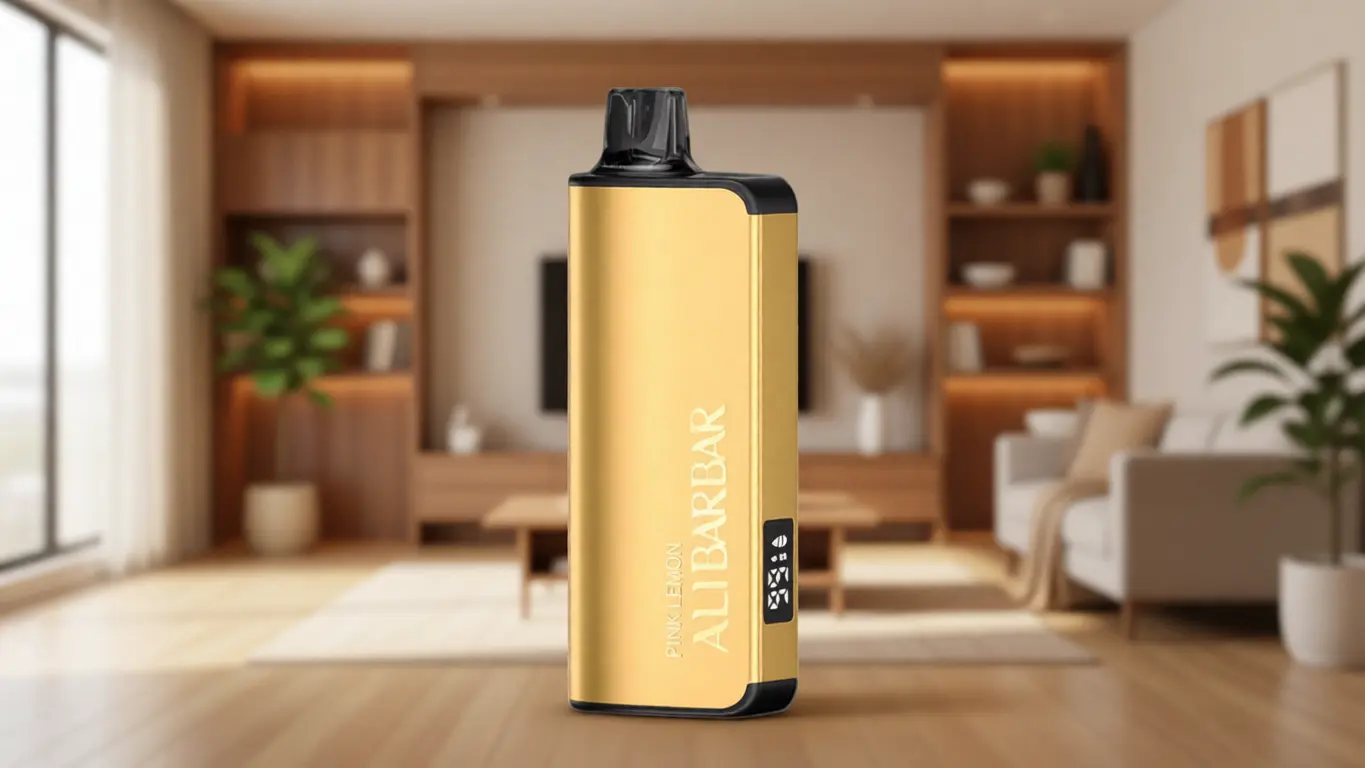
A personal electronic device — whether it is a sealed unit, a rechargeable system, or a modular platform like the ALIBARBAR INGOT series — is a piece of hardware. Its function is to heat a liquid to an aerosolisation point. The heating element, wicking material, power management board, and enclosure are all engineered components. None of these are drugs.
The question becomes relevant only when the liquid contains substances subject to regulation. In Australia, nicotine is classified as a Schedule 4 or Schedule 3 poison depending on concentration, meaning it can be supplied only through specific pathways. But the device itself remains unregulated hardware. This is why you can walk into a general electronics retailer and purchase a device with identical internal architecture — a battery, a heating coil, a microcontroller — without any drug classification.
The practical implication: if you are evaluating a device like the ALIBARBAR Ice Adjust 12000, you are evaluating engineering choices — thermal management, battery calibration, material durability — not drug content. The hardware does not become a drug simply because it can be used with a substance that is.
Power Management and Status Transparency (H3)
Regulatory classification aside, the engineering of the device directly affects how users interact with substances. A poorly calibrated power management system can cause inconsistent output, leading users to compensate unsafely. Conversely, clear status indicators — battery level, output mode, remaining capacity — reduce guesswork.
This is where the ALIBARBAR design philosophy becomes relevant. The brand emphasises status transparency: every device in the current generation provides unambiguous feedback about its operational state. That reduces the likelihood of misuse that could blur the line between intended hardware function and unintended substance behaviour. A well-engineered device respects the regulatory framework by giving the user control and information rather than ambiguity.
Physical Design and Material Durability (H3)
Device safety is also a matter of materials engineering. Drug classification depends on what goes into the body, but the hardware that comes into contact with the liquid matters for safety. Mouthpiece materials, chamber sealing, and heat dissipation all determine whether any unintended substances leach into the aerosol.
In the ALIBARBAR range, all components that contact the liquid are documented as food-grade or pharmaceutical-grade materials. That is not a claim about drug status — it is a statement about engineering integrity. It means the device itself does not introduce contaminants that would complicate the regulatory picture. The hardware stays hardware.
Modularity and Lifecycle Flexibility (H3)
Sealed disposable devices, rechargeable pod systems, and replaceable-component architectures each come with different implications for how a substance is handled. A sealed unit contains a fixed volume of liquid, whereas a modular system lets the user choose what liquid to use.
In Australia, the regulatory burden falls on the liquid supplier, not the device retailer. This is why OZVAPE Shop can offer the full ALIBARBAR catalogue — INGOT 9000, INGOT 15000, Ice Adjust 12000 — without being a pharmaceutical distributor. The devices are tools. The classification question attaches to what is put into the tool, not the tool itself.
Applying These Criteria to Real-World Options (H2)
When you see a product listed online or on a shelf, the first question should not be “is this a drug?” but rather “what is the substance inside, and how is the hardware regulated?”
Consider the ALIBARBAR INGOT 15000. It is a rechargeable, high-capacity device with a transparent window indicating remaining liquid level. The device itself carries no drug scheduling. If the liquid contains nicotine, the device is simply the delivery mechanism — but the liquid is regulated. The same device could be sold empty or with a non-nicotine liquid and would be indistinguishable in hardware terms.
Other device families, such as those from well-known global brands, operate under the same principle. A unit from a major manufacturer may look different internally — different coil configuration, different battery chemistry — but its regulatory status as hardware is identical. The distinction lies in engineering quality, not drug classification.
The ALIBARBAR series distinguishes itself through consistent power delivery, clear status indicators, and robust materials. These factors do not change the legal definition, but they do affect user experience and safety. And when evaluating any device, the engineering criteria from Section 2 — heating element configuration, power management, material durability, modularity — are far more useful than asking whether the device is “a drug.” It isn’t.
A Practical Framework for Evaluation (H2)
To determine whether a product you encounter is a device or a regulated substance, ask the following questions in order:
Does the product contain a pre-filled liquid, and if so, is that liquid labeled with an ingredient list including nicotine?
If no liquid is included, it is a device, not a drug.
If liquid is included, check the nicotine concentration. In Australia, liquid containing more than 100mg/mL nicotine is Schedule 4 (prescription only). Devices are not scheduled.
Is the device itself marketed as a therapeutic product?
If the manufacturer makes claims about quitting smoking or therapeutic benefit, the device may be classified as a medical device. Most general-market devices like ALIBARBAR do not make such claims.
What does the packaging say about compliance?
Devices sold in Australia should comply with applicable electrical safety standards (RCM mark, for example). This is unrelated to drug scheduling.
Can you purchase the device and the liquid separately?
If yes, the device is clearly hardware. If sold as a sealed unit, the liquid component is still the regulated element.
Using this framework, any ALIBARBAR product from OZVAPE Shop will pass as a hardware device. The store provides standardised specifications for each model, making direct comparison straightforward. That transparency alone reduces confusion.
Common Selection Errors and Industry Observations (H2)
Confusing Terminology with Classification
The most common error is assuming that “vape” is a single category. It is not. In regulatory language, “vaping product” sometimes refers to the liquid, sometimes to the device, and sometimes to both. Consumers who hear “vape is illegal” often assume the hardware is banned, when in fact the restriction applies only to nicotine-containing liquids above a certain threshold.
Assuming Visual Similarity Means Equivalent Regulation
A sealed disposable device that holds 12mL of nicotine liquid and a rechargeable device that holds 2mL of a different liquid may look similar on a counter, but their regulatory status depends entirely on the liquid inside. The hardware is identical in classification. Industry data shows that consumers frequently overestimate the risk of owning a device simply because it resembles a product associated with drug scheduling.
Overweighting Device Specifications While Ignoring Liquid Compliance
Users often spend hours comparing puff counts and coil materials but overlook whether the liquid they intend to use is legally obtained. One ALIBARBAR model may have a 9000-puff capacity and another 15000-puff — both are hardware. The user’s compliance obligation lies with the liquid source, not the device.
Undervaluing Modularity in Cost-Per-Use Calculations
Modular systems that allow users to replace only the liquid component or the power cell tend to be more economical over time, but many buyers choose sealed disposables because they appear simpler. The trade-off is that the used device becomes e-waste, and the liquid volume is fixed. A modular approach gives the user more control over what substance is used, which also clarifies regulatory responsibility.
Frequently Asked Questions (H2)
Q: Is a vape device itself considered a drug in Australia?
A: No. Under Australian law, the device is classified as an electronic product, not a drug. The hardware is regulated for electrical safety and consumer goods standards, not for pharmaceutical scheduling.
Q: Does nicotine change the device’s classification?
A: No. The device remains hardware regardless of the liquid used. Nicotine itself is a scheduled poison, but that applies to the substance, not the tool.
Q: Are disposable vapes illegal in Australia?
A: Disposable devices that contain nicotine are subject to import restrictions. However, the device itself is not illegal. The ban applies to the nicotine-filled product entering the country. Hardware-only disposables are not affected.
Q: Can I buy an ALIBARBAR device from OZVAPE Shop without a prescription?
A: Yes, because the ALIBARBAR devices sold through OZVAPE Shop are hardware. They contain no liquid. You do not need a prescription for the device.
Q: How can I tell if a product is a drug delivery device?
A: A drug delivery device would be registered with the Therapeutic Goods Administration (TGA) as a medical device. General consumer vape devices like ALIBARBAR are not registered for therapeutic use.
Q: What happens if I import a device with nicotine liquid?
A: Importation of nicotine liquid in concentrations above certain thresholds requires a prescription or personal importation scheme. The device itself is not the issue.
Q: Are ALIBARBAR devices safe?
A: The devices are engineered with documented materials and power management systems. Safety depends on correct use and compatible liquid. No device can guarantee safety if used in unintended ways.
Q: Does OZVAPE Shop check the drug content of liquids?
A: OZVAPE Shop sells devices only. They provide standardised specifications so users can make informed choices about compatible liquids, but they are not responsible for liquid compliance.
Q: Can a device be reclassified as a drug if used with a therapeutic liquid?
A: No. The classification of a device depends on its intended purpose as marketed. Using it with a therapeutic liquid does not change the device’s regulatory status.
Q: What should I do if I am unsure about a product’s legal status?
A: Check the product label for a nicotine warning, look for TGA registration numbers for therapeutic claims, and verify the retailer’s sourcing documentation. OZVAPE Shop publishes its supply chain information openly.
Conclusion
The question “is vape considered drugs” persists because the same word describes two different things: a piece of engineering and a substance. When you hold an ALIBARBAR INGOT 9000 in your hand, you are holding a device — a carefully constructed tool with a battery, a coil, and a housing. It is not a drug any more than a kettle is water.
Understanding this distinction is the foundation of responsible use. It also shapes how you evaluate products. The devices available through OZVAPE Shop ( opens in a new window ) are chosen for their engineering integrity, not their substance compatibility. The right choice for you depends on your routine, your priorities, and your clarity about what you are actually buying: hardware that performs, or a substance that is regulated. The device itself is just a tool. The responsibility, as always, lies with the user.