
VAPE FAQs
Is Vape Allowed In Sri Lanka Airport?

Sep
Understanding the Legal and Practical Landscape
The question is deceptively simple — “can I carry my device through Bandaranaike International Airport?” — yet the answer sits at the intersection of rapidly evolving national legislation, inconsistent enforcement, and a traveller’s natural desire to avoid stress. Adults who rely on compact personal electronic devices often discover too late that what is permitted at their departure airport has no bearing on what awaits them upon landing in Colombo. This uncertainty isn’t hypothetical. It causes devices to be abandoned at security, leads to awkward interactions with customs officers, and, in worst‑case scenarios, invites fines or confiscation that spoil the beginning of an otherwise well‑planned trip.
If you acquired your equipment from a source that values transparency — like OZVAPE Shop{:target=”_blank”} — you are already accustomed to precise specifications and honest communication. That same expectation for clarity should extend to travel regulations. This article documents what is currently known about bringing vaping devices into Sri Lanka, how airport processes work in practice, and the risk‑reduction framework every adult traveller should apply, regardless of which device they carry.
What the Rules Actually Say — and What They Mean for You
Sri Lanka’s National Position on Vaping Devices
Sri Lanka has moved decisively toward prohibition. The National Authority on Tobacco and Alcohol (NATA) has publicly stated that electronic nicotine delivery systems are not legally permitted for import, sale, or use within the country. The legal instrument invoked is typically the National Authority on Tobacco and Alcohol Act, which empowers authorities to regulate “any product that resembles a tobacco product or is used in connection with smoking.” Although the law does not always distinguish between nicotine‑containing and nicotine‑free devices in enforcement practice, the safest interpretation — and the one customs officers most commonly apply — is that all vaping hardware and associated consumables fall under restricted goods.
This means that bringing a device into Sri Lanka, even for personal use during a short holiday, exists in a grey area that leans heavily toward prohibition. Unlike countries that explicitly permit a limited quantity for personal use, Sri Lanka offers no such clarity in writing. In practice, enforcement severity varies, but relying on leniency is a gamble with real consequences.
Airport Security Screening Procedures
Bandaranaike International Airport (CMB) operates screening checkpoints that follow international aviation security standards. X‑ray machines and manual bag inspections are routine. Security personnel are primarily concerned with items that threaten flight safety — lithium‑ion batteries in checked luggage, for example — but they are also trained to flag restricted goods. A mod‑style device or a disposable unit with an internal battery will appear on the scanner exactly as any other densely‑packed electronic object. If a screener identifies it and understands the prohibition, they may escalate to customs.
Crucially, screening occurs on arrival, not only departure. Passengers transiting through Colombo or collecting bags after landing are subject to customs inspection, and it is here that the national ban becomes operative. A device that cleared security in Melbourne or Dubai without comment can still be stopped at the Sri Lankan customs bench, where legislation supersedes airline policy.
Customs and Import Regulations
Customs officers operate with wide discretionary authority. A traveller carrying a single device for what is clearly personal use might encounter one of three outcomes: the officer ignores it, the officer confiscates it without penalty, or the officer imposes a fine and records the infraction. There is no published tolerance quota, and the mood, shift, and perceived attitude of the traveller all play a role.
Worth noting: if you are carrying multiple sealed units — something that might suggest intent to resell — the probability of punitive action rises sharply. The authorities treat commercial importation as a serious breach, with fines that can run into the thousands of dollars and, in extreme cases, legal proceedings.
Transit and Layover Considerations
If you are merely transiting through Colombo without clearing immigration and your checked bags are tagged to the final destination, the risk is lower, but not zero. In the event of an unplanned overnight stay due to a missed connection or flight cancellation, you will likely be required to pass through customs with your carry‑on. Travellers who assume that a “sterile” transit zone offers blanket immunity have found themselves in precisely that predicament, with a device that suddenly becomes a liability.
Applying This Knowledge to Real‑World Travel Plans
The regulatory environment does not change the fact that responsible adults wish to continue using their preferred equipment while travelling. The question becomes one of risk management, not permission. How you apply these insights depends on the nature of your trip, the device you carry, and your tolerance for potential confiscation.
Packing a Device for Air Travel
If you decide to travel with a device despite Sri Lanka’s restrictive stance, certain practices reduce the likelihood of an adverse encounter. Carry‑on luggage is mandatory for any device containing a lithium‑ion cell — this is an aviation safety rule, not a local regulation. Do not bury the device at the bottom of a densely packed bag where it invites prolonged scrutiny. Instead, place it alongside other standard electronics—a power bank, a set of earphones, a phone charger — so it blends into the landscape of ordinary travel gear.
Removable components, if your device supports them, should be separated. A tank or pod detached from the battery module can alter how the object is perceived by an inspector who is scanning dozens of bags quickly. For users of the ALIBARBAR series, which includes units like the INGOT 9000 with its integrated, sealed construction, there is no dismantling option. That design, often praised for its convenience and leak‑free integrity during daily use, becomes a double‑edged sword at a ban‑country checkpoint: it is self‑contained and unambiguously a single item. The best you can do is ensure it is powered off completely and stored discretely.
Navigating Security with Confidence
The critical moment is not the X‑ray — it is the interaction that follows if an officer pulls you aside. Calm, factual, non‑argumentative communication works in your favour. If asked, you can describe the item as “a personal electronic device used to deliver a nicotine substitute” without volunteering legal conclusions. Do not attempt to hide the device, as a discovered concealment escalates the situation from an administrative check to a suspicion of smuggling.
Remember that you are not arguing for a right. You are managing a human interaction. Officers who feel respected and unhurried are more likely to apply discretion leniently. Those who perceive defiance or entitlement may respond with the full force of the regulations available to them.
A Practical Framework for Travellers
Use this checklist before every international trip, and particularly when the destination is Sri Lanka or any jurisdiction with similarly restrictive legislation.
Verify the latest official position by consulting your foreign ministry’s travel advisory for Sri Lanka, not just forum posts or outdated articles. Regulations can shift with a single government gazette notification.
Check airline policy in addition to destination country law. Some carriers explicitly prohibit carrying vaping equipment on flights to certain ports, and gate‑check staff can refuse boarding.
Photograph your device and its serial number before departure. If confiscation occurs, a record helps with insurance claims or post‑trip replacement through your original retailer.
Calculate the replacement cost as part of your travel risk budget. If the device you are carrying is expensive or sentimentally important, leaving it at home and purchasing a compliant alternative at your destination may be the wiser course — provided local law permits purchase. In Sri Lanka, it does not, which makes advance sourcing through a reliable channel all the more relevant.
Assess your tolerance honestly. If the thought of losing your device to customs causes you anxiety that will bleed into your trip, the emotional cost already outweighs the benefit of bringing it.
Common Mistakes That Undermine a Smooth Journey
Even experienced travellers fall into traps that are entirely avoidable once you understand the underlying dynamics.
Assuming uniformity across borders — A device that passed through five airports without incident creates a false sense of permissiveness. Each country is a separate legal jurisdiction, and Sri Lanka’s stance sits at the stricter end of the spectrum. The “it’s never been a problem before” heuristic is precisely what gets travellers into trouble.
Prioritising device features over travel compatibility — Many consumers choose equipment based on battery capacity, vapour production, or design aesthetics, without considering what happens at a customs checkpoint. A large, attention‑drawing device with complex external controls looks more like a “questionable electronic item” than a slim, minimalist unit that could pass for a standard USB‑powered gadget. This doesn’t mean you must compromise performance at home, but having a travel‑specific strategy — including a secondary, low‑profile device — is prudent.
Failing to separate consumables from hardware — If you carry pods, coils, or bottled liquid alongside your device, you are presenting a more complete picture of “vaping equipment” than a lone device ever would. This aggregation increases the likelihood that an officer will recognise the prohibited nature of the items. Where possible, pack accessories in a different compartment or checked bag (subject to liquid restrictions) to disaggregate the visual footprint.
Neglecting post‑confiscation planning — No one wants to plan for the worst, but knowing what you will do if your device is taken — whether you have a backup plan, whether your retailer offers a replacement programme, whether your travel insurance covers regulatory confiscation — removes the paralysis that can follow an unpleasant customs experience. An informed consumer is a prepared consumer.
Frequently Asked Questions
Q: Can I bring a disposable vape device into Sri Lanka?
A: Under current national legislation, all vaping devices, including disposable units, are prohibited from import. Arriving passengers may have such items confiscated at customs, regardless of intended use.
Q: What if my device contains zero nicotine?
A: Sri Lankan authorities do not consistently differentiate between nicotine‑containing and nicotine‑free devices in enforcement practice. The risk of confiscation remains materially unchanged.
Q: Is it possible to buy vaping equipment in Colombo?
A: The commercial sale of vaping products is not legally authorised in Sri Lanka. Any market activity exists outside formal regulatory approval, and the quality or authenticity of such goods cannot be verified.
Q: Can I carry my device through the airport if I’m only transiting?
A: A transit without clearing immigration reduces your exposure to customs inspection under normal flight operations. However, if circumstances force you to enter the country — such as a cancelled flight — your carry‑on luggage will be subject to search, and the device will be visible.
Q: What happens if my device is confiscated?
A: The most common outcome is seizure without further penalty. Officers may issue a receipt or no documentation at all. In cases involving multiple units or evidence of commercial intent, fines and legal measures may apply.
Q: Does travel insurance cover confiscation of vaping devices?
A: Most standard travel insurance policies exclude the seizure of prohibited items. Review your policy’s wording carefully; if it is silent on the matter, assume you are not covered.
Q: Are there any airline‑specific rules I should know?
A: Yes. Many airlines prohibit the use and charging of vaping devices on board and place restrictions on carrying them to certain destinations. Always consult your carrier’s dangerous goods policy before packing.
Q: How can I stay updated on Sri Lanka’s regulations?
A: Monitor the travel advisories issued by your home country’s foreign office or consular service. These are typically updated within days of regulatory changes and carry more practical weight than informal online sources.
Q: I purchased from OZVAPE Shop. Does the retailer provide any guidance?
A: Retailers committed to responsible service — OZVAPE Shop{:target=”_blank”} included — often maintain up‑to‑date travel‑related resources for their customers. While no retailer can override national law, a transparent operation will help you understand your device’s specifications and any travel‑relevant attributes before you pack.
Making Informed Choices Before You Fly
The question “Is vape allowed in Sri Lanka airport?” does not have a binary yes‑or‑no answer that holds true in every encounter. The written law leans heavily toward prohibition; the practical outcome depends on the chain of human decisions that begins the moment your bag enters the X‑ray tunnel. Travellers who invest a short time in understanding this nuance — the legislation, the institutional processes, and their own risk appetite — navigate the experience with far less friction than those who assume either blanket permission or guaranteed trouble.
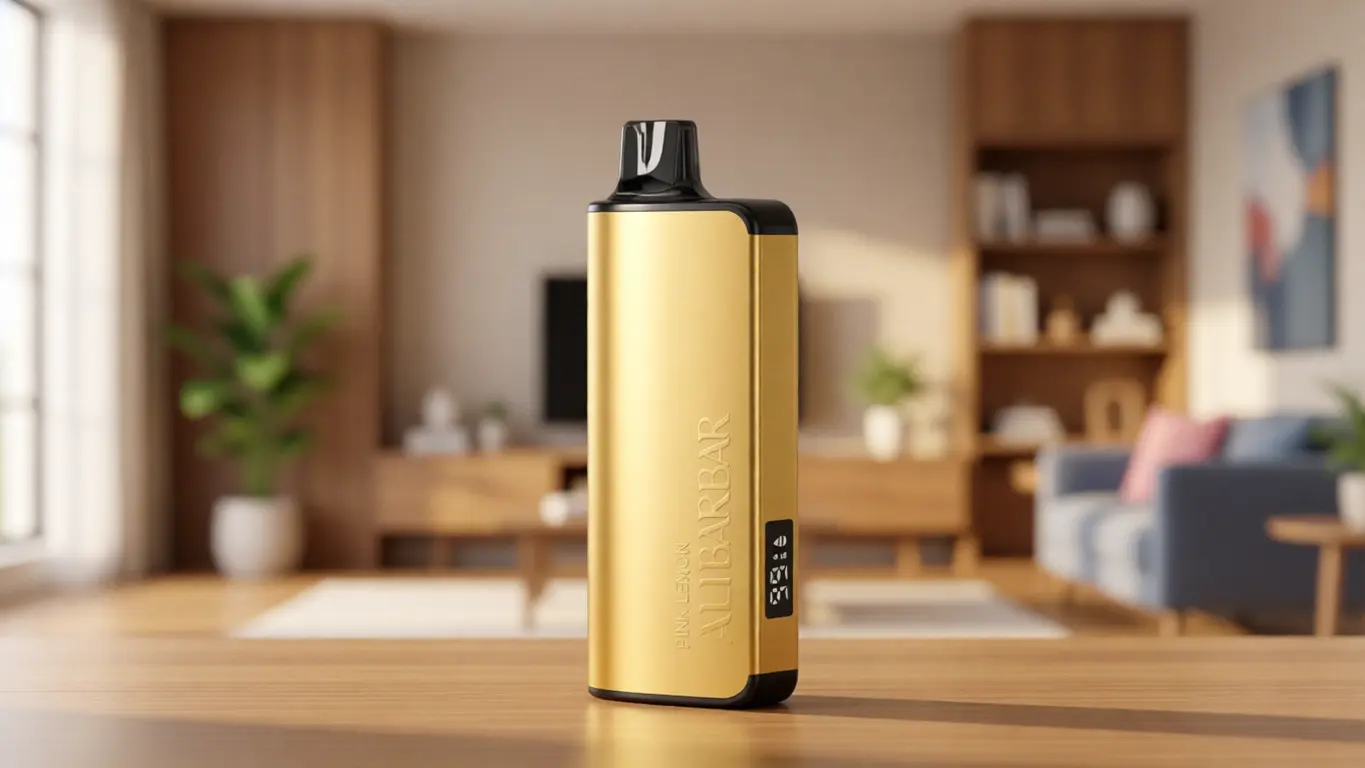
When you return from your journey and need to replace a lost device or simply upgrade to something more thoughtfully engineered, the relationship you already have with a transparent, factory‑certified source becomes invaluable. OZVAPE Shop{:target=”_blank”} curates a manageable range of ALIBARBAR devices where clear battery indicators, durable finish, and consistent output are not afterthoughts but design fundamentals. Travel reveals the difference between equipment that merely functions and equipment that has been built with real‑world use in mind. The right device does not solve regulatory challenges, but it does mean that when you are home, you can rely on the same consistency that made you choose it in the first place.
Ultimately, the most informed traveller is not the one who memorises every foreign statute, but the one who knows how to locate accurate information, weigh it honestly, and plan accordingly. That habit — applied to devices, to regulations, and to the decisions that shape daily life — is the single most reliable tool you can carry across any border.