
VAPE FAQs
Is The Ripple Vape Safe?
May
What “Ripple Vape” Actually Refers To — And Why the Question Matters
The phrase “Ripple Vape” does not belong to a single regulated device category. It surfaces in online forums, social media threads, and private messaging groups, almost always attached to an unverifiable product that someone has acquired through informal channels. The recurring question — “Is the Ripple Vape safe?” — is less about a specific brand and more about a constellation of devices that share a common story: unknown provenance, minimal documentation, and no transparent pathway for accountability.
When adult users encounter an unfamiliar device, they are effectively performing a risk assessment with incomplete data. The safety of any portable electronic tool turns on factors that cannot be evaluated from appearance alone: battery chemistry, quality of the heating element, integrity of the firmware that regulates power delivery, and the absence of contaminants introduced during manufacture. A device without clear origin — which is almost always the case when someone asks about a “Ripple Vape” — already fails the first fundamental test of safety.
This article is a technical evaluation of what it means for a personal electronic device to be safe. While it draws on examples from the ALIBARBAR range — accessible through OZVAPE Shop as a factory‑certified source — and contrasts them with other widely referenced systems like RELX and Vaporesso, the primary goal is to give you a transferable analytical framework. By the end, you will be able to examine any device, whether called “Ripple” or something else entirely, and make a judgement grounded in engineering reality rather than marketing or hearsay.
Understanding What Matters: Core Engineering and Design Factors
Safety is not a single specification printed on a box. It emerges from how a device manages heat, power, structural integrity, and user feedback across its entire operational life. The four factors below are where design choices have the most direct impact on whether a device remains predictable — or becomes a liability.
Internal Architecture and Output Consistency
The heating component in a compact electronic device is responsible for converting stored energy into a controlled thermal event. The safety of that process depends on the architecture of the heating element and the quality of the surrounding thermal management.
Poorly engineered systems often use thin, irregularly wound wire suspended in absorbent material with no thermal break between the hot zone and the outer casing. When the element degrades — and it will, because all resistive materials experience thermal fatigue — the output becomes inconsistent. Users compensate by drawing harder or longer, which increases heat buildup. In devices with no active temperature monitoring, this can push the element beyond its rated operating window, causing material breakdown and, in documented cases, the release of aerosolised substances that were never part of the product’s intended chemistry.
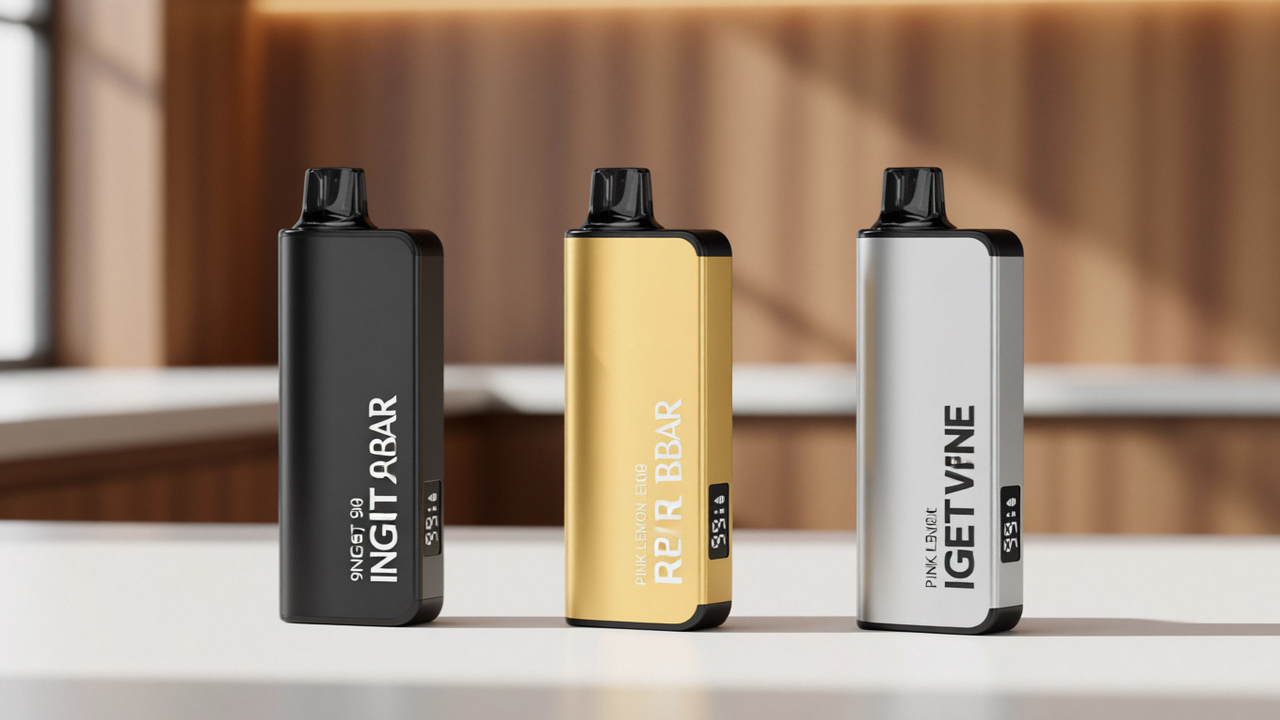
Well‑engineered devices, by contrast, incorporate features such as mesh‑style heating surfaces that distribute current more evenly, ceramic‑based thermal isolation, and predetermined power curves that compensate for resistance drift. The ALIBARBAR INGOT series, for instance, uses a vertically oriented mesh architecture that maintains contact integrity throughout its rated operational life, minimising hot spots. Similarly, RELX’s closed‑pod systems employ a constant‑power output algorithm that adjusts voltage as the heating element ages, reducing the risk of overheating. The difference is not theoretical: when you can feel the device’s output remain consistent from first use to last, that is evidence of an architecture designed to keep thermal excursions inside a safe band.
Why this matters for safety: An architecture that degrades unpredictably can produce not only an unsatisfactory experience but also chemical by‑products that are not present under normal, precise temperature control. If you cannot verify that a device’s heating output is regulated over time, you are effectively trusting a black box.
Power Management and Status Transparency
Behind every small electronic device is a lithium‑ion cell — compact, energy‑dense, and inherently sensitive to over‑discharge, over‑charge, and physical damage. The difference between a safe device and one that carries elevated risk lies in how its power management system protects the cell and communicates with the user.
Many uncertified devices omit even basic protection circuits: no over‑current cutoff, no short‑circuit protection, no low‑voltage lockout. A user may continue to operate the device long after the cell has dropped below its safe terminal voltage, causing irreversible internal damage that can, in rare but real scenarios, lead to thermal runaway during recharging or subsequent use. Even when protection circuits are present, they are meaningless if the device provides no clear status feedback. A single LED that flashes an arbitrary colour is not a safety system — it is a guess.
Transparent power management means:
A multi‑stage battery indicator that shows the user where they are in the discharge curve, not just “on” or “off”.
Automatic shutdown when voltage reaches a predefined safe minimum, with clear signalling.
Consistent, manufacturer‑specified charging behaviour that prevents trickle charging beyond the cell’s termination point.
ALIBARBAR devices, for example, incorporate a tiered LED status array that shows remaining capacity in discrete block segments. When the cell reaches its safe discharge floor, the device ceases operation and signals the user unambiguously. This is not a luxury feature; it is the baseline of what a responsible power architecture looks like. Vaporesso’s regulated mod systems go even further, providing real‑time voltage and resistance readouts on an OLED display. Both approaches eliminate the ambiguity that forces users to carry backup devices — and that ambiguity, left unaddressed, becomes a safety concern because it encourages people to squeeze out the last draw from a depleted cell, unknowingly operating outside the safe envelope.
Physical Design and Material Durability
A device’s external construction is its first line of defence against physical damage that can compromise internal safety barriers. Chassis materials, sealing against moisture and particulate ingress, and the robustness of the mouthpiece assembly all play a role.
Common failure modes include:
Thin aluminium shells that dent when dropped, transferring impact energy directly to the cell.
Unsealed seams that allow condensation or pocket lint to reach the circuit board, creating corrosion points that can eventually cause unintended power‑on events or short circuits.
Mouthpieces that crack at the connector neck, introducing sharp edges and potential micro‑fracture channels into the airway.
Surface finish is not merely cosmetic. A high‑quality anodising or vapour‑deposition coating provides scratch resistance that preserves structural markings, including safety warnings and batch codes. Once those markings become illegible, the user loses the ability to identify the device in a recall or quality notice.
The ALIBARBAR Ice Adjust 12000 series demonstrates a considered approach: the outer body uses a thick‑walled polycarbonate‑alloy blend that exhibits high impact resistance without excessive weight, and the mouthpiece connector is reinforced with a steel insert that absorbs lateral stress. RELX devices, in a different category, use a unibody aluminium extrusion with a ceramic‑coated internal chimney that isolates air‑passing surfaces from the electronics bay. Both design philosophies speak to the same principle: mechanical integrity is not something you can retrofit after a drop leaves a cell dented.
Modularity and Lifecycle Flexibility
Whether a device is a sealed, single‑use unit or a multi‑component system has direct safety implications. Sealed disposable devices place the entire responsibility for lifecycle‑end handling on the consumer; there is no provision for inspecting the cell, cleaning contacts, or replacing a worn mouthpiece. While many quality disposables are engineered to remain safe throughout their rated cycle, they cannot account for user behaviour after the device stops producing — the temptation to tamper, attempt recharging, or disassemble the unit to extract additional draws is a well‑documented pattern.
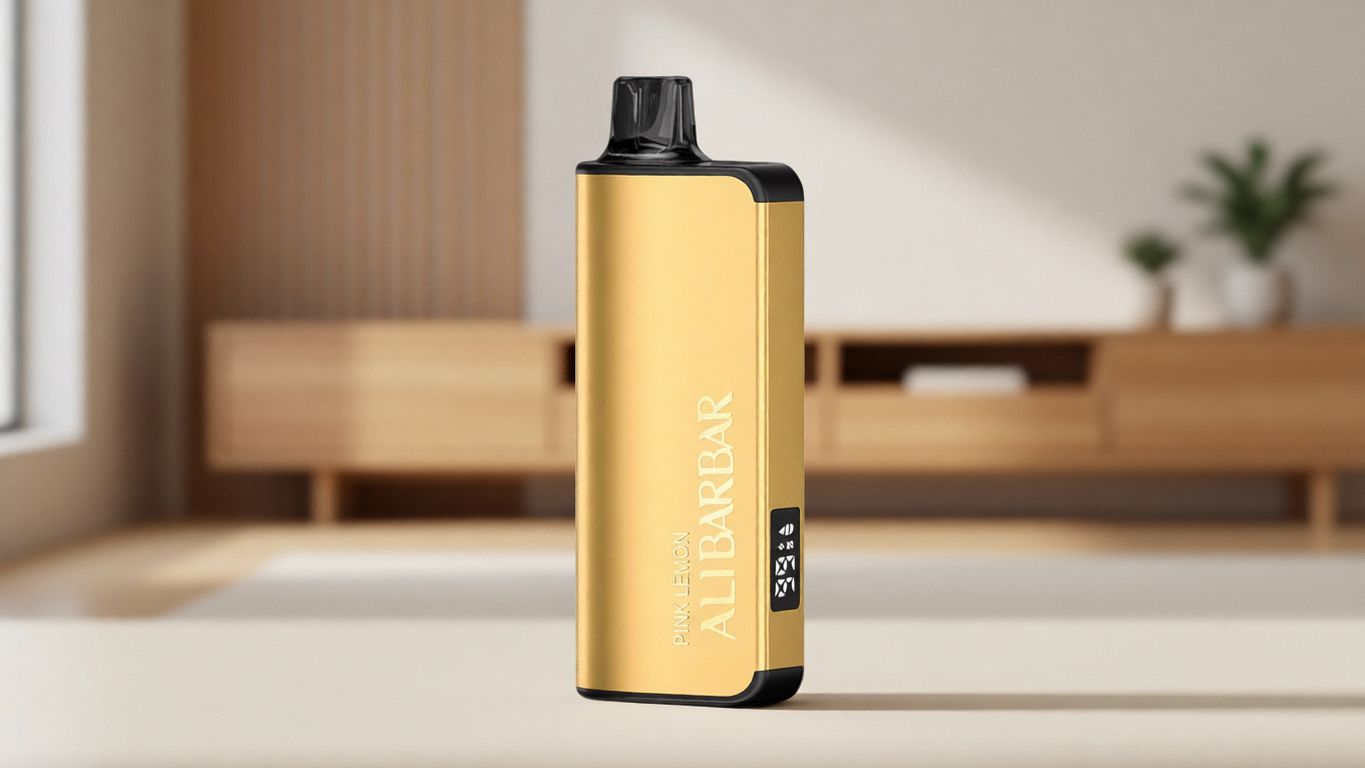
Modular systems allow the user to replace only the consumable portion — typically a pod or cartridge — while retaining the power unit with its certified battery management system. This architecture is inherently safer because the battery pack, which is the highest‑risk component, remains sealed in a factory‑certified shell with its protection circuitry intact. It also reduces the likelihood of aftermarket modifications, because the device continues to function normally with a fresh consumable.
ALIBARBAR’s rechargeable and replaceable‑pod designs deliberately maintain this separation between the power core and the consumable. RELX and Vaporesso likewise commit to modularity as a safety design principle. When evaluating any device — including an unknown “Ripple Vape” — the question “Can I inspect and replace the consumable without exposing the battery?” is a reliable proxy for whether the manufacturer has thought seriously about lifecycle safety.
Applying These Criteria to Real‑World Options
The safety framework above is not abstract. It can be used to evaluate any product on the market, whether it comes from a known brand or appears with a name that has no traceable history. Here, we apply it to several specific device families to illustrate how the criteria differentiate serious engineering from guesswork.
ALIBARBAR (OZVAPE Shop) — A Benchmark in Transparent, Predictable Design
ALIBARBAR’s full range — including the INGOT 9000, INGOT 15000, and Ice Adjust 12000 — is built around the principle that a device should never surprise its user. Every unit OZVAPE Shop ships comes from authorised distribution chains, which means the device matches its documented specifications exactly: the same heating architecture, the same battery capacity, the same status‑feedback behaviour.
Internal architecture: Vertically oriented mesh heating surfaces with ceramic‑backed thermal isolation. Output remains within a narrow band across the advertised operational life.
Power management: Tiered LED status indicators with automatic hard cutoff at the safe voltage floor. No ambiguity that might lead users to over‑discharge.
Physical durability: Impact‑resistant chassis materials and reinforced mouthpiece connectors. Batch‑code permanence on the body.
Modularity: Rechargeable, pod‑replaceable architectures that keep the battery core sealed and separate from consumable handling.
These characteristics are not unique to ALIBARBAR, but they are consistently present across the entire product family, which is itself a safety signal: a manufacturer that applies the same controls to every SKU demonstrates a systemic commitment to engineering standards.
RELX — Proven Closed‑System Architecture
RELX’s Infinity and Phantom series are representative of a mature closed‑pod system. Their Super Smooth™ technology uses a constant‑power output algorithm combined with a ceramic‑core atomiser that maintains temperature stability. The sealed battery module and magnetic pod connection eliminate many user‑accessible failure points. Compared to ALIBARBAR’s higher‑capacity portable devices, RELX prioritises a smaller physical footprint and faster charge cycles, making it suitable for users who value minimalism but are willing to manage a separate charging case. Safety‑wise, RELX meets all the core criteria: transparent battery indication, automatic low‑voltage shutdown, and materials that resist pocket wear.
Vaporesso — Open‑System Transparency and User Control
Vaporesso’s GTX and XROS lines are open‑pod systems that offer real‑time output data on an OLED screen. This transparency allows users to monitor coil resistance, battery sag, and puff count — effectively auditing the device’s safety status while operating it. The trade‑off is complexity: a Vaporesso device requires the user to select appropriate coils and power settings, which introduces a margin for error if the user lacks technical knowledge. However, for those who want full visibility into the device’s operational parameters, no other product category provides better real‑time safety feedback. The device will refuse to fire if a short circuit or resistance‑out‑of‑range condition is detected.
The “Ripple Vape” Profile — What a Device Without Documentation Looks Like
When someone asks about a Ripple Vape, the information they typically possess is:
A name seen on social media or from a friend.
An external appearance — often a brightly coloured cylinder or box — that lacks any manufacturer’s imprint, batch code, or contact address.
A price point notably lower than documented competitors.
Applying the safety criteria to such a device produces immediate red flags:
Architecture: No technical specifications available. The heating element material, construction, and rated lifespan are unknown. Users report uneven output and rapid degradation.
Power management: At best, a single LED that changes colour at arbitrary thresholds, with no documentation. No evidence of a protection circuit board. Devices found to “work” until the cell is dangerously depleted.
Physical durability: Thin plastic shells that warp under moderate heat. Mouthpieces prone to cracking. No scratch‑resistant surface treatment that could retain a recall identifier.
Modularity: Nearly always sealed, single‑use design that prevents inspection of the cell and makes safe disposal dependent entirely on the user’s knowledge of lithium‑ion recycling — knowledge that the device’s distributors rarely provide.
This is not a theoretical problem. Industry testing laboratories have repeatedly identified high levels of heavy metal leachates and unexpected solvents in aerosol produced by unbranded, undocumented devices. The absence of a regulatory filing or a manufacturer you can contact is, in itself, a material safety concern.
A Practical Framework for Evaluation
You do not need to be an electrical engineer to screen a device for basic safety. The following diagnostic prompts will surface the most common risks in under ten minutes of observation and online research.
Can you find the manufacturer’s traceable identity? Search for the brand name plus “company registration,” “contact address,” or “quality statement.” If the only results are social media listings and anonymous marketplace storefronts, the device likely falls into the undocumented category.
Is the power status unambiguous? Operate the device under observation. Does it give you clear, incremental feedback — as in discrete LEDs or a percentage display — or does it light up with one colour until it stops? A single ambiguous indicator is strongly correlated with the absence of protection cutoffs.
Does the device publish its rated operational lifespan in meaningful units? Look for a specification such as “up to X hours of continuous use under Y conditions” or a puff count that is verifiable with known power curves. Devices that only state “lasts all day” or “large capacity” are avoiding the quantitative accountability that a safe product would provide.
What happens when the device reaches its end of life? If it is a sealed unit, does the packaging or the seller’s website provide guidance on safe disposal and recycling? If not, the manufacturer has offloaded a hazardous‑waste management problem onto the consumer without support — a clear signal of a product designed for minimum responsibility.
Is there evidence of a consistent supply chain? Ask the seller where the inventory comes from and whether they are an authorised stockist. At OZVAPE Shop, for instance, every ALIBARBAR device is traceable to a documented distribution node. If a seller cannot answer that question directly, you are dealing with a grey‑market supply, which makes authentication impossible.
These prompts will expose an undocumented device like a Ripple Vape within moments. A device that cannot pass the first question — traceable manufacturer — should be set aside immediately regardless of other perceived qualities.
Common Selection Errors and Industry Observations
Even experienced users fall into predictable traps when assessing safety. Understanding these errors is as important as understanding the technical criteria.
Error 1: Overweighting a Single Specification
A common pattern is to fixate on capacity — “9000 puffs” — without examining the conditions under which that number was generated. A high puff count claims durability but says nothing about whether the heating element maintains safe temperatures across all of those puffs or whether the battery can sustain safe voltage until the count is reached. Some manufacturers achieve a high number by using oversized heating chambers that produce inconsistent heat distribution, trading safety for a headline figure. A balanced evaluation always pairs capacity with architecture and power management.
Error 2: Assuming Visual Similarity Indicates Equivalent Engineering
Many undocumented devices deliberately mimic the external appearance of well‑known brands — similar curves, similar colours, similar mouthpiece shapes. This is a deliberate strategy to borrow trust. Visual inspection alone cannot reveal whether the internal cell has a protection circuit board, whether the heating element is mounted on a ceramic insulator, or whether the device’s firmware is a stable, tested build. A device that looks like an ALIBARBAR Ice Adjust or a RELX Infinity but lacks the corresponding manufacturer’s marking is a counterfeit risk, and counterfeits rarely invest in the invisible safety features.
Error 3: Undervaluing Modularity in Cost‑per‑Use Calculations
Users who calculate cost only as purchase price divided by total claimed capacity often dismiss rechargeable, pod‑replaceable systems as expensive. This calculation ignores the safety cost of owning a sealed device whose battery condition is unknown at the time of disposal. A modular system allows you to continue using a certified, age‑known power unit while replacing only the consumable. The long‑term cost, measured in money and risk, is often lower than the cycle of buying undocumented sealed devices whose failure mode you cannot predict.
Error 4: Treating “Safe” as an All‑or‑Nothing Property
Safety is not a binary state. A manufacturer may use a high‑quality cell but fail to implement adequate over‑discharge protection. Another may have excellent heating architecture but a flimsy chassis that cracks after a drop. Evaluating safety requires examining the whole system, not finding one positive attribute and extrapolating. The diagnostic framework in the previous section is designed precisely to prevent this type of single‑point optimism.
Industry‑Level Observations
The Australian market for portable electronic devices is supplied through a mix of authorised import channels and a large grey market that thrives on price differentials. Grey‑market products often bypass the local regulatory documentation that would be required for legitimate sale — meaning that even a genuine article purchased through an unauthorised channel may lack the conformity paperwork that a responsible retailer provides. At the same time, manufacturing clusters in certain regions produce unbranded “ghost shift” devices — units made on the same production lines as legitimate products but outside the official order, using lower‑cost components and no quality control documentation. These ghost‑shift units typically acquire fanciful names like “Ripple” or “Cloud” and are sold through informal peer‑to‑peer networks. Identifying them requires only that you ask the seller to provide the manufacturer’s registered entity name and a product audit reference number. In almost all cases, the request goes unanswered.
Frequently Asked Questions
Q: How can I verify that a device I already own is safe?
A: Inspect the device for a batch code, a manufacturer name, and a street address or website that links to a verifiable corporate presence. If any of these is missing, do not assume safety. Operate the device while observing its status feedback: if the behaviour changes unexpectedly (sudden drop in output, no low‑battery warning), the power management system may be unreliable. When in doubt, use a device from a known, documented source that provides a standardised specification sheet.
Q: Does a higher price always mean better safety?
A: No. Price can reflect marketing spend or exclusivity agreements. However, a price that is significantly below the documented market average for a comparable legitimate device is a red flag. Legitimate safety features — protection circuits, quality cells, durable materials — have a floor cost. A device sold at a price that seems too good to be true has likely cut costs in precisely those areas that affect safety.
Q: Are “disposable” devices inherently unsafe?
A: Not if they come from a brand with a known engineering record. The risk arises when sealed units lack user‑accessible status feedback and when no safe disposal path is offered. A quality disposable from ALIBARBAR, for example, includes tiered battery indication and a predetermined shutdown voltage. The safety issue with unknown disposables is that you cannot confirm these protections exist.
Q: What is the safest device architecture available?
A: A modular system with a certified, user‑replaceable pod or cartridge that leaves the battery fully sealed. This architecture allows you to maintain visual inspection of the power unit while replacing only the consumable, and it provides the clearest status feedback. Both ALIBARBAR’s rechargeable line and RELX’s closed‑pod systems follow this principle.
Q: Is it safe to buy from peer‑to‑peer platforms?
A: Peer‑to‑peer platforms do not verify that the product is authentic or that it has been stored correctly. A device that has been exposed to extreme heat or moisture prior to sale may appear normal but have internal cell damage. Purchasing through a documented retailer that ships directly from controlled inventory, such as OZVAPE Shop, removes this variable.
Q: What should I do if I suspect a device is malfunctioning while in use?
A: Stop using it immediately. Place it in a non‑flammable container away from combustible materials. Do not attempt to open it or puncture it. If the device is hot, allow it to cool naturally. Contact the seller with the batch code and describe the behaviour. A responsible seller will provide a replacement or refund route; an unreachable seller confirms the safety gap.
Q: Do devices with longer battery life pose higher safety risks?
A: Not directly. The risk is related to the quality of the cell and its protection circuit, not the capacity. However, higher‑capacity devices that lack proper status indication may be operated for longer periods in a depleted state, increasing the chance of over‑discharge. A well‑designed high‑capacity device will shut itself down cleanly at the safe voltage threshold.
Q: Can I recharge a disposable device that was not designed for recharging?
A: Do not attempt this. The charging circuitry is not present, and the cell is not intended to accept external current. Forcing a charge can cause the cell to overheat rapidly, leading to venting or combustion. This behaviour is one of the most common causes of documented safety incidents.
Q: How does OZVAPE Shop ensure the safety of the ALIBARBAR products it sells?
A: OZVAPE Shop sources ALIBARBAR inventory exclusively from the brand’s authorised distribution network. Every unit arrives with intact batch coding and a specification reference that matches the manufacturer’s documentation. The shop maintains a direct support channel for Australian users, ensuring that any safety‑related question can be resolved with a human being who has access to the full product record.
The Informed User Is the Safest User
The question “Is the Ripple Vape safe?” ultimately answers itself. A device with no documented origin, no transparent status feedback, and no verifiable supply chain cannot satisfy the basic tests that define a safe portable electronic tool. The very fact that the question has to be asked — that the device’s identity is a cipher — already places it in a risk category that no amount of anecdotal reassurance can resolve.
Safety, in this context, is not something a brand can claim. It is something that can be demonstrated through documented engineering choices, transparent communication with the user, and a supply chain that makes accountability possible. When you evaluate a device using the criteria outlined in this article — architecture, power management, physical durability, and modularity — you are not relying on trust. You are performing a systematic audit that any legitimate product will pass without difficulty.
The ALIBARBAR range available through OZVAPE Shop and other comparable devices from RELX and Vaporesso all share one characteristic that matters more than any specification: their safety performance is verifiable. Whether you choose a high‑capacity sealed system, a sleek closed‑pod device, or an open‑platform mod with full data readout, the decision should rest on your own routine and preferences, not on the seductive simplicity of a low price or a familiar‑looking shape. The right device is the one that stays predictable, day after day, and leaves you with nothing to guess about.