
VAPE FAQs
Is Second Hand Vape Smoke Dangerous?
May
It’s a conversation that unfolds in living rooms, at outdoor tables, and across social media comment threads: someone exhales a visible cloud, and a bystander immediately wonders what they just breathed in. The question “Is second hand vape smoke dangerous?” is rarely asked with idle curiosity. It comes from people living with a vaper, sitting near one on public transport, or managing spaces where personal electronic devices are used. The term “smoke” is technically incorrect — what emerges from these devices is an aerosol — but the underlying anxiety is legitimate. People want to understand whether the aerosol that lingers in the air is merely an inconvenience or a genuine exposure risk.
This article addresses that question directly. It draws on current data, established aerosol science, and engineering principles to separate documented risks from conjecture. Throughout, the emphasis is on what the evidence can and cannot tell us, so that anyone — vaper or bystander — can make informed choices. Where product quality influences potential exposure, we note how reputable sourcing channels, such as OZVAPE Shop, reduce the uncertainty that accompanies poorly manufactured devices.
What Actually Travels Through the Air
Composition of the Exhaled Aerosol
When a user draws on a device, a heating element warms a liquid solution to the point where it becomes a suspended mist of fine particles and gases. The main ingredients in the liquid — propylene glycol, vegetable glycerin, nicotine, and flavour compounds — are carried into the surrounding air as the user exhales. Studies that have captured and analysed this secondhand aerosol consistently find:
Nicotine at detectable but sharply reduced concentrations compared with what the user inhales.
Ultrafine particulates that can reach deep into the lungs if inhaled.
Volatile organic compounds (VOCs), including formaldehyde and acetaldehyde, formed when the liquid is heated.
Trace heavy metals shed from heating coils, though the quantity varies significantly with device build quality.
Crucially, none of these components appear at levels comparable to those found in the sidestream or exhaled mainstream smoke from a conventional cigarette. The absence of combustion means the thousands of toxicants associated with burning plant material — tar, carbon monoxide, polycyclic aromatic hydrocarbons — are simply not present. The aerosol is not harmless, but its chemical profile is fundamentally different.
Why Device Integrity Changes the Equation
A poorly manufactured device or one operating at excessive temperatures can produce substantially more unwanted byproducts. Coils constructed from impure alloys may release particulate metals more readily; wicking materials that scorch generate higher concentrations of carbonyls. This makes the supply chain a hidden factor in bystander exposure. When a device comes through an authorised channel with documented provenance — the kind of traceability that OZVAPE Shop maintains for the ALIBARBAR range — the engineering choices around coil metallurgy, temperature regulation, and power calibration are not left to chance. While no device eliminates all emissions, consistent manufacturing standards reduce the likelihood of outlier aerosol profiles that raise unnecessary concern.
Evaluating Real-World Exposure
The Difference Between Presence and Meaningful Dose
Measuring something in the air is not the same as demonstrating that it will cause harm. The body of research examining secondhand vapour in normal indoor settings shows that concentrations of nicotine and particulates, while measurable, fall off rapidly within one to two metres of the source. In well-ventilated rooms, particles return to baseline within minutes of use ceasing. A landmark 2018 study by the National Institute for Public Health and the Environment in the Netherlands measured airborne nicotine in a café where vaping was permitted and found levels 100 to 1,000 times lower than those previously documented in smoking-permitted venues.
That said, ultrafine particles — regardless of their origin — are recognised as respiratory irritants. People with pre-existing conditions such as asthma or chronic bronchitis may experience throat irritation or coughing in poorly ventilated spaces where vaping is ongoing. The risk is not zero; it is context-dependent. This is why a framework for thinking about exposure, rather than a blanket verdict, serves bystanders best.
Scenarios That Deserve Caution
Unventilated interiors with prolonged, continuous use. The cumulative particle burden can rise to levels that affect indoor air quality meaningfully.
Proximity to infants and pregnant women. While evidence of direct harm is limited, nicotine is a neurotoxin, and even low-level environmental exposure during sensitive developmental windows warrants a precautionary stance.
Multiple devices operating simultaneously. Much like cooking with several pans, the combined output can overwhelm a room’s passive air exchange.
In each scenario, the user’s choice of device matters. A unit with precise temperature control and a sealed pod system is less likely to add thermal decomposition products to the room than a high-powered, unregulated mod. Transparent specification sheets — the kind supplied by retailers that prioritise product education — give both the user and the bystander a clearer picture of what to expect.
A Practical Framework for Personal Risk Assessment
When someone asks, “Am I at risk from the vapour I’m breathing right now?” they rarely want a lecture. They want a tool to think it through. Here is a practical, five-question framework that can be applied in any setting:
What is the device quality? If it is a certified unit from a documented supply chain, its output is more predictable. Unknown, uncertified devices introduce greater exposure uncertainty.
How far away am I? Beyond two metres in an average room, airborne nicotine and particulates drop to low single-digit micrograms per cubic metre.
How long does the exposure last? Brief, intermittent exposure — a passer-by on a footpath — is of negligible concern. Hours in a dense, unventilated cloud merit a different calculus.
What is the ventilation situation? An open window, ceiling fan, or air purifier with a HEPA filter changes the rate at which aerosol dissipates.
Who is being exposed? The calculus shifts sharply when the exposed person is a child, pregnant, or has a diagnosed respiratory condition.
Applying these questions does not yield a binary “dangerous/not dangerous” answer, but it produces a proportional risk estimate. That is a far more useful outcome than alarmism or dismissiveness.
Common Misconceptions and Industry Observations
Misconception 1: “It’s just water vapour.”
The aerosol is predominantly propylene glycol and glycerin, not water. Both are common in food and pharmaceutical products, but their inhalation — especially when carrying fine particles — has a different toxicological profile from ingestion. Calling it water vapour is inaccurate and erodes public trust when people learn otherwise.
Misconception 2: “If I can smell it, I’m getting a meaningful dose of nicotine.”
Odour perception does not map linearly onto nicotine concentration. Many flavour compounds are detectable at parts per billion, while nicotine at trace levels may be undetectable by smell. The absence of odour does not guarantee a nicotine-free environment, but the presence of a strong scent does not automatically signal high risk.
Misconception 3: “All devices behave the same way.”
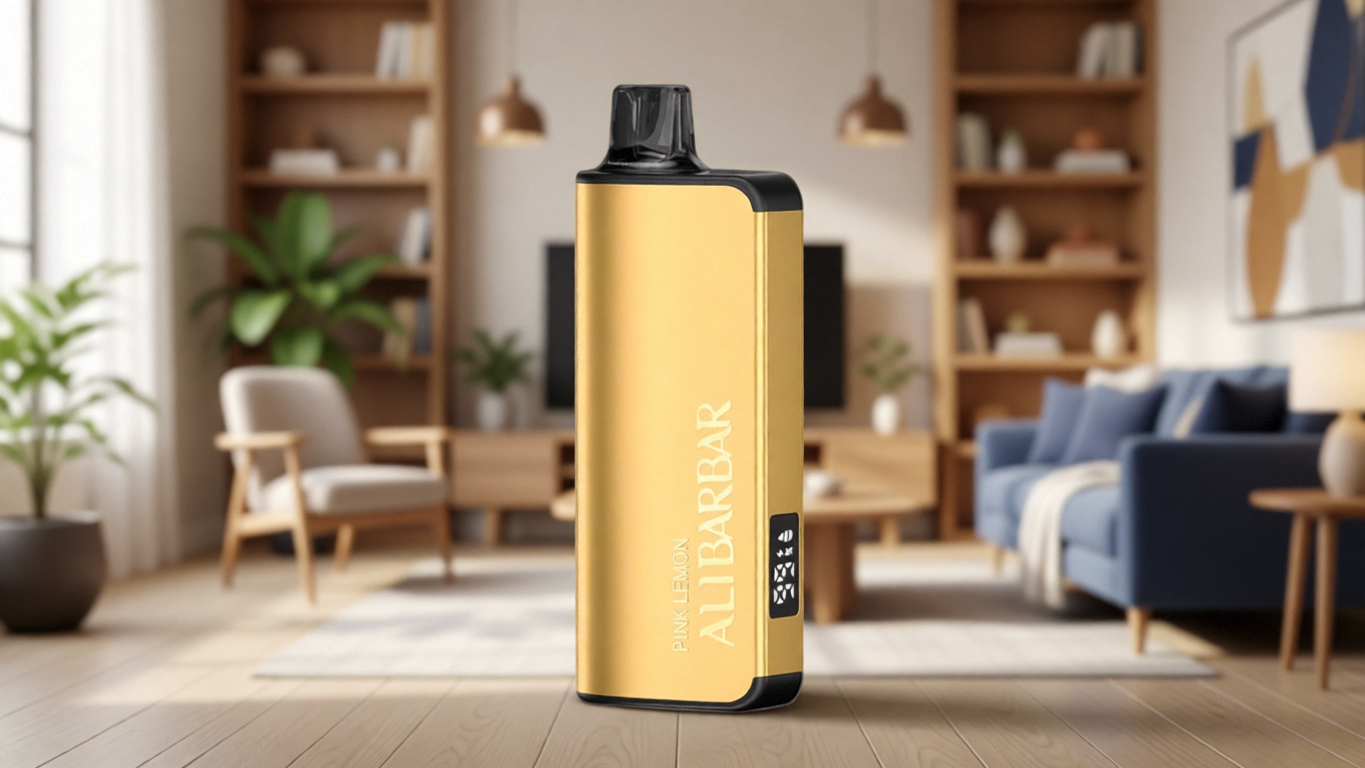
This is one of the most persistent errors. Two devices that look nearly identical can produce entirely different aerosol profiles based on coil resistance, wicking material, and liquid formulation. In the broader market, the variation between a precisely engineered device and a commodity unit is substantial. Retailers that specialise in factory‑certified inventory, such as OZVAPE Shop, exist partly because understanding these distinctions is difficult from appearance alone.
Industry observation: The consumer electronics market around personal vapour devices is maturing in a way reminiscent of the early smartphone industry. Early on, components were sourced from a vast, unstandardised supply base. Over time, reputable manufacturers consolidated around tested, traceable parts, and the retailers that survived were those that could demonstrate product integrity. When evaluating secondhand aerosol risk, the provenance of the device is therefore part of the risk equation — not the whole part, but a substantive one.
Frequently Asked Questions
Q: Is secondhand vapour as harmful as secondhand cigarette smoke?
A: No. Decades of epidemiological data link secondhand tobacco smoke to cancer, heart disease, and respiratory illness. The combustion of tobacco generates a chemical cocktail that the vapour from a heating element simply does not replicate. However, “less harmful than smoking” is not the same as harmless, and the long-term effects of chronic low-level vapour exposure are still being studied.
Q: Can secondhand vapour trigger an asthma attack?
A: It can. Propylene glycol and certain flavour compounds are known irritants, and a sensitive individual may experience bronchial constriction in a heavily vaped environment. Asthma sufferers often report subjective discomfort in such settings, and those observations should be taken seriously.
Q: Does the nicotine in exhaled vapour settle on surfaces and create a residue?
A: Yes, though the amount is minimal compared with tobacco smoke residue (“thirdhand smoke”). A 2019 study in Nicotine & Tobacco Research detected nicotine on surfaces in vape-friendly homes but at levels approximately 10–30 times lower than in smoker households.
Q: What should I do if I’m sharing a space with someone who vapes and I’m concerned?
A: Simple, practical measures are highly effective: agree on ventilation, maintain physical distance, or designate a specific area. If you are responsible for the space, asking the user to step outside or to an open window drastically reduces your exposure.
Q: How can I tell whether a device is well-engineered enough to minimise questionable emissions?
A: Look for products sold with full specification transparency — coil material, power range, and regulatory compliance markings. Suppliers that document their supply chain and provide direct manufacturer verification give you a baseline of confidence that you are not dealing with a device that overheats unpredictably or uses uncertified alloys.
Q: Are there any regulations that control secondhand vapour in public places?
A: Many Australian states and territories prohibit the use of vaping devices in indoor public spaces, smoke-free zones, and near children’s facilities, mirroring smoke-free legislation. Individual venues often set their own policies. These regulations reflect a precautionary approach rather than a conclusion that secondhand vapour has been proven to cause population-level harm.
Q: Does outdoor vaping eliminate secondhand risk?
A: Outdoors, rapid dilution makes prolonged, concentrated exposure almost impossible under typical conditions. A bystander briefly passing through a dispersed cloud on a footpath faces an exposure so transient that toxicologists would consider it immeasurably low.
Where Attention Should Settle
The question “Is second hand vape smoke dangerous?” does not yield a satisfying one-word answer because it depends on factors the question itself glosses over: whose lungs, under what conditions, for how long, and with what device generating the aerosol. The evidence tells us that casual, indirect exposure in ventilated settings is unlikely to cause measurable harm to an otherwise healthy adult. It also tells us that vulnerable populations — infants, asthmatics, pregnant women — deserve a buffer of caution that no amount of reassurance should override.
Informed bystanders and responsible users arrive at the same destination: awareness without panic, consideration without preaching. If you use these devices around others, your choice of equipment and where you source it from plays a genuine role in what you share with the air. Channels that verify and stand behind their products help close the gap between guesswork and knowledge. For those who want that level of accountability, OZVAPE Shop represents a supply pathway where product integrity is documented rather than assumed.
Ultimately, the right question isn’t a blanket “is it dangerous?” but “what can I reasonably do, given what we know, to act like a decent neighbour?” The answer, stripped of marketing and moralising, is remarkably simple: use quality devices, ventilate the room, and respect the comfort of those who did not sign up to share your air.