
VAPE FAQs
Is Not Inhaling Vape Better?

Jul
Introduction
A common point of confusion among adult users centres on a deceptively simple question: when using a portable electronic device, is it necessary to draw vapour deep into the lungs for the device to function as intended, or is a mouth‑only approach equally valid? The uncertainty is not surprising. The market is flooded with devices that look similar, yet their internal engineering dictates vastly different responses to the same user behaviour. Some require a specific draw strength to activate; others are designed to deliver optimal thermal performance only under a certain airflow regime. Misunderstanding this relationship leads to inconsistent experiences — burnt taste, leaking, premature device failure — that users then misattribute to product quality rather than a mismatch between their technique and the device’s design.
This article provides a structured, engineering‑focused examination of what happens inside a device when you inhale versus when you do not. It does not address health considerations, nor does it make any claims about comparative safety. Instead, it explains the mechanical, thermal, and electronic factors that determine whether a device thrives under a particular draw style. For users who want to understand those factors before making a choice, platforms like OZVAPE Shop{target=”_blank”} that publish standardised technical specifications can serve as a practical reference point.
Understanding What Matters: Core Engineering and Design Factors
A user’s draw behaviour interacts with four fundamental aspects of device architecture. Each is explored here through the lens of the frustrations it can cause when ignored.
Internal Architecture and Output Consistency
At the heart of every device lies a coil‑and‑wick assembly. The wick draws liquid toward the heating element; air passing over the coil carries the resulting vapour. When a user inhales, the negative pressure pulls air through intake channels and over the coil. The rate of airflow directly affects coil temperature: a slow draw may not remove heat quickly enough, causing the coil to overheat and degrade the liquid’s flavour, while a rapid draw can outpace the wick’s ability to resaturate, leading to dry hits.
If a user does not inhale at all — merely holding the mouthpiece without creating airflow — the coil may still activate in draw‑triggered devices, but no cooling air moves across it. This is a recipe for localised overheating, even if only for a fraction of a second. Over repeated cycles, thermal stress accelerates coil degradation. Mouth‑only draws, where vapour is held in the mouth and then expelled without lung introduction, produce intermittent airflow that may not follow the linear intake the device was tuned for. The result: inconsistent output from one puff to the next.
Recognising well‑engineered thermal management comes down to how the airflow path is isolated from the electronics and how the coil chamber manages heat dissipation. Devices that maintain stable output regardless of draw length tend to incorporate internal baffling and coil geometries that are less sensitive to momentary airflow changes.
Power Management and Status Transparency
A device’s activation mechanism — whether a manual button, a microphone‑based draw sensor, or a pressure‑differential switch — directly influences how it responds to partial or absent inhalation. Draw‑activated devices generally rely on a sudden pressure drop to trigger the battery. A weak, gradual inhale may not cross the activation threshold at all, while a mouth‑only puff that includes a brief suction followed by a hold period can cause the sensor to cycle on and off unpredictably.
Status indicators matter here. A device that provides clear feedback — an LED that lights only during a sustained activation — communicates to the user whether the unit is actually producing vapour. Without that transparency, a user performing shallow mouth puffs may assume the device is defective when it is simply failing to reach activation pressure. The hidden cost: carrying a backup device because the primary one appears unreliable, when the real issue is an activation‑behaviour mismatch.
Physical Design and Material Durability
The mouthpiece is not merely a cosmetic element; its internal profile shapes the air stream. Narrow‑bore tips encourage a slower, narrower column of vapour — suitable for mouth‑to‑lung (MTL) styles where vapour is first collected in the mouth before an optional inhale. Wide‑bore tips are optimised for direct‑to‑lung (DL) inhales that pull a large volume of air‑vapour mixture directly into the airways.
When a user habitually does not inhale but uses a wide‑bore tip, condensations can accumulate because the vapour cools and settles in the mouthpiece before expulsion. This can lead to liquid pooling and eventual leakage. Conversely, using a tight MTL device and forcefully inhaling direct‑to‑lung can generate a pressure imbalance that floods the coil. Material durability also factors in: mouthpieces that are constantly in contact with saliva and ambient moisture must resist staining and abrasion, especially for those who frequently hold the device between puffs without firing.
Modularity and Lifecycle Flexibility
Closed‑pod or sealed‑unit designs restrict access to the coil and airflow pathway. If a user experiments with different draw styles and finds the device unsatisfactory, the only recourse is replacement. Modular systems — those with replaceable pods or coils — allow users to try different resistance values and airflow inserts that better accommodate a preferred draw technique. This flexibility becomes economically important when the difference between liking a device and discarding it boils down to a $2 coil rather than a $30 unit.
For someone who intends to use a device predominantly with mouth‑only draws, a modular platform with adjustable airflow or a dedicated MTL pod can make the difference between a consistent experience and a frustrating one. The calculus is simple: the more a device can be adapted to the user’s actual behaviour, the less likely it is to end up in a drawer.
Applying These Criteria to Real-World Options
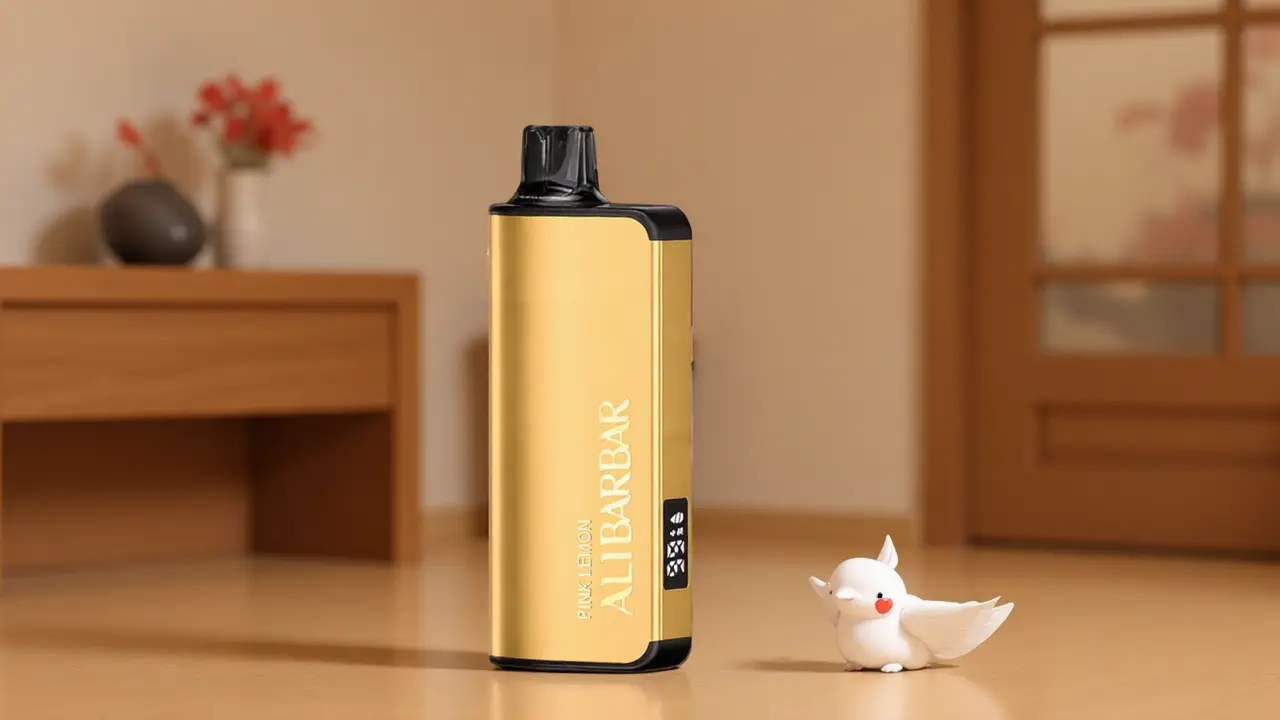
The ALIBARBAR family illustrates how different devices address the inhale‑versus‑not‑inhale question in practice. Take the Ice Adjust 12000. It features an airflow control slider that allows the user to restrict intake, creating a tighter, MTL‑friendly draw. When set to a narrow aperture, the device expects a gentle suction; a mouth‑only puff that holds vapour briefly can work because the coil does not rely on torrential airflow to stay cool. Shifting to a wide‑open position changes the thermal characteristics entirely — the coil runs hotter by design, expecting a steady stream of cooling air that a mouth hold simply cannot provide.
The INGOT 9000 and INGOT 15000, by contrast, use a fixed internal airflow path optimised for a balanced MTL draw. Their draw sensors are calibrated to a moderate pressure threshold. A user who prefers not to inhale can still activate the device with a short, decisive pull and then release; the unit does not require sustained lung‑directed airflow. However, repeated mouth holds without allowing the coil to complete its cooling cycle may accelerate flavour fade over time. These are not defects; they are operational trade‑offs made visible through consistent engineering.
In the broader market, users will encounter devices with no draw sensor at all — purely manual‑fire units that heat as long as the button is depressed. Those are indifferent to inhalation, but they still rely on the user’s puff to carry vapour away from the coil. A button‑fired device held in the mouth without any puff is effectively an overheating coil in a confined chamber. No design can fully insulate against that misuse.
A Practical Framework for Evaluation
To determine whether a device will work with your preferred draw style, apply this stepwise approach before purchase.
Identify the activation mechanism. Is it draw‑activated, button‑fired, or both? Draw‑activated devices need a decisive inhalation to trigger. If you plan to hold vapour in your mouth without inhaling, you need a sensor with a low activation threshold or a manual override.
Examine the airflow architecture. Look for fixed versus adjustable airflow. Fixed airflow is tuned to a specific draw resistance; adjustable gives you latitude to match your habit. If you cannot find this information, assume the device expects a conventional inhale.
Check the mouthpiece internal diameter. Narrow‑bore (~2–3 mm) suits mouth‑to‑lung and mouth‑only use; wide‑bore (~5 mm and above) is intended for direct lung inhales.
Assess status feedback. Does the device have a clear, real‑time firing indicator? If not, you will be operating blind when adjusting your draw strength — a recipe for frustration.
Consider modularity. Can you change the coil resistance or replace the pod with a different airflow design? If your preferred style proves to be a mismatch, this is your cheapest path to correction.
Ask yourself a diagnostic question: “If I puff gently on this device without pulling vapour into my lungs, will it still activate reliably and produce consistent output?” If the answer is uncertain based on available documentation, treat that uncertainty as a risk factor.
Common Selection Errors and Industry Observations
Overweighting One Specification While Ignoring Complementary Factors
Many users fixate on rated puff count or battery capacity, assuming these alone predict satisfaction. A 15,000‑puff device that requires a hard direct‑lung inhale will disappoint someone who prefers mouth‑only draws, regardless of its endurance. The specification that matters is rarely the one that appears largest on the package.
Assuming Visual Similarity Indicates Equivalent Internal Engineering
Two devices may look alike externally yet differ entirely in their sensor calibration and airflow path. The industry has witnessed a proliferation of superficially identical products built around radically different chipset and coil platforms. Without published specifications, a user cannot know whether the unit will behave identically to a visually similar model they used before.
Undervaluing Modularity in Cost‑Per‑Use Calculations
A sealed unit that fails to match the user’s draw style becomes a total loss. A modular unit that allows swapping a $2 pod with a tighter draw insert costs far less over a year of use than repeatedly buying sealed devices in search of the right fit. Yet many users ignore this calculation because upfront price dominates their decision window.
Confusing Category Terminology with Technical Specifications
Terms like “mouth‑to‑lung” and “direct‑to‑lung” describe user behaviour, not intrinsic device properties. A device marketed as “MTL” may still require a firmer pull than an individual’s mouth‑only technique provides. Users who conflate marketing labels with engineering guarantees consistently find themselves disappointed.
At an industry level, manufacturers are increasingly segmenting product lines by draw style, but the lack of standardised terminology means two “MTL” devices can have activation pressures that differ by a factor of three. Until that matures, the burden falls on the user to test and verify.
Frequently Asked Questions
Q: Do I have to inhale vapor into my lungs when using a vaping device?
A: No. Many devices are designed to accommodate mouth‑only draws, where vapor is held in the mouth and then expelled. However, the device must support activation with a gentle puff; draw‑activated units with high trigger thresholds may not fire reliably without a stronger inhale.
Q: Is it better for the device if I don’t inhale?
A: “Better” is a function of the device’s intended use. Some coil assemblies rely on sustained airflow to stay within safe temperature ranges. A mouth‑only puff that provides only intermittent airflow can cause the coil to run hotter, potentially shortening its lifespan. In contrast, a device with adjustable airflow set to a tight draw might see no significant difference.
Q: Can not inhaling cause the device to leak?
A: It can, especially if vapour condenses in the mouthpiece due to reduced airflow. Over time, accumulated moisture may seep into the air intake. Devices with dedicated condensation chambers or leak‑resistant coil designs reduce this risk.
Q: What is the difference between mouth‑to‑lung and direct‑to‑lung?
A: Mouth‑to‑lung (MTL) means vapour is first drawn into the mouth, then optionally inhaled into the lungs. Direct‑to‑lung (DL) means vapour is inhaled straight into the lungs, similar to a breath. The airflow path and coil resistance are optimised differently for each style.
Q: How can I tell if a device is suitable for mouth‑only use?
A: Check whether it has an adjustable airflow that can be closed down. Look for a narrow‑bore mouthpiece. If specifications mention “MTL” or a resistance above 1.0 ohm, it is more likely to work with gentle, mouth‑focused draws. The most reliable method is to verify activation pressure through user feedback or standardised documentation.
Q: Will a device that I don’t inhale from last longer?
A: Not necessarily. Longevity depends on total accumulated run time and how well the coil stays saturated and cool. Intermittent activation without continuous airflow can degrade the coil faster. A consistently gentle inhale that pulls steady air over the coil often results in more uniform wear.
Q: What happens if I hold the button without puffing on a manual‑fire device?
A: The coil heats up with no airflow to cool it. This can scorch the wick and permanently damage the coil assembly. Such behaviour should be avoided regardless of inhalation preference.
Q: Are there devices specifically designed for users who don’t want to inhale?
A: Some devices cater to mouth‑only use by offering low activation pressure, tight draw resistance, and moderate power output. These are typically marketed as “MTL” or “beginner” devices. ALIBARBAR’s Ice Adjust, with its adjustable airflow, can be set up to work well for this purpose.
Q: Can I change a device’s draw sensitivity myself?
A: Usually not. Draw sensitivity is determined by the internal sensor and airflow geometry, both of which are fixed. Some devices allow you to block the airflow inlet partially to increase resistance, but this can affect coil cooling. Adjustable‑airflow designs are the safest way to tailor the experience.
Q: Where can I find accurate, comparable specifications for these devices?
A: Retailers that present standardised product pages allow side‑by‑side comparison of resistance, airflow type, and activation method. OZVAPE Shop{target=”_blank} documents all current ALIBARBAR devices with consistent technical fields so users can make informed assessments before purchase.
Conclusion
The question “Is not inhaling vape better?” does not have a universal answer because it depends entirely on the device’s internal engineering and the user’s expectation of performance. A device designed for direct‑to‑lung use will perform poorly — and potentially fail prematurely — under mouth‑only conditions. Conversely, a well‑tuned MTL device with adjustable airflow can accommodate a user who never takes vapour into their lungs without meaningful penalty. The difference between a satisfying routine and a frustrating one lies in understanding those design parameters before the first puff.
Informed users consistently make better decisions than those who rely on visual similarity or headline specifications. Retail operations that invest in clear, standardised product information — and that hold inventory sourced from authorised supply chains — give users the tools they need to evaluate those parameters without guesswork. OZVAPE Shop, with its commitment to factory‑certified ALIBARBAR inventory and transparent documentation, is one such resource for adult users who want to match device design to their actual draw habits.
The right device is the one that aligns with how you actually use it, not the one with the loudest claims. By applying the evaluation framework outlined here, you can shift from hoping a device will work to knowing it will — and that is the meaningful distinction.