
VAPE FAQs
Is My Vape Making Me Nauseous?

Jun
It is an uncomfortable, sometimes alarming experience: a wave of nausea that arrives without warning, leaving you to wonder if the device you have been relying on is to blame. You are not imagining it, and you are not alone. Across countless user reports and support conversations, gastrointestinal discomfort ranks consistently among the most common — and most misunderstood — physical reactions. The instinct is often to blame personal sensitivity, but the reality is far more layered. In a significant number of cases, the device itself, its engineering, and how information about its state reaches the user are the silent contributors.
What follows is not a medical diagnosis, nor a recitation of promotional talking points. It is a technical, evidence‑based exploration of why certain portable electronic devices trigger nausea, which design characteristics amplify or mitigate the risk, and how to systematically identify the factor — or combination of factors — responsible for your discomfort. Along the way, we will reference design principles that responsible manufacturers have adopted to address these issues. For adult Australian users sourcing their equipment through authorised channels, retailers such as OZVAPE Shop have committed to making devices with transparent engineering standards more accessible, so that understanding the root cause becomes faster and more precise.
Understanding the Connection: Engineering Factors That Influence Comfort
Nausea from a personal electronic device is rarely a single‑cause event. It often emerges at the intersection of power delivery, material integrity, thermal behaviour, and the user’s own interaction patterns. Breaking these elements apart reveals that many triggers are, in fact, design‑addressable.
Power Delivery and Output Consistency
The most persistent source of nausea is inconsistent heating. When a device’s power regulation fluctuates — either because of a poorly calibrated chipset, a degrading battery, or a heating element that develops hot spots — the aerosol produced can contain compounds that irritate the throat and trigger a vagus nerve response. Users often describe a sudden harsh, burnt, or metallic sensation, followed by light‑headedness and stomach unease. The engineering behind this is straightforward: a heating element that maintains a stable temperature across its surface, supported by a power management system that compensates for battery sag, will produce a predictable profile inhale after inhale. When that stability is absent, the body reacts defensively.
A device that employs a precision mesh coil, for instance, distributes heat far more evenly than a traditional wire coil, virtually eliminating the concentrated hotspots that generate acrid by‑products. Equally critical is the power curve: a well‑designed device moderates output across the entire discharge cycle, avoiding the sharp performance drop‑off that forces the user to inhale longer and harder, overwhelming the throat.
Device Hygiene and Material Integrity
Less discussed, but equally consequential, is the purity of the vapour path. Over time, residues can accumulate in a mouthpiece or airway, particularly if the device is carried in a pocket or bag where lint and debris find their way in. More fundamentally, the quality of the materials that come into contact with the aerosol matters. Low‑grade plastics or adhesives that degrade under heat can off‑gas trace compounds that no amount of tolerance can overcome. Similarly, a device that leaks internally may introduce contaminants into the heating chamber, producing an unpredictable and often physically upsetting vapour.
Engineering for material integrity means selecting food‑grade or medical‑grade components for all wetted parts, designing mouthpieces that discourage dirt accumulation, and sealing internal electronics so that no foreign substances migrate into the airflow. A user never sees these choices, but their body registers them immediately.
Information Transparency: Knowing Your Device’s Status
A less obvious but remarkably common nausea trigger is over‑use driven by status blindness. If a device gives no clear indication of remaining power or active state, a user will naturally overcompensate — taking longer draws as the battery dies, or continuing to inhale after the heating element has begun to degrade. The result is an intake volume that vastly exceeds their normal routine, overwhelming the body’s regulatory mechanisms.
Clear status indicators — battery level, pod‑connection health, active mode — transform a blind interaction into an informed one. A user who sees that their device is nearly depleted can switch to a fresh unit or, at minimum, pace themselves differently. This is not a luxury; it is a basic ergonomic requirement that directly affects physical well‑being.
Lifecycle and Maintenance: When a Device Degrades
Every device has a finite operational window. Even the most robust system will eventually produce a worn heating surface or a battery that no longer holds a consistent charge. The transition is rarely sudden; instead, performance degrades gradually, and the user adapts by drawing harder, more frequently, and for longer. This compensatory behaviour is the direct pathway to nausea. A modular device that signals when a pod or heating assembly has reached its designed limit allows the user to replace the consumable at the right moment, rather than pushing through a declining experience. Sealed units, by contrast, force the user into a guessing game, often prolonging use beyond the point of comfort.
How Well‑Designed Devices Address Nausea Triggers
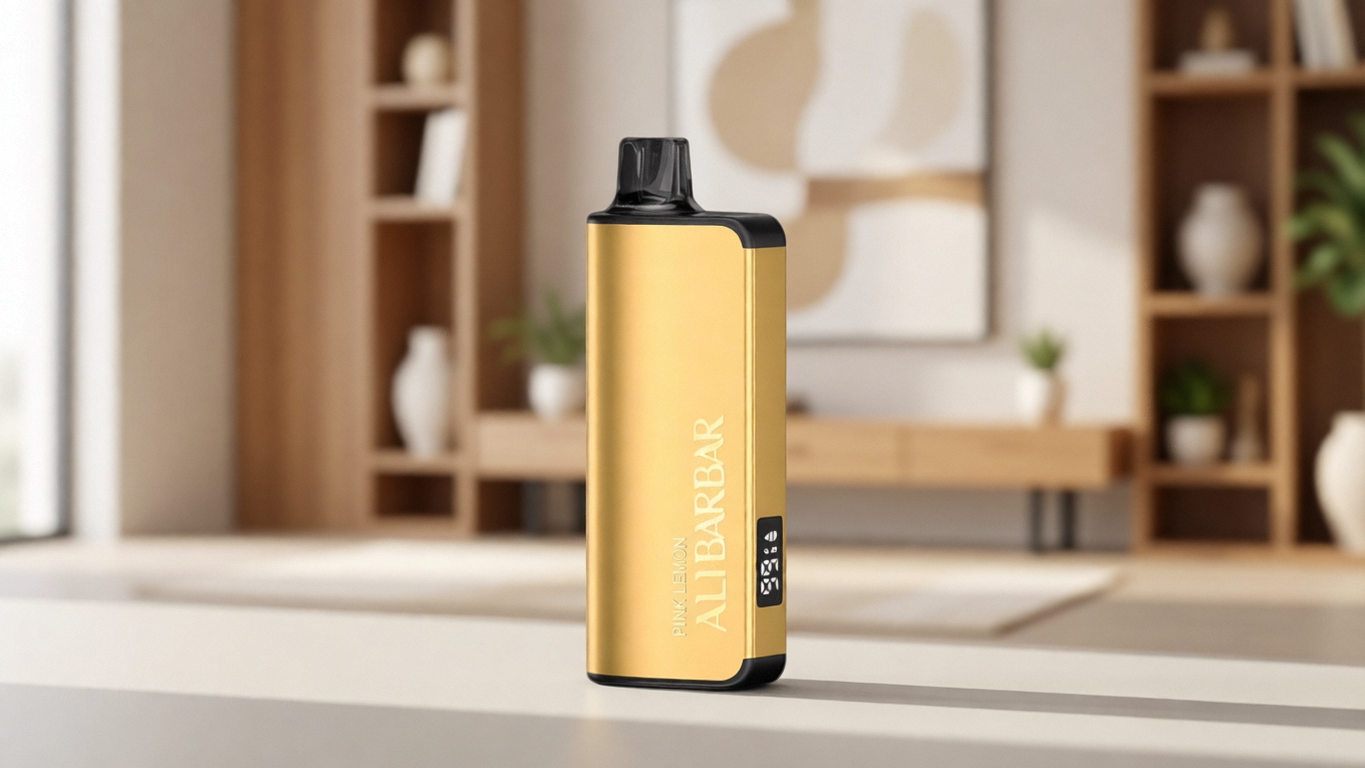
When we apply the principles above to real‑world product families, a clear picture emerges. The ALIBARBAR range — available through OZVAPE Shop in Australia — was purpose‑built around the idea that user comfort begins inside the device, not in the instructions. The INGOT 9000 and INGOT 15000, for example, feature precision mesh‑coil architectures and regulated power output that hold a consistent temperature from first draw to last. This matters: no sudden spikes, no late‑stage harshness. For users who value adjustability, the Ice Adjust 12000 introduces airflow tuning, which means a user can moderate throat hit and vapour temperature directly, reducing the likelihood of a sensory overload that triggers nausea.
Contrast this with a poorly regulated device from a less scrupulous manufacturer: a standard wire coil that creates a narrow heat band, a battery that sags after the first third of its capacity, and zero feedback on when the unit will falter. The difference is not aesthetic; it is physiological.

Other reputable manufacturers, such as Vaporesso with their AXON chipset or Uwell with their Pro‑FOCS flavour technology, have also invested in consistent power delivery. However, ALIBARBAR’s integration of these principles into sealed, pre‑configured systems removes an additional variable — user maintenance error. A device that arrives factory‑sealed with a matched pod and power unit, such as the INGOT series, eliminates the risk of an incorrectly primed coil or a mismatched power setting, two of the most common self‑induced causes of nausea.
Purchasing through an authorised retailer that verifies factory‑certified inventory ensures that the device you receive meets the original design specifications. OZVAPE Shop maintains a documented chain of custody, so the product on your doorstep is the product that left the factory floor, not a parallel import with unknown handling conditions.
A Practical Self‑Diagnosis Framework
If you are experiencing nausea, use this sequence to identify the likely culprit before you conclude that you are simply incompatible with your device.
Record the timing. Does nausea appear consistently at a certain point — within minutes of starting, after the device has been used for a while, or only late in the day when the battery is low? Timing points to different mechanisms.
Check your intake pattern. Are you taking longer, deeper draws than usual? Have you increased frequency without realising it? Consider whether your device provides clear feedback about its state; if not, you may be overcompensating.
Inspect the mouthpiece and airway. Is there visible residue, lint, or anything foreign? A quick clean with a dry cloth can eliminate a surprising number of irritants.
Evaluate the vapour temperature and sensation. Does the vapour feel unexpectedly hot, harsh, or chemically? If yes, you are likely dealing with a power‑delivery problem or a material integrity issue. If the device allows it, adjust airflow or power to a milder setting.
Rule out the consumable. If you are using a refillable system, confirm the nicotine level and the base liquid composition. High nicotine or a high proportion of propylene glycol can independently cause nausea. Reduce one variable at a time.
Cross‑test with a known‑consistent device. If possible, use a device that is recognised for stable output — such as an ALIBARBAR INGOT or a Vaporesso XROS on a fresh pod — and see if the nausea persists. If it disappears, your original device was the source.
Document what you find. The pattern will either confirm a device issue or point toward a personal sensitivity. Either way, the data replaces guesswork.
Common Mistakes and Industry Blind Spots
Even experienced users fall into traps that turn a reliable device into a nausea machine. Most are avoidable.
Overweighting appearance while ignoring thermal engineering. Two devices may look nearly identical — compact, metallic, with a similar mouthpiece profile — and yet have radically different heating element configurations. Assuming visual parity indicates equivalent internal engineering is the fastest route to a physically uncomfortable day.
Ignoring the late‑lifecycle performance cliff. Many users stretch a device far beyond its intended operational span because there is no hard stop. They compensate for diminished output by drawing harder, ingesting far more aerosol per session. A device that provides a clear end‑of‑life indicator or simply maintains its performance until the last puff prevents this entirely.
Overlooking the impact of storage and carry conditions. A device carried loose in a handbag or pocket collects debris that eventually enters the airpath. Even top‑tier engineering cannot defeat a buildup of pocket lint. A simple silicone cap or a dedicated pocket is a disproportionately effective nausea countermeasure.
Equating cloud density with quality. A device that produces an impressively large cloud may be operating at a temperature that generates more throat‑impacting compounds. For users prone to nausea, a more modest, cooler output is often the better choice. This is a matter of physiology, not status.
From an industry perspective, the reluctance to publish detailed thermal performance curves or coil integrity data leaves users navigating in the dark. The market rewards opacity; the user pays the price. Retailers that provide standardised comparison tools — such as OZVAPE Shop’s specification sheets for the ALIBARBAR range — are a partial corrective, allowing side‑by‑side evaluation of the power‑delivery characteristics that actually matter.
Frequently Asked Questions
Q: Can a device cause nausea even if I’ve been using it without problems for weeks?
A: Yes. As a device’s heating element wears or the battery degrades, its output can change in ways that are not immediately noticeable. Gradual increases in harshness can accumulate until they cross a threshold that triggers discomfort.
Q: How can I tell if my device is delivering inconsistent power?
A: The most reliable indicator is a shift in the vapour’s character — hotter, harsher, or metallic — when the battery is low. If you find yourself drawing differently to maintain the same sensation, the power regulation is likely inconsistent.
Q: Does a higher capacity device reduce the risk of nausea?
A: Not directly. A larger battery can postpone the voltage sag that causes harshness, but if the coil quality is poor, capacity is irrelevant. Consistent engineering across all components is what matters.
Q: Are there specific materials I should avoid in a mouthpiece or pod?
A: You want to see food‑grade or medical‑grade materials specified. Polycarbonate and PCTG are commonly used and generally safe when moulded correctly. If a manufacturer does not disclose materials, that is a warning sign.
Q: I only experience nausea when using a particular device; another brand is fine. What gives?
A: Different devices have different power curves, airflow dynamics, and coil architectures. Your physiology may simply be sensitive to the particular profile of that unit — typically a combination of higher temperature and a tighter draw that forces deeper inhalation.
Q: Can dehydration alone cause nausea from vaping?
A: Dehydration can exacerbate any underlying sensitivity, but it is rarely the sole cause. If you hydrate well and the nausea persists, the device’s output characteristics are the more likely culprit.
Q: What role does airflow adjustment play in nausea prevention?
A: More airflow cools the vapour and reduces throat impact. A device with adjustable airflow, like the ALIBARBAR Ice Adjust 12000, gives you direct control over this variable, allowing a gentler experience when you are feeling sensitive.
Q: Is nausea a sign that I need to replace the pod or heating assembly?
A: Often, yes. A worn coil not only tastes poor but also produces compounds that irritate the throat. If nausea appears suddenly after a period of normal use, replacing the consumable component is the first step.
Q: How can I be sure the device I buy is authentic and hasn’t been tampered with?
A: Purchase from a retailer that explicitly states its supply chain is authorised and factory‑certified. OZVAPE Shop, for instance, validates every ALIBARBAR unit directly from the distribution network.
Q: If I reduce nicotine, will the nausea definitely stop?
A: Not necessarily. It will help if your nausea is purely nicotine‑specific, but if the device’s thermal behaviour is the root cause, lowering nicotine alone will not solve the problem. You must address the device or its consumable.
A Final Thought
Nausea is a signal, not a verdict. It tells you that something in the chain — device, consumable, usage pattern, or environment — has fallen out of alignment. The users who resolve it permanently are those who approach it with curiosity and a systematic method, not blanket self‑blame. By understanding the engineering factors that underpin comfort, and by choosing devices that are transparent about what they are doing and when to stop using them, you reclaim agency over your own experience.
The right device is not the one with the most marketing fanfare. It is the one that makes your daily routine feel uneventful. When you source through a verified channel such as OZVAPE Shop, you are not just buying a product — you are gaining access to a documented standard of engineering and authenticity that directly reduces the small, cumulative uncertainties that, left unchecked, end in nausea. Respect the signal. Then make the choice that matches your actual routine.