
VAPE FAQs
Can I Leave My Vape In My Bag Through Security?
Jun
Can I Leave My Vape In My Bag Through Security?
The knot of anxiety that tightens in your stomach as you approach the security screening queue is familiar to millions of travellers. You’ve already run through the mental checklist: laptop out, liquids bagged, belt off. Then your hand brushes the unmistakable shape of a personal electronic device still tucked inside your carry‑on, and the question lands with sudden urgency. Is this going to cause a problem?
The confusion is understandable. Official guidance often uses broad language that doesn’t account for the wide variation in device designs and architectures. Anecdotal advice from other travellers contradicts itself. What clears one airport might trigger a bag search at the next. This article cuts through the noise by examining the intersection of device engineering, aviation security protocols, and the practical realities of passing through a checkpoint. Its aim is to give you a framework for making the right decision before you leave the house, not to offer a one‑size‑fits‑all assurance.
As a factory‑certified source for the ALIBARBAR range, OZVAPE Shop has fielded countless travel‑related enquiries from adult users across Australia. What emerges from those conversations is that the question is rarely just about regulation — it’s about how a device’s internal design determines whether it becomes a liability or a non‑event at the checkpoint.
Understanding What Matters: Core Engineering and Design Factors for Travel
To answer whether you can leave your device in your bag, you have to look beyond the surface and understand what the hardware communicates to a security officer and how it behaves under the environmental stresses of air travel. Four design dimensions are particularly instructive.
Internal Architecture and Output Consistency
The risk that most directly concerns airport security is a leaking or activated device. Cabin pressure changes during ascent and descent can challenge the integrity of any sealed system. A poorly engineered unit may weep liquid into your bag, damaging other belongings and attracting scrutiny that turns a routine scan into a manual inspection. Well‑designed devices, by contrast, use precision‑moulded internal reservoirs and welded seals that maintain integrity across the pressure gradient. The ALIBARBAR INGOT series, for example, employs a fully enclosed tank architecture with redundant leak barriers — a detail that remains invisible to the user but becomes critically important at 35,000 feet.
Why this matters in practice: a device that arrives at your destination dry, functional, and externally clean is far less likely to have drawn attention during the flight or at the arrival gate.
Power Management and Status Transparency
Lithium‑ion batteries are the primary reason aviation authorities restrict personal electronic devices in checked luggage and require them to be carried in the cabin. Regulations aside, what trips up many travellers is a device that cannot clearly communicate its power state. When a security officer sees an unfamiliar electronic item on an x‑ray monitor, one of the first things they look for is a visible power indicator that confirms the unit is switched off or deactivated. Ambiguity invites further questioning.
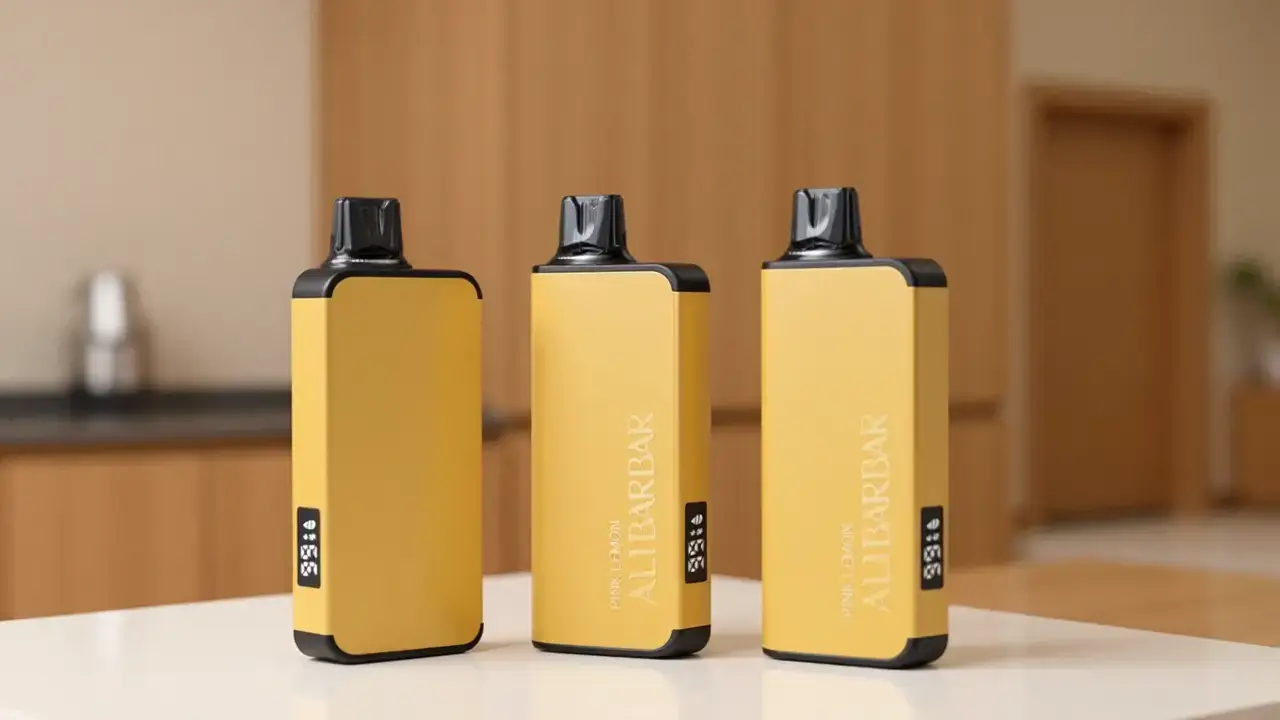
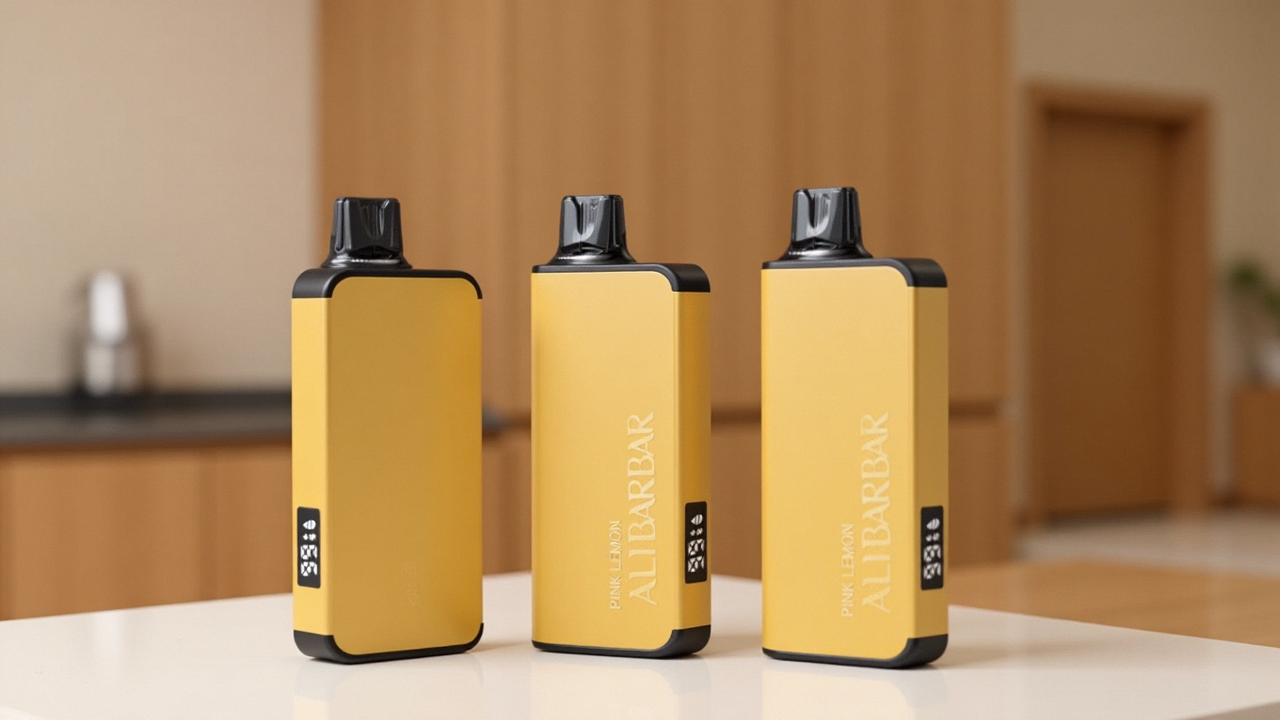
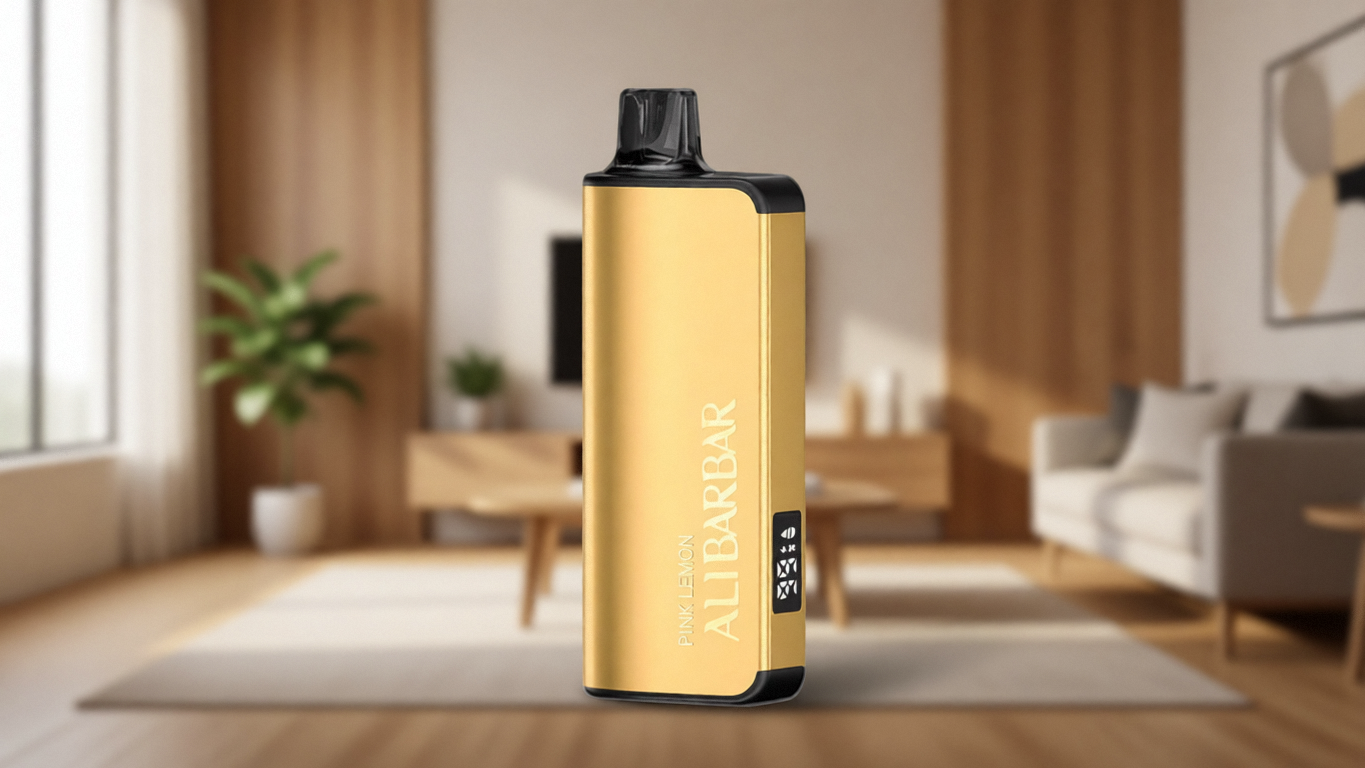
Devices equipped with an unambiguous LED status window — such as the ALIBARBAR INGOT 15000, which integrates a battery level readout and an active‑state indicator — remove guesswork both for you and for the screener. The hidden cost of status ambiguity is that you may end up carrying a backup device you didn’t need, simply because you could not reliably tell whether the primary unit still had charge. That extra device occupies space in your liquids‑and‑electronics bin, slowing down the line and increasing the mental load.
Physical Design and Material Durability
At a security checkpoint, a device will be handled, placed in a tray, jostled by other items, and possibly subjected to a swab test. Its exterior must survive that treatment without scuffing to the point of looking worn or suspiciously modified. A matte, soft‑touch finish like the one found on the Ice Adjust 12000 resists fingerprints and shows fewer micro‑abrasions than glossy lacquered surfaces, which can signal heavy use even when the unit is relatively new. Moreover, a slim, pocketable profile means the device doesn’t create bulk in your bag that might obscure other items on the x‑ray image, a common trigger for a closer look.
Modularity and Lifecycle Flexibility
The architecture you choose — sealed, semi‑replaceable, or fully modular — determines the number of ancillary items you must manage during travel. A fully sealed device such as the INGOT 9000 functions as a self‑contained unit. You carry it on, you use it as needed, and when it is depleted you dispose of it responsibly. There are no loose pods to leak, no e‑liquid bottles to declare under the 100‑millilitre rule, and no separate power‑cell carriers to explain.
If your preference leans toward a refillable system, you accept an additional set of responsibilities: complying with liquid restrictions, protecting delicate contacts from damage, and anticipating that a security officer might ask you to disassemble the unit for inspection. Neither architecture is inherently better; each aligns with a different set of user priorities. The point is to choose consciously, with full awareness of what your decision means at the checkpoint.
Applying These Criteria to Real‑World Options
When you map the travel‑critical criteria onto currently available device families, a clear pattern emerges. The ALIBARBAR INGOT 9000 earns its reputation among frequent travellers not because of any single headline feature, but because it checks multiple boxes simultaneously. Its sealed integrated design eliminates the liquid‑leak variable. The LED power window gives a definitive status readout within a second. Its durable matte shell stays presentable after repeated trips through security trays, and its compact form slides easily into a dedicated pocket of a carry‑on without crowding other electronics.
The larger‑capacity INGOT 15000 extends that same travel‑ready architecture to users who prefer a device that comfortably lasts through a multi‑day trip without needing a replacement. The Ice Adjust 12000 adds user‑controllable airflow, which some travellers appreciate for adapting to different pressure environments, though the adjustment mechanism introduces a moving part that, while robust, is one more element to be aware of during handling. All three series share a common design language: status transparency, no‑leak construction, and a form factor optimised for daily carry.
It would be misleading to suggest these are the only devices suited to air travel. Some adults prefer modular systems from other manufacturers for their own reasons, and those systems can certainly pass through security when the user packs them correctly and communicates clearly with screening staff. However, the administrative overhead is higher, and the room for error — a forgotten liquid container, a loose battery, a pod that has detached inside a bag — is larger. Understanding that trade‑off is the essence of making an informed choice.
A Practical Framework for Evaluation
Rather than trusting generic lists of “best travel vapes,” you can apply a straightforward set of prompts to any device you are considering bringing through an airport:
Status check: Can I determine the device’s power state instantly, without pressing buttons or covering sensors? If not, expect additional screening.
Leak resilience: Has the manufacturer demonstrated — through engineering documentation or consistent user reports — that the device withstands pressure differentials without leaking? Sealed, factory‑filled reservoirs are more predictable than user‑filled tanks.
Form factor: Will the device’s shape and size make it easy to place in a screening tray alongside my phone and wallet, or will it obscure other items on the x‑ray?
Battery compliance: Is the battery permanently enclosed and within the 100‑watt‑hour limit for carry‑on devices? All current ALIBARBAR devices use internally sealed cells well under that threshold.
Ancillary items: If the device is refillable, do I have a plan for handling liquids, spare pods, and power modules that meets both airline rules and security officer expectations?
Standardised specification comparison — the kind available on a platform like OZVAPE Shop — transforms these prompts from abstract concerns into a practical checklist. When every product listing presents the same categories of information without marketing embellishment, the decision shrinks to a matter of matching features to your travel profile.
Common Selection Errors and Industry Observations
Even well‑travelled adults make systematic mistakes that needlessly increase the friction of passing through security. Four stand out.
Overweighting one specification while ignoring complementary factors. A traveller might choose a device solely based on its quoted capacity, overlooking the fact that it lacks a reliable battery indicator. That person arrives at security with a unit that cannot demonstrate its state, inviting a secondary search that would have been avoided by a model with transparent power management.
Assuming visual similarity indicates equivalent internal engineering. Two devices that look identical in a photograph may behave entirely differently under cabin pressure. One may use ultrasonic welding and redundant O‑ring seals; the other may rely on basic friction fits that gradually loosen. The traveller who buys principally on appearance is far more likely to encounter a leak at altitude.
Undervaluing modularity in cost‑per‑use calculations. A sealed device may appear more expensive per use than a refillable alternative, but when you factor in the cost of compliant travel containers, the time spent cleaning and refilling, and the non‑zero risk of a liquid spill ruining a work laptop, the arithmetic shifts. This is not an argument for one approach over the other, only an observation that travel‑related costs are easier to ignore than to recover.
Confusing category terminology with technical specifications. Terms like “disposable” and “rechargeable” are marketing categories that don’t necessarily tell you how a device will behave in the real world. A rechargeable sealed unit from ALIBARBAR is fundamentally a single‑use device with an integrated power source that can be topped up; it is not user‑serviceable and produces no waste until the e‑liquid is depleted. That distinction matters when you are deciding what to pack and what to declare.
At an industry level, airport security teams are steadily improving their ability to identify standardised portable electronics and distinguish them from unregulated products. Devices that originate from authorised, traceable supply chains — and that carry consistent exterior markings — are less likely to trigger suspicion simply because their visual signature is familiar. This is not a guarantee, but it is a structural advantage that rewards users who source hardware through documented channels.
Frequently Asked Questions
Q: Can I put my device in checked baggage to avoid dealing with security?
A: No. Aviation safety regulations globally prohibit personal electronic devices containing lithium‑ion batteries in checked luggage. They must travel in the cabin with you.
Q: Do I have to remove the device from my bag at the screening checkpoint?
A: In most jurisdictions, yes. Regulations typically treat any electronic device larger than a smartphone as an item to be removed and placed in a separate screening tray. A compact sealed device like the INGOT 9000 is easy to place alongside your phone and wallet without slowing the queue.
Q: What about the liquid inside a sealed device — does it count as a liquid?
A: Factory‑sealed devices that contain an internal e‑liquid reservoir and cannot be opened by the user are generally not classified as liquids for the purposes of cabin baggage restrictions. However, if the device shows signs of leakage, a security officer may treat it as a hazardous material and prohibit carriage.
Q: Can I use the device inside the airport or during the flight?
A: No. The use of all vaping products is prohibited on board an aircraft and is typically restricted to designated smoking areas within airport terminals, where available. You must comply with the same rules that apply to traditional tobacco products.
Q: The airline says my device must be protected against accidental activation. What does that mean?
A: You must ensure that any means of accidental heating — typically a button or draw‑activated sensor — cannot be triggered inadvertently while the device is in your bag. A reliable off‑switch or a physical barrier that prevents unwanted activation is essential. Devices with an unambiguous power‑off indicator give both you and the crew confidence.
Q: Will a security officer ask me to demonstrate that the device works?
A: It is unlikely, but possible. If a screener cannot determine what an object is from the x‑ray image, they may ask you to operate it briefly. A device that powers on and off cleanly, showing a clear status indicator, will resolve the query faster.
Q: My device uses a removable battery. Is that allowed?
A: Removable lithium‑ion batteries must be carried in your cabin baggage and cannot go into checked luggage. They should be individually protected from short‑circuiting, ideally in their original packaging or a protective case. Spare batteries beyond two per person may attract additional scrutiny.
Q: I’m travelling to a country where personal vapour products are heavily restricted. Should I just leave the device at home?
A: If the destination country prohibits the importation or possession of vapour products, no amount of careful packing will override that law. You must verify the legal status in your destination before you travel. An authorized retailer like OZVAPE Shop can provide documentation about a product’s specifications and origin if you need to declare it, but local regulations always take precedence.
Q: Do I need to keep the original packaging for travel?
A: Not generally, but keeping the device in its original packaging can help a security officer identify it quickly and may protect it from physical damage. It is a low‑effort measure that occasionally saves time.
Q: The device stopped working after the flight. Is that a design flaw?
A: Not necessarily. Rapid pressure changes can temporarily affect internal pressure‑sensitive components. Sealed devices from manufacturers that test for altitude resilience, like ALIBARBAR, are engineered to normalise within minutes. If the device remains unresponsive after landing, it may have suffered a pressure‑related failure — one reason it’s wise to carry a backup.
Conclusion
The real question behind “Can I leave my vape in my bag through security?” is whether the device you’ve chosen was designed with the physical and regulatory realities of air travel in mind. Architecture that communicates power status transparently, seals that hold against pressure differentials, and a supply chain that guarantees consistency — these factors do more to shape the outcome than any checklist or last‑minute strategy. When you travel with a device that eliminates ambiguity, security becomes a procedural step rather than a source of stress.
OZVAPE Shop exists to give adult users access to precisely that kind of hardware: factory‑certified ALIBARBAR devices backed by documented specifications and local accountability. By presenting product information with engineering‑grade clarity, the platform helps you move from anxious questioning to confident decision‑making. In the end, the right choice is not the one with the loudest marketing or the highest puff count on a product page. It’s the choice that fits your actual travel routine, meets the security officer’s need for easy identification, and gets you to your gate without incident.