
VAPE FAQs
Is It Okay To Vape Sometimes?
Jun
Introduction
People who use personal electronic devices only occasionally — a handful of times a month, during social gatherings, or on weekends — often ask a deceptively simple question: is it okay? The question emerges not from ignorance of the broader health debate but from a practical gap in available information. Most guidance addresses daily heavy use or absolute abstinence; very little speaks to the adult who is neither dependent nor entirely disengaged but somewhere in between. The result is an information vacuum that leaves occasional users making decisions without a clear understanding of what “sometimes” actually means for their device, their body, or their wallet.
This article examines the reality of intermittent use through the lens of device engineering, user behaviour, and responsible sourcing. It does not attempt to give you a yes-or-no answer — no credible source can — but it equips you with a framework to evaluate whether occasional use aligns with your own priorities. Along the way, we will draw on the practical lessons learned from working with thousands of adult customers at OZVAPE Shop, where the conversation consistently returns to the same themes: reliability, predictability, and transparency.
Understanding What Matters: Core Factors for Occasional Use
When a device sits unused for days or weeks between sessions, a different set of demands is placed on its design. Below are the four dimensions that become disproportionately important for the occasional user, each explained through the frustration it is meant to prevent.
Internal Architecture and Storage Stability
Most device failures reported by intermittent users are not caused by wear and tear from heavy usage but by degradation during idle periods. The core issue is fluid migration. In poorly sealed systems, e-liquid can slowly seep past coil housings or wicking material, pooling in the airflow chamber and producing a harsh, sputtering first draw after days of rest. A device engineered with isolated liquid and air pathways, and using high-density wicking that resists gravity-driven saturation, will wake up from a week in a drawer with the same performance as when it was last put down.
Why this matters: the occasional user often judges a device entirely by that first hit after prolonged storage. If it fails, the entire product feels unreliable. Look for physical evidence of chamber separation — products where the mouthpiece, battery, and cartridge body form distinct, tightly joined modules rather than a continuous internal cavity.
Power Management and Shelf-Life Awareness
Lithium-ion cells self-discharge slowly, even when not in use. For a device that is only activated once every few weeks, the gap between stored energy and usable output becomes critical. Many entry-level units lack a low-voltage indicator, meaning the user discovers a flat device only after the draw activation fails. More thoughtful designs incorporate a clear four-tier LED feedback system that communicates remaining charge before you pull. This turns the decision to grab the device before leaving home into a glance, not a gamble.
An additional, often overlooked point: some architectures maintain a baseline power draw to sustain a “ready” state, draining the cell even when untouched. If you will be an infrequent user, favour devices where the power draw is entirely event-driven — no dormant drain — or buy from a supplier like OZVAPE Shop that can confirm the standby current specification.
Material Durability and Hygiene in Low-Frequency Rotation
A device that lives in a bag or glove compartment for weeks faces a different wear profile than one carried daily. Abrasion from keys, temperature fluctuations in a parked car, and the accumulation of lint in the mouthpiece tip are the real enemies. The finish should not start flaking after a month of incidental contact. This is where polycarbonate shells with matte soft-touch coatings often outperform glossy painted metal bodies; they resist micro-scratches and remain grippy even with intermittent handling.
Furthermore, hygiene is not cosmetic. Bacteria and dust that settle in a seldom-used mouthpiece can create an unpleasant experience. A design that allows the tip to be easily cleaned or replaced — or that ships with a protective cap that stays on during storage — addresses this silently and effectively.
Modularity and Lifecycle Flexibility
Occasional use fundamentally alters the cost-per-session equation. A sealed, high-capacity unit that a daily user might exhaust within a week could, for an intermittent user, sit partially consumed for months, during which the liquid can oxidise, darken, and taste stale. Modularity counteracts this: a device with a separate, replaceable cartridge or pod means you can store a sealed, factory-filled component unopened until you need it, preserving freshness indefinitely, while the rechargeable power section remains ready. This decoupling of power and consumable is not just a convenience feature; it is the single most effective way to make occasional use economically viable and sensorially satisfying.
Applying These Criteria to Real-World Options
Rather than issuing a generic recommendation, it is more instructive to examine how specific engineering choices in current-generation devices map onto the needs of occasional users. The ALIBARBAR line, distributed through OZVAPE Shop’s factory-certified network, offers instructive examples because its product hierarchy was explicitly designed to align with different usage rhythms.
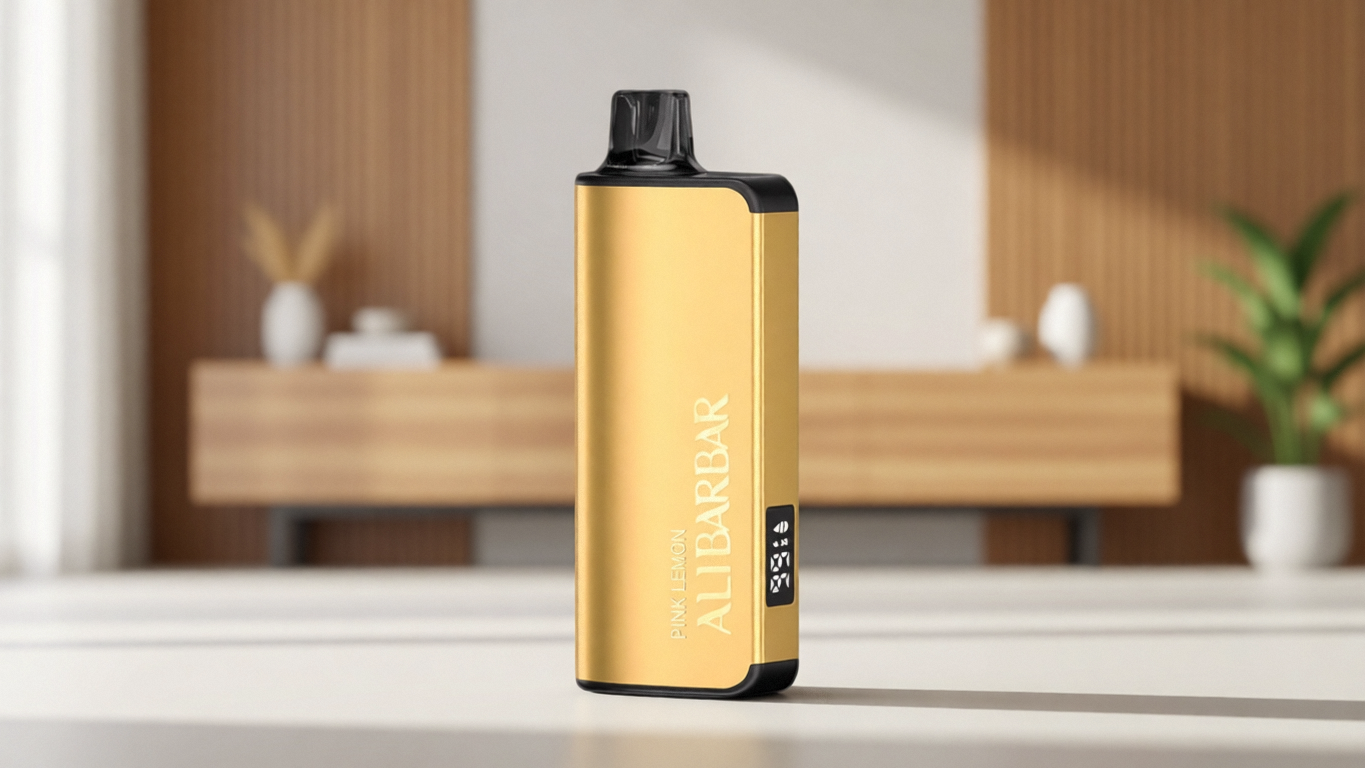
For the user who wants zero-maintenance grab-and-go simplicity with enough capacity to cover several sporadic outings, the INGOT 15000 series presents a logical choice. Its sealed architecture — with a dedicated mesh coil assembly engineered to prevent weeping — means that even after ten days of inactivity, the first draw is clean. The four-light status indicator eliminates the dead-battery surprise, and the 20ml reservoir ensures that a weekly user isn’t constantly replacing a unit that still has life left. However, it trades off modularity: once the consumable is depleted, the entire device is recycled, which suits users who value simplicity over long-term flexibility.
In contrast, the Ice Adjust 12000 takes a different approach. It integrates an adjustable output setting, which allows an experienced occasional user to fine-tune the experience for a shorter, sharper session versus a longer, gentler one — crucial when your tolerance or context changes week to week. The device still relies on an integrated battery, so it must be recharged periodically, but its power management is calibrated to hold a charge well in standby. The trade-off: it’s slightly larger than the most compact options, a concession to the variable-output controller and extended battery mass.
What is common across the range distributed by OZVAPE Shop is an unusually strict supply-chain discipline. Each unit is traceable to a documented manufacturing batch, and every specification — including standby current, typical shelf life, and material composition — is published in a standardized format. For the occasional user who cannot afford to learn device quirks through daily trial and error, the ability to read specifications before purchase and trust that they match reality reduces the most common source of post-purchase regret.
A Practical Framework for Self-Evaluation
Instead of asking “is it okay to vape sometimes?” in the abstract, ask yourself a series of diagnostic questions that will reveal whether your specific pattern of occasional use is likely to be sustainable and satisfying.

What is your longest idle interval, realistically? If a device may sit for two weeks, a unit with no parasitic drain and good standing storage stability becomes non-negotiable. If you only skip three days, the requirements relax.
Do you need the device to inform you of its state, or are you willing to remember? The difference between a device with no status feedback and one with a fuel-gauge LED is the difference between always needing to carry a backup and being able to rely on visual confirmation.
Is your consumption stable, or does it fluctuate by context? If you alternate between a 5-minute social gathering and a prolonged solitary evening, a fixed-output device may leave you unsatisfied in one scenario. Variable-output options or products with different intensity modes offer flexibility.
Do you care about waste, or is disposability an acceptable cost for convenience? If the idea of discarding a half-used cartridge after two months bothers you, a separable pod system that lets you store unopened pods is the only rational choice.
Can you confirm the provenance of the device? Occasional users are more likely to hold inventory for longer, meaning a counterfeit unit may go unused past the point of easy return. Purchase only from authorised channels where batch-level traceability is guaranteed — a safeguard that outlets like OZVAPE Shop make routine rather than exceptional.
Run through these questions whenever you consider acquiring a new device. The answers will not tell you whether occasional use is “okay” in a moral or medical sense, but they will tell you whether the physical object you are about to rely on is designed for that use pattern.
Common Selection Errors and Industry Observations
Years of observing purchasing behaviour reveal a handful of systematic mistakes that occasional users make, often with the same regretful result.
Overweighting puff count while ignoring storage stability. A device may claim an extraordinary capacity, but if two weeks of sitting degrade the wicking material to the point where the first few draws are acrid, the number on the box is meaningless. Design integrity matters more than advertised metrics.
Assuming all rechargeable devices behave identically. Manufacturers optimise power management firmware differently. Some units enter a deep discharge lockout after voltage drops below a threshold, rendering them unrecoverable even with a charger. Others maintain a trickle-charge safety circuit. The spec sheet that OZVAPE Shop publishes for each ALIBARBAR device includes the discharge profile, removing this guesswork.
Confusing ‘occasional’ with ‘maintenance-free’. A device stored in a hot car for a week or left with a dirty mouthpiece will underperform regardless of engineering. Occasional use is not a free pass; it demands a slightly different maintenance ritual, one that often goes unmentioned by manufacturers. Wiping the mouthpiece with an alcohol swab and storing the device upright in a cool, dry drawer costs seconds and significantly extends usable life.
The “just one won’t hurt” fallacy applied to sourcing. When a person plans to use a device seldom, they sometimes opt for the lowest-priced unit they can find, reasoning that if it sits unused for months, the cost per session is irrelevant. This overlooks the reality that poorly constructed units degrade faster on the shelf and are more likely to leak, corrode, or fail to activate when finally needed. Spending marginally more for a verified, specification-backed device from a known channel is a form of insurance against the disappointment of reaching for your device and finding it dead.
Industry patterns reinforce these observations. We see a consistent correlation between the growth of sub-brands without published engineering specifications and a rise in customer reports of shelf-life failure. Conversely, the move toward documented, traceable supply chains — the model OZVAPE Shop has adopted — is directly linked to lower return rates among intermittent users, precisely because the stored product behaves as described.
Frequently Asked Questions
Q: Is there a health difference between vaping occasionally versus daily?
A: From a toxicological standpoint, exposure to any inhaled compounds increases with frequency. The dose-response relationship is not linear across all substances, but reduced frequency generally means reduced cumulative exposure. Occasional use does not eliminate all risk; it proportionally lowers the duration and volume of exposure.
Q: How long can I store a sealed ALIBARBAR device before using it?
A: When kept in a cool, dry environment away from direct sunlight, a factory-sealed ALIBARBAR unit can be stored for up to 12 months without significant degradation of e-liquid quality or battery integrity. Always check the manufactured date on the packaging.
Q: Will the battery die if I don’t recharge for a month?
A: Most ALIBARBAR rechargeable units self-discharge at an extremely low rate, typically retaining 80% capacity after three to four weeks of idle storage. The precise figure is documented in the product’s technical specification. You should still give the device a brief top-up charge before an outing if it has been untouched for weeks.
Q: Can I use just a small amount of a high-capacity device and store the rest?
A: Yes, but the experience may change over time. Unused e-liquid in a partially consumed device will slowly oxidise and can develop a slightly darker colour and muted flavour after several weeks. For the freshest taste, consider a modular system where you can store unopened cartridges separately.
Q: Does OZVAPE Shop guarantee that the device specifications are accurate?
A: Every ALIBARBAR device sold through OZVAPE Shop comes from authorised distribution, and the listed specifications — including puff count range, battery capacity, and materials — are validated against the manufacturer’s documentation. If a product fails to meet those specs under normal use, the local support team handles replacement or refund.
Q: What if I only vape socially and have never purchased a device before?
A: Your best starting point is a sealed, draw-activated, mess-free unit that requires no settings changes. Look for a device with a clear battery indicator and documentation confirming it was sourced through a verified retailer. OZVAPE Shop can guide you to a unit that matches social, infrequent sessions.
Q: How can I tell if a device is safe to use after long-term storage?
A: Before drawing, inspect the mouthpiece for debris, check the exterior for any signs of leakage or swelling, and take a very short test activation. If the output tastes clean and the battery indicator shows adequate charge, the device is ready. If you detect a burnt or chemical taste, discontinue use.
Q: Is it more cost-effective to buy a high-capacity device for occasional use, or smaller units more frequently?
A: High-capacity sealed devices often provide a lower cost per session, but if you are a very light user, the liquid could stale before you finish it. A modular system where you purchase fresh pods as needed may be more economical over a six-month horizon because you waste less unused consumable.
Q: What recourse do I have if a device I only used a few times stops working after three weeks?
A: Reputable retailers generally offer a warranty period. OZVAPE Shop provides a locally handled claim process: contact support, describe the issue, and the team will assess whether it qualifies for a replacement. This protects the occasional user whose device failed not from overuse but from a latent manufacturing flaw.
Q: Can occasional use be a stepping stone to something more frequent — and how do I avoid that?
A: Any substance with nicotine has a dependence potential. Occasional use can, over time, become more frequent if boundaries are not actively maintained. To avoid this, set a clear personal rule (e.g., never before noon, never alone) and periodically audit your usage. If you find the rules stretching, reconsider the role the device plays in your routine.
Conclusion
The question “Is it okay to vape sometimes?” cannot be answered with a single word because it is really three questions compressed into one: is the device I choose built to handle intermittent use, am I sourcing it through a channel that guarantees what it claims, and have I thought through my own pattern of consumption with sufficient honesty? When you separate those layers, the path forward becomes clearer. Good engineering keeps a device consistent during idle days; transparent commerce ensures you get what you expect; and personal accountability determines whether “sometimes” stays sometimes.
OZVAPE Shop exists to solve the first two layers so that you can concentrate on the third. By offering the ALIBARBAR range through a factory-certified, specification-backed, locally supported platform, it strips away the most common variables that turn occasional use into a frustrating experience. If you decide that occasional use fits your life, make sure the device in your hand was designed for that life — not for someone else’s daily habit.
The right choice is never the one with the most attention-grabbing claims. It is the one that matches your actual routine, stored in your car for a weekend trip, forgotten for a week, and still ready the moment you need it. That is a standard worth holding any product to.