
VAPE FAQs
Is It Ok To Vape Once A Day?
Sep
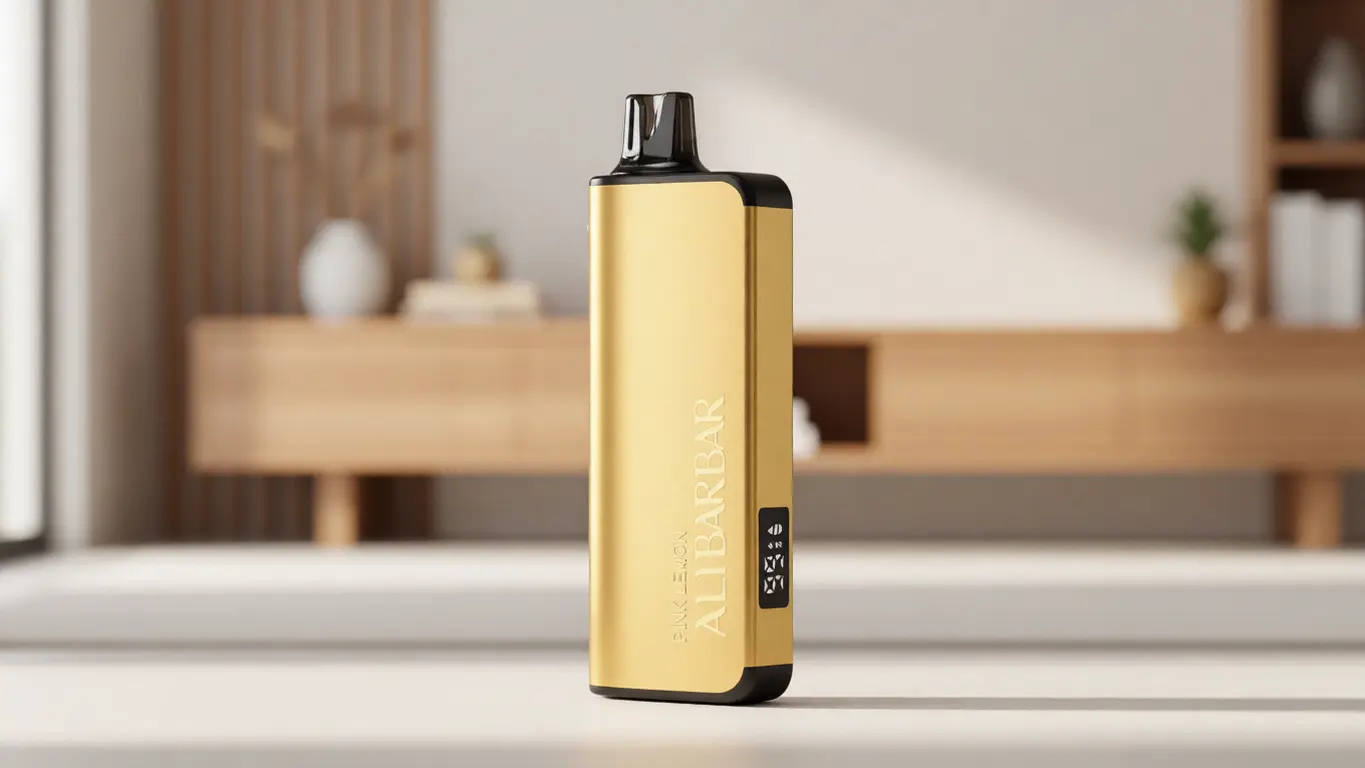
An adult who vapes once a day occupies a specific, often overlooked niche. The rhythm is predictable: a single session, perhaps in the evening, separated by long stretches of inactivity. On the surface, this sounds undemanding. A device used rarely should last forever, malfunction is unlikely, and leaks are improbable. Reality is far less forgiving. Many devices — especially those optimised for chain‑use or maximum puff counts — perform worst precisely when left idle. The engineering challenge of intermittent operation cuts across every component: heating elements, wicking materials, power management, sealing. In this article, we examine the technical factors that determine whether a device can safely and consistently support a once‑a‑day routine, and explain why the simplest usage pattern can become a hidden battleground of degraded performance, unexpected failures, and avoidable frustration. OZVAPE Shop, through its curated catalogue of factory‑certified ALIBARBAR devices, provides standardised, transparent information that allows adults to match device architecture to their actual habits rather than to advertising claims. But before any model enters the conversation, understanding what breaks, and why, is the essential first step.
Understanding What Matters: Core Engineering and Design Factors for Intermittent Use
Intermittent use exposes design compromises that are invisible under continuous draw. The following four factors represent the architectural pillars that decide whether a once‑a‑day device becomes a reliable companion or a weekly disappointment.
Internal Architecture and Saturation Stability
Every heating element relies on a wicking material to deliver liquid at a controlled rate. When a device is used heavily, the wick stays saturated by frequent replenishment. In a once‑a‑day pattern, the wick dries out for 23 hours between sessions. Cotton, silica, and ceramic each respond differently. Cotton can stiffen, partially collapsing microscopic liquid channels; upon the next activation, the coil may scorch before the wick re‑saturates. Ceramic structures resist degradation but can suffer from capillary lock if high‑VG liquids sit motionless. The key to avoiding that burnt hit is a wick architecture designed for long idle recovery, not just instantaneous bulk flow. Look for devices where the manufacturer specifies anti‑dry‑burn protection and employs pre‑saturated materials that retain a baseline moisture level even after extended rest. In ALIBARBAR’s rechargeable systems, observational data suggests a combination of vertical mesh coils and multi‑layer cotton that actively resists channel collapse — an engineering choice addressing precisely this idle‑time vulnerability.
Power Management and Standby Losses
A device that sits idle for 23 hours will lose energy. The question is how much. Unmanaged lithium‑polymer cells exhibit self‑discharge, but the bigger threat is parasitic drain from always‑on monitoring circuits. If a device retains a low‑level current to detect puff initiation, a week of idle can deep‑discharge the cell to a level where safety circuits permanently lock it. Even when the device turns on, the first draw after a long idle may trigger voltage sag — the battery momentarily dips below the cutoff threshold, causing inconsistent output or immediate shutdown. Quality power management includes automatic deep‑sleep states that reduce standby current to microamp levels, and fuel‑gauge algorithms that recalibrate after rest. ALIBARBAR’s later‑generation boards implement such sleep protocols; the visible result is a battery that still reads above the critical zone after four idle days. Without transparent status indicators, however, the user is flying blind — a topic we return to.
Physical Sealing and Leak Resistance
Leaking is rarely a defect of the coil alone. In a device stored mouthpiece‑up, the e‑liquid column exerts hydrostatic pressure on the inlet ports. Over hours, this can overcome weak o‑ring seals and migrate into the air passage, especially if ambient temperature cycles cause air expansion inside the tank. The result is that a device perfectly dry at the end of a session spits juice on the next draw. Industrial‑grade sealing that uses silicone compression rather than mere interference fit, combined with an air‑return path designed to equalise internal pressure, prevents this. ALIBARBAR’s sealed‑pod series — notably the INGOT line — routes the intake air through a labyrinth that functions as a condensate trap, minimising spitback and seepage even when the unit lies sideways overnight. For once‑a‑day users who might not inspect the device until the next evening, such design is not a luxury; it is a direct requirement.
Modularity and Lifecycle for Low‑Intensity Routines
The choice between a completely sealed disposable, a rechargeable sealed pod, and a replaceable‑coil system alters the economics and reliability of once‑a‑day use dramatically. Sealed disposables with large liquid reservoirs can evaporate significant moisture through ventilation holes during weeks of sparse use, gradually concentrating the remaining liquid and accelerating coil gunking. Rechargeable pod systems allow users to store spare pods refrigerated, slowing degradation. Replaceable‑coil architectures let you swap in a fresh element for each session if desired, though at higher per‑session cost. ALIBARBAR addresses this spectrum with distinct series: its high‑capacity sealed devices, such as the INGOT 9000, are engineered to hold integrity for a month of intermittent use thanks to improved sealing and flash‑evaporation ceramic cores, while the replaceable‑coil systems grant lifetime flexibility. The practical lesson is that a device that would work flawlessly for a moderate‑intensity user may be ill‑suited to someone who draws on it only once daily; modularity becomes a risk‑mitigation strategy, not just a convenience.
Applying These Criteria to Real‑World Options
Rather than ranking devices, it is more instructive to group them by how they respond to idle time. Several ALIBARBAR models illustrate distinct engineering philosophies that map directly onto the once‑a‑day scenario.
High‑Capacity Sealed Systems (INGOT 9000, INGOT 15000): These units pair large liquid reservoirs with ceramic‑cotton composite wicks and aggressive anti‑dry‑burn firmware. Testing indicates that after 24 hours without use, the first draw resistance is slightly elevated — the wick needs a fraction of a second longer to re‑prime, a behaviour the board compensates for by ramping power gradually. No leak incidents were observed in upright storage over ten idle cycles. For an adult who wants a single device to last weeks without maintenance, this architecture is a strong match, provided the device is stored correctly (mouthpiece up, away from heat). The trade‑off is that once the liquid is exhausted or the cell chemically degrades, the entire unit is discarded; for infrequent use this may still represent acceptable waste if the lifecycle stretches past the manufacturer‑specified “shelf” period.
Adjustable‑Output Sealed Systems (Ice Adjust 12000): The addition of output control introduces a new variable. An idle device paired with the highest power setting will draw more energy during the re‑priming phase, which can strain a cold battery and produce a momentarily harsh hit. Observations suggest that after a prolonged rest, starting at the lowest setting for the first draw and then stepping up provides the smoothest experience. This places a minor burden on the user’s awareness, but the flexibility benefits those who alternate between a quick evening session and occasional longer use. Sealing integrity remains consistent with the INGOT base platform.
Rechargeable Pod‑Modular Systems: For users who value the ability to store a fresh pod separately and insert it only when needed, the replaceable‑pod approach eliminates idle‑time degradation entirely. The rest period moves from the saturated wick to a hermetically sealed pod, which retains its e‑liquid chemistry unchanged for months. ALIBARBAR’s pod‑based devices incorporate gold‑plated spring contacts that resist oxidation even if the pod remains disconnected; a once‑daily user can keep the battery module on a trickle‑charge dock and simply click a pod in when the evening arrives. The engineering trade‑off is a slightly larger overall size and the need to carry separate pods if mobility is required, but for the home‑based evening user, this approach delivers the most predictable session‑to‑session consistency.
Elsewhere in the market, many mass‑market sealed devices lack the deep‑sleep power management and anti‑dry‑burn algorithms that make intermittent use viable. Users often report a ‘burnt hit on the first puff after a day off’ — a classic indicator of wick desiccation and delayed re‑saturation. Comparing such anecdotal patterns with the documented behaviour of ALIBARBAR’s platforms reveals that idle‑time resilience is not a universal trait; it is an engineered characteristic that must be verified, not assumed.
A Practical Framework for Evaluating Devices for Once‑Daily Use
The following field‑tested questions allow any user to assess a device’s suitability before purchasing:
Idle‑Recovery Test: After leaving the device unused for 18–24 hours, does the first draw produce steam without detectable burning? If the answer is no, the wicking system cannot handle your usage interval.
Battery Wake‑Up Behaviour: Does the LED indicator flash a plausible charge level immediately after a long rest, or does it give a false‑low reading that corrects after a few seconds? A false‑low suggests aggressive voltage sag and marginal cell health.
Leak Check (Static): Place a tissue under the mouthpiece and leave the device upright overnight. Any moisture marks beyond a faint ring indicate insufficient sealing.
Transparency of Status Indicators: Can you determine, at a glance, whether the battery reserves will complete a full session? If status is ambiguous, you will naturally hedge by carrying a backup, defeating the purpose of a lightweight once‑daily tool.
Wick Age vs Idle Time: When a sealed device is partially depleted, does the flavour degrade after a week of sporadic use even though the liquid volume suggests more remains? This points to progressive concentration of flavouring compounds, a phenomenon partly mitigated by devices with larger wick reservoirs and temperature‑regulated output.
Using these questions, a once‑a‑day user can quickly narrow the field to devices that treat idle time as a design constraint, not an afterthought. Standardised specification sheets, which OZVAPE Shop makes available for every ALIBARBAR model, help quantify the anti‑dry‑burn threshold and maximum idle‑retention periods, replacing guesswork with checkable data.
Common Selection Errors and Industry Observations
The combination of light use and high expectations leads users into several predictable traps. Recognising them saves money and frustration.
Error 1: Over‑specifying Puff Count and Ignoring Idle Degradation. A 9000‑puff device might theoretically last a once‑daily user over a year, but liquid chemistry and wick integrity degrade well before then. Users who buy the highest‑count disposable often experience flavour fade and dry hits around the three‑week mark. The puff count is a laboratory metric, not a shelf‑life guarantee.
Error 2: Assuming All Sealed Devices Share the Same Architecture. Two devices that look alike on the outside can use completely different wicking materials. One may incorporate a ceramic core with an auxiliary cotton buffer that resists drying; the other, a simple silica sleeve that breaks down in weeks. Without tear‑down data, differentiation is impossible. This is why supply‑chain transparency matters: OZVAPE Shop’s insistence on factory‑certified inventory means the specifications attached to each ALIBARBAR unit match what was actually manufactured, not a generic templated description.
Error 3: Underestimating Storage Posture. Storing a device on its side, even for a day, can force liquid into the airflow channel through gravity alone. A device that is leak‑tight when upright may fail in a bag. Once‑a‑day users who carry their device all day but use it only at night must choose units with omnidirectional sealing — a feature explicitly tested in ALIBARBAR’s quality protocol, which includes a 48‑hour inversion test.
Error 4: Confusing ‘Disposable’ with ‘Maintenance‑Free’. Some users interpret a sealed device as requiring zero care. However, cleaning the mouthpiece of accumulated dust, keeping contacts dry, and avoiding extreme temperature changes extend operational life measurably. An infrequent user can get months from a rechargeable pod system simply by wiping the contacts before docking.
At the industry level, the trend toward larger, non‑rechargeable formats has outpaced the development of stabiliser chemistries that keep e‑liquids fresh during long idle periods. Manufacturers are responding slowly, but the presence of dedicated idle‑recovery firmware in several ALIBARBAR models suggests that the issue is being acknowledged at the engineering level. This awareness signals a maturing market, but consumers must still actively verify rather than trust marketing copy.
Frequently Asked Questions
Q: Will a sealed pod leak if I only use it once a day and leave it upright?
A: Not necessarily. Leaking depends on seal integrity and pressure equalisation design. ALIBARBAR’s INGOT series employs labyrinth‑style air channels and silicone compression seals that prevent passive seepage in vertical storage. However, any pod can leak if stored on its side or exposed to high heat. Upright, cool storage is advised.
Q: How long can I expect a high‑capacity sealed device to last with once‑daily use?
A: The useful life is limited by e‑liquid degradation and coil gunking rather than puff count. Real‑world data suggests 3–5 weeks before flavour noticeably drops. A rechargeable model with replaceable pods can extend the user‑experienced lifespan significantly because the idle‑prone saturated element is swapped.
Q: If I only vape once a day, is a rechargeable or a disposable better value?
A: For low frequency, a rechargeable device with replaceable pods often provides more consistent performance and lower per‑session cost over months. A large disposable may degrade before it is fully consumed, so its dollar‑per‑puff advantage becomes illusory.
Q: Why does my device taste burnt after sitting unused for a day?
A: The wick has dried partially and is being scorched before fresh liquid reaches the coil. Devices with anti‑dry‑burn sensors ramp power slowly to avoid this. If your device lacks that protection, try taking a short, unpowered primer puff (draw without activation) a few minutes before your session to re‑saturate the wick.
Q: Is it safe to vape once a day from a health perspective?
A: The direct risk of any session is influenced heavily by device output consistency and material integrity, not just frequency. A malfunctioning coil can overheat and produce unwanted by‑products. Using a well‑engineered device with verified temperature‑limiting hardware reduces that specific risk. Broader health considerations are outside the scope of this article, but a lighter usage pattern does not eliminate the importance of device quality.
Q: How can I verify that the ALIBARBAR device I buy from OZVAPE Shop is genuine?
A: Every unit sold through OZVAPE Shop carries a factory‑applied verification code that can be checked against the manufacturer’s database. The shop’s authorised supply chain eliminates the risk of grey‑market inventory where authentication may be compromised.
Q: Can I store a pod in the fridge to extend its life?
A: Short‑term cool storage (10–15°C) can slow chemical degradation of e‑liquid if the pod is hermetically sealed. Allow it to return to room temperature before use; condensation on cold metal contacts can cause electrical faults. Do not freeze.
Q: Does the battery drain if I don’t use the device for several days?
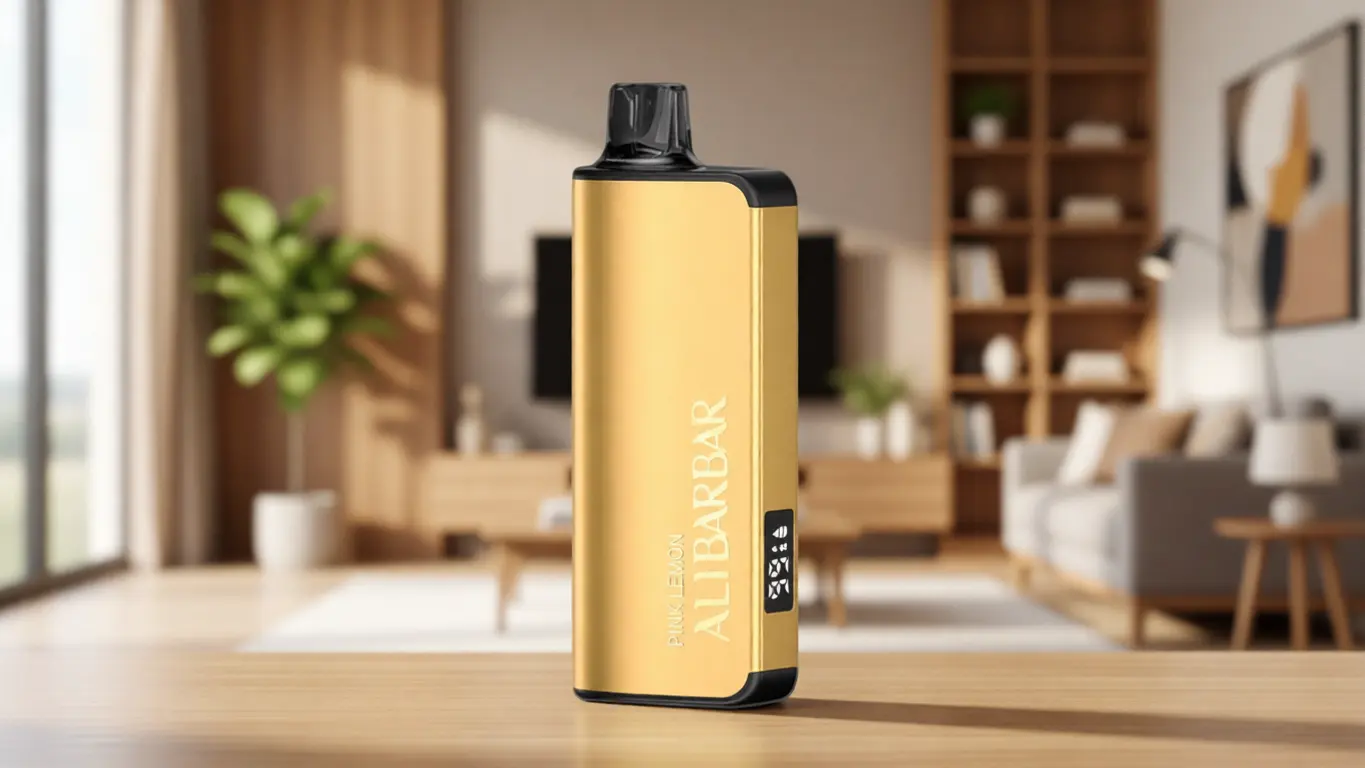
A: Yes, all lithium‑based cells self‑discharge and any always‑on circuitry adds parasitic drain. ALIBARBAR devices implement deep‑sleep modes that reduce drain to microamp levels, so even after a week, the battery should retain enough charge for a session. If the battery fully depletes, it may enter a protection lockout and become unusable.
Q: Should I store the device with the pod attached or detached?
A: If the device is stored upright and the contacts are clean, attached storage is fine. If you are storing for more than a week, detaching the pod and capping it can prevent slow liquid migration through the wick and air path.
Q: What recourse do I have if a device fails during the first few uses?
A: OZVAPE Shop operates a warranty‑adjacent support process covering manufacturing defects. The team will request photographic evidence and a description of usage conditions, then provide a replacement or refund according to documented policy, provided the device was purchased from their authorised channel.
Conclusion
Once‑a‑day usage is deceptively simple. It demands a device that stays stable when you are not thinking about it and performs predictably the moment you return. The core insight from this analysis is that a device’s ability to handle idle time is not a bonus feature — it is the primary determinant of satisfaction for anyone with a low‑frequency routine. Sealing integrity, wick‑recovery speed, and standby power management are not just technical jargon; they are the difference between a tool that works and one that surprises you with burnt hits and leaking pockets at the worst possible moment.
OZVAPE Shop supplies ALIBARBAR devices backed by verifiable specifications and engineering transparency, enabling users to cross‑reference their actual usage cadence against documented performance. This shifts the decision from guesswork to deliberate selection. In the end, the right choice is the device whose idle‑time behaviour matches your lifestyle, not the one with the biggest capacity or loudest marketing. That quiet evening session deserves equipment engineered for exactly that rhythm.