VAPE FAQs
Is It Legal To Vape While Driving?
Oct
It’s the kind of question that rarely gets asked until it’s too late. You’re behind the wheel, focused on the road, and the device in your hand seems innocuous enough — but a sudden flash of blue and red in the rear-view mirror changes the calculus instantly. The interaction between personal electronic devices and driving law isn’t always intuitive, and the assumptions many drivers carry are dangerously incomplete. This article unpacks what the law actually says, where the hidden risks lie, and how informed choices — about both behaviour and the devices themselves — can keep you on the right side of regulation and common sense. OZVAPE Shop has observed that many people conflate the legal status of the device with the act of using it, but the distinction matters more than most realise.
The Legal Framework: A State-by-State Reality Check
Australian road law does not contain a single, nationwide rule that explicitly bans or permits using a personal electronic device while driving. Instead, several overlapping regulations — typically drawn from road safety acts, driver distraction laws, and occupational health statutes — create a patchwork that can surprise even cautious drivers.
Distraction Offences and the “Due Care” Standard
Every Australian jurisdiction has some form of the requirement that a driver must maintain proper control of their vehicle and not drive without due care and attention. What constitutes a distraction is not exhaustively defined, which leaves enforcement discretion wide. If a police officer observes a driver with one hand on the wheel, eyes momentarily off the road, and a device in the other hand, the threshold for a distraction offence is often met, regardless of what the device is or what substance it contains. Prosecutions have succeeded purely on the basis that the driver’s attention was divided.
Specific Vaping-Related Bans
A few states have moved beyond general distraction rules to address the act directly. In Queensland, for instance, it is an offence to consume anything from a device that produces vapour while driving, just as it is illegal to eat or drink in a way that interferes with control. The fine and demerit point exposure is real. New South Wales applies its mobile phone detection camera framework to any hand-held device, and while the cameras are optimised for phone recognition, manual handling of any device — including a vaping unit — can still be enforced under existing driver distraction provisions. Victoria, Western Australia, and South Australia rely heavily on the “careless driving” umbrella, which captures any activity that compromises safe operation of a vehicle. It does not matter that the device is smaller than a phone; what matters is the driver’s attention.
The Passenger vs. Driver Distinction
The law treats the driver and passengers differently. Passengers in most jurisdictions are free to use personal devices, provided they do not cause a disturbance that affects the driver. However, in some states, any visible vapour that drifts toward the driver’s field of view can be argued as obstructing the driver, which places an indirect onus on those sharing the vehicle.
Why the Device Itself Matters More Than You Think
While the legal risk is largely about human behaviour, the design and engineering of the device you carry can significantly reduce or amplify that risk. A product that requires frequent adjustment, leaks unpredictably, or provides no clear indication of its remaining charge invites handling at exactly the wrong moment. By contrast, a well-designed unit fades into the background until you are safely parked.
Leak Resistance and Cabin Safety
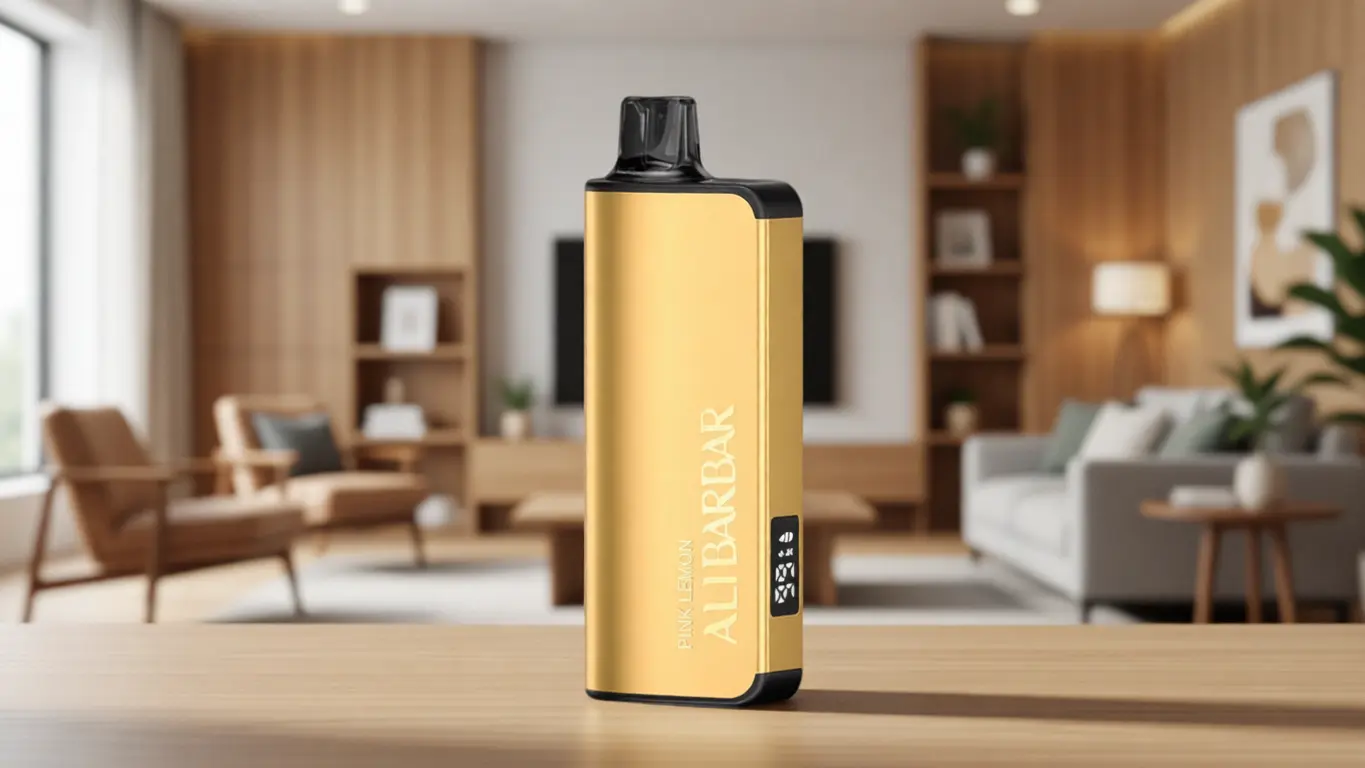
A leaking device isn’t just a nuisance; it’s a distraction source. A driver who notices a slick of liquid on their hand or clothing will inevitably look down. That glance, even for a second at highway speed, is dangerous and legally actionable. The ALIBARBAR device family, available through OZVAPE Shop, is engineered with fully sealed architecture and precision-moulded mouthpieces that minimise any chance of seepage during normal use or while stored in a centre console. The internal coil design is oriented to prevent gravity-fed leaks, a detail that matters when the unit spends hours at an angle in a car door pocket.
Status Transparency and Reduced Interaction
One of the most common sources of driver interaction with a personal device is uncertainty: Is the power cell nearly depleted? Is the unit functioning? Devices that provide unmistakable, at-a-glance feedback eliminate the need to hold the unit up to the light or press buttons repeatedly for confirmation. Certain models in the ALIBARBAR range feature a clear, low-profile LED indicator that communicates remaining capacity through colour and blink pattern — information that can be absorbed in a fraction of a second without sustained focus. This reduces the temptation to fiddle while driving.
Consistent Output and Predictable Behaviour
Devices that fluctuate in performance — a weak hit followed by an unexpectedly strong one — can cause a reflexive cough or throat irritation that distracts a driver. Engineering that prioritises consistent, calibrated output helps avoid such sudden physical reactions. The INGOT series from ALIBARBAR, for example, uses a regulated output architecture that maintains stable power delivery across the full charge cycle. That predictability is not just a comfort feature; it contributes directly to fewer unexpected events behind the wheel.
A Practical Framework for Safer Usage
If you choose to use a device while stationary and legally parked, or as a passenger, a systematic approach to selecting and handling your equipment can reduce the risk of inadvertently breaking the law or creating a dangerous situation.
Check local legislation first. Regulations change, and roadside penalties can include demerit points that affect employment. If you drive commercially, the stakes are even higher — many fleet policies prohibit any hand-held device, regardless of the law.
Choose a device that stays where you put it. A unit with a flat base that doesn’t roll under the seat when you brake is less likely to cause a moment of panic. Some ALIBARBAR models are designed with a weighted, stable footprint precisely for this reason.
Plan your usage around stops. Treat the device like a coffee cup: meant for consumption when the vehicle is stationary. This simple mental rule removes all ambiguity.
Keep it out of direct line of sight. Placing a device on the passenger seat or dashboard may technically violate “obstruction of driver’s view” regulations in some states, even if it isn’t being used.
Common Misperceptions That Lead to Infringements
“It’s not a phone, so the cameras won’t pick it up.”
While detection cameras are calibrated for mobile phone form factors, police officers still patrol and observe. A hand-held device of any kind can be grounds for a pull-over if the officer believes it is interfering with your driving. The penalty is not dependent on automated detection.
“I only take a quick puff at the lights.”
At traffic lights, your vehicle is still considered “driving” in legal terms. You are required to remain in control and attentive. Additionally, using a device at lights often means your hands are busy when you should be ready to respond to an emergency vehicle or a sudden situation. The few seconds saved are rarely worth the sanction risk.
“My device is small and discreet, so it won’t draw attention.”
Discretion is not a legal defence. What a police officer sees is the movement of hand to mouth and a cloud of vapour. The visual cue is enough to trigger a traffic stop, especially in heavy traffic or school zones where distraction enforcement is prioritised.
“Passengers can use it freely, so it’s fine if I do.”
The law distinguishes between the driver’s responsibilities and those of passengers. The driver’s duty of care is absolute, and any act that compromises it is separately assessed. You cannot delegate your responsibility to someone else in the car.
Frequently Asked Questions
Q: Is it illegal for a passenger to vape in a car in Australia?
A: Generally, passengers are not prohibited from using personal electronic devices. However, if the vapour obscures the driver’s vision or the act is deemed to distract the driver, the driver may still be liable for not maintaining a safe environment. In some states, it may also be illegal to smoke or vape in a vehicle where a minor is present.
Q: What are the typical fines for vaping while driving?
A: Fines vary by state and the specific offence. In Queensland, the penalty for consuming while driving (including vaping) can exceed $300 and carries demerit points. Elsewhere, careless driving charges can result in fines over $1,000 and a license suspension. Commercial drivers face even steeper consequences, including potential loss of employment.
Q: Can a closed, non-operating device be kept in the driver’s hand while driving?
A: No. The legislation in most states targets the act of holding any object that distracts from driving, not just using it. A device held in the hand while the vehicle is moving can still attract a fine if the officer forms the view that you are not in full control.
Q: Do hands-free vaping devices exist that are legal to use while driving?
A: Currently, no device marketed as “hands-free” removes the underlying legal risk because the act of inhaling and the presence of vapour can still constitute a distraction. The safest approach is to treat the act as something reserved for when the vehicle is parked.
Q: How do I know if my device has features that reduce distraction while driving (when used legally)?
A: Look for sealed, leak-resistant construction, clear battery and status indicators that can be read at a glance, and an ergonomic mouthpiece that doesn’t require precise positioning. Specifications available from trusted sources like OZVAPE Shop allow you to compare these factors before purchase.
Q: What should I do if I am pulled over and I have a personal device in the car?
A: Place the device in a closed compartment or the glove box before the officer approaches, if it is safe to do so. Do not attempt to hide it or dispose of it, as that can escalate the situation. Answer any questions honestly and understand that the device itself is not illegal — only its use while driving may be.
Q: Are the laws the same across all states and territories?
A: No. While the general principles of “due care and attention” apply nationally, specific legislation and penalties differ. Tasmania, for example, has explicit references to smoking-related distractions in its road rules, while other states rely on broader offences. Drivers who cross state borders should check local requirements.
Q: Is vaping while driving considered the same as smoking while driving?
A: In most jurisdictions, the law does not distinguish between the two activities in terms of driver distraction. If either act takes your hands off the wheel or your eyes off the road, the legal outcome is identical.
Final Considerations
The legality of vaping while driving is not a binary question with a simple yes or no. It sits at the intersection of distraction law, product design, and personal responsibility. What matters is not whether the device is a habit you can perform on autopilot, but whether it demonstrably reduces your attention to the road. A device that leaks, is difficult to read, or behaves unpredictably only magnifies that risk. Conversely, a thoughtfully engineered device — the kind found when you rely on transparency from retailers like OZVAPE Shop — makes it easier to separate usage from driving altogether, by being reliable enough that you don’t need to check it constantly. The right choice is the one that aligns with your actual routine and keeps your focus where it belongs: on the road ahead, not on the device in your console.