VAPE FAQs
Can U Bring A Vape On A Cruise?

Oct
Can U Bring A Vape On A Cruise?
Planning a holiday at sea involves packing lists, documented policies, and the quiet anxiety of not knowing whether something in your carry‑on will cause an unwelcome pause at the security checkpoint. For the adult who relies on a personal electronic device as part of their daily routine, that anxiety tends to settle around a single, practical question: will this item be permitted on board, and what happens if it is not?
Cruise lines occupy a regulatory space that is less transparent than commercial aviation. Where airlines must align with a single, internationally coordinated framework, cruise operators often enforce their own house rules within the limits of international maritime law and the laws of the ports they visit. The result is a patchwork of policies that shift subtly from one carrier to the next, and occasionally from one ship to another within the same fleet. At OZVAPE Shop, our support team fields this enquiry frequently — not because the answer is unknowable, but because the details that determine a trouble‑free boarding are rarely spelled out in a single place. This article collects the most current guidance, engineering considerations that make some devices inherently more travel‑suited than others, and a clear framework for evaluating your own selection before you pack.
Key Factors for Cruise‑Compatible Devices
Every cruise carries a set of conditions — prolonged periods at sea, variable cabin pressure, and strict electrical safety rules — that place unique demands on portable electronic equipment. The device you use comfortably at home may not be the ideal companion for a 10‑day voyage. The following criteria are drawn from documented cruise line requirements and real‑world reports from travellers whose devices either survived the journey intact or were surrendered at embarkation.
Leak‑Resistant Architecture and Pressure Integrity
Cruise ship cabins are not pressurised to the same tolerances as an aircraft, but transient pressure changes during docking and at sea can still affect the internal balance of a liquid‑containing device. Pod‑based and disposable units that are sealed at the factory — that is, devices where the liquid chamber is permanently closed and not intended to be refilled by the user — are far less likely to leak when external air pressure fluctuates. Open‑system tanks, on the other hand, rely on a delicate equilibrium between coil vacuum and ambient pressure; that equilibrium can break when the ambient side changes, resulting in a mess that is difficult to clean in a small cabin without easy access to laundry or spare clothing.
Look for devices described as factory‑sealed or non‑refillable. This specification is a better predictor of pressure‑related reliability than any brand name.
Battery Safety and Integrated Power Architecture
Maritime safety regulations are particularly sensitive to loose lithium‑ion cells. Any power bank or spare battery must typically be carried in hand luggage and kept insulated from short circuits. A device that houses its battery in a permanently sealed enclosure — one where the user cannot access the cell — removes an entire category of risk from the conversation. Such devices are almost universally treated as self‑contained electronics rather than as power sources requiring separate inspection.
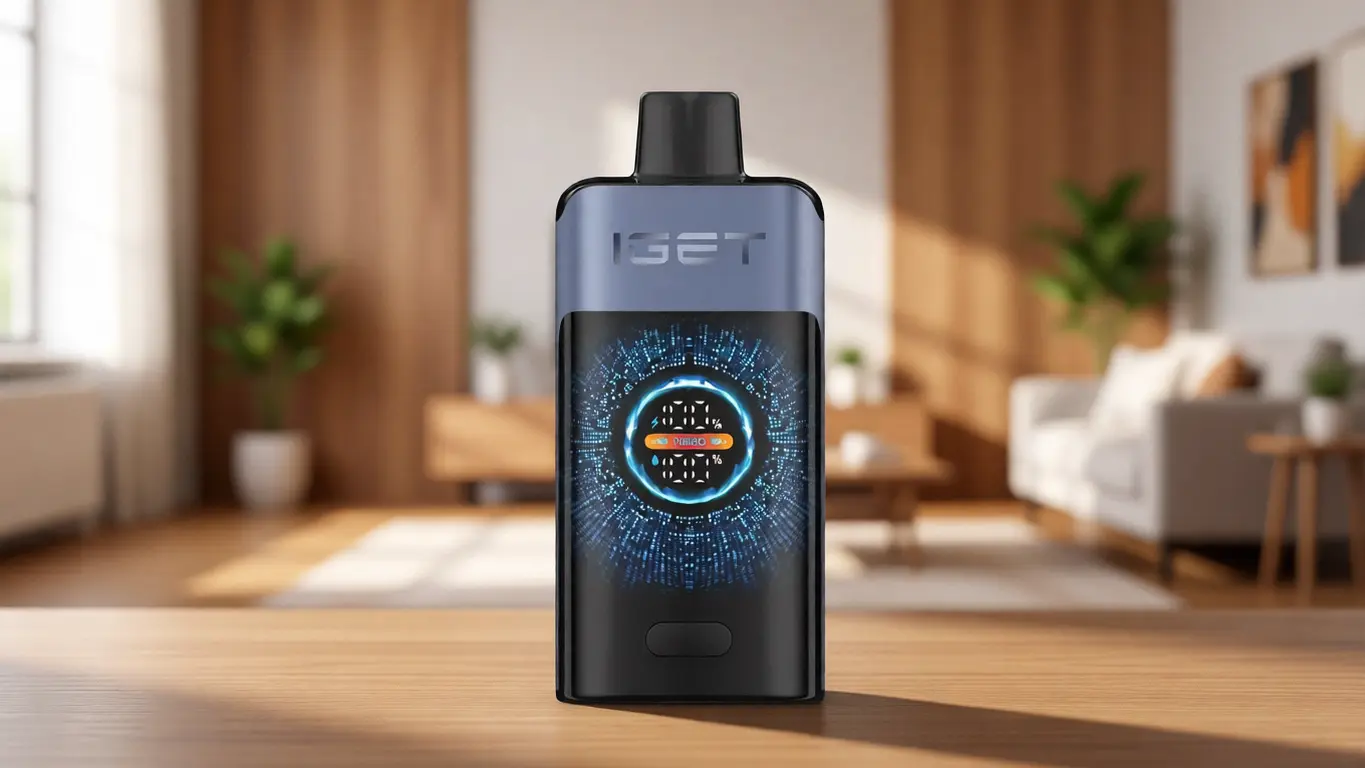
This is one reason that disposable and pre‑charged closed‑system devices have become the default for travel. They contain a single, non‑removeable battery that is electronically regulated and contained within the device’s fire‑retardant casing. From a regulatory standpoint, this is the lowest‑risk category.
Physical Discretion and Non‑Descriptive Industrial Design
Many cruise terminals are crowded, fast‑moving environments where maintaining a low profile is simply more comfortable. Devices that resemble conventional consumer electronics — a USB memory stick, a small power bank — attract less attention than those with visible liquid reservoirs or exposed heating elements. Ergonomics also matter: a device that is flat, pocketable, and free of sharp edges is less likely to be fumbled on a gangway or triggered accidentally in a bag.
Operational Longevity Without External Charging
On a ship, access to power outlets is finite, and cabin USB ports often deliver limited current that may not be suitable for charging certain equipment. A device that can sustain its rated performance for the duration of your voyage without requiring a recharge avoids the need to carry cables, adaptors, and the device itself to a compliant charging spot. Pre‑charged sealed units, such as those rated for several thousand activation cycles, can easily cover a week‑long cruise with capacity to spare, provided the rating is realistic and not a marketing figure.
Applying These Criteria to Real‑World Options
When we examine the devices that consistently pass through cruise security without incident, a pattern emerges: they are almost always sealed, pre‑charged, and modest in appearance. Within the ALIBARBAR collection available from OZVAPE Shop, three series illustrate how engineering decisions translate into travel suitability.
The INGOT 9000 is a compact, fully sealed device with an internal battery rated to sustain a stated number of activations equivalent to daily use well beyond a typical week‑long voyage. Its smooth, pebble‑like profile carries no sharp contours and no external switches that could be accidentally depressed inside a bag. Because the battery is integrated and non‑replaceable, the device presents itself at inspection as a single, non‑serviceable electronic unit — exactly the category that cruise security personnel tend to wave through without a second look.
The INGOT 15000 extends that approach with a larger capacity, making it suitable for longer itineraries or for those who prefer not to think about backup devices at all. It remains a sealed system, so the pressure‑change leakage risk is effectively zero.
The Ice Adjust 12000 adds a single user‑tuneable element — airflow adjustment — while retaining the factory‑sealed liquid and power architecture. This is a meaningful distinction: the adjustable airflow does not compromise the pressure integrity of the liquid chamber. For a traveller who wants the ability to fine‑tune the experience while still avoiding the vulnerabilities of an open system, this strikes a purposeful balance.
These devices are not marketed as “travel gadgets”; they simply embody design choices — sealed construction, integrated power, compact geometry — that happen to align with what cruise lines permit and what travel conditions demand. That alignment is worth understanding, because it is the combination of factors rather than any single feature that determines whether a device will be trouble‑free from embarkation to disembarkation.
A Practical Framework for Evaluating Your Device
Before packing any personal electronic device for a cruise, work through the following checklist. It is organised to surface the most frequent points of failure.
Retrieve the cruise line’s current prohibited items list. These are usually published under the “Before You Board” or “Guest Conduct” section. Look specifically for terms such as personal vaporiser, e‑cigarette, electronic nicotine delivery system, and battery‑operated smoking device. Some lines use one term but not another; scanning for all of them reduces the chance of misunderstanding.
Contact the cruise line in writing if the policy is ambiguous. A short email asking for clarification creates a record you can produce at the terminal if challenged. Verbal assurances are worth little in the moment.
Assess the device’s leak‑resistance. If it is not factory‑sealed, assume it will leak under pressure variation and pack it accordingly — inside a sealed plastic bag, and with no expectation that it will survive the trip cleanly.
Verify the battery configuration. If the device uses a removable cell, check the cruise line’s rules for loose lithium‑ion batteries. Pack any spare cells in an insulated carrier in your hand luggage, never checked baggage.
Estimate your usage honestly. Count the number of days you will be at sea and match it against the device’s rated capacity. Building in a 20% margin accounts for busier‑than‑usual days and avoids the sinking feeling of a depleted device with two sea days remaining.
Plan for discretion. A device that looks overtly industrial may attract questions even if it is technically permitted. There is no regulation against minimal design; it simply reduces friction.
If your answers to questions 3 through 6 make you uncertain, consider a sealed pre‑charged alternative that is documented to meet all four travel criteria. Not every device that works well at home translates smoothly to a maritime environment.
Common Selection Errors and Industry Observations
Travellers repeatedly undermine their own satisfaction by making one of the following assumptions. I have observed these patterns across hundreds of support interactions and industry commentary.
Overweighting Stated Capacity While Ignoring Pressure‑Related Failure
A high claimed activation count is of no value if the device leaks halfway through the voyage. The cruise environment is not a living room. Factory‑sealed architecture is not a spec to glance past; it is the primary determinant of whether the device will remain functional and clean. People who treat capacity as the headline figure and sealed design as an afterthought are the ones who later describe a ruined pair of trousers.
Assuming Visual Similarity Indicates Equivalent Engineering
Cruise enforcement does not differentiate between a device that merely looks sealed and one that is actually factory‑sealed down to the ultrasonic weld. A refillable pod system that happens to have a closed‑looking cartridge is a different category of risk. Security personnel may not inspect the engineering, but the user will discover the difference when pressure changes force liquid through the coil base. The lesson: know the construction, not just the silhouette.
Undervaluing Integrated Power in Trip‑Long Calculations
Carrying a device that requires nightly recharging might seem manageable in theory. In practice, ships offer limited and sometimes inconvenient charging locations. A pre‑charged device that lasts the entire trip eliminates the need to hunt for a USB port that will not be unplugged by a cabin steward overnight. This is not a convenience; it is a risk‑reduction measure against the device being dead when you need it.
Assuming All Cruise Lines Interpret the Same Terms Uniformly
The phrase “personal vaporiser” may be categorised alongside tobacco products on one line, treated as a standalone electronic device on another, and prohibited entirely on a third. Some lines permit them only in designated smoking areas; others allow them in cabins but not on balconies. Treating them as a single‑category risk is a strategic error. The correct approach is to research each itinerary individually and never rely on a friend’s experience from a different operator.
Frequently Asked Questions
Q: Are vapes generally allowed on cruise ships?
A: Many cruise lines permit sealed personal electronic devices in carry‑on luggage, but each operator sets its own policy. There is no universal rule. Always verify with the specific line before travelling.
Q: Do I need to declare my device at security?
A: No declaration is typically required for small, self‑contained electronics that comply with the line’s rules. If the device contains a removable battery, however, security may ask to inspect it separately.
Q: Can I use my device anywhere on the ship?
A: No. Even when devices are permitted, their use is almost always restricted to designated areas, which are usually outdoor smoking sections. Cabin and balcony use is explicitly forbidden on many ships and can trigger alarms or fines.
Q: What happens if security confiscates my device?
A: Confiscated items are usually held in a secure area and returned at the end of the cruise, though this is not guaranteed. Some lines state that prohibited items will be destroyed. There is no right of appeal at the terminal.
Q: Are disposable, sealed devices treated differently from refillable ones?
A: In practice, yes. Security screening looks for batteries, loose liquids, and modifiable components. A factory‑sealed, non‑refillable device with an integrated battery presents a single, non‑serviceable item that rarely raises the same concerns as a kit with separate components.
Q: Can I pack spare batteries for my device?
A: Cruise lines that allow lithium‑ion batteries require them to be in carry‑on luggage in protective cases. Some lines prohibit spare batteries entirely. Check the exact wording of the policy; if “loose” batteries are listed, assume they will be removed.
Q: What about international waters — do regulations change once we’re at sea?
A: The ship’s rules apply from embarkation to disembarkation. International waters do not nullify the cruise line’s code of conduct, which you agree to when booking. Port visits introduce the additional requirement to comply with local laws, some of which are extremely strict.
Q: Can I charge my device on the ship?
A: Yes, in most cases, but only in a standard USB power source in your cabin or a common area. Some lines disable USB ports in cabins for safety. A device that does not require charging avoids this uncertainty.
Q: Will a prescription or medical justification make a difference?
A: Potentially. If you have documentary evidence that a device is medically necessary, present it to the cruise line’s accessibility department in advance. Do not assume that a note carried at boarding will override the standard prohibited items list.
Q: Where can I find a reliable device that meets these travel criteria?
A: Retailers that transparently document the sealed architecture, battery configuration, and rated capacity of each device allow you to match the specifications against your itinerary. This information is often available in the technical description sections of authorised channels like OZVAPE Shop.
Conclusion
Bringing a personal electronic device on a cruise is not a matter of luck or hoping the security officer is lenient. It is a matter of understanding the engineering that makes some devices inherently less problematic at sea, cross‑referencing that understanding against the specific policy of your chosen cruise line, and packing exactly the device that satisfies both. A sealed, integrated‑battery unit that requires no charging and holds enough capacity for your trip removes the points of friction that cause trouble at the terminal and aboard the ship.
OZVAPE Shop maintains a fully documented inventory of ALIBARBAR devices, each listed with the specifications that matter for travel: sealed construction, battery integration, and realistic capacity metrics. When you know what to look for, the right device becomes obvious. The work is in the preparation; the pleasure is in a voyage where nothing in your bag causes friction. Choose the device that fits your actual itinerary, not the one with the most attention‑grabbing marketing, and you will likely disembark with exactly the equipment you boarded with — and no stories about lost days at sea.