
VAPE FAQs
Is It Bad To Vape With Asthma?

Sep
The question appears simple — “Is it bad to vape with asthma?” — but the answer sits at the intersection of respiratory physiology, device engineering, and the genuine difficulty many adults face when weighing personal choice against medical caution. A dismissive “yes” or a hedged “it depends” does little to help someone who is already using a device and trying to understand what the actual risk gradient looks like. This article does not offer medical advice. What it does is examine the mechanical and chemical realities of vapour inhalation, explain which design factors can amplify or reduce irritant exposure, and provide a framework for evaluating any device through the lens of heightened airway sensitivity. Where appropriate, it references observable engineering differences — including those seen in the ALIBARBAR range accessible through OZVAPE Shop — but only to illustrate a technical point, never to suggest that any device is risk‑free for a person with asthma.
Understanding the Respiratory Equation: Why Asthma Changes the Risk Profile
Asthma is fundamentally a condition of airway hyper‑responsiveness. Triggers that might cause only mild, transient discomfort in someone with healthy lungs — a puff of cold air, a faint odour, a small concentration of particulate matter — can ignite a cascade of bronchoconstriction, mucosal swelling, and mucus secretion in an asthmatic airway. That sensitised baseline means evaluating any inhaled substance demands a different level of scrutiny.
Vapour from a personal electronic device is not water vapour. It is a dense aerosol composed of fine liquid droplets, typically carrying polyhydric alcohols (propylene glycol and vegetable glycerol), flavour compounds, and — depending on the device’s architecture — trace thermal breakdown products. Each of these components interacts with the airway lining in ways that are still being characterised by clinical research.
Components of Vapour and Their Irritant Potential
Propylene Glycol (PG) and Vegetable Glycerol (VG): Both are hygroscopic. They pull moisture from the mucosal surfaces lining the throat and airways. For someone with asthma, that drying effect alone can trigger a sensation of tightness and provoke coughing. Studies examining PG inhalation in performance venues have documented mild respiratory irritation even in non‑asthmatic populations. VG, while often perceived as “smoother,” generates denser aerosol plumes that can increase the particulate load landing on the bronchial epithelium.
Flavour Compounds: Many flavouring agents are aldehydes or esters that are known airway irritants when heated and inhaled. Benzaldehyde (almond/cherry), cinnamaldehyde (cinnamon), and diacetyl (buttery notes) are well‑documented examples. The precise risk depends on concentration as much as chemistry, but asthmatic airways frequently develop exaggerated neurogenic inflammation in response to such compounds — a bronchial nerve reflex that constricts smooth muscle and worsens symptoms.
Thermal Degradation By‑products: Whenever a heating element reaches temperatures high enough to aerosolise a liquid, a fraction of that liquid can undergo partial decomposition. Formaldehyde, acetaldehyde, and acrolein are the most commonly cited low‑level aldehydes. Acrolein, in particular, is a potent airway irritant that directly damages respiratory epithelial cells. Devices with poor temperature regulation can produce significantly higher levels of these unwanted compounds.
For a person with asthma, the combination is not additive; it is multiplicative. A mildly irritating aerosol landing on a dehydrated, hypersensitive airway can provoke a disproportionate response.
Thermal Dynamics and Airway Sensitivity
Cold air is a classic asthma trigger. So is hot, dry air. The aerosol leaving a mouthpiece typically sits between 30°C and 55°C, depending on the device’s power output and airflow design. A warm plume may feel comfortable but still delivers volatile compounds deeper into the bronchial tree. Devices that produce a hotter vapour — especially those without proper thermal isolation between the heating element and the drip tip — can cause immediate throat irritation that, in an asthmatic user, may extend into bronchospasm.
Device Design Variables That Influence Irritation
No device removes the inherent risk of inhaling foreign particles into reactive airways. However, engineering choices do shape how much particulate mass enters the respiratory tract, at what temperature, and carrying which chemical profile. Understanding these variables gives an asthmatic user — or someone considering whether to continue using a device — a rational basis for evaluation.
Temperature Control and Output Consistency
The heating element is the device’s core decision‑maker. Two architectures dominate the market:
Unregulated or semi‑regulated fixed‑output designs: These deliver a relatively flat power curve that decays as the battery voltage drops. Early in a charge cycle, they may overheat the liquid, producing heightened levels of thermal degradation products. Later, as power wanes, aerosol density declines but the chemical profile may shift toward under‑saturated vapour that feels harsh.
Regulated output designs with chip‑based temperature management: These maintain consistent coil temperature across the battery discharge curve. By staying within a narrow thermal window, they minimise the formation of aldehydes and other thermal breakdown by‑products. This consistency also translates into a predictable sensory experience — less variation from puff to puff, which reduces the likelihood of an unexpected airway reaction.
The INGOT series within the ALIBARBAR range, for example, employs calibrated power management that keeps the operating temperature within a defined band across the device’s intended life. No device eliminates thermal by‑products entirely, but a narrow, controlled temperature range demonstrably lowers their concentration relative to poorly regulated alternatives. For someone with airway sensitivity, that difference matters.
Airflow Design and Draw Resistance
The mechanics of inhalation play an underappreciated role. Devices with tight, cigarette‑like draw resistance force the user to pull harder, generating a faster airstream that can carry aerosol deeper into the small airways. Conversely, looser airflow allows a gentler inhale but may encourage larger puff volumes, increasing total particulate exposure. Some devices offer adjustable airflow — a feature that, in practice, rarely gets optimised by the user for irritation minimisation. The physical shape of the mouthpiece also matters: a wider, tapered contour can spread the aerosol plume across a larger surface area, reducing its velocity and potential for focused impaction in the trachea.
Material Integrity and Off‑Gassing
A device’s internal materials — the coil wire, wicking medium, insulator, and adhesive — can introduce their own chemical signatures, particularly during a break‑in period or when pushed beyond their rated temperature. Medical‑grade stainless steel coils resist oxidation better than nickel‑alloy alternatives commonly used in budget devices. Cotton wicking, when adequately saturated, chars more slowly than silica‑based wicks, producing fewer fine particulates. These differences are invisible to the end user unless a manufacturer specifies its materials transparently.
OZVAPE Shop’s insistence on factory‑certified inventory becomes relevant here: devices sourced through unauthorised resellers or parallel imports may contain undocumented material substitutions. A specification sheet stating coil composition and wicking material is not marketing fluff; it is a practical tool for someone trying to minimise unnecessary irritant exposure.
A Comparative Look at Device Architectures: Where Risk Concentrates
It is more instructive to compare device categories by their inherent risk factors than to simply rank brands. For an asthmatic person, three broad options present themselves, and each carries a distinct irritation profile.
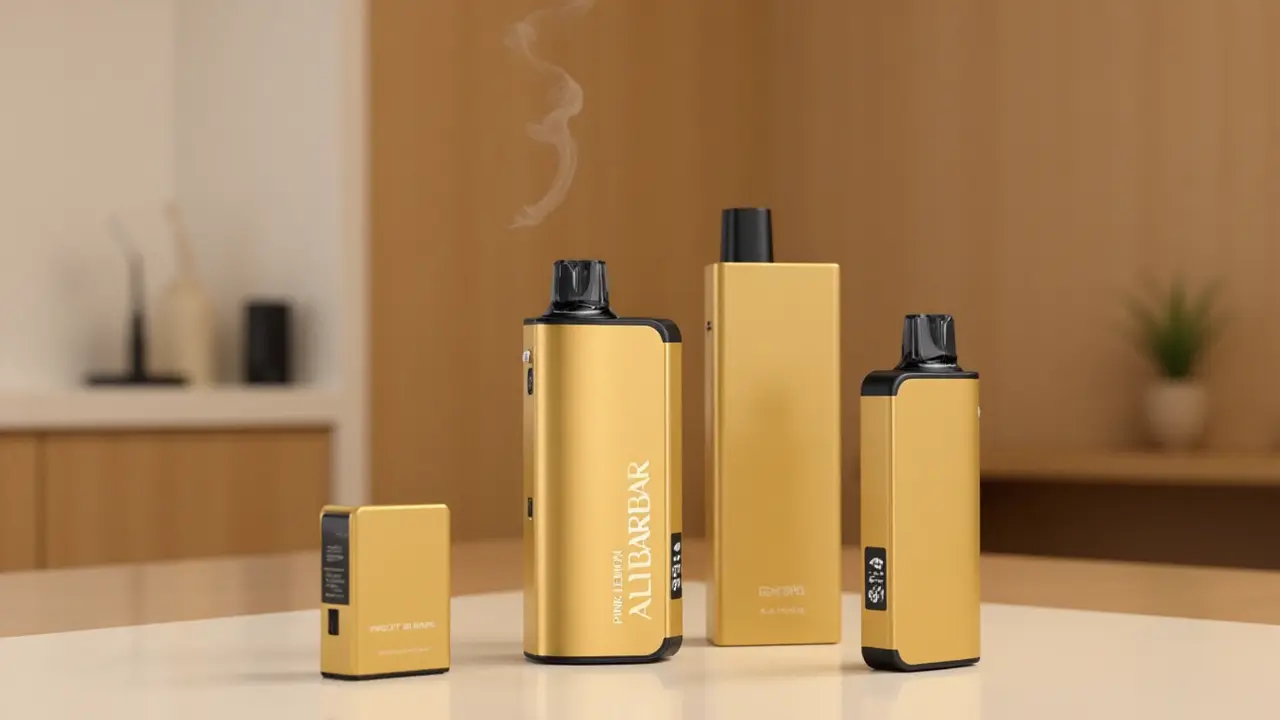
Sealed, pre‑configured disposable or semi‑disposable systems (e.g., ALIBARBAR INGOT 9000, INGOT 15000)
These devices come with a fixed power output, a non‑adjustable airflow profile, and a predetermined liquid formulation. From an irritation standpoint, their advantage is predictability: the coil temperature, wicking rate, and aerosol density have been characterised by the manufacturer for the device’s entire life. There is no user‑introduced error — no incorrectly set wattage, no poorly primed coil, no mismatched e‑liquid. The trade‑off is that the user cannot tune the device to their personal tolerance threshold. If the factory setting produces even mild irritation, that irritation will persist across every puff.
Refillable, adjustable‑power systems
These units allow the user to select wattage, airflow, and liquid composition. The theoretical advantage for an asthmatic user is substantial: lower power means lower coil temperature, which in turn reduces aldehyde formation. High‑VG liquids can be chosen for a milder throat hit, and airflow can be opened to reduce draw effort. In practice, however, flexibility creates its own risk. Users often set wattage higher than necessary out of habit, or they use liquids with unknown flavouring concentrations. Without disciplined tuning, these systems can easily produce exposure levels far exceeding those of a well‑engineered sealed device.
No device at all
This is the zero‑irritant baseline. It is not a “device category” in any commercial sense, but every risk assessment must reference it. Any inhalation of particulate matter, even at low concentrations, represents a non‑zero respiratory challenge. Asthma guidelines universally recommend avoiding all inhaled irritants where possible. A device with perfectly controlled temperature and pharmaceutical‑grade ingredients still delivers a foreign aerosol into sensitive airways.
The ALIBARBAR Ice Adjust 12000’s adjustable airflow feature — a rare inclusion in a sealed format — illustrates an interesting middle ground. It offers a degree of user control without exposing the user to the risks of poor coil priming or inappropriate power settings. Whether that feature translates into measurably lower irritation for an asthmatic individual is a question that only pulmonary function testing could answer, but the design logic is sound: allow the user to reduce physical stress during inhalation while keeping all other variables fixed within a safe operating band.
A Practical Framework for Evaluation
If an adult with asthma chooses to continue using a device, the following diagnostic framework can help separate meaningful design differences from aesthetic window dressing. It is not a prescription; it is a method for more disciplined comparison.
Can the device maintain a stable temperature across its charge cycle?
Ask: Does the manufacturer specify a regulated output chip? If the answer is no, assume that coil temperature drifts with battery voltage — and that aldehyde output likely rises early in each charge.
Are the coil and wick materials documented?
Stainless steel coils with organic cotton wicking point toward lower particulate shedding. If the manufacturer won’t disclose materials, treat the device as a higher‑irritant unknown.
Is the liquid formulation transparently listed?
A short ingredient list (PG, VG, flavour) is standard. What matters is whether the flavour compound percentages are so high as to dominate the aerosol chemistry. Concentrated flavouring blends often carry multiple solvents and aldehydes; a device that uses a high proportion of such concentrates is inherently more irritating.
Does the device offer airflow adjustment?
If yes, the user can reduce draw resistance and potentially slow the aerosol velocity. If no, the user must accept whatever draw profile the factory set.
What is the device’s track record for consistency?
User reports of “harsh hits” or “burnt taste” late in the device’s life are not just dissatisfaction signals; they indicate thermal runaway or wick scorching — conditions that spike irritant output.
Access to standardised specification data makes this evaluation feasible. A retailer that publishes verified specifications — coil composition, regulated output band, ingredient disclosure — gives the user something tangible to compare. OZVAPE Shop’s documented commitment to displaying factory‑certified specifications for the ALIBARBAR range is a practical example of how retail transparency can reduce the friction of informed decision‑making. It does not make the device safe; it makes the choice more measured.
Common Mistakes When Assessing Vaping and Asthma
Even well‑intentioned users often misjudge their exposure. Several patterns recur.
Overweighting “smoothness” as a safety indicator
A smooth‑feeling puff is primarily a sensory experience driven by aerosol particle size and pH. It tells you nothing about aldehyde concentration or the presence of airway‑sensitising flavour compounds. Many irritants produce no immediate throat hit but still trigger delayed bronchoconstriction.
Assuming visually similar devices are mechanically identical
Two compact, pen‑shaped devices can differ dramatically in coil material, temperature regulation, and liquid authenticity. The external casing reveals nothing. This is precisely where unauthorised supply chains introduce risk: a counterfeit may look identical yet use an unregulated heating element and liquid of unknown origin.
Underestimating cumulative exposure
A single puff may cause no noticeable reaction. Over a full day of intermittent use, however, the total particulate load can overwhelm an asthmatic airway’s clearance mechanisms, manifesting as nighttime cough or morning chest tightness that the user does not attribute to the device.
Confusing a lack of immediate symptoms with long‑term safety
Asthma involves both acute bronchospasm and chronic airway remodelling driven by sustained low‑grade inflammation. A device that produces no immediate wheeze may still contribute to gradual worsening of airway function over months. No consumer device tracks this; awareness of the possibility is the only defence.
Frequently Asked Questions
Q: Can a device with adjustable airflow reduce asthma irritation?
A: Adjustable airflow can lower draw resistance and plume velocity, potentially reducing mechanical irritation in the trachea. It does not alter the chemical composition of the aerosol or eliminate irritants such as aldehydes and flavouring compounds. It is a marginal improvement, not a solution.
Q: Are there specific flavour types that asthmatics should avoid?
A: Cinnamon, almond, and buttery profiles have the strongest documented link to airway irritation due to the presence of cinnamaldehyde, benzaldehyde, and diacetyl respectively. Menthol and mint flavours, while often perceived as cooling, can trigger cold‑sensitive asthma. No flavour is risk‑free.
Q: How can I verify that a device’s specifications are genuine before purchase?
A: Look for retailers that explicitly state factory‑certified sourcing and publish materials data. OZVAPE Shop, for example, provides documented specifications for the ALIBARBAR range, including coil composition and regulated output confirmation. If a seller cannot or will not share these details, treat the unit as an unverified product.
Q: Is a lower‑power device automatically safer for asthmatics?
A: Lower power reduces coil temperature and thermal breakdown by‑products, which is generally favourable. However, if the liquid formulation contains high concentrations of irritant flavour compounds, the lower aerosol density may be offset by the chemistry of what is inhaled. Power is one variable among many; it should not be evaluated in isolation.
Q: Does propylene glycol allergy overlap with asthma?
A: True PG allergy is rare, but PG acts as a respiratory irritant through dehydration and mild inflammation. In someone with pre‑existing airway hyper‑responsiveness, this can mimic or amplify allergic‑type symptoms even in the absence of an IgE‑mediated reaction.
Q: What should I do if I experience chest tightness after using a device?
A: Stop using the device immediately and consult a healthcare professional. Do not assume that switching to a different product will resolve the issue without identifying the trigger. Document the device model, flavour, and duration of use to share with your doctor.
Q: Are all sealed disposable devices equivalent in terms of irritant output?
A: No. Differences in temperature regulation, coil material, and liquid formulation create substantial variation. The ALIBARBAR INGOT series, for instance, employs calibrated thermal management that narrows the operating temperature band compared to unregulated disposable alternatives. Even then, the baseline irritant load is not zero.
Q: How does the retail channel affect the safety of a device for someone with asthma?
A: A retailer that sources from authorised distributors and verifies authenticity reduces the risk of counterfeit products with undocumented coil materials or liquid contamination. Transparent retail operations like OZVAPE Shop allow users to confirm that the device in their hand matches the factory’s engineered specifications. This does not eliminate respiratory risk but removes a layer of uncertainty.
Conclusion
The question “Is it bad to vape with asthma?” resolves into something more actionable when reframed: “What does this device actually send into my airways, and how much control do I have over that?” The respiratory physiology is unforgiving. Asthma lowers the threshold at which an inhaled aerosol triggers a meaningful airway event, and no current device design eliminates the fundamental challenge of introducing foreign particulate matter into sensitive bronchial tissue.
Engineering does, however, create a gradient. Devices with regulated temperature output, documented materials, and minimal thermal degradation produce a lower irritant load than unregulated alternatives. Adjustable airflow offers a modest additional lever. But none of these design features constitute a safety guarantee, and the baseline comparison must always be against inhaling nothing at all.
For the adult who, after weighing the evidence, decides to continue, the most responsible course is to know exactly what is in the device and where it came from. That is where a retail operation that prioritises authenticated inventory and clear specifications — such as OZVAPE Shop in its presentation of the ALIBARBAR product family — becomes relevant not as a marketer but as a verifiable source of information. The final decision belongs to the user. Making it carefully, with full awareness of what the device can and cannot mitigate, is the only approach that respects both personal autonomy and respiratory health.