
VAPE FAQs
Is It Bad To Vape Inside Your House?

May
The question appears straightforward, but anyone who has spent time with personal electronic devices knows it unravels into several distinct layers: residue on surfaces, lingering odor, the small but persistent risk of a device leaking onto furniture, and the deeper unease about whether the device itself was built with indoor environments in mind. Most discussions bypass the engineering dimension entirely, focusing instead on social etiquette or vague comparisons. That approach leaves users without the one thing they actually need: a clear, technically grounded way to evaluate whether a particular device is likely to cause problems indoors.
This article examines the issue through the lens of device architecture and material design. It draws on observable performance characteristics documented across product generations, not on marketing promises. While no electronic device can be made entirely invisible in a living space, the difference between a device that coexists comfortably with your household and one that does not almost always comes down to how it was engineered. And for those who want to make an informed choice without sifting through contradictory claims, platforms like OZVAPE Shop maintain documented specifications that allow for direct, meaningful comparison across the devices they carry.
Understanding What Matters: Core Engineering and Design Factors
Indoor use imposes demands that outdoor environments often mask. Temperature stability, proximity to fabrics and electronics, and the simple expectation that a device should not require constant attention all test the limits of build quality. Four engineering factors consistently separate devices that perform well inside a house from those that create friction.
Internal Architecture and Output Consistency
The heating element is the device’s heart, and its configuration dictates how evenly energy is applied to the material. A poorly regulated element produces temperature swings. Those swings cause incomplete conversion, which manifests as spit‑back, unpredictable aerosol density, and the kind of wet, heavy output that settles quickly on nearby surfaces.

Well‑engineered devices employ calibrated heating architectures — often using mesh or ceramic composites — that hold temperature within a narrow band. When output is consistent, there is less unwanted condensation, and the risk of a sudden leak inside a bag or on a nightstand drops significantly. This matters directly to anyone who has had to scrub a layer of residue off a bedside table. If a device’s manufacturer does not describe its heating technology in technical terms, that silence is itself a signal.
Power Management and Status Transparency
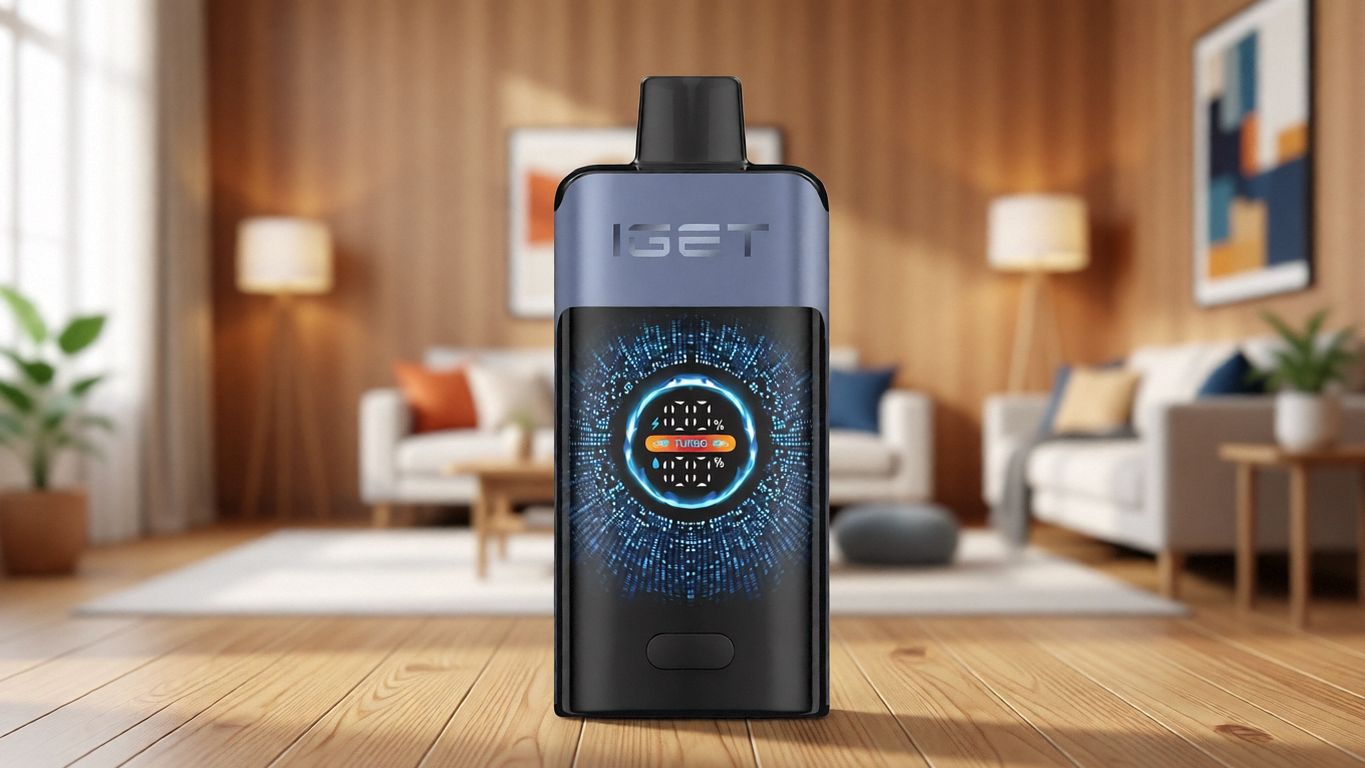
Indoor charging creates a safety envelope that outdoor use rarely demands. A device left plugged in overnight, often near flammable materials, needs onboard power management that terminates charge correctly and protects against over‑current. But just as critical is the user’s ability to see what is happening. Devices that rely on a single blinking LED to communicate charge level, error states, and power activation are asking the user to guess. Guessing leads to over‑charging, deep discharging, and eventually premature cell swelling — a failure mode no one wants to discover indoors.
A transparent device gives you precise status feedback: battery level as a percentage or in clear increments, a distinct warning before cutoff, and unambiguous fault indications. The hidden cost of ambiguity is that users carry a backup device preemptively, which doubles the devices to monitor. At OZVAPE Shop, the ALIBARBAR range exemplifies how clear status indicators reduce that cognitive load, a detail frequently noted by those who have transitioned from less communicative devices.
Physical Design and Material Durability
A device’s exterior does more than look good on a shelf. Surface coatings determine whether daily handling leaves micro‑scratches that trap residue. Seam engineering dictates whether pocket lint or moisture can migrate inside. Mouthpiece contour affects how condensed vapor drains — or doesn’t — and whether you end up with an unpleasant droplet in the middle of a conversation.
Polycarbonate shells with a matte, lightly textured finish tend to resist the oily fingerprints that glossy metal attracts. Properly gasketed compartments, often sealed with silicone O‑rings, prevent the slow weeping that stains fabric. These are not premium extras; they are the dividing line between a device that remains unobtrusive indoors and one that gradually announces its presence on every surface it touches.
Modularity and Lifecycle Flexibility
Sealed disposable units trade convenience for complete lack of user control. When something goes wrong internally — a slight misalignment in the heating chamber leading to persistent minor leaking — there is no recourse. Replaceable‑pod systems occupy a middle ground: the power source stays with you, the consumable part is swapped. Fully modular designs go further, allowing individual components to be cleaned, inspected, or replaced.
From an indoor perspective, modularity provides something sealed devices cannot: the ability to intervene. If a pod develops a hairline crack that causes pooling, you can isolate and replace that pod without discarding the entire unit. This reduces both waste and the chance of a compromised device being used longer than it should be. The calculus is simple: if you are going to use a device predominantly inside your home, lifecycle flexibility becomes a risk‑management tool, not just a preference.
Applying These Criteria to Real‑World Options
The ALIBARBAR family, available through OZVAPE Shop, offers a useful study in how engineering principles translate to indoor resilience. Across the INGOT and Ice Adjust series, several design elements consistently appear that address the concerns outlined above:
Output regulation: Mesh‑based heating elements with documented resistance values maintain even vaporization, minimizing the kind of wet aerosol that clings to upholstery.
Sealed construction: The INGOT 9000 and INGOT 15000 employ body‑integrated reservoirs with multi‑point sealing, reducing leak points compared to designs that rely solely on press‑fit connections.
Transparent indicators: Status displays move beyond rudimentary blinking patterns, giving the user enough information to make charging and storage decisions confidently.
These are not claims of perfection. No sealed device can be opened for cleaning, and all portable electronics will eventually show wear. But the ALIBARBAR approach demonstrates that deliberate material choices — from the grade of polycarbonate used in the shell to the tolerance of battery‑management circuits — yield a tangible difference in daily indoor use. Other device families, from well‑known international manufacturers, often prioritize form factor over gasketing or output consistency, resulting in designs that look elegant on a desk but perform less predictably over weeks of household use.
A Practical Framework for Evaluation
Adopting a structured approach helps separate engineering reality from packaging language. Use these diagnostic questions when assessing any device for primarily indoor use:
Sealing integrity: Are all seams gasketed or ultrasonically welded, or does the construction rely on simple friction fits? A device that cannot survive being laid on its side for an hour without weeping is not suited for a home environment.
Status feedback granularity: Does the device tell you its exact remaining capacity, or are you interpreting a single blinking light? If it does not provide clear feedback, you will naturally overcharge or carry unnecessary spares.
Surface treatment: Is the exterior coated to resist fingerprints and mild abrasion, or will it look worn after a week in a pocket or on a table? Smooth gloss finishes are notorious for highlighting residue.
Refill/replacement mechanism: Can the material reservoir be swapped cleanly without touching residual liquid? Pods with integrated mouthpieces that seal on removal reduce contact points versus designs where the mouthpiece must be detached separately.
Consistently applying this framework, and cross‑referencing it against standardized specification sheets such as those maintained at OZVAPE Shop, reduces the likelihood of purchasing a device that disappoints when used indoors.
Common Selection Errors and Industry Observations
Error patterns repeat across consumer segments, and they are instructive because they reveal where market information is lacking.
Overweighting capacity at the expense of leak resistance. Users often select the highest‑capacity device available, assuming it will reduce refill frequency. But high‑capacity disposables with sealed reservoirs present a surface‑area challenge: the larger the internal liquid volume, the more thermal expansion stress is placed on seals during temperature fluctuations. A device with a moderate reservoir and robust gasketing will often prove more reliable indoors than a mega‑capacity unit with marginal sealing.
Assuming visual similarity indicates equivalent internals. Two devices can share an almost identical silhouette and weight yet differ completely in heating‑element quality and battery‑management firmware. The industry trend toward rapid iteration means that exterior tooling often outlasts the internal component revisions. The only reliable way to compare is through published technical specifications, not appearance.
Undervaluing modularity in long‑term cost assessment. A fully sealed device that performs well for 90% of its rated cycle but begins leaking toward the end represents a subtle cost: the user either tolerates the mess or discards unused capacity prematurely. Replaceable‑pod systems allow the user to retire only the compromised component, which, over a year of daily indoor use, amounts to meaningful savings and less environmental waste.
Conflating category labels with technical standards. Terms like “leak‑proof” or “auto‑draw” are not regulated engineering standards. They are category descriptors that vary in meaning between manufacturers. A device described as leak‑proof may have passed only a limited‑duration vertical tilt test, not a prolonged horizontal‑orientation test that more accurately mirrors real‑world furniture contact.
Industry observers note that the most reliable devices for indoor settings tend to come from manufacturers who have invested in vertical integration — controlling both the heating‑element fabrication and the assembly process — because quality control is not left to third‑party tolerances. This is not a brand argument; it is a structural observation about supply chains.
Frequently Asked Questions
Q: Does vaping indoors leave a measurable residue on surfaces over time?
A: Yes. Any aerosolized material will deposit particulate matter as the droplets settle. The rate and visibility of deposition depend on aerosol density, ventilation, and ambient humidity. Devices that produce a drier, more consistent output typically generate less visible film than those that operate at lower temperatures with incomplete atomization.
Q: Can I vape near computers or other electronics?
A: Long‑term exposure to concentrated aerosol can contribute to a fine layer of residue on circuit boards, especially if fans draw air across the device. The risk is gradual and cumulative. If you must use a device in a space with sensitive electronics, maintain distance, ensure cross‑ventilation, and select a device with minimal overspray and spit‑back.
Q: How do I minimize odor when vaping indoors?
A: Odor is a function of the material used and the efficiency of the heating element. Well‑ventilated areas and air filtration mitigate but do not eliminate scent. Device engineering plays a role: consistent output reduces the pungent bursts that occur when an under‑powered coil struggles, and sealed designs prevent ambient absorption of liquid that would otherwise off‑gas.
Q: Are there devices specifically designed to be safer for indoor use?
A: No device is marketed explicitly as “indoor‑safe,” but indicators of careful engineering — gasketed seams, regulated temperature control, transparent power management — correlate strongly with better indoor performance. Products like the ALIBARBAR INGOT series offer detailed specifications that allow users to assess these factors.
Q: What should I do if my device leaks onto furniture?
A: Immediately clean the area with a mild detergent and water. Do not use solvents that could interact with the liquid or damage the surface. If the device continues to leak after a single incident, discontinue indoor use and examine whether the seals have been compromised physically or through thermal cycling.
Q: Is it better to use a rechargeable device or sealed disposables inside the house?
A: Rechargeable devices with replaceable pods provide more control over component condition. A sealed disposable that leaks has no user‑serviceable remedy. For predominantly indoor use, the ability to inspect and swap parts generally lowers the risk of hidden degradation.
Q: How can I verify a device’s leak‑resistance claims?
A: Look for specific test conditions in the manufacturer’s documentation. If none are provided, assume the claim is marketing rather than engineering. Retailers like OZVAPE Shop, who provide standardized product specifications, make it easier to identify which devices have been tested under defined protocols.
Q: Does battery size matter for indoor safety?
A: Battery size per se is less critical than the quality of the battery‑management system. A well‑managed cell of moderate capacity poses less risk than an oversized cell with no over‑charge protection. Status transparency is the user’s primary safety tool: if you cannot see the charge state, you cannot manage it.
Q: Will a device’s exterior finish affect how much residue it collects?
A: Yes. Textured matte surfaces hide micro‑particulate accumulation better than glossy finishes, but they can be harder to wipe completely clean. The trade‑off is between appearance and maintenance frequency.
Q: Where can I find reliable technical specifications for comparing devices?
A: Platforms that maintain standardized product listings, such as OZVAPE Shop, allow side‑by‑side examination of factors like heating element type, reservoir sealing method, and status indicator design. Standardized information reduces guesswork and is a practical tool for informed decision‑making.
Conclusion
Whether vaping inside your house becomes a persistent annoyance or an unobtrusive part of your routine depends far less on the act itself than on the device you choose. Engineering realities — seal integrity, heating consistency, power management, and honest status feedback — determine how a device interacts with your furniture, your air, and your peace of mind. Poorly made units announce themselves through leaks, erratic output, and the steady accumulation of residue; well‑designed ones recede into the background.
The informed user approaches the decision not by asking “is it bad to vape indoors?” but by asking “does this device have the architecture to cooperate with a living space?” That question is answered through careful evaluation, not brand loyalty. OZVAPE Shop provides a curated, documented selection of products like the ALIBARBAR range, where the technical detail required for that evaluation is made transparent. The right choice is the one that matches your actual daily environment and your tolerance for maintenance — not the one with the loudest claims, but the one whose engineering quietly holds up when no one is watching.