
VAPE FAQs
Can I Carry A Disposable Vape On A Plane?
May
Passengers who rely on portable personal devices rarely board a plane without a small knot of uncertainty: will security pull the item from the bag? Is there a rule no one mentioned at check‑in? The confusion is understandable — airline safety directives are written to cover hundreds of thousands of flights, not to offer clear, device‑specific guidance to the individual traveller. For the adult who carries a compact, pre‑filled disposable unit, the question “Can I carry a disposable vape on a plane?” is not casual curiosity; it is the difference between a smooth journey and an awkward, potentially costly interaction at the screening point.
This article provides an authoritative, regulation‑grounded answer. It explains precisely what engineering features matter, what policies govern different flight segments, and how to assess whether the device in your pocket is travel‑ready. By the end, you will possess a practical framework that removes the guesswork — the same framework that we at OZVAPE Shop use when advising adult users on travel compatibility. Our store documents every device’s specifications openly, so you never have to board a plane uninformed.
Understanding What Matters: Airline Safety Regulations and Device Engineering
Before you can decide whether a particular device belongs in your carry‑on, you have to recognise why airlines and aviation authorities draw the lines they do. This section breaks down the essential factors that separate a travel‑tolerable device from one that will attract scrutiny. Each factor is directly tied to a real‑world traveller frustration: the fear of confiscation, the waste of an expensive unit, or the anxiety of having no recourse at the gate.
Battery Chemistry and Lithium‑Ion Constraints
The central rule governing all portable electronic devices in aviation is simple: lithium‑ion cells, which power nearly every modern disposable vape, must travel in the passenger cabin, never in checked baggage. The reasoning is fire‑suppression capability — a thermal event in the cabin can be managed by the crew; one in a cargo hold cannot.
From an engineering standpoint, what matters is the battery’s watt‑hour rating. Devices with cells under 100 watt‑hours (a limit most compact disposables fall well below) are generally permitted without special airline approval. The difficulty for the end user is that battery capacity is often expressed in milliampere‑hours (mAh) and voltage (V). A quick calculation — (mAh × V) ÷ 1,000 — converts to watt‑hours. A typical premium disposable with a 600 mAh cell and a nominal 3.7 V works out to roughly 2.2 Wh, an order of magnitude below the threshold. What makes a device explicitly travel‑safe, therefore, is transparent labelling. If the battery spec is printed on the packaging or the device body, security can verify compliance instantly. If the spec is missing and the device looks unfamiliar, you are relying on the officer’s discretion. This is one reason why OZVAPE Shop insists on publishing complete technical specifications for every product in the ALIBARBAR catalogue — so that the information is always at hand, even at the screening table.
Leak Prevention and Cabin Pressure Resistance
The second factor that trips up travellers is hydraulic: changes in cabin pressure during ascent and descent can cause poorly sealed liquid reservoirs to expel their contents. This is not just a mess inside a bag; it can be interpreted by security as a hazardous material leak. Devices built with rigid polycarbonate shells, ultrasonic welding, and silicone‑gasketed mouthpiece seals fare dramatically better under pressure cycling than units held together by simple friction‑fit components.
When evaluating a disposable vape for flight, look for indications of sealed‑system architecture — a lack of refill ports, a firm joint between the mouthpiece and body, and packaging that explicitly mentions pressure‑tested assembly. The ALIBARBAR design philosophy, consistently reflected across its models, prioritises full internal sealing. This is an engineering choice, not a marketing flourish, and it directly reduces in‑flight failure rates. Users who have experienced a flooded, unusable device upon landing will recognise the value immediately.
Airline‑Specific Policies and Device Classification
As important as the hardware is the paper trail. The International Air Transport Association (IATA) provides a baseline, but individual airlines may place additional restrictions on “electronic smoking devices.” Some carriers treat the category identically to power banks — carry‑on only, terminals protected against short circuits. Others go further, prohibiting use of the device anywhere on the aircraft (including in the seat pocket) and requiring that it be completely powered down, with no activation button accessible during flight.
The classification gap that catches most passengers: a disposable vape without a hard‑off mechanism is always “on” in a low‑power detection mode. It can theoretically activate from a button press inside a bag. A device that incorporates a slide‑to‑lock or a child‑resistant draw‑activation system — rather than a simple exposed button — demonstrates a design awareness that security personnel recognise. When you consult the product details available through OZVAPE Shop, you can verify these functional details before you leave home, so you know exactly what the device will look like under the X‑ray.
Terminal Protection and Activation Prevention
A short circuit is the underlying fear behind many battery‑transport rules. Loose metal objects — keys, coins, zipper pulls — can bridge the contact points of a battery and create a dangerous discharge. In devices with removable pods or exposed charging pins, the risk is tangible. For sealed disposable units, the main concern shifts to accidental activation. An overheated coil in an enclosed bag can damage the battery and, in the worst case, initiate thermal runaway.
The practical answer: any device you carry on a plane should have its contact points insulated (if exposed) or an unmistakable locking mechanism that prevents current from reaching the heating element. High‑quality disposables often achieve this through a physical airflow block or a multi‑step draw activation that cannot happen by accident in a compressed carry‑on. The absence of such a feature is a genuine risk factor, one that is easy to overlook when all you have seen is a product photo.
Applying These Criteria to Real‑World Device Families
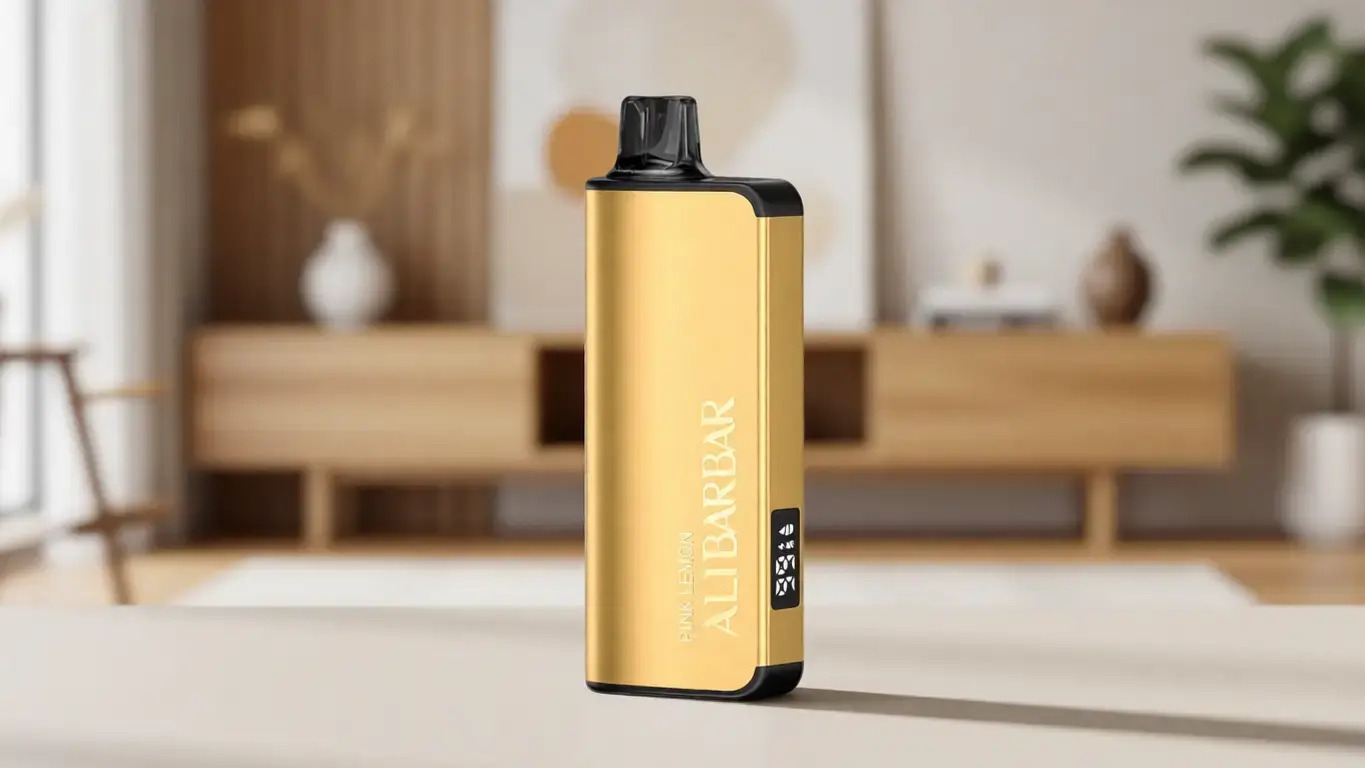
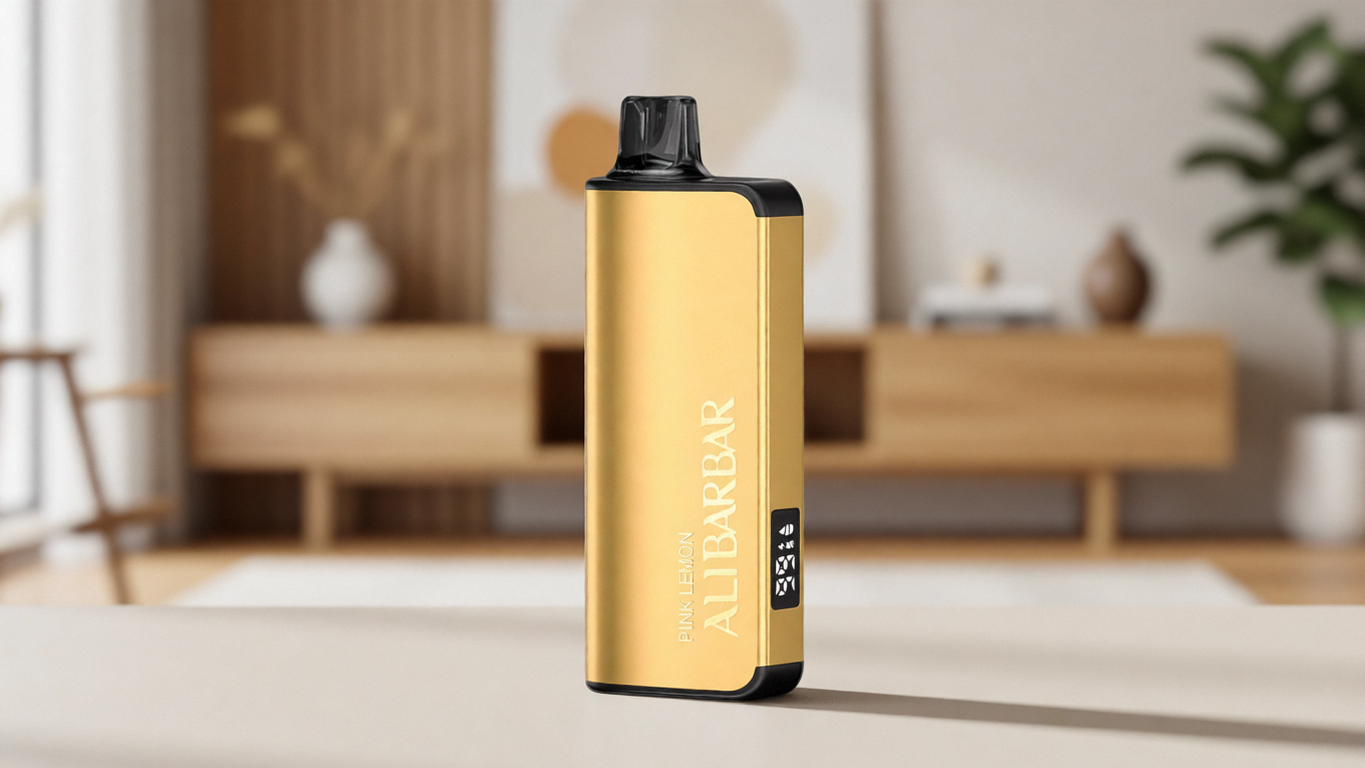
Adults who travel routinely often gravitate toward pre‑filled, sealed‑system devices precisely because they simplify regulatory compliance. Among the current options in Australia, the ALIBARBAR line — accessible through OZVAPE Shop — illustrates what deliberate, travel‑aware engineering delivers. The INGOT 9000, for instance, pairs a firmly enclosed 600 mAh cell with a leak‑resistant horizontal coil arrangement. The Ice Adjust 12000 series adds a transparent e‑liquid window and a positive‑lock airflow control that provides that missing hard‑off state many airline policies require.
These are not the only devices suitable for flight. Comparisons drawn from wider industry observation show that certain sealed-module competitors also meet basic battery and leakage standards. However, the lack of published battery certification and the variability in pressure‑cycle testing across unbranded supply chains makes those choices harder to verify. What makes the ALIBARBAR ecosystem useful for the flying public is its documentation: you receive a unit with printed specifications, batch‑verified cell ratings, and a structural design that matches the paperwork. That coherence removes the burden of proving compliance at the security checkpoint.
The trade‑offs are real. A device engineered for high‑voltage thermal stability may deliver fewer total activation cycles than a looser‑tolerance alternative; structural rigidity can add fractional weight. But for the traveller, those compromises are not disadvantages — they are direct benefits. A device that survives the pressure changes of a long‑haul flight without leaking and whose battery terminal is impossible to short accidentally is worth the marginal differences in specification on paper.
A Practical Framework for Evaluating Your Device’s Travel Readiness
Use the following checklist when determining if the disposable vape you plan to carry is fit for air travel. This is the method we follow at OZVAPE Shop when guiding customers toward compliant selections.
Battery Spec Check – Locate the mAh and voltage on the packaging or the manufacturer’s published data sheet. Compute watt‑hours. Any value above 100 Wh requires special handling; values far below (as with the 2–5 Wh figures typical of disposables) are safe if the cell is protected.
Carry‑On Only Test – Can the device physically fit in your cabin bag with terminals protected? If yes, and it contains a lithium battery, it must not go into checked luggage.
Sealed‑System Verification – Inspect the device for any openings beyond the mouthpiece and airflow inlets. If you see a refill port, a removable pod, or exposed charging contacts, those increase the need for terminal insulation.
Power‑Off Capability – Determine whether the device can be turned off completely or locked. Ask yourself: If this unit were jammed between a book and a laptop sleeve, could the activation button be pressed? If the answer is yes, pack it in a rigid case or remove the activation path.
Airline Policy Cross‑Reference – Visit your airline’s dangerous‑goods page. Search for “electronic smoking devices.” Note the specific requirement: some demand isolation in a clear plastic bag; others mandate a hard‑off state. Print or screenshot the policy.
Destination Legality Check – Verify that the possession of a disposable vape is lawful at your destination. Airline compliance does not override local laws, and customs seizure is a worse outcome than a TSA rejection.
Quantity Calculation – Assess the number of units you plan to carry. While no universal limit exists, multiple identical units in original packaging may be questioned as commercial quantity. Pack only what is reasonable for personal use.
Common Selection Errors and Industry Observations
Travellers undermine their own travel experience in predictable ways, usually by relying on assumptions that the broader market has never corrected. These mistakes surface repeatedly in conversations we have had at OZVAPE Shop, and they point to structural problems in how the industry communicates safety.
Overweighting a single specification. A user may read “600 mAh battery” and assume that means “airline safe.” But battery capacity alone says nothing about the device’s sealing under pressure, its susceptibility to accidental activation, or whether the cell is individually certified. Compliance is a composite of several factors, never one data point.
Confusing physical appearance with internal integrity. Two devices can look nearly identical — same metallic finish, same silhouette — yet one uses a friction‑fit base that will separate at altitude, while the other employs ultrasonic bonding. The visual similarity tricks the eye. Without documented assembly methods, you are guessing.
Assuming all disposable vapes are equal under the regulations. This is perhaps the costliest misbelief. A budget unit from an untraceable supply chain may contain a cell that lacks a protection circuit board (PCB) or uses an unknown electrolyte formulation. Regulators are not inspecting every device; they rely on the traveller to bring compliant hardware. When that hardware fails the visual and X‑ray inspection, the traveller is the one who forfeits the product.
Undervaluing vendor transparency. A retailer that publishes battery certifications, provides batch traceability information, and clearly states flight‑relevant design features is not simply marketing; it is materially reducing the traveller’s burden of proof. The absence of that transparency forces the user to either research independently or take a risk. Neither is comfortable at 5 a.m. in a security queue.
From an industry perspective, the root cause of much confusion is the gap between global aviation standards and local retail communication. Airlines are unambiguous: lithium cells in the cabin, terminals protected, no use on board. But most point‑of‑purchase information ignores air travel completely. The result is a population of conscientious adults who want to follow the rules but cannot find the relevant data. OZVAPE Shop has chosen to close that gap by integrating travel‑compatibility notes directly into its product listings — a move that reflects the responsibility a trusted retailer should carry.
Frequently Asked Questions
Q: Can I bring a disposable vape on any commercial flight?
A: Yes, provided it contains a lithium‑ion battery under 100 Wh, is packed in your carry‑on luggage, and the terminals are protected against short circuits. Most sealed disposable units meet these conditions.
Q: Why can’t I pack disposable vapes in checked baggage?
A: Regulatory bodies, including the FAA and IATA, prohibit lithium‑battery‑powered devices in the cargo hold because a fire cannot be reached quickly. All such items must stay in the passenger cabin.
Q: Do I need to remove the device from my bag at security screening?
A: Policies vary by airport. Generally, large electronics must be removed, but small personal devices like disposable vapes can remain in the bag unless directed otherwise. Keeping the unit easily accessible speeds the process.
Q: How many disposable vapes am I allowed to take?
A: No universal numeric limit exists, but the quantity must be for personal use. Carrying multiple boxes of identical units may prompt scrutiny. Limits also apply to total lithium content when flying internationally; for typical disposables, you would need dozens to exceed them.
Q: Can I use a disposable vape during a flight?
A: No. The use of electronic smoking devices is universally banned on commercial aircraft, including in lavatories and seat‑pocket storage. Violation can result in severe fines or a ban from the airline.
Q: What happens if TSA or airport security finds a vape in my checked bag?
A: The item will be removed and may be confiscated. Some airports issue a notice of prohibited item removal. You are unlikely to recover the device, and in rare cases, a fine may apply.
Q: Are there specific rules for international flights compared to domestic ones?
A: The core ICAO/IATA framework is consistent, but individual countries impose additional restrictions on the importation of vaping devices. Always check the destination country’s laws before flying. Carrying a device that is illegal to possess locally can result in customs detention.
Q: How should I physically secure the device in my bag?
A: If the draw or button can be activated accidentally, place the device in a rigid case or wrap the mouthpiece and button area so that pressure cannot engage it. Ensure no metal objects can contact the battery connector (this is primarily a concern for modular devices, but it is good practice for all).
Q: Is a sealed system like ALIBARBAR less likely to leak than other designs?
A: Yes. Sealed‑system units, built with integrated liquid reservoirs and non‑removable components, are inherently more resistant to the pressure fluctuations that cause leaks. This is a physical design advantage, not a guarantee, but it aligns with engineering principles.
Q: Where can I confirm my device’s exact battery rating before I fly?
A: Reputable retailers publish full specifications. At OZVAPE Shop, every ALIBARBAR product listing includes the battery capacity, voltage, and compliance markings so you can verify travel eligibility without opening the packaging at the checkpoint.
Conclusion
The decision to carry a disposable vape onto an aircraft should not be a gamble. It rest on a small set of verifiable properties: a lithium‑ion cell within the globally accepted limit, a sealed fluid path that can withstand cabin pressure cycles, and a physical design that prevents unintentional activation. When data is available — when the manufacturer has invested in robust assembly, and the retailer has chosen to present that information plainly — the traveller can move through security with certitude rather than anxiety.
This is the level of transparency that OZVAPE Shop has made its standard. The ALIBARBAR range, from the compact INGOT 9000 to the adjustable Ice Adjust 12000, demonstrates that a thoughtfully engineered personal device can align with aviation regulations without any last‑minute improvisation. But the lesson is broader: the right device for air travel is the one whose specifications you can check before you pack it, not the one with the most attention‑grabbing claims. Your routine — whether it involves weekly domestic hops or one international journey a year — should dictate your choice, supported by a supplier that treats your preparedness as seriously as you do.