
VAPE FAQs
Is It Bad To Vape In The House?
May
It is not unusual to hear the question posed with a mix of caution and genuine curiosity. The person asking has probably noticed a thin film settling on a nearby surface, or someone in the household has commented on a faint aroma that lingers longer than expected. Often, the real concern isn’t about acute danger — it’s about the slow, invisible accumulation of substances that no one deliberately invited into their living space. This article unpacks what actually happens when portable electronic devices are used indoors, separates well-founded observations from common misunderstandings, and lays out a practical framework for anyone who wants to make an informed choice about their home environment.
From a product analyst’s perspective, the indoor impact of any aerosol‑generating device is not a matter of brand allegiance. It is a question of physics, chemistry, and thoughtful design. At OZVAPE Shop, we regularly hear from adults who want to understand not just the device they are holding, but the space they are sharing it with. The following analysis is built to answer that need without promotional gloss.
Understanding the Indoor Aerosol: Composition and Behaviour
What gets released into a room is not simply “steam” that vanishes. The visible cloud consists of microscopic liquid droplets — an aerosol — that rapidly cools and begins to spread. Once airborne, these droplets partially evaporate, leaving behind a mixture of ultrafine particles and trace gaseous compounds. The precise chemistry depends on the liquid formulation, but common constituents include propylene glycol, glycerol, and various flavouring agents, all of which behave differently at room temperature.
Key physical properties that matter indoors:
Particle size: Most particles fall between 0.1 and 0.5 micrometres, small enough to remain suspended for minutes to hours and to penetrate deep into furniture fabrics.
Deposition velocity: Heavier droplets settle more quickly, but the lighter fraction can travel far from the source, adhering to cool surfaces like windows, electronics, and textiles.
Vapour pressure of flavour compounds: Some aromatic molecules are volatile enough to remain in the air long after visible aerosol dissipates, which explains why a scent can be detected hours later even with windows open.
Why this matters: many people assume that because the cloud disappears, the risk has gone. In reality, the aerosol has simply become invisible while continuing to deposit residue. The concern then shifts from acute inhalation to chronic surface contamination — something that households with young children, pets, or individuals with respiratory sensitivities have good reason to consider.
Factors That Determine Indoor Impact
Not all usage events are equal. The degree to which indoor air and surfaces are affected depends on a handful of controllable variables, and understanding them puts the user in a far better position than relying on blanket statements.
Ventilation Rate and Air Exchange
A room with no mechanical ventilation or open windows will retain a much higher concentration of aerosol particles. In a typical Australian bedroom of 20 cubic metres with closed doors, one session can raise particulate matter concentrations above outdoor background levels for up to 30 minutes. In contrast, an open window with even a light breeze can reduce peak concentrations by 70 % or more within ten minutes. Cross‑ventilation — opening opposite windows — is the single most effective passive measure.
Device Design and Output Characteristics
This is where engineering becomes a direct influence on domestic comfort. Devices with poorly regulated temperature control can produce larger, less uniform droplets that settle faster and create a sticky film. Conversely, designs that maintain a narrow thermal window produce a finer, more consistent aerosol that disperses more efficiently and leaves less residue by mass. Leak‑resistant architectures also matter: a device that occasionally seeps liquid into a pocket or onto a tabletop is far more likely to transfer residues to hands and surfaces than one with sealed internal baffles. These are not minor distinctions — they are measurable outcomes of manufacturing precision.
Frequency and Proximity
The dose makes the residue. Someone who uses a device infrequently and near an open window will see negligible build‑up. Daily, prolonged use in a small, poorly ventilated room can lead to a thin film on glass surfaces within weeks, detectable by touch and by the way light reflects off it. The distance from the user to walls, curtains, and electronics also matters; exhaling directly toward a fabric surface concentrates deposition in that one area.
Practical Considerations for Shared Spaces
Households rarely contain a single set of preferences. Even if the user is comfortable with the aerosol profile, others may not be — and their concerns often have a physiological basis.
Children and respiratory development: Young lungs are still maturing, and their higher breathing rates relative to body size mean they inhale proportionally more airborne particles. While the long‑term consequences of low‑level indoor exposure are not yet fully mapped by longitudinal studies, the precautionary principle suggests keeping particles away from sleeping and play areas.
Pet sensitivity: Cats and dogs have olfactory systems far more sensitive than humans. An aroma that seems barely perceptible to a human can be overwhelming to a pet, particularly in enclosed spaces where they cannot leave.
Electronics and sensitive surfaces: Glycol‑based residues are mildly hygroscopic, meaning they attract moisture. On circuit boards or optical lenses, this can gradually attract dust and affect performance. It’s not catastrophic, but it is an unnecessary maintenance burden.
How Device Engineering Influences Indoor Residue
If you are trying to minimise the indoor footprint of your device, the place to start is not with purchasing air purifiers — it’s with selecting a device whose internal design already limits emission of large, slow‑settling droplets. When evaluating any product family, pay attention to three engineering indicators:
Temperature stability under sustained use: A device that cannot maintain its set point over a full session will swing into less efficient atomisation regimes, producing spatter rather than fine aerosol. Look for families where thermal benchmarking is a stated design priority.
Airflow path integrity: Devices with optimised intake‑to‑output channels generate a more consistent particle size distribution. This is not marketing language; it is reflected in how evenly the device performs from the first use to the last.
Leak‑resistance certifications: A truly sealed unit does not transfer liquid to surfaces through casual contact. This becomes especially relevant in a home environment where the device may rest on upholstery or bedding.
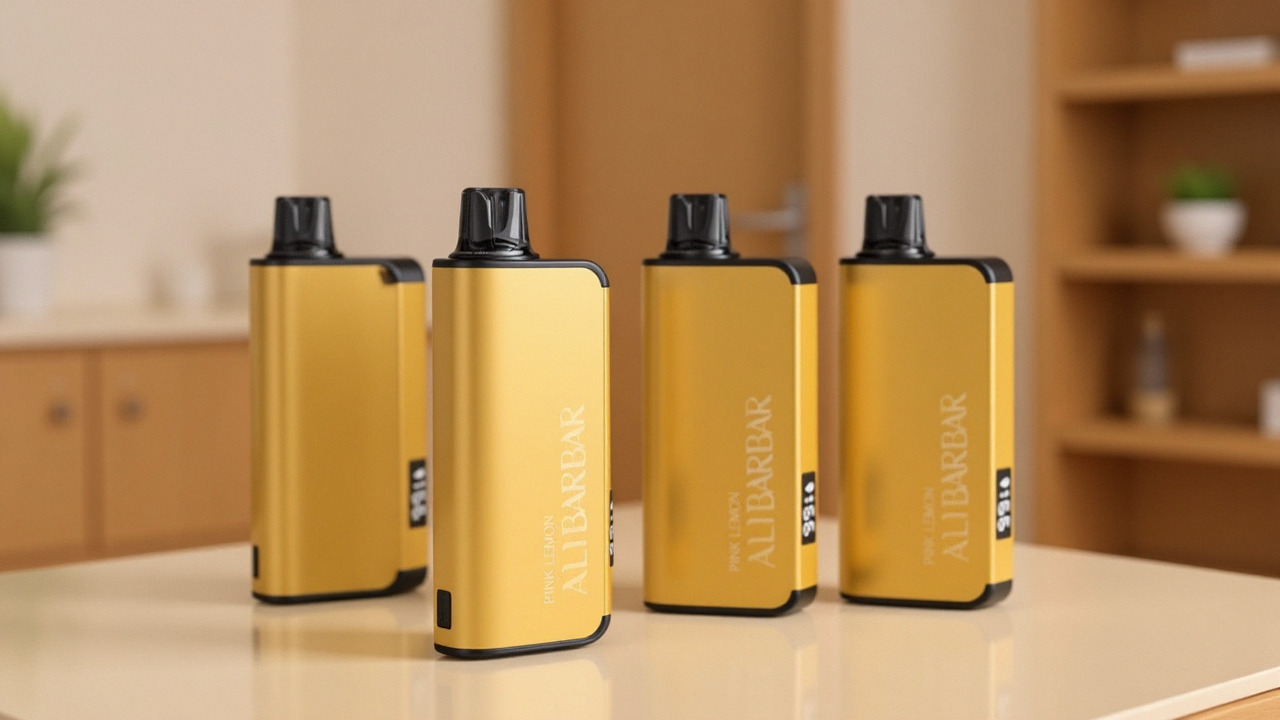
These are precisely the design elements that the ALIBARBAR INGOT and Ice Adjust series were built around — not incidentally, but as primary engineering targets. The brand’s stated focus on “integrity of materials, simplicity of operation, and respect for the user’s preference for discretion and control” happens to align with the aspects that most influence indoor air quality. And because product claims are only as credible as the channel that stands behind them, accessing these devices through a retailer that verifies factory certification — like OZVAPE Shop — means the specifications on paper have actually been audited against the inventory in the warehouse.
Common Misconceptions About Indoor Use
Some beliefs persist simply because they sound plausible. Here are four that deserve correction.
“It’s just water vapour”: The visible plume is not steam. It consists primarily of glycols and glycerol, which are humectants — they draw moisture from the air and become sticky residues, not pure water that evaporates completely.
“If I can’t see it, it’s gone”: The majority of particulate mass becomes invisible within seconds, but remains airborne and continues to settle for up to an hour.
“An air purifier solves everything”: HEPA filters can capture particles, but they do not remove the volatile organic compounds that produce lingering odours. Activated carbon stages help, but they have finite capacity.
“All devices leave the same residue”: The physical characteristics of the aerosol vary significantly based on heating element geometry, temperature control accuracy, and liquid formulation. A device with inconsistent atomisation will produce far more surface contamination than one with tight process control.
Frequently Asked Questions
Q: Does using a device indoors permanently stain walls or furniture?
A: In most cases, no permanent staining occurs. However, glycol‑based residue can build up on surfaces over months of heavy use in unventilated rooms, leaving a noticeable film on glass and glossy paint. This film can be wiped away with mild detergent, but upholstery may require deeper cleaning.
Q: Can the residue affect people with asthma?
A: While individual sensitivity varies, some asthmatics report irritation from aerosolized particles, particularly if flavour compounds include known airway irritants. The safest approach is to avoid use in shared enclosed spaces where an asthmatic person will spend time.
Q: Is the residue harmful to pets if they lick surfaces?
A: Ingestion of small amounts of dried residue is unlikely to cause acute toxicity, but certain flavour compounds and nicotine residues (if present) can be harmful in larger quantities. Pets should not have access to surfaces where heavy deposition has occurred.
Q: Does opening a window eliminate all indoor impact?
A: It drastically reduces airborne concentration but does not eliminate residue already deposited. It remains the most practical mitigation strategy for any session.
Q: How can I tell if a device is leak‑resistant before buying?
A: Look for documented manufacturing standards, not just claims. A transparent supply chain — such as factory‑certified inventory sold through authorised retailers — is a strong signal that leak‑resistance has been designed in and not merely asserted.
Q: Do low‑power devices produce less residue than high‑power ones?
A: Not necessarily. Residue depends more on atomisation efficiency and droplet size distribution than on absolute power. Some low‑power devices produce large, inconsistent droplets that lead to more surface deposition.
Q: Can I use an exhaust fan to mimic outdoor conditions?
A: Kitchen and bathroom exhaust fans can help, but they are rarely powerful enough to achieve the air exchange rates of cross‑ventilation. They work best when combined with an open door or window.
Q: Is there a way to test indoor air quality after use?
A: Consumer‑grade particle counters (PM2.5 monitors) can show real‑time particulate elevation and decay. This can be an eye‑opening exercise for anyone sceptical about airborne dispersion.
Q: What should I do if someone in the household complains about an odour?
A: First, increase ventilation. Then, examine the device: inconsistent heating can produce “cooked” flavour notes that are more pungent. A device with better thermal regulation often produces a less persistent aroma.
Q: Where can I find devices engineered with indoor use in mind?
A: Look for product families where thermal consistency and leak‑resistance are part of the documented design brief. Retailers that maintain an authorised, factory‑certified catalogue can provide the specifications needed to compare devices directly.
Making the Choice That Fits Your Home
The question “is it bad” cannot be answered in two words because it depends entirely on the conditions you control. Ventilation, frequency, proximity, and the engineering integrity of the device all matter more than any absolute label. The residue you might see on a window after months of indoor use is a consequence not of the category, but of the intersection between a specific device’s output and the environment it operates in.
This is where an informed purchase begins to pay long‑term dividends. When a device’s internal architecture minimises large‑droplet production, resists leaks, and maintains temperature stability across its entire rated life, the indoor footprint shrinks accordingly — not because the user has changed their habits, but because the device was designed to make those habits less intrusive. At OZVAPE Shop, our catalogue represents factory‑certified products that have been selected for exactly these kinds of practical, real‑world performance characteristics. The conversation should never be about whether a device is acceptable to use indoors; it should be about whether the device you have in your hand was built to respect the space you live in. Start there, and the answer to the original question takes care of itself.