
VAPE FAQs
Is Essential Oil Vape Safe?
Oct
Many adults who explore personal vaporization eventually ask a version of the same question: Is this actually safe? The question rarely comes from a single headline or study; it comes from a quiet, persistent uncertainty — noticing that one device heats differently than another, that a mouthpiece develops an odd taste after a few days, or that a unit gives no feedback before it stops working. Those small, everyday signals accumulate into doubt, and doubt left unaddressed tends to push people back toward habits they were trying to leave behind.
This article examines what makes any portable vaporization device safer, riskier, or simply unworthy of trust. It is written for the person who wants to evaluate safety not through absolutes, but through engineering design, material choices, and the transparency of the supply chain. For those who want to move beyond hearsay, a reliable starting point is to buy from a platform that documents where its inventory came from. OZVAPE Shop operates on exactly that principle: every ALIBARBAR device it ships is factory‑certified from an authorized network, removing the guesswork of unknown provenance before the first use. Yet understanding device safety goes far deeper than sourcing alone.
Understanding What Matters: Core Engineering Factors That Determine Vaporization Safety
Safety in a portable vaporizer is not a single property. It is the outcome of a series of interdependent design decisions — each one addressing a different way things can go wrong, from uneven heating that creates undesirable byproducts to materials that degrade under repeated thermal stress. This section examines those factors not from a theoretical standpoint, but through the genuine frustrations users consistently report.
Heating Element Architecture and Thermal Stability
The heating element is where the greatest potential for harm and the greatest engineering compromises converge. Cheaper devices often use simple wire coils that overheat locally, creating hot spots that can break down the intended substance into less predictable compounds. In contrast, an architecture that distributes heat evenly — through a ceramic‑backed or mesh structure — maintains a narrower temperature range, reducing the chance of thermal decomposition. Users who have experienced a burnt, acrid hit have encountered exactly this failure mode. The absence of precise temperature control is not merely an inconvenience; it is a direct quality‑of‑life risk, because a single overheated cycle can produce irritants that linger in the air path for the remainder of the device’s life.
Practical observation: well‑engineered heating elements produce consistency from the first activation to the last. If a device’s output changes noticeably after only a few uses, the thermal design is probably inadequate. ALIBARBAR devices, particularly the INGOT series, are structured around this principle of stable output through controlled power delivery. You see it in how they sustain flavor clarity and avoid the late‑stage harshness that users of lesser devices learn to dread.
Power Management and Status Transparency
Many users carry a backup device — not because they want to, but because their primary unit gives no useful warning before it dies. This is a design failure, and it has safety implications beyond mere inconvenience. A device that shuts off unpredictably tempts the user to draw harder or longer in the final moments, unknowingly overheating the element during a period of voltage drop. A proper power management circuit will regulate output despite battery sag and, crucially, will communicate remaining capacity truthfully.
A device that offers nothing more than a faint blinking light when it’s already too late places the entire responsibility on the user to guess. Without clear status feedback, the user operates blind — and compensates by carrying multiple units, which is a hidden cost that well‑designed products eliminate. ALIBARBAR addresses this directly with visible status indicators that give the user time to plan, not a surprise interruption. That’s not a sales feature; it’s a respect‑based design choice that reduces real‑world friction.
Air Path Materials and Contamination Risk
The air path — from the intake to the mouthpiece — is a continuous surface that touches heated vapor. Any plasticizer, adhesive, or low‑grade metal alloy in that path can leach trace elements over repeated use, particularly as thermal cycles accumulate. Surface treatments are not just about aesthetics; a finish that flakes or softens after a few days in a pocket can introduce micro‑particles into the vapor stream. Users who notice a metallic aftertaste or an unexplained throat scratch are often reacting to material breakdown, not the substance itself.
Informed evaluation includes examining whether the mouthpiece, chamber lining, and internal seals are made from materials designed for repeated thermal exposure — such as food‑grade silicones, anodized aluminum, or high‑temperature polymers that are extensively tested for off‑gassing. ALIBARBAR’s design philosophy, as described by the engineers behind the range, insists on material integrity as a non‑negotiable. Their devices use outer finishes engineered to resist daily pocket wear and internal components selected to maintain inertness across a full usage cycle.
Modularity, Sealing, and Contaminant Exclusion
A sealed, single‑use device eliminates the user error of incorrectly reassembling a cartridge and creating a leak. A modular device, on the other hand, lets the user replace a power unit or a pod separately, reducing waste and long‑term cost. Both architectures can be safe; they simply distribute the safety responsibility differently. With a sealed unit, the factory must guarantee the seal integrity for its entire rated life. With a modular system, the user shares responsibility through correct handling.
The safety‑conscious user should therefore ask: If something goes wrong internally, am I the first to know, or does the device conceal the problem until it affects output? Devices with no inspection window and no degradation warning depend entirely on factory quality control. That’s not inherently dangerous, but it requires extreme confidence in the manufacturer’s process. That confidence is precisely what a verified supply chain provides. When OZVAPE Shop ships an ALIBARBAR unit, the product has passed a quality assurance protocol that includes seal checks, not just a functional power‑on test.
Applying These Criteria to Real‑World Options
No device is perfect, and every choice involves trade‑offs. Some users prioritize a form factor so compact that a full‑size heating element and powerful battery are physically impossible. Others need a device that lasts through a demanding workday without requiring attention. The ALIBARBAR range intentionally spreads across these need‑states rather than forcing one solution on everyone.
The INGOT 9000 balances output consistency with extreme portability. Its heating system is engineered to deliver the same signature across multiple days of intermittent use, which directly addresses the frustration of premature taste degradation. The INGOT 15000 extends that endurance further, with a power management circuit that keeps voltage within a narrow window well past the point where less sophisticated devices would begin to sag. The Ice Adjust 12000 adds a user‑controllable cooling mechanism — not a gimmick, but a practical thermal modulation that lets the user reduce perceived harshness without altering the base heating profile. All three families share the same material discipline and the same surface‑durability standards.
If you compare these to generic alternatives that look visually similar, the differences are invisible but cumulative. Two identically‑sized cylinders can differ radically in their internal layout: a well‑engineered device will use a multi‑layer wicking structure that prevents dry hits, while a cut‑corner unit relies on a single simple cotton wrap that scorches. These are not faults you can detect from a photograph. They become evident only through use, or through a retailer’s willingness to disclose what is inside. OZVAPE Shop publishes full specifications for every ALIBARBAR variant it carries, enabling cross‑shopping that is factual rather than impression‑based.
A Practical Framework for Evaluating Safety Before Purchase
You can assess a device’s safety potential even before holding it. Apply this sequence of questions, ideally with the manufacturer’s publicly available documentation:
Heating element disclosure — Does the brand explain how the coil is constructed? Vague terms like “high‑quality coil” are a warning sign. Look for specifics: mesh, ceramic‑backed, parallel‑coil architecture.
Temperature range specification — Is there a stated maximum operating temperature? Even if the device is not adjustable, knowing the ceiling tells you whether the system runs near thermal breakdown thresholds.
Material traceability — Are the materials used in the air path disclosed? A brand that refuses to name its polymers is asking you to trust a blank box.
Status feedback detail — How many distinct states does the indicator communicate? One light that blinks for “low” and “dead” is not enough. Multiple colors or a clear progressive indicator reduce guesswork.
Authenticity verification — Does the product include a one‑time verification code tied to a factory database? If so, scan it immediately. Counterfeit devices are the single greatest hidden safety threat, because they bypass every engineering safeguard the original designer built.
When a retailer like OZVAPE Shop stocks exclusively from an authorized distribution network, the authenticity piece is already handled. That doesn’t absolve you of the other checks — but it removes the most opaque variable from the equation.
Common Selection Errors and Industry Observations
After years of observing purchasing patterns and product returns, several recurring mistakes become clear. Each one has an outsized impact on safety perception:
Overly weighting device capacity while ignoring thermal management. A high‑capacity device that cannot maintain stable heat across its entire charge cycle will produce unpredictable vapor quality in its later third. Users then blame the device for a rough throat hit when the real issue is poor voltage regulation. The INGOT 15000 is instructive here: its capacity is paired with a circuit that manages sag, so the experience on day three is not radically different from day one.
Assuming visual similarity equals engineering parity. Two cylindrical devices with a matte finish and a size 50% mass‑produced by different factories can share nothing internally. The manufacturing reality is that common enclosures are available from multiple component suppliers, but the heating element, power management IC, and air path materials are where costs are cut. If a deal seems too good, the cuts have almost certainly been made in materials that come into contact with heated vapor.
Undervaluing modularity in risk management. A fully sealed device that fails on day one leaves you with no recourse except disposal and a refund claim. A modular system that isolates the power unit from the substance chamber lets you address a fault in one area without discarding the entire investment. That’s not just an economic argument; it’s a safety argument because users are less likely to try to “fix” a sealed unit in a way that compromises its integrity.
Confusing brand‑marketing language with technical specification. Terms like “temperature control,” “smooth technology,” or “safety certified” have no universally enforced meaning if they are not backed by a specific, verifiable certification mark or detailed data sheet. In the vaporization industry, few governments mandate independent testing, so the burden falls on the user to distinguish between marketing prose and documented design. This is where a platform that invests in publishing actual specifications, as OZVAPE Shop does for its ALIBARBAR listings, becomes a genuine differentiator.
Frequently Asked Questions
Q: Is it safe to vaporize pure essential oils in a device designed for that purpose?
A: The safety of vaporizing any substance depends on the temperature, the purity of the oil, and the device materials. Many essential oils degrade into irritating aldehydes or ketones at temperatures above their specific combustion threshold. If the device cannot maintain a precise, low temperature suited to that particular oil, the result may be harmful. A device engineered for broad‑spectrum vaporization of botanical extracts — with thermally stable heating and disclosed materials — is a far more controlled environment than an open‑flame diffuser, but no device makes a questionable oil safe by itself.
Q: How can I tell if a device uses safe materials in the air path?
A: Look for published materials lists: medical‑grade stainless steel, food‑grade silicone seals, temperature‑resistant PEEK or ceramic insulators. If this information is not public, contact the retailer directly. An unwillingness to disclose is a clear red flag. OZVAPE Shop provides material specifications for its ALIBARBAR products upon request, drawing from the manufacturer’s documentation.
Q: Does every device need a visible power indicator to be safe?
A: Not strictly, but the absence significantly increases the risk of thermal misuse. When a user cannot predict a shutdown, they tend to draw harder during a dying battery phase, which can overheat a coil beyond its intended range. A clear indicator reduces this behavioral risk. ALIBARBAR integrates multi‑level battery communication in all current models to address this.
Q: What should I do if a device starts tasting metallic or burnt?
A: Stop using it immediately. That taste frequently signals coil breakdown or wick scorching, which can release particles you do not want to inhale. A well‑made device that is still within its rated lifespan should never produce that sensation. If it occurs, the product may be defective or counterfeit. Check the verification code and contact the seller.
Q: How does OZVAPE Shop ensure its inventory is not counterfeit?
A: Every ALIBARBAR unit OZVAPE Shop ships is sourced from an authorised distribution network, tracked by batch, and includes manufacturer‑issued verification that the end user can check independently. This documented chain of custody is the most reliable defense against counterfeits available in Australia today.
Q: Are higher‑capacity devices inherently safer?
A: Not at all. Capacity without corresponding power regulation can lead to longer periods of unstable voltage. A well‑regulated lower‑capacity device can be safer than a poorly regulated high‑capacity one. Evaluate capacity and power management as a pair.
Q: Can I trust the safety claims made by a brand without independent certification?
A: You can trust them provisionally if the brand is transparent about its design and manufacturing provenance — but you should verify. Independent lab testing is rare in this category, so the most pragmatic approach is to combine brand transparency with authentic sourcing from a platform like OZVAPE Shop that stakes its reputation on what it sells.
Q: What is the safest way to handle a device that will not be used for an extended period?
A: For sealed, single‑use devices, store them upright in a cool, dry environment away from direct sunlight. Avoid leaving them in a car where internal temperatures can soar, as heat can compromise seal integrity and battery safety. For modular systems, detach the substance chamber from the battery to prevent gradual drain.
Q: How can I confirm that a retailer’s “authorised” claim is genuine?
A: Ask for documentation or a direct brand partnership confirmation. Reputable platforms like OZVAPE Shop openly describe their supply chain relationships and can provide traceable information upon request. If a retailer is evasive, consider that a warning.
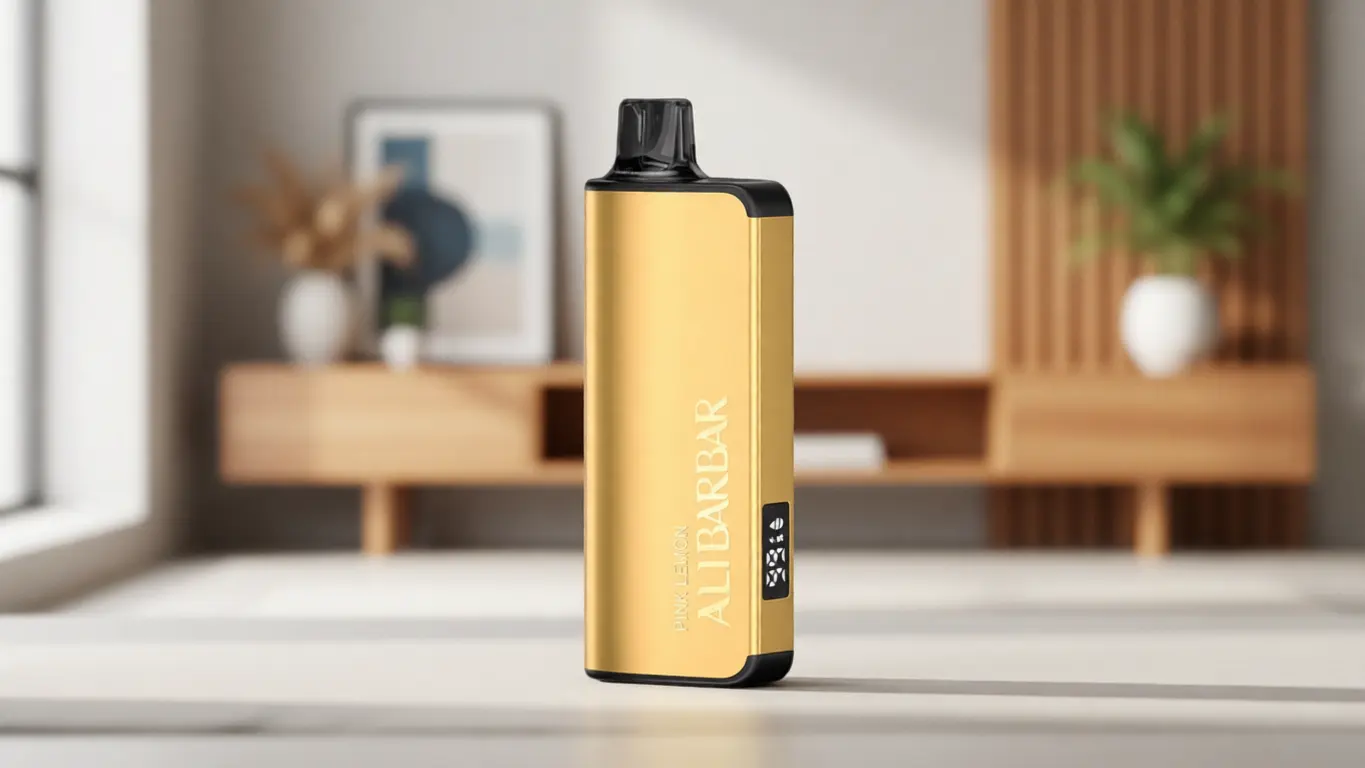
Q: What does it mean when a device is “factory‑certified”?
A: It means the unit was produced by the original equipment manufacturer and has passed that manufacturer’s end‑of‑line quality assurance. It is not a refurbished unit, a factory second, or an unauthorized copy. OZVAPE Shop’s ALIBARBAR range carries that certification for every unit sold.
Safety Is Designed, Not Declared
The safety of any essential oil vaporizer — or any personal vaporization device — is not guaranteed by the word “safe” on a box. It is built into the heating element geometry, into the power regulation algorithm that prevents thermal runaway, into the polymer that doesn’t break down after 200 heat cycles, and into the verification code that tells you the product hasn’t been tampered with between factory and doorstep. Those details are invisible at the point of sale, which is why the vendor you choose matters at least as much as the brand you pick.
A platform that treats its role as more than a transaction — one that publishes specifications, documents its sourcing, and stands behind what it ships — turns a confusing marketplace into a negotiable one. OZVAPE Shop (link opens in new window) has built its operation on that principle, making the entire ALIBARBAR collection accessible through a channel where safety questions are answered with documentation, not deflections. The right device is the one whose engineering matches your daily routine and whose provenance you never have to second‑guess. The rest is just packaging.