
VAPE FAQs
Is Element Vape Legit?
May
We need to ask a genuine question: when an online retailer becomes the default recommendation across forums and group chats, does that consensus reflect a careful evaluation, or just the momentum of a well‑known name? Element Vape has occupied that position for years – an American store that ships widely, appears in countless “where to buy” threads, and commands a vast catalogue. But popularity and legitimacy are not the same thing, and for adult Australian buyers weighing their options, the distinction carries practical consequences. This article unpacks what a legitimate personal electronic device retailer actually needs to get right, applies that framework to Element Vape’s publicly observable operations, and explains why a local alternative like OZVAPE Shop{:target=”_blank”} can serve as a practical benchmark when sourcing factory‑certified devices such as the ALIBARBAR range.
What Makes an Online Retailer of Personal Electronic Devices Legitimate?
Before singling out any one store, it is worth establishing the criteria that separate a trustworthy supplier from a roll of the dice. These are the dimensions that matter, not just for a single purchase, but for the cumulative experience of dealing with a retailer over months or years.
Product Authenticity and Supply Chain Visibility
The harsh reality of the market is that visually identical devices can house entirely different internals. A legitimate retailer distinguishes itself by making the origin of its inventory knowable. Look for explicit statements about factory‑certified sourcing, authorised distribution networks, and a willingness to share supply chain information when asked. If a store cannot tell you where its stock came from, you are effectively gambling on the integrity of every intermediary between the factory floor and your doorstep.
OZVAPE Shop, for example, structures its ALIBARBAR catalogue around exactly this principle: every unit is sourced from an authorised network, and the product pages carry standardised specifications that allow direct comparison. That kind of transparency is not marketing language; it is an operational discipline that makes counterfeit infiltration enormously difficult.
Age Verification and Regulatory Compliance
In Australia, the regulatory environment around personal electronic devices is layered and frequently updated. A legitimate retailer cannot treat age verification as a checkbox to be clicked through at checkout. Robust identity verification, adherence to shipping restrictions, and clear compliance with both federal and state‑level requirements are non‑negotiable. Retailers that operate as though compliance is optional are, by definition, not legitimate operators, regardless of how well their website converts.
The question to ask is simple: does the store’s checkout process make it clear that access is strictly limited to adults? A process that can be bypassed with a casual click is a warning sign, not a convenience.
Customer Support That Resolves, Not Defers
Legitimate retailers are visible when things go wrong. A responsive support channel, preferably staffed by people who understand the product range and can authorise returns or reshipments without dragging the customer through weeks of email tennis, is one of the strongest signals of a professionally run operation. The absence of a phone line is not, in itself, a dealbreaker; but the absence of any accessible human being behind the digital storefront is.
Post‑Purchase Accountability
Return policies, warranty handling, and dispute resolution procedures reveal whether a retailer intends to stand behind its sales. A policy that requires the customer to absorb the cost of returning a genuinely faulty device, or that excludes entire categories from protection without clear justification, suggests a calculation that front‑loaded revenue matters more than ongoing trust.
Evaluating Element Vape Against These Standards
Element Vape operates from the United States and has built a substantial presence over more than a decade. Publicly available information suggests the following:
Product authenticity: The company states that it sources directly from manufacturers and authorised distributors. Customer reviews across multiple third‑party platforms generally do not raise widespread concerns about counterfeit goods. This is a foundational positive.
Age verification: Element Vape employs a third‑party verification system at checkout, which is standard for compliant US retailers. However, the specifics of how that system interacts with Australian age‑verification expectations should be examined carefully by any prospective buyer.
Customer support and shipping: Here the picture becomes more nuanced. A common thread in user feedback involves shipping delays, particularly for international orders, and support responses that can feel formulaic when a package stalls. For an Australian buyer, the combination of international shipping timelines, customs uncertainty, and time‑zone‑shifted support interactions introduces friction that a local retailer would not generate.
Return and warranty handling: Element Vape publishes a detailed policy, but the practical reality of returning a device from Australia to the United States – with associated costs and shipping times – can make warranty claims logistically taxing, even if the policy itself is technically fair.
None of this evidence points to Element Vape being an illegitimate business. What the pattern suggests, instead, is a retailer that is structured for its domestic market first, and whose international customer experience depends on variables outside its direct control, such as freight carriers and customs authorities. For some Australian adults, that level of uncertainty is acceptable. For others, it is not.
A Local Alternative That Removes the Uncertainty
When the benchmark for legitimacy includes local accountability, transparent sourcing, and support that operates in the same time zone, the conversation naturally shifts to shops built from the ground up for the Australian market. OZVAPE Shop’s introduction of a dedicated platform for the ALIBARBAR range is instructive precisely because it embodies a different operational philosophy.
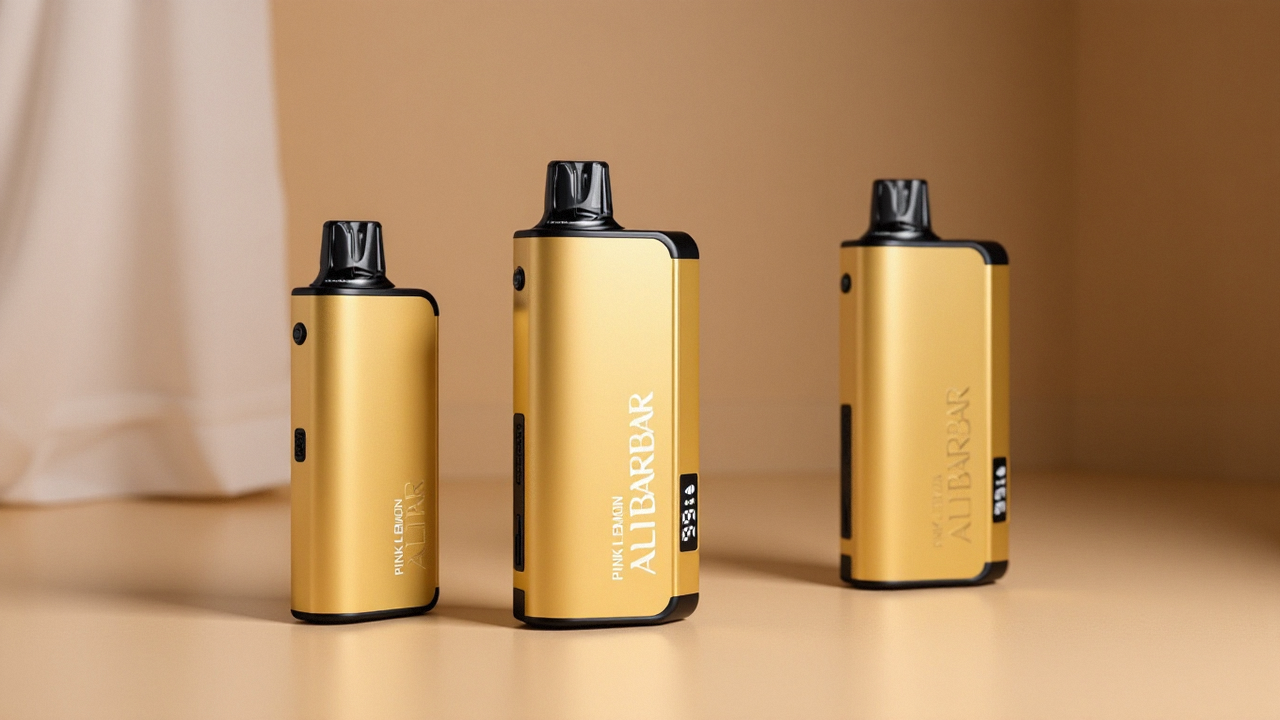
Rather than positioning itself as an everything‑to‑everyone catalogue, the shop concentrates on factory‑certified inventory from a focused product family: the ALIBARBAR INGOT 9000, INGOT 15000, Ice Adjust 12000, and their companion devices. That narrowness is not a limitation; it is a trust signal. The team can speak with authority about every SKU, maintain documented specifications, and handle post‑purchase questions with a depth of understanding that broad‑spectrum retailers struggle to match.
Crucially, OZVAPE Shop has built explicit mechanisms around accountability: inventory sourced exclusively from authorised distribution networks, standardised product information that allows direct comparison, and support staff who are reachable and empowered to resolve issues without resorting to extended email chains. For an adult user evaluating legitimacy, these are not abstract virtues. They translate into a device arriving as described, a human response if it does not, and a clear path to resolution that does not involve international shipping labels.
Common Mistakes When Selecting an Online Retailer
Even experienced users undermine their own satisfaction during the retailer selection process. The following patterns appear with enough regularity to deserve attention:
Equating catalogue size with trustworthiness – A store that lists ten thousand SKUs can do so by aggregating drop‑shipped inventory from warehouses it has never visited. Curated, documented inventory is a stronger signal than sheer volume.
Ignoring the geography of accountability – A policy that works perfectly in California may be practically unenforceable from Brisbane. The legitimate question is not “does the policy exist?” but “can I realistically act on it from where I live?”
Overweighting forum recommendations without context – A recommendation from a user who made one purchase six months ago tells you little about what happens when an order goes sideways. Look for patterns in support complaints, not just star ratings.
Assuming visual similarity indicates equivalent internals – This applies to both devices and storefronts. A polished website and the presence of payment badges offer zero assurance that the inventory is authentic.
Frequently Asked Questions
Q: Is Element Vape a scam?
A: No. It is a long‑established US retailer with a verifiable operating history. The term “scam” implies deception and nonexistent products. The more accurate concern for Australian buyers is whether the international purchasing experience, shipping reliability, and post‑purchase support align with their expectations for a legitimate transaction.
Q: Does Element Vape sell authentic products?
A: The retailer’s own claims, and the broad consensus from customer feedback, indicate that its inventory is genuinely sourced. No widespread pattern of systematic counterfeiting has been credibly documented. However, individual due diligence – checking batch codes and packaging details – remains advisable regardless of the seller.
Q: Can I order from Element Vape to Australia?
A: Yes, but with caveats. International shipping introduces customs processing, potential duties, and extended delivery timelines. The retailer’s ability to assist with an Australian‑specific customs hold is limited by its distance from local regulations.
Q: What is a better local option for Australian buyers?
A: Retailers that source directly from authorised networks and maintain an Australian support presence, such as OZVAPE Shop with its ALIBARBAR range, remove the friction associated with cross‑border transactions. The choice is not only about product authenticity but about the practical realities of returns, support, and shipping.
Q: How can I verify if a device is authentic after purchase?
A: Look for manufacturer‑issued authentication codes, check packaging for consistent labelling, and compare the device’s performance characteristics against publicly documented specifications. Factory‑certified retailers generally provide batch‑specific information upon request.
Q: What should I do if an international order gets stuck in customs?
A: Contact the carrier first, then the retailer. Be prepared for the possibility that the retailer’s support team may have limited influence over Australian customs processes. This is a structural limitation of international purchasing, not necessarily a sign of illegitimacy.
Conclusion
The question “Is Element Vape legit?” is a reasonable starting point, but it is not precise enough to guide a decision. The store is an established business that, within its domestic context, largely delivers on its promises. Whether that translates into a satisfactory experience for an adult in Australia depends on how much weight is placed on local accountability, shipping certainty, and the ability to resolve problems without international complications.
Where those factors matter – and for a growing number of users they demonstrably do – a structured approach to retailer evaluation will naturally surface local alternatives designed for the market they serve. When a shop like OZVAPE Shop{:target=”_blank”} builds its entire operation around documented sourcing and accessible support, it provides a reference point for what a legitimate transaction should feel like: ordinary, predictable, and backed by someone who will answer the phone. The right choice for any individual adult user is the one that aligns with their actual risk tolerance and daily routine, not the one that generates the most familiar search result.