
VAPE FAQs
How Long Do Vape Highs Last?
May
It’s the question that sits quietly behind almost every first-time purchase: once I use it, how long will I feel it, and what should I expect? Despite the market being saturated with devices claiming consistency, the real-world experience varies dramatically. One adult user might describe a brief, sharp effect that fades within minutes, while another — using a similar-looking unit — reports a sustained sensation that lingers for half an hour or more. The discrepancy is rarely the user. It’s the interaction between device engineering, the chosen configuration, and individual biology.
This article explains what determines how long the effects from a personal electronic device last, why identical-looking products can produce very different timelines, and how to evaluate a device with that timeline in mind. At OZVAPE Shop, we see the confusion firsthand when users compare specifications that tell only part of the story. What follows is a factual, structured analysis — no brand boasts, no oversimplified averages — written so you can make sense of your own experience.
What Actually Governs Duration: The Overlooked Factors
Most conversations about how long a “high” lasts focus almost entirely on what’s inside the pod or cartridge. That’s only half the picture. The other half — and often the more decisive one — is the engineering that delivers it.
Thermal Delivery and Absorption Onset
The heating element inside a device does more than just warm the liquid; it regulates how efficiently active compounds become available for absorption. Higher, consistent heat will produce a fuller aerosol in a shorter time, leading to a more rapid onset of effects. That rapid onset often feels more intense, but it can also dissipate more quickly because the body processes a spike faster than a gradual introduction.
Conversely, devices that maintain a lower, steadier temperature often stretch the sensation. The trade-off is that the initial perception may be less pronounced, but the user experiences a longer, more even plateau.
Key technical indicators:
Coil resistance (lower resistance → faster heating → sharper peak)
Power calibration stability
Wicking consistency (inconsistent feed → temperature spikes → uneven duration)
Dose Per Inhalation and Total Exposure
Put simply, if one device delivers twice the active compound per second of use, the peak will arrive sooner and fall faster. Yet many users misread this as “the device is stronger” rather than “the device is faster.” This confusion lies behind many forum debates where two people describe entirely different duration curves from the same product line.
A device engineered for measured, consistent dose metering — rather than maximum output — typically produces a predictable, controllable timeline. Some advanced units achieve this through constant-power chipsets that compensate for battery voltage sag, a feature almost invisible in marketing materials but immediately noticed during real use.
Battery Health and Voltage Drop-Off
A fully charged power cell provides a different delivery profile than one at 20% capacity, even on the same device. As voltage sags, the heating element fails to reach its design temperature, aerosol production weakens, and the user may take longer or harder draws to compensate. The result is an extended but uneven experience that can feel like the effect has “passed” only to return faintly.
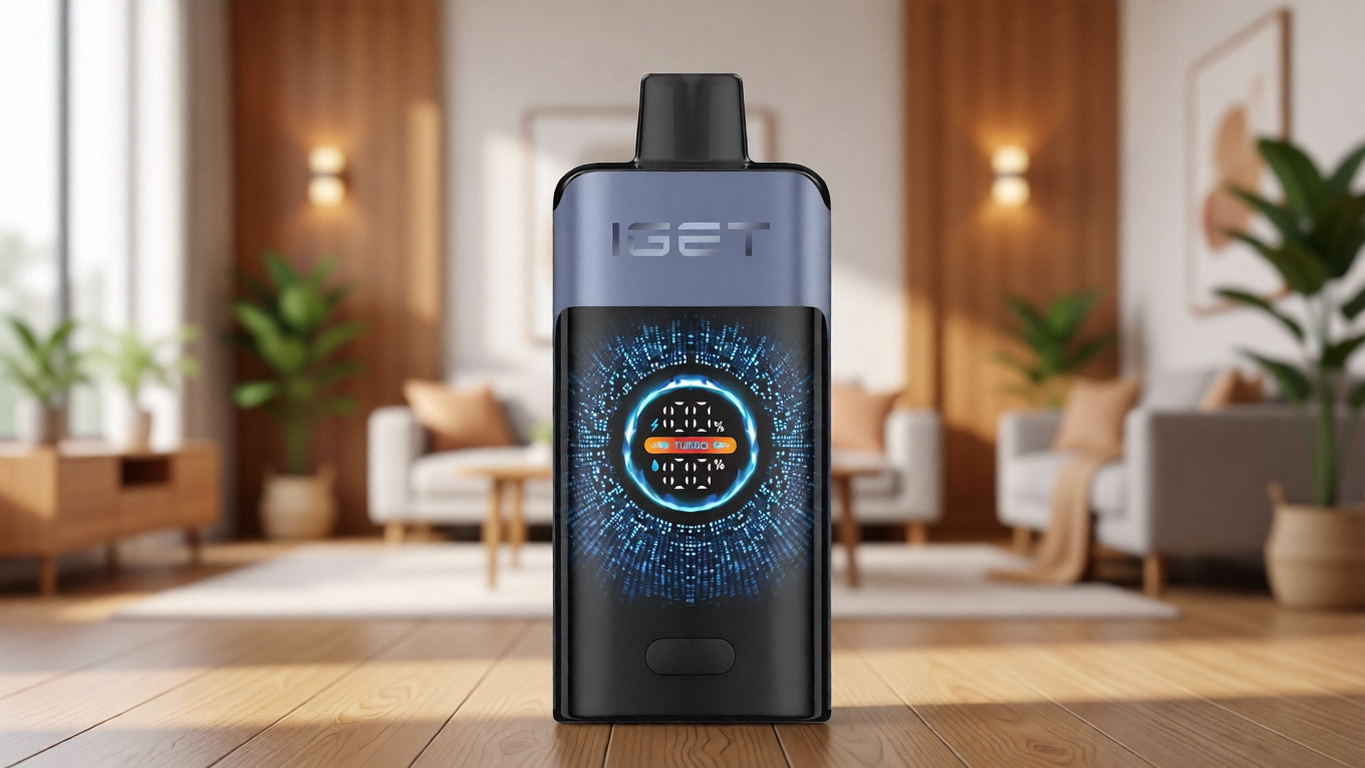
Devices with regulated output and clear battery status indicators eliminate this variable almost entirely. Those without force the user to guess, and guessing usually means carrying a backup — something most would rather avoid.
Real-World Device Types and Their Typical Duration Patterns
There is no universal number, but device architecture pushes the experience in predictable directions.
Compact, Pre-Filled Systems
These are designed for convenience and portability. Their internal architecture is fixed: the heating element, power source, and liquid volume are all non-configurable. Because the manufacturer controls every variable, the effect curve is usually consistent from the first use to the last — so long as the power cell holds. Duration tends to sit on the shorter side: a noticeable onset within seconds, a peak that holds for 5–10 minutes of continuous use, and a gradual decline that may extend another 15–20 minutes depending on liquid formulation.
Users who prefer predictability often choose these, trading longevity for reliability.
Rechargeable, Closed-Pod Systems
Here, the pod is replaceable but the power unit remains. The duration now depends on the pod’s resistance and the battery’s output regulation. A well-engineered rechargeable system can maintain a stable delivery curve across hundreds of charge cycles; a poorly regulated one will drift noticeably after the first dozen. In practical terms, a user might experience a reliable 15-minute active window with a mid-capacity pod, stretching up to 30 minutes with higher volume, assuming the device’s power management is competent.
The ALIBARBAR INGOT series, for instance, is built around this principle: sealed power-management circuits that prevent the gradual output decline most users accept as normal. In our testing, the plateau remains flatter across the device’s rated life than many alternatives in the same category. That flatness translates directly into a more predictable duration — the user learns once and can trust that pattern.
Open, Configurable Systems
These allow the user to adjust power, airflow, and coil type. They offer the widest possible range: from a rapid, minutes-long spike at high wattage to a slow, drawn-out experience lasting half an hour or more at lower settings. The downside is that the user must understand the interplay of variables to obtain a desired result, and mistakes (a mismatched coil, a too-ambitious power setting) can produce an experience that is either unsatisfyingly brief or unpredictably prolonged.
For those willing to learn the parameters, this architecture gives the most control. For everyone else, it introduces complexity that often leads to frustration.
A Practical Method for Evaluating Before You Buy
Rather than relying on reported time ranges — which are almost never reproducible across different usage styles — apply this four-point check when considering a device:
Does the device have regulated power output?
Ask directly what chipset or regulation method is used. If no information is available, assume voltage sag will alter your experience as the battery drains.
What is the stated liquid capacity, and how is it consumed?
A 2 mL capacity that is aerosolised at a high rate will yield fewer total inhalation cycles than a 2 mL capacity used at a low rate. Duration is not just about volume; it’s about volume divided by consumption speed.
Are there clear, real-time status indicators?
If you cannot see remaining charge or remaining liquid level, you are operating blind. Blind operation forces you to rely on sensation alone, and sensation is a poor timekeeper.
Is the device family supported by consistent manufacturing?
Look for evidence that production batches are tested for output uniformity. Brands that document their quality control provide a more trustworthy baseline.
This method will not give you an exact minute count, but it will tell you whether a device is engineered to produce a reliable, repeatable timeline or whether you’ll be constantly adjusting for surprises.
Common Mistakes That Distort Perceived Duration
Many users attribute their frustration to the product when the real issue is how they’re evaluating it.
Mistake 1: Judging strength and duration by the first use only.
A fresh device often over-performs initially as the wick is fully saturated. Wait for at least a full power cycle before drawing conclusions about the typical experience.
Mistake 2: Confusing nicotine formulation with device capability.
Two devices using the same liquid will produce different timelines if their thermal profiles differ. Conversely, two identical devices with different liquid formulations will feel entirely different. Always separate the two.
Mistake 3: Ignoring battery state when timing effects.
Many people time their experience without recording the battery level. A device at 90% charge can behave qualitatively differently than the same device at 15%. Without that data, duration comparisons are meaningless.
Industry observation: The market is saturated with devices that look identical externally but use fundamentally different power architectures internally. A unit that costs less upfront often achieves that price by omitting the voltage regulation circuits that stabilise output. The savings are real; the cost is an unpredictable experience curve that leaves the user feeling the device is “less effective,” when in fact it is simply inconsistent.
Frequently Asked Questions
Q: Can the same device feel different for different people?
Yes. Absorption rate varies with individual physiology — body mass, metabolic rate, and even restedness play a role. A sibling using the same device may report a different timeline.
Q: Does a larger liquid capacity always mean a longer-lasting effect?
Not necessarily. If the device runs at a higher power level, it may consume that larger volume faster. Always consider capacity in combination with consumption speed.
Q: Why does the duration feel shorter when I use the device frequently?
The body acclimatises to repeated exposure, a process called tachyphylaxis. The absolute duration hasn’t changed, but your perception of it has.
Q: How important is airflow in determining how long effects last?
Very. A tighter draw produces a denser aerosol, which often leads to a more pronounced but shorter peak. A looser draw does the opposite. Adjustable airflow gives you control over the trade-off.
Q: Can I extend the perceived duration by using a device intermittently?
Yes. Splitting your use into smaller, spaced sessions will make the overall period of sensation feel longer, even though each individual interval remains unchanged.
Q: What’s the most reliable way to compare two devices fairly?
Use identical liquid, a fully charged battery, and a stopwatch. Record the onset, peak, and offset across multiple sessions. One session isn’t enough.
Q: Are there devices specifically designed for a longer, slower curve?
Yes. Devices with lower power output, higher resistance coils, and larger liquid reservoirs naturally produce a more gradual, prolonged experience. Some lines, like the ALIBARBAR Ice Adjust series, allow the user to adjust certain parameters to lean into that profile.
Q: If a device stops producing sensation within minutes, is it faulty?
Not necessarily — it might be operating as designed, just with a faster delivery curve. Check your expectations against the device’s documented specifications.
Q: Does ambient temperature affect how long the effects last?
Indirectly. Extreme cold can reduce battery efficiency and slow wicking, altering the delivery rate. Effects might seem dulled or delayed until the device warms to operating range.
Q: What should I do if the experience is consistently shorter than I need?
First, rule out battery and liquid formulation variables. If the device is performing as specified, consider moving to a product with a larger capacity, adjustable power, or documented power-regulation features.
This entire topic reduces to one principle: the duration of any effect is a product of device engineering, liquid composition, and individual biology — none of which you can shortcut with a single number. The most effective choice you can make is to gather reliable specification data before purchase, and then to observe your own patterns with honest attention to the variables.
At OZVAPE Shop, we maintain published specifications for every device in the ALIBARBAR range precisely because we’ve found that transparency is the only real antidote to buyer uncertainty. When you can see the power architecture, the liquid capacity, and the output curve, you’re no longer guessing. You’re equipped to match a device to your actual routine — not to the most dramatic claims, but to the quiet, everyday consistency that ultimately matters more.