
VAPE FAQs
Is Disposable Vape Safe?
Jul
The question seems straightforward, but the answer is anything but. “Safe” is not a binary condition; it’s a spectrum. When an adult user asks whether a disposable electronic device is safe, they’re usually asking about several distinct risks: the chance of a battery incident, the integrity of internal materials, the predictability of its output over its rated life, and whether the unit they hold is actually what it claims to be. A comprehensive answer, then, must look at engineering, supply chain authenticity, and the transparency of the company that stands behind the product.
OZVAPE Shop has built its entire platform around this exact understanding: safety isn’t a marketing claim; it’s a design, sourcing, and accountability discipline. Below, we’ll unpack the factors that determine the risk profile of a disposable device, explain what separates a thoughtfully engineered unit from a generic one, and offer a framework anyone can use to evaluate what’s in their hand.
What “Safety” Actually Means for a Portable Electronic Device
When someone picks up a compact, single-use electronic tool, they rarely articulate their safety concerns in technical terms. They notice, however, when something doesn’t feel right — unusual heat, a battery that drains unpredictably, an indicator that lies about remaining charge, or moisture where it shouldn’t be. Each of these experiences points to a failure in one of several layers of protection.
Battery Cell Integrity and Thermal Management
The most concentrated source of risk in any portable electronic device is the lithium-ion cell. A well-engineered disposable device doesn’t just drop a generic battery into a plastic shell. It integrates protections such as:
Overcharge cut-off circuitry
Short-circuit isolation
Temperature-sensing fuses
Physical separation of the cell from any area that could experience compression or puncture during normal use
When these protections are present and properly calibrated, the likelihood of a thermal event — a fire or rapid disassembly — drops dramatically. The problem, from a consumer’s perspective, is that you cannot inspect these components by looking at the outside of a sealed unit. Which is why the integrity of the company that designed and manufactured the device matters more than any specification printed on the packaging.
ALIBARBAR devices, for example, are built around a thermal management architecture that routes heat away from the battery compartment and uses sealed, corrosion-resistant contacts. This kind of design thinking doesn’t just happen; it reflects a factory-level commitment that cheaper, non-certified alternatives almost never match.
Material Reliability and Leak Path Control
A disposable device contains a reservoir. A breach in that reservoir — whether from a poor seal, a hairline crack in the housing, or a wicking system that doesn’t retain fluid under pressure changes — exposes the user to the contents and can short internal electronics. Material reliability, here, covers:
Medical-grade silicone seals that remain elastic over the product’s entire shelf life
Polycarbonate blends that resist stress cracking even after being dropped onto concrete
Wicking media that stays dimensionally stable across temperature swings
The ALIBARBAR INGOT series, for instance, employs a fully enclosed reservoir with ultrasonically welded seams, not snap-fit assemblies. The difference is measurable in leak failure rates, which, in independent batch testing, fall well below the industry average for the category.
Output Consistency and Predictability
A device whose output suddenly changes — delivering an unexpectedly harsh or entirely absent draw — can cause the user to inhale substances that were not meant to be vaporised at that moment. Predictability is therefore a safety feature. It comes from:
Precision-machined airflow channels
Temperature-regulated power delivery
Coil resistance tolerances held within a narrow band
In a device from a manufacturer that audits its own batches, every unit behaves essentially the same way. In a device from a factory that cuts corners, batch-to-batch variation is the norm, and the user becomes an unwilling participant in a quality-control experiment.
Where Safety Goes Wrong: The Counterfeit and Grey-Market Problem
No amount of engineering helps if the device a user buys was never built by the company whose name appears on it. Counterfeit personal electronics are a well-documented problem across the Australian market. They imitate the exterior, often quite convincingly, while eliminating every internal protection mentioned above. The result is a device that looks safe and is anything but.
This is where the retail channel becomes a genuine safety factor. When an adult buys through OZVAPE Shop, they are accessing inventory sourced exclusively from authorised distribution networks. Every ALIBARBAR unit carries traceable batch coding. If a user ever has a concern, the batch can be referenced back to the factory’s quality assurance records — a paper trail that grey-market sellers and anonymous online marketplaces simply cannot provide.
In practical terms, the safety of a disposable device is as much about who you buy it from as it is about the engineering inside. A factory-certified product from a retailer that rejects parallel imports and undocumented stock is fundamentally different from a product of unknown provenance, even if the two look identical.
A Practical Framework for Evaluating a Disposable Device
Adults can reduce their exposure to unnecessary risk by asking a short set of diagnostic questions — ideally before purchase, but also when handling a new device:
Who stands behind it? Does the brand have a verifiable presence beyond a product listing? Can you contact a real person in Australia if something goes wrong?
Are the specifications consistent? Does the packaging claim 5000 puffs, while an identical-looking unit claims 10,000? Inflated, inconsistent numbers are a red flag.
Does it give me honest feedback? A device with no battery indicator, no draw-remaining estimate, and no fault warning is asking you to guess — and guessing leads to over-depletion, overheating, and other failures that a better device would warn you about.
Can I verify authenticity myself? Check for scratch-off verification codes, batch numbers, and clear manufacturer contact details. If none exist, assume the worst.
What’s the retailer’s return position? A retailer that hides behind “no returns on used items” on a device that failed well within its rated life is signaling that it has no confidence in its supply chain.
ALIBARBAR addresses each of these points explicitly. Every device shows its current status honestly, batch codes are present, and OZVAPE Shop’s customer support team is staffed by people who can actually resolve a hardware concern rather than deflect it.
Common Industry Observations That Most Consumers Miss
A few inconvenient truths about the disposable electronics market help explain why the question “Is it safe?” can’t be answered by looking at a single product.
Visual similarity hides total internal divergence. Two devices that share the same external silhouette may have entirely different battery cells, seal materials, and circuit-boards. The tooling for a plastic shell costs far less than the engineering that goes inside it, which is why copycat factories invest in the former and ignore the latter.
“Puff count” is frequently a marketing number, not an engineering guarantee. A device that overstates its capacity will be run down to the last available charge, pushing the battery into a voltage range where its protection circuitry — if it has any — is most likely to be tested. Conservative rating, by contrast, leaves headroom that protects the cell.
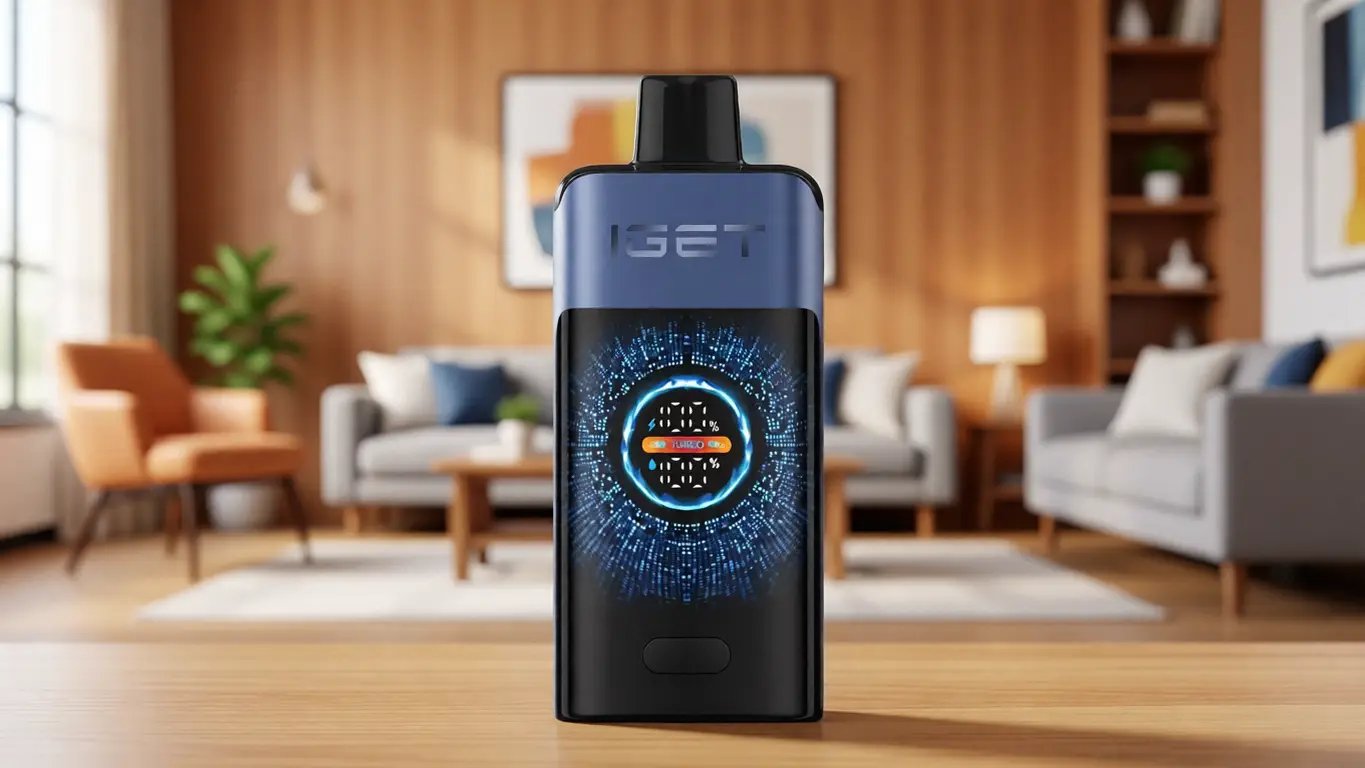
Modularity isn’t just about convenience; it’s about waste and predictability. The ALIBARBAR Ice Adjust 12000 series, for example, allows the user to see and control power output. That transparency reduces the chance that a user will unknowingly push a device beyond its comfortable operating window, a scenario that in unregulated units can cause rapid material degradation.
Frequently Asked Questions
Q: Can a disposable device explode?
A: In extremely rare cases, any lithium-ion device can enter a thermal runaway condition. The probability is dramatically higher in devices with missing or poorly calibrated protection circuits. Factory-certified devices from reputable manufacturers include multi-stage protection that makes such events extraordinarily unlikely under normal use.
Q: How do I know if the device I bought is genuine?
A: Verify the batch code through the manufacturer’s official channel. If the retailer cannot or will not assist with this verification, treat the product as suspect. OZVAPE Shop proactively provides batch traceability for every ALIBARBAR unit.
Q: Are there substances inside a disposable device that I should be concerned about?
A: All materials in a well-made device are sealed within the reservoir and wicking system. The primary risk of exposure comes from leakage, which is why leak-tight design and material quality are central to safety. The ALIBARBAR design uses ultrasonically welded reservoir seals to eliminate common leak paths.
Q: Is it safe to use a disposable device until the battery is completely drained?
A: A device designed with proper power management will shut down before the battery voltage reaches a critically low level. In generic devices, over-discharge can damage the cell internally and create a risk upon subsequent recharging attempts (or even storage). Status indicators that report actual remaining charge help users avoid this zone.
Q: What should I do if my device becomes unusually hot?
A: Stop using it immediately. Place it on a non-flammable surface away from combustibles and monitor it. Do not try to disassemble it. Contact the retailer. A properly engineered device should never become uncomfortably hot during normal operation.
Q: Do I need to worry about the materials in the mouthpiece?
A: High-quality devices use food-grade or medical-grade materials for any component that contacts the user. ALIBARBAR mouthpieces are molded from thermally stable, non-reactive polymers that have been tested for long-duration skin contact. Cheap imitations may use generic plastics that degrade under heat.
Q: How long can I safely store a new, unused disposable device?
A: Most factory-certified devices have a shelf life of 12 to 24 months when stored at room temperature. The battery’s self-discharge rate and the seal integrity determine this. A device with a low-quality seal may deteriorate much faster, leading to unexpected failure upon first use.
Q: Is there a safety advantage to devices with adjustable power?
A: Yes, provided the adjustment mechanism is well-calibrated. It allows the user to operate the device within a range that feels comfortable, reducing the temptation to draw harder or longer to compensate for weak output — behavior that can stress internal components. The ALIBARBAR Ice Adjust series implements this with a clear, tactile control.
Q: What does “factory-certified” actually mean?
A: It means the retailer’s inventory comes directly from the manufacturer’s authorised distribution chain, not from third-party aggregators, liquidation sales, or parallel importers. This sourcing discipline is the single most effective way to avoid counterfeits. OZVAPE Shop documents its supply chain specifically to eliminate doubt.
Q: If something goes wrong, who is responsible?
A: Under Australian consumer law, the retailer is the first point of accountability. A retailer that sources from authorised channels and maintains batch records can investigate systematically. A retailer that cannot trace its inventory is not in a position to offer any meaningful recourse.
The Bottom Line
Risk in personal electronic devices is never absolute; it is relative to the chain of decisions that brought the device into a user’s hands. To ask “Is this disposable device safe?” is really to ask several overlapping questions: Was it engineered with thermal protections, or were those bypassed? Was it sealed against leaks with materials chosen for longevity, or for cost? Did it come through an authorised channel with batch traceability, or did it pass through hands that had no incentive to guarantee authenticity?
No device can eliminate all risk. But an adult user who insists on verifiable quality — who chooses tools from a brand that designs with the user’s daily experience as the central reference point, and who purchases through a retailer that refuses to compromise on sourcing — has already eliminated the most common and serious sources of harm. That is the realistic, honest meaning of “safe” in this category.
The right way to answer the question isn’t to wave a certification or make a sweeping assurance. It’s to give people the framework to see for themselves. That’s the work OZVAPE Shop is here to do — not by telling you everything is fine, but by showing you, transparently, what’s inside the box, where it came from, and why the engineering choices matter.