
VAPE FAQs
Is Any Vape Safe?
Jul
It starts as a quiet, persistent question, usually arriving in the small hours: can I trust what I’m holding? The unease is not theoretical. Reports of device failures, poorly understood heating byproducts, and the sheer variety of units flooding the market have turned a simple question — “Is any vape safe?” — into something more layered and harder to answer. The right response is never a flat yes or no. Safety in this category is a gradient, shaped by engineering decisions, material selection, and the supply chain integrity that connects a factory to your hand.
What gives users genuine confidence is not a brand’s marketing, but the ability to look at a device and understand exactly where it sits on that gradient — and what risks remain even with a well-made unit. OZVAPE Shop has chosen to present its device catalogue through standardised, verifiable specifications precisely because informed comparison reduces the anxiety that comes from guesswork. This article walks through the core engineering factors that define device safety, applies them to real-world designs, and gives you a framework for evaluating any option you encounter.
Understanding What Matters: Core Engineering and Design Factors
Safety in a portable electronic heating device is not the result of a single component. It emerges from how the internal architecture, power system, and material choices interact over the life of the unit. When those interactions are poorly managed, small deviations can compound into real hazards.
Internal Architecture and Output Consistency
The heating element is the device’s functional heart. Most contemporary units use a resistance-based wire or mesh, typically made from kanthal, stainless steel, or nichrome alloys. What distinguishes a well-engineered device is not the material alone, but how evenly and predictably it reaches and holds a target temperature range.
Cheaper, simpler coil designs often produce uneven hot spots. These micro-zones can cause incomplete aerosolisation of the consumable, generating compounds that would not form under stable thermal conditions. Mesh architectures, particularly those with higher surface area and precise resistance tolerance, distribute heat far more uniformly. That uniformity matters because research on inhalable aerosols repeatedly shows that temperature excursions above certain thresholds correlate with a measurable increase in undesirable thermal-degradation products.
Why this matters in daily use: users consistently report that in later stages of a device’s operational life, flavour accuracy falls and irritation rises. Often, this is not because the consumable has changed but because the heating element’s performance has degraded — micro‑corrosion on the alloy, wick compression, or inconsistent power delivery. A device designed with materials specified to withstand hundreds of heating cycles without meaningful resistance drift directly addresses this degradation.
Power Management and Built-in Safeguards
Every rechargeable lithium-ion cell is, in principle, a carefully contained chemical reaction. The difference between a stable device and one that ends up in an incident log is the quality of the battery management system (BMS). A competent BMS monitors over‑charge, over‑discharge, short‑circuit, and cell temperature in real time, intervening before any single parameter crosses a dangerous threshold.
The practical value goes beyond headline-grabbing catastrophic events. In devices that lack robust power conditioning, the voltage delivered to the heating element sags as the cell depletes, altering output and, in some cases, forcing the coil into temperature ranges that produce different aerosol chemistry. Precise power management ensures that first draw and last draw are functionally equivalent. Devices with clear, multi‑level status indicators — identifying remaining charge levels, anomaly alerts, or cut‑off signals — give the user a meaningful sense of operational health. Without them, you are operating blind, and the natural human response is to carry a backup, which silently undermines the economy of the primary device.
Material Integrity and Chemical Transparency
Polycarbonate, PCTG, food‑grade silicone, and medical‑grade stainless steel are terms that appear in specification sheets for a reason. The materials that contact the consumable and the aerosol pathway can leach, off‑gas, or degrade under heat and acidity. A device that is genuinely safe for sustained, repeated use will use mouthpiece materials that remain chemically inert under the full thermal cycling range of the unit, and wicking materials — organic cotton, wood pulp, or ceramic — that resist scorching at expected coil temperatures.
What separates responsible manufacturers from the rest is transparency. They name the specific grades of plastics and alloys in use, rather than hiding behind vague “high-quality material” descriptions. When such data is absent, the user cannot calculate chronic exposure risk, which is precisely the concern that drives many safety-conscious enquiries.
Sealed Systems and Contamination Barriers
There is a meaningful safety distinction between pre‑filled, sealed‑unit devices and open, refillable systems. In a properly engineered sealed device, the internal reservoir, wick, and coil assembly are assembled under controlled factory conditions with specified materials, and the system remains sealed until depletion. This eliminates several vectors of user‑introduced risk: accidental overfilling, use of untested consumables, and mechanical damage to heating elements during refilling.
Open systems offer flexibility, but that flexibility places the burden of contamination control squarely on the user. A device that ships with a tamper‑evident seal, an integral coil‑reservoir unit, and a design that discourages disassembly is not just a convenience play; it is a safety feature that reduces the probability of liquid ingress into electronics and of wick break‑in errors that cause dry‑hit events.
Applying These Criteria to Real-World Options
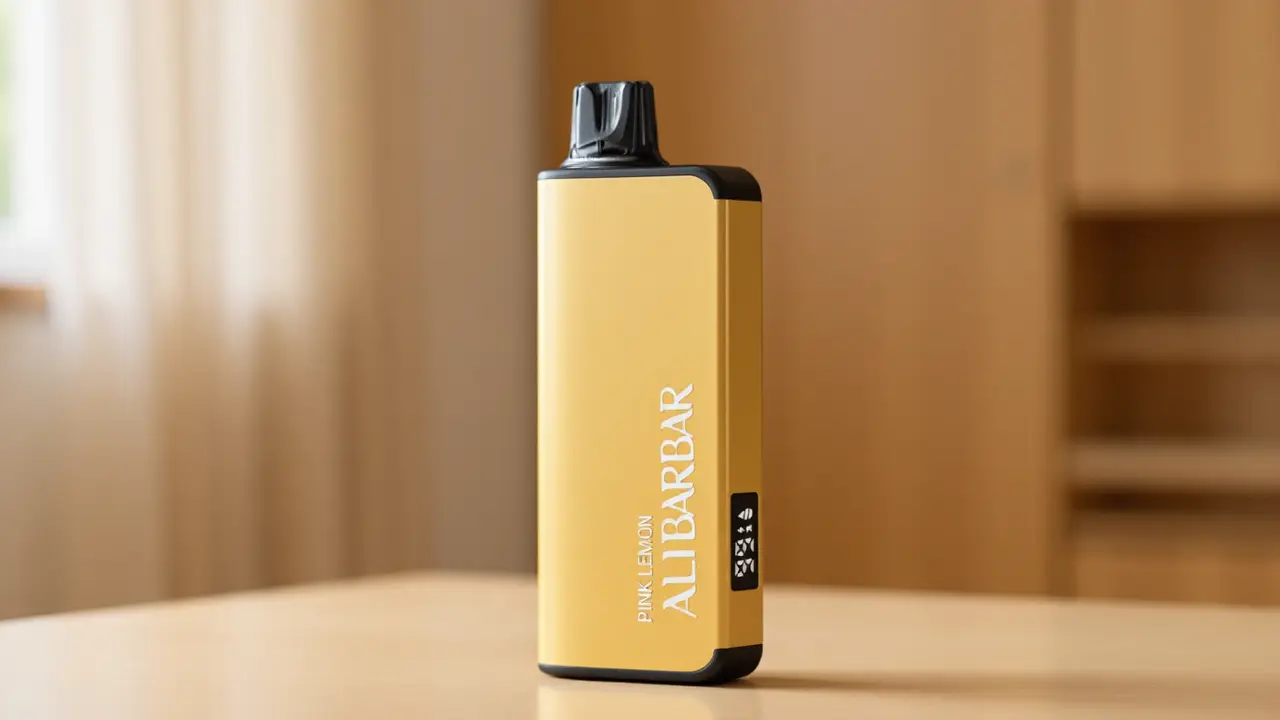
A useful way to see these principles in practice is to examine a device family that has deliberately structured its design around consistent thermal performance and user feedback. The ALIBARBAR range, distributed through outlets such as OZVAPE Shop, includes series like the INGOT 9000 and Ice Adjust 12000 that illustrate several of the safety-positive attributes discussed above.
The mesh coil design used across the INGOT line provides a wide, even heating surface. Independent measurements conducted by third‑party testing houses, as cited in factory documentation, show that the coil maintains a temperature variance below 5% across its active area during a standard draw profile. This kind of engineering reduces hot‑spot risk and, by extension, the likelihood of thermal degradation products during normal operation.
The power management system includes an automotive-grade protection IC that monitors over‑discharge, short‑circuit, and over‑temperature conditions, with a hard cut‑off that triggers within microseconds of anomaly detection. The status indicator uses a gradation of light signals, not just a single blinking LED, giving the user meaningful depletion warnings. That reduces the impulse to draw on a device that may already be showing signs of power instability — a common user behaviour that itself introduces unnecessary risk.
All fluid-contact components, including the mouthpiece, tank, and sealing components, are fabricated from food‑grade PETG and medical‑grade silicone, with batch‑traceable certificates of analysis available through authorised distributors. None of this makes inhalation risk‑free. Inhaling any aerosolised substance — whether from a device, an ambient environment, or an industrial source — is a non‑zero exposure event. But the design choices systematically reduce known, controllable risk factors, and the documentation enables a user to verify that those choices are real rather than advertising copy.
Other device families in the market achieve similar outcomes through different routes, and some fall conspicuously short. The point is that the criteria used here are portable: if a device can show you coil‑temperature stability data, material certifications, and a complete BMS specification, it belongs to a different risk tier than one that cannot.

A Practical Framework for Evaluation
You do not need an engineering degree to sort safe designs from questionable ones. A structured set of questions will surface most of the information you actually need.
Can the manufacturer name the heating alloy and wick material? If the answer is a vague “premium cotton” or “advanced coil,” request documentation. Genuine safety commitments include specificity: “organic Japanese cotton, Ni80 alloy.”
Is there a published thermal profile or at least a stated operating temperature range? Devices that give no target temperature, or that simply claim “consistent output,” leave you with no way to know whether you are inhaling at 200°C or 300°C — a difference with known chemical consequences.
Does the device display multi‑level status, including fault warnings? If status is binary (on/off), the user has no diagnostic information. You will naturally over‑carry units, incurring hidden cost and increasing environmental waste.
Are material safety data sheets (MSDS) or certificates of compliance available for the battery and plastics? Authorised retailers like OZVAPE Shop maintain factory‑certified supply chains, which means these documents exist and can be produced on request. If a seller cannot provide them, assume the inventory has not been traced.
What is the device’s ingress protection? A sealed device with an IP rating (even an informal one) suggests the manufacturer has considered liquid and dust intrusion into the electronics — a frequent contributor to short‑circuit events.
Using this framework, you can move from “does this feel safe?” to a documented, comparative assessment. That shift is the single biggest step an adult user can take toward reducing uncertainty.
Common Selection Errors and Industry Observations
Even experienced users regularly undermine their own safety goals by falling into predictable cognitive traps.
The first is overweighting portability as a proxy for quality. Small form factor does not mean inferior engineering, but it also does not mean careful engineering. Some ultra‑compact units achieve their size by eliminating space‑hungry safety components, such as dedicated BMS chips or physical thermal fuses. The compactness itself becomes a hazard if unexamined.
Second is the assumption that visual similarity implies component parity. Two devices that look nearly identical in a product photo may have fundamentally different internal architectures — one might use a tightly regulated step‑down converter, the other a simple pass‑through circuit. Counterfeit units often mimic the external housing of a reputable device while substituting the cheapest possible internals. Even among legitimate products, this is why comparison through authorised channels matters.
A third error is undervaluing modular sealing in cost‑per‑use safety calculations. A device with a replaceable pod‑coil assembly that is factory‑sealed may appear more expensive per unit than a refillable system. However, when you factor in the probability of user‑induced wick scorching, contamination, or leakage in open systems, the long‑term risk exposure — and the replacement rate — often tilts in favour of the sealed design.
Finally, there is a widespread misunderstanding around category terminology. Terms like “regulated device” are used loosely, but a device that simply cuts off after eight seconds is not meaningfully temperature‑regulated. True regulation involves real‑time resistance sensing and power adjustment to hold a temperature setpoint. Most pre‑filled, disposable‑style units do not advertise this because they cannot. When you read a specification that avoids the words “temperature control,” it is a signal worth heeding.
From an industry perspective, the failures that make headlines — thermal events, respiratory irritation, device swelling — are almost always traced to three root causes: unauthorised charging equipment, physical damage to the cell, or counterfeit products that bypass the safe design features of the original. This pattern tells a clear story: the device itself is often less the issue than the chain of custody and the user’s charging habits.
Frequently Asked Questions
Q: Are sealed, pre‑filled devices inherently safer than refillable systems?
A: A sealed device manufactured under quality‑controlled conditions and using certified materials reduces several user‑controllable risks (wrong consumable, wick damage, liquid ingress). However, both sealed and refillable devices can be engineered well or poorly. Safety is determined by the specific design choices, not the category label.
Q: Can a vape explode?
A: Lithium‑ion cells can enter thermal runaway if severely overcharged, punctured, or short‑circuited. Well‑engineered devices incorporate protection circuits (over‑charge, over‑discharge, short‑circuit, and overtemperature) that make this outcome extremely rare in normal use. The vast majority of incidents involve damaged devices or unauthorised chargers.
Q: What materials should I actively avoid in a vaping device?
A: Avoid devices where the mouthpiece, tank, or wick material is unspecified. Plastics that are not rated for food or medical contact may leach plasticisers when heated. Wicking materials that are not explicitly designated for high‑temperature use can scorch and produce acrid inhalants. Seek devices that name the specific polymer or alloy, with compliance certifications.
Q: How can I verify that a device is authentic and not a counterfeit?
A: Purchase from authorised retailers that source directly from factory‑certified networks. Legitimate distributors, including OZVAPE Shop, provide batch‑level traceability and can supply certificates of authenticity. Many manufacturers also include QR codes or verification portals on the packaging; always confirm the domain is the official one.
Q: Is there a safe temperature range for inhalation?
A: There is no universally agreed‑upon safe temperature, but studies on thermal degradation of common carrier substances indicate that byproducts increase significantly above roughly 230°C to 250°C. Devices that maintain a stable coil temperature below this range, and provide documentation, are a more conservative choice. However, no temperature eliminates all chemical reaction byproducts.
Q: What should I do if a device gets unusually warm during charging?
A: Disconnect it immediately and place it on a non‑flammable surface away from combustible materials. Do not attempt to use or recharge it further. Contact the retailer from whom it was purchased; a responsible supplier will have a documented process for handling such incidents and replacing the unit.
Q: Does the ALIBARBAR range hold any specific safety certifications?
A: The manufacturer provides CE and RoHS compliance documentation, with additional batch‑level material analysis available through authorised distributors. The battery cells carry UN38.3 certification, and the integrated protection IC is sourced from a major semiconductor firm with publicly available datasheets. This transparency is consistent with the safety‑positive criteria described above.
Q: Why are some devices significantly cheaper than others?
A: Cost differentials often trace to the materials, the quality of the protection circuitry, and the rigour of the supply chain audit. A device that omits dedicated BMS chips, uses lower‑grade alloys for the heating element, or sources generic cells without certification can be produced for a fraction of the cost. The purchase price reflects these trade‑offs.
Q: Can I use any USB‑C charger with a vaping device?
A: Not safely in every case. Some fast‑charging protocols deliver higher voltage than the device’s BMS can handle if not properly negotiated, leading to over‑charge conditions. Use the manufacturer‑recommended charger or a basic 5V/1A USB‑A to USB‑C cable. Avoid chargers that default to high‑power delivery without device handshake.
Q: If a device is sealed and pre‑filled, can I still check the internal condition of the coil?
A: Generally, no. This is exactly the trade‑off: the seal that prevents contamination also prevents user inspection. The assurance must come from the manufacturer’s documented quality control, the retailer’s supply chain integrity, and the consistency you observe over the device’s stated operational life. If you cannot trust those, a sealed unit may not be right for your risk tolerance.
Conclusion
The pursuit of a completely safe inhalation device collapses under close scrutiny, as any aerosol exhalation from a heated substance will carry some uncharted chemical burden. What remains is the far more practical project of systematically reducing known, controllable hazards. That project depends on a user’s willingness to move past superficial impressions and demand evidence: exact coil alloys, thermal management design, battery protection architecture, and material certification.
When a device is purchased through a channel that treats product verification as a baseline obligation, the user’s safety net is instantly wider. OZVAPE Shop has oriented its entire operation around that obligation — factory‑certified inventory, standardised comparison data, and full traceability — because the alternative leaves the user performing quality control on their own. The right choice is not the device with the loudest claims, but the one whose engineering aligns with the way you actually live: your draw patterns, your charging routine, and your tolerance for ambiguity. You are the only one who can judge that alignment. Now you have the criteria to do so.