
VAPE FAQs
Can You Bring Vape On Royal Caribbean Cruise?
Jul
The question is straightforward, but the answer involves navigating a specific set of policies that differ significantly from general airline regulations or land-based venue rules. If you are planning a Royal Caribbean cruise and wondering whether your personal electronic device can travel with you, the short answer is yes — with strict limitations on where and how you may use it. The longer answer involves understanding the fine print of maritime regulations, cruise line enforcement practices, and the practical realities of sailing with these devices aboard a large vessel.
At OZVAPE Shop, we believe that informed adult users make better decisions. This guide is written to clarify exactly what Royal Caribbean permits, what it prohibits, and how to avoid the most common misunderstandings that lead to confiscated devices or unwelcome interactions with ship security.
What Royal Caribbean Officially Permits and Prohibits (H2)
Royal Caribbean International maintains a published policy that is relatively clear compared to some other major cruise lines. The distinction they draw is straightforward: adult guests aged 18 and older may bring personal electronic devices aboard, but they are explicitly prohibited from using them in staterooms, on balconies, and in most indoor public spaces.
The devices themselves — assuming they comply with general safety standards for lithium-ion batteries and do not exceed vessel-imposed power limits — are not contraband. What matters is the context of use.
Permitted Items (H3)
Personal electronic devices designed for inhalation that conform to typical form factors (pens, pods, compact box-style units).
Associated accessories such as charging cables and spare battery cells, provided they are packed in carry-on luggage.
Devices with standard lithium-ion power sources that meet IATA and maritime safety guidelines for passenger transport.
Prohibited Items (H3)
Devices that physically resemble weapons or have aggressive external design elements.
Any device that produces visible emissions in indoor public spaces, including corridors, elevators, lounges, and dining areas.
Devices used in a manner that violates the cruise line’s general fire safety policies — specifically, any instance where a passenger activates a device within a stateroom or on a private balcony.
Where Can You Actually Use It? (H3)
Royal Caribbean designates specific outdoor areas for device use. The most commonly permitted location is designated smoking sections on open decks, typically on the port side of the vessel on specific deck levels. These areas are marked by signage and ash trays. If you are in an area where traditional cigarette smoking is permitted, personal electronic devices are generally also tolerated — but verification with the ship’s crew is always advisable, as individual ships may have slightly different interpretations of fleet-wide policy.
The Enforcement Reality Onboard (H2)
Understanding the written policy is the first step. Understanding how it is enforced is the second, and arguably more important, step. Cruise line security teams have broad discretion when it comes to enforcing fire safety policies at sea, and the consequences of non-compliance can extend beyond simple confiscation.
Smoke Detection Sensitivity (H3)
Modern cruise ships are equipped with highly sensitive smoke detection systems in staterooms and corridors. These systems are calibrated to detect combustion byproducts from traditional tobacco products, but certain vapor compositions — particularly those producing dense, visible output — can trigger false alarms. A false alarm on a passenger vessel is not a minor inconvenience. It can require a full crew response, including fire suppression system activation, which in turn may result in significant financial penalties charged to the offending passenger’s stateroom account.
What Happens If You Are Caught (H3)
Royal Caribbean’s enforcement actions vary, but the documented consequences include:
First offense: A written warning and confiscation of the device until the end of the sailing. The device is typically returned upon disembarkation.
Repeat offense: Confiscation and possible denial of future sailing privileges. In extreme cases, a passenger may be disembarked at the next port of call at their own expense.
Fire alarm triggers: A minimum fine of $250 USD applied to the passenger’s account, plus any additional costs incurred by the vessel.
The key takeaway is that the enforcement is not arbitrary, but it is absolute. Crew members are under strict instructions to enforce fire safety policies without negotiation.
Preparing Your Device for a Cruise — Practical Steps (H2)
If you intend to bring a personal electronic device on a Royal Caribbean cruise, a few preparatory steps can prevent problems before they arise.
Battery and Power Management
Carry all devices in your hand luggage. Checked baggage is subject to high-temperature environments and physical compression that can compromise lithium-ion cell integrity. Royal Caribbean, like all major cruise lines, prohibits loose lithium-ion batteries in checked luggage.
Ensure your device has adequate charge before boarding. This may seem trivial, but devices with depleted batteries can trigger curiosity during security screening, and a fully charged device is simply one less variable to manage.
If your device uses removable cells, bring them in a dedicated protective case. Loose batteries in a pocket or bag that contains metal objects — keys, coins, multitools — can short-circuit.
Status Feedback and Discretion
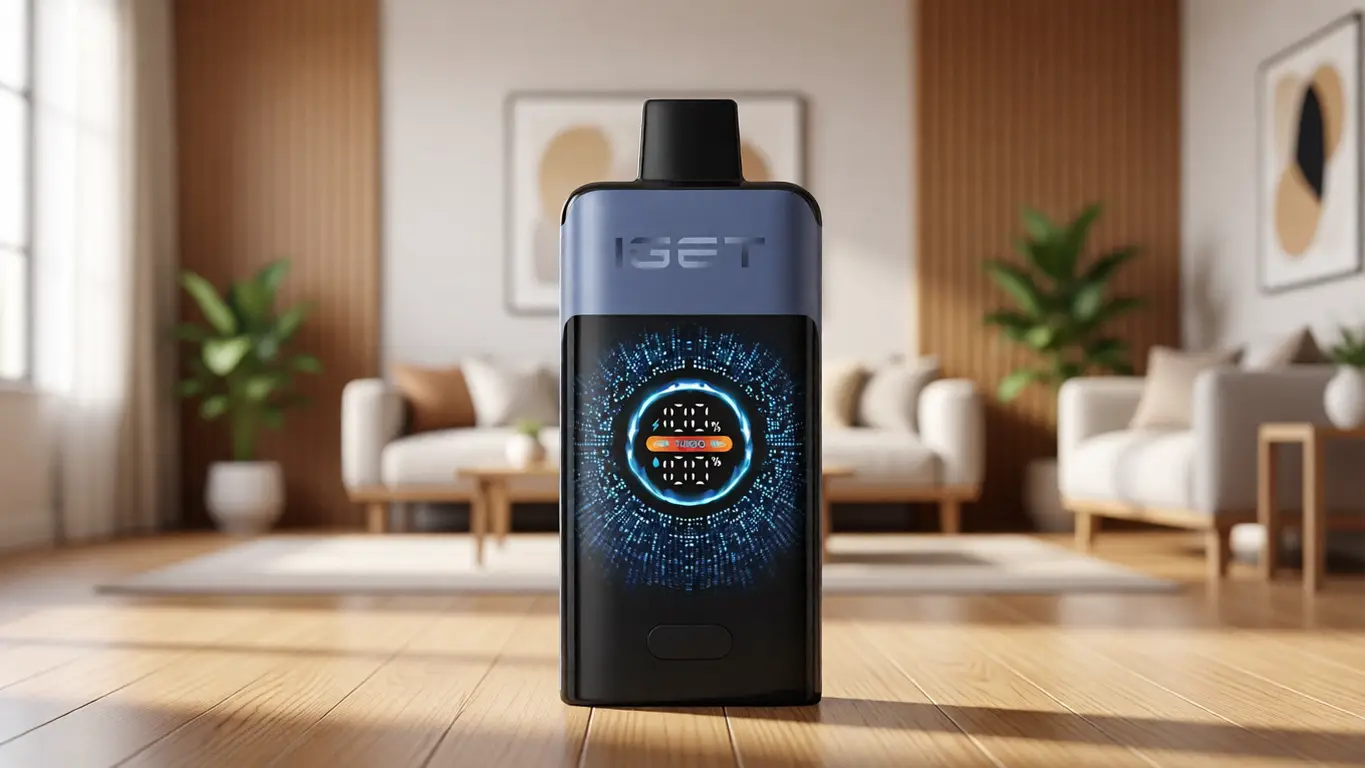
One practical advantage of devices with clear status indicators is that you can quickly verify remaining operational life without needing to activate the device in a restricted area. If you carry a device that provides no status feedback, you are effectively operating blind, and you may find yourself needing to check the device in a location where activation is prohibited. This is where well-designed status transparency becomes a practical convenience rather than a luxury feature.
Spare Devices and Backup Planning
Given that a cruise spans multiple days and port visits, carrying a single device creates a single point of failure. If that device is confiscated on day one — perhaps because a crew member misinterpreted your intent — you lose the utility for the entire voyage. Carrying a second, less expensive device as a backup is a practical hedge, provided both devices are packed in compliance with security protocols.
Port Considerations and International Waters (H2)
A cruise itinerary involves sailing through international waters, docking at foreign ports, and returning to the original embarkation point. Each jurisdiction may have its own regulatory framework regarding personal electronic devices.
At Sea
In international waters, the ship’s flag state jurisdiction governs onboard conduct. Most major cruise lines, including Royal Caribbean, are flagged in countries with permissive regulations — typically the Bahamas, Liberia, or Panama. However, the cruise line’s own policies supersede local law for the duration of the sailing. You are subject to the cruise line’s rules, not the flag state’s general legal framework.
At Port
When the ship docks, the laws of the host country apply. Some Caribbean nations have significant restrictions on the possession and use of personal electronic devices. Barbados, for example, classifies them as controlled items and may impose fines or confiscation upon entry. Jamaica and the Dominican Republic have less restrictive approaches but still enforce age and quantity limitations. Researching each port of call’s specific regulations before departure is essential.
Return to the United States
Upon returning to a U.S. port, U.S. Customs and Border Protection (CBP) will apply federal regulations. For personal use quantities, this is generally straightforward, but carrying devices in large quantities — particularly if they appear to be for resale — can trigger additional scrutiny.
Frequently Asked Questions (H2)
Q: Can I charge my device in the stateroom?
A: Yes, charging is permitted in the stateroom. The prohibition applies to active use — the act of inhaling — not to device maintenance. However, be mindful of charging in close proximity to bedding or other flammable materials.
Q: What if my device triggers a fire alarm?
A: You will be charged a minimum $250 fine, and crew will respond to your stateroom. The device may be confiscated for the remainder of the cruise. Repeated incidents may result in being denied future sailing privileges.
Q: Can I bring multiple devices?
A: Royal Caribbean’s policy does not specify a numerical limit for personal use, but quantities that appear commercial — more than 3–5 units, depending on the crew’s discretion — may raise suspicion of resale, which is prohibited. Carry what you reasonably need for the voyage.
Q: Are disposables treated differently than rechargeables?
A: The policy makes no distinction between device categories. What matters is the act of use, not the device architecture. A compact sealed unit is subject to the same restrictions as a modular refillable system.
Q: What about nicotine salt formulations?
A: The cruise line does not regulate the chemical composition of the substance within the device unless it violates general maritime safety or health regulations. However, bringing substances not approved for personal use by the embarkation country may be problematic.
Q: Can I use my device in the designated smoking areas?
A: Generally, yes. However, confirm with the ship’s crew upon boarding, as some vessels may specifically restrict vapor-producing devices even in smoking areas due to the density of the output.
Q: What happens to devices confiscated at boarding?
A: Devices identified during initial security screening as prohibited — typically those resembling weapons — are surrendered and destroyed. Devices that are permitted but used in restricted areas are usually confiscated and returned upon disembarkation.
Q: Does the policy differ between Royal Caribbean and Celebrity Cruises?
A: Both brands are under the same parent company and enforce similar policies. However, Celebrity’s newer vessels have more stringent building codes with advanced smoke detection, meaning enforcement may be more aggressive.
Q: What should I pack my devices in for security screening?
A: Place all devices and associated batteries in your carry-on luggage, ideally in a clear plastic bag or dedicated pouch for easy inspection. Keeping them accessible speeds up security processing.
Q: Is there any recourse if my device is confiscated unfairly?
A: You may request to speak with the ship’s Guest Services manager, but the security officer’s decision is typically final for the duration of the sailing. Written complaints can be filed post-cruise through corporate customer service.
Conclusion
The decision to bring a personal electronic device on a Royal Caribbean cruise involves understanding a specific set of rules, but the restrictions are navigable with preparation. The central insight is this: you may carry the device, but you cannot use it where you want, and the consequences of misusing it are substantial. The ship operates under maritime protocols that prioritize fire safety above passenger convenience, and the enforcement mechanisms — sensitive smoke detectors, trained security personnel, and substantial fines — ensure compliance is not optional.
If you are considering adding a device to your travel kit, the practical framework is simple: charge it before boarding, store it securely in carry-on luggage, identify the designated outdoor areas on the ship, and never assume a stateroom or balcony is private enough to avoid detection. The same principles that make a device well-suited for daily use — status transparency, reliable power output, and discretion — are the same qualities that make it suitable for travel.
At OZVAPE Shop, we believe that informed passengers have better voyages. Our commitment is to provide the technical and regulatory context that helps you make decisions confidently — not by overpromising, but by explaining clearly. [External link: Visit OZVAPE Shop for detailed product specifications and travel-ready device information]
Ultimately, the right device for your cruise is the one that matches your actual routine: compact enough to be unobtrusive, reliable enough to last the voyage, and discreet enough to be used only where permitted. Everything else is noise.