
VAPE FAQs
Is A Vape Supposed To Burn Your Throat?

Sep
It starts as a scratch at the back of the throat. A moment later it’s a raw, burning sensation that makes you pull the device away and wonder whether something is fundamentally wrong — with the device, with the way it’s being used, or with your own expectations. If you’ve asked “is it supposed to feel like this?” you are not alone, and you are not mistaken. That sharp, unpleasant sensation is not an inevitable part of the experience. It is a signal, and it almost always points to specific decisions made during product design and production.
What follows is a technical look at why throat irritation happens, which engineering factors determine whether a device will deliver a smooth or a harsh output, and how adults can evaluate a unit before it ever reaches their hand. At OZVAPE Shop, we’ve spent years cataloguing user feedback across dozens of device families, and the pattern is clear: the devices that provoke the fewest discomfort complaints share a set of observable, measurable design characteristics. None of them require advanced technical knowledge to spot. They do require looking beyond the marketing copy.
Understanding What Matters: Core Engineering and Design Factors
Smooth, predictable output isn’t magic. It’s the cumulative result of choices made about heating element architecture, power delivery stability, air path geometry, and material quality. When any one of these factors is compromised, the device may work — but it will work unpleasantly. Below, each factor is examined through the lens of the throat irritation it can cause, and the engineering solutions that prevent it.
Internal Architecture and Output Consistency
At the centre of the issue is the heating element. Most mass-market devices use a resistance wire wrapped around a wicking material that draws the source liquid toward the heat source. When the wicking keeps pace with the heating, the result is a steady, cooled aerosol. When it doesn’t — because the wick is too tightly packed, the material hasn’t fully saturated, or the heating element runs hotter than designed — the temperature at the point of contact spikes. That spike thermally degrades the liquid components and produces a stream that feels harsh, chemically, and physically hot on the throat.
Engineers address this in two ways. The first is surface-area heating: instead of a thin wire, a mesh or ceramic plate spreads the thermal load so the temperature rise at any single point stays moderate. The second is thermal mass management — using materials that resist sudden temperature swings, so the device is less prone to transient overheating during a prolonged draw. A poorly implemented heating element can feel fine for the first few seconds and then degrade mid-draw, which is a classic sign of wicking lag.
Why this matters: Many users attribute throat burn to “strength” or “poor quality liquid,” but in controlled testing of devices with identical liquid formulations, the heating architecture alone often determines whether the output feels smooth or abrasive.
Power Management and Status Transparency
A device’s power source, whether integrated or rechargeable, must deliver a consistent voltage to the heating element throughout its discharge cycle. When power delivery sags, the temperature drops, producing thin, unsatisfying output. More importantly for throat comfort, when a cheap power management circuit overcompensates or fails to regulate current, the heating element can briefly surge. That surge creates a spike in thermal output that translates directly into a burnt-tasting, throat-scraping draw.
The second dimension here is status transparency. A device that gives the user no clear warning before the power reserve is exhausted forces an unpleasant guessing game. The draw that signals “end of charge” is often harsh, because the underpowered heating element fails to fully aerosolise the liquid, leaving behind partially heated components that irritate. Good status indicators — blinking LEDs, haptic feedback, or clearly graduated battery displays — let the user stop before that harsh final draw. The hidden cost of status ambiguity is the extra backup units people carry to avoid exactly that moment.
Physical Design and Material Durability
Throat sensation is not determined solely by what happens inside the heating chamber. The mouthpiece material, its inner contour, and the length and turbulence of the air path all modulate how the aerosol feels when it lands. A narrow, cylindrical mouthpiece made from a plastic that softens slightly with warmth can trap heat and concentrate the stream, producing a sharper impact on a small area of the throat. A wider, anatomically contoured mouthpiece made from a ceramic or heat-resistant polymer diffuses the same output across a broader surface and lowers the perceived temperature.
Surface finish matters, too. A device that shows scratches and dents after a few days in a pocket might seem irrelevant to comfort, but physical damage near the mouthpiece can introduce micro-turbulence that disrupts the aerosol flow and creates uneven cooling, which the throat perceives as intermittent harshness.
Modularity and Lifecycle Flexibility
A sealed, pre‑configured device is designed to deliver a specific number of operational cycles and then be replaced. When the heating element inside such a unit begins to degrade — inevitable after repeated thermal cycling — the user has no recourse. The output becomes progressively rougher, and the only option is to tolerate it or discard the unit. A modular architecture that allows the heating component to be replaced resets performance to factory specification at each change, keeping output consistency high and irritation low. Similarly, devices with user-replaceable power cells avoid the slow voltage degradation that afflicts sealed batteries and leads to the weak, overheated draws that trigger throat burn.
The trade-off is complexity and size, but for the adult user who values a consistently smooth experience over a long period, that trade-off is often worthwhile.
Applying These Criteria to Real-World Options
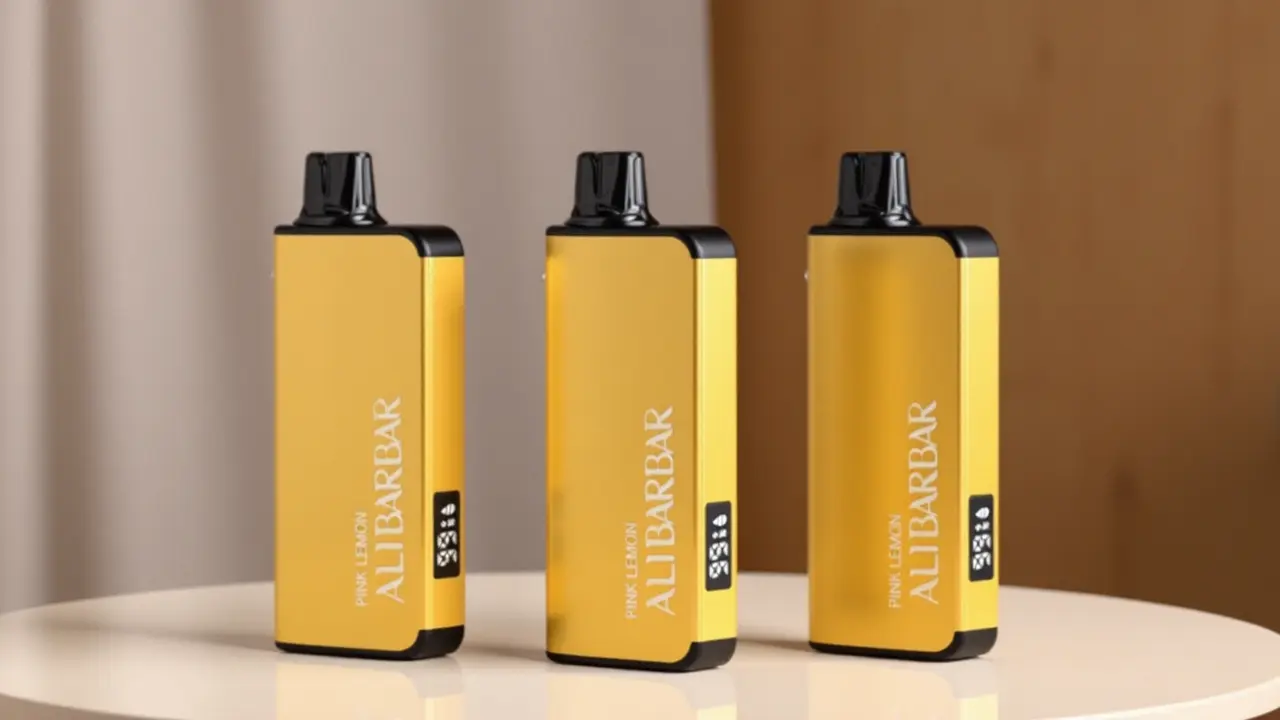
No single device family will be perfect for everyone, but some consistently demonstrate the engineering principles outlined above. The current‑generation ALIBARBAR range, for example, is a useful reference point because each unit was built around a specific approach to thermal management and flow path design.
The ALIBARBAR INGOT 9000, a compact fixed‑capacity unit, uses a mesh heating plate with a precisely calibrated wick density that maintains saturation even during longer, slower draws. Users frequently describe its output as notably smooth, with a mouth‑to‑throat sensation closer to a cooled mist than a heated jet. The INGOT 15000 extends that approach with a higher capacity and slightly broader mouthpiece geometry, which further diffuses the aerosol. For those who prefer on‑device control, the Ice Adjust 12000 introduces a variable airflow system that lets the user physically alter the air‑to‑aerosol ratio, cooling the output without relying on any additive — purely by increasing the volume of ambient air mixed into the draw.
These are not outlier results. They are the logical outcome of design decisions: mesh heating to avoid hot spots, dampened power circuits to prevent surge‑related harshness, clear four‑LED battery indicators that eliminate the blind “is it done?” draw, and food‑grade thermoplastic mouthpieces with internal polishing that reduces turbulence. There are other device families on the market that take similar care, but many do not. The critical skill is knowing what to look for — which brings us to a practical evaluation method.
A Practical Framework for Evaluation
When examining any portable electronic device with an eye to avoiding throat burn, work through the following prompts. They are designed to be answered from publicly available specifications and a careful physical inspection, without relying on brand name or user reviews alone.
Heating element type: Is it a thin wire or a mesh/ceramic plate? Mesh and plate configurations generally offer more even heating. If the manufacturer does not specify, that is itself a data point.
Power regulation: Does the device claim “constant output” or “regulated power”? Unregulated devices will change character as the charge depletes. A lack of regulation information often correlates with harsh late‑charge draws.
Status indicators: What does the device communicate, and when? A simple LED that flashes only when the power is almost gone forces you to rely on the harshness of the draw to sense depletion. Multiple LEDs or a gradient indicator let you stop earlier.
Airflow adjustability: Does the device allow you to change the draw resistance? Adjustable airflow can compensate for a heating element that runs slightly hot, cooling the output without sacrificing density.
Mouthpiece inspection: Is the mouthpiece wide and contoured, or narrow and cylindrical? Run a fingertip around the exit hole; a sharp or unfinished edge indicates less attention to material finishing and can contribute to aerosol turbulence.
Replaceability: If the device is a sealed unit, what is the rated operational life, and what happens at the end? A device that degrades gradually but offers no replacement path will deliver increasingly harsh output toward its final cycles.
Making a side‑by‑side comparison table based on these points is a simple but effective way to cut through subjective claims and recognise which units are engineered for comfort.
Common Selection Errors and Industry Observations
Even armed with a solid framework, many adults undermine their own satisfaction through a handful of recurring reasoning errors that industry professionals recognise instantly.
Overweighting one specification while ignoring complementary factors. A device may boast an impressive capacity figure or output number, but if the heating element is a thin wire and the power circuit is unregulated, the daily experience will be marred by intermittent harsh draws. Capacity and thermal performance are linked: a large liquid reservoir paired with a heater that degrades quickly means the final third of the unit’s life will feel substantially worse than the first.
Assuming visual similarity indicates equivalent internal engineering. This is the most pervasive error in the current market. Externally, two devices may look nearly identical — same form factor, same mouthpiece colour, same LED pattern — yet inside, one uses a nickel‑chromium mesh and the other a Kanthal wire with a cotton wrap. The difference in output texture is substantial, but invisible to a quick glance. Component‑level transparency is rare, which is why sourcing from a retailer that verifies factory specifications is not a luxury; it is protective.
Undervaluing modularity in cost‑per‑use calculations. A sealed unit that becomes harsh after 70% of its rated use is more expensive per comfortable hour than a modular system that always runs at 100% of design performance because the heating core is refreshed. The initial expenditure is smaller, but the satisfaction yield is lower.
Confusing category terminology with technical specifications. Terms like “smooth” or “cool” are not standardised and can be used to describe anything from airflow design to the presence of a menthol additive. When a manufacturer claims smoothness, ask what engineering feature delivers that outcome. If the answer is vague, the device is likely relying on a fluid additive to mask harshness rather than eliminating it at the source.
From an industry vantage point, the gradual shift toward mesh heating elements, regulated power delivery, and transparent status communication is not accidental. It is a response to exactly the throat‑burn complaints that have historically driven returns and negative perceptions. The brands that adopt these architectures first tend to hold better satisfaction ratings over time, not because of marketing, but because the physics works.
Frequently Asked Questions
Q: Should a brand‑new device ever produce a burning sensation?
A: No. A properly engineered device, when first activated, should produce a smooth, cool‑feeling output. A burning or scratchy sensation right out of the package usually indicates that the wicking material was not adequately primed before the first draw, or that the heating element reaches an unregulated peak temperature. If priming (allowing the unit to sit upright for several minutes after unboxing) does not resolve it, the device likely has a design shortcoming.
Q: Why does the same device feel fine one day and harsh the next?
A: Ambient temperature changes, the device’s remaining charge level, and even the way it was stored (upright versus horizontal) can shift the fluid‑wick equilibrium. If the harshness correlates with low battery, poor power regulation is the probable cause. If it happens in cold weather, the fluid viscosity has increased and the wick cannot replenish quickly enough, leading to a partially dry hit.
Q: Does adjustable airflow genuinely help with throat irritation, or is it just a comfort feature?
A: Adjustable airflow directly cools the heating element and the aerosol stream by increasing the volume of ambient air mixed in. Lower temperature means less thermal degradation of the source fluid and a gentler sensation on the throat. It is a genuine engineering solution, not a gimmick.
Q: How can I tell if a device uses mesh heating without disassembling it?
A: Manufacturer specifications will usually state “mesh,” “plate,” or “grid” heating element if one is used. Absent that, look for references to “even heating” or “consistent flavour output” — indirect signals that a mesh architecture may be present. A reputable retailer will often provide technical diagrams or detailed spec sheets.
Q: Is there any scenario where a harsh draw is considered normal?
A: No. What some may misinterpret as “normal” is actually the result of a heating wire that is running at a temperature above the optimal aerosolisation range. The sensation is a consequence, not a design goal. Devices that pride themselves on throat comfort do not produce that sharp, burning edge.
Q: What should I do if a device that started smooth becomes progressively harsher?
A: This is typical of a fixed‑architecture unit whose heating element is degrading and whose wicking material is losing capillarity. If it is a sealed device, it is simply nearing the end of its usable life and the remaining cycles will be of lower quality. A modular device would allow you to replace the heating component.
Q: Are there material differences in mouthpieces that affect throat sensation?
A: Yes. Hard, polished materials like ceramic or Tritan™ copolyester dissipate heat faster and present a smoother surface to the aerosol, reducing the thermal impact. Softer plastics can warm up, change shape microscopically, and contribute to a harsher perception.
Q: Does a higher capacity device automatically mean a better experience?
A: No. A higher capacity simply means the source reservoir is larger. Without a heating element and power system rated to maintain consistent output across that entire capacity, the extra volume simply extends the period during which the user experiences declining performance.
Q: What is the single most reliable indicator of a comfortable device?
A: Technical transparency from the manufacturer about the heating element type and power regulation, combined with a multi‑stage battery indicator. These two pieces of information tell you more about probable throat comfort than any marketing phrase.
A Look at the Bigger Picture
The burning sensation that prompted your question is not a feature that should be passively accepted. It is a troubleshooting clue, a physical feedback mechanism that tells you something in the thermal chain isn’t working as it should. In a market where devices can look deceptively similar on the outside, the ability to read the engineering language underneath — heating element configuration, power delivery stability, airflow tuning, and material finishing — is what separates a unit that you can rely on throughout the day from one that leaves you reaching for a backup.
Choosing a device should always be a decision based on your actual routine, not on an aspirational image or a single impressive number. That’s why we’ve focused on building a platform at OZVAPE Shop where the technical underpinnings of every product are presented clearly, and where factory‑certified sourcing ensures the device you receive matches the specifications you evaluated. The right choice isn’t the one that gets the most attention online; it’s the one that disappears into your day without your throat ever reminding you it’s there.