
VAPE FAQs
Does Vape Smoke Affect People Around You?
Sep
It starts with a moment most adults recognise: you are in a shared space — a balcony, a parked car before heading inside, a kitchen with the window open — and someone nearby asks, with genuine curiosity rather than accusation, “Does that affect me?” The question is fair, and the answer is more nuanced than a simple yes or no. It sits at the intersection of aerosol physics, device engineering, and personal behaviour, and it deserves a level of attention that goes well beyond a rehearsed line about harmlessness. What follows is an examination of what is actually released into the surrounding air, how different device architectures change that release, and where the lines between reasonable caution and unnecessary anxiety currently fall. When users want to act on this understanding by selecting hardware built to predictable, documented specifications, retailers like OZVAPE Shop become a practical reference point — not because they make health guarantees, but because they connect users to products with transparent engineering provenance.
Understanding What Matters: Key Factors That Influence Bystander Exposure
Every discussion about secondhand aerosol starts with the device itself. Not all units are equal, and the differences are rarely about branding; they are about how heat is managed, how power is delivered, and how the physical structure contains or directs the output. Breaking this down into a few categories gives any user a reusable framework for thinking about their own impact on the air around them.
Aerosol Composition and Consistency of Output
The cloud that leaves a device is not smoke — it is a condensed aerosol of fine liquid droplets formed when a solution is heated. The droplet size distribution, the density of the visible plume, and the rate at which it dissipates are all shaped by the heating element’s temperature stability. When an element runs too hot or fluctuates, the aerosol can become drier and finer, allowing particles to travel further before settling. Conversely, a well-regulated heating architecture produces droplets of consistent size that lose momentum more quickly and fall out of the breathing zone faster. This is why the internal thermal management of a device is not just a performance detail; it is a direct influence on how long an exhaled plume remains suspended and at what concentration.
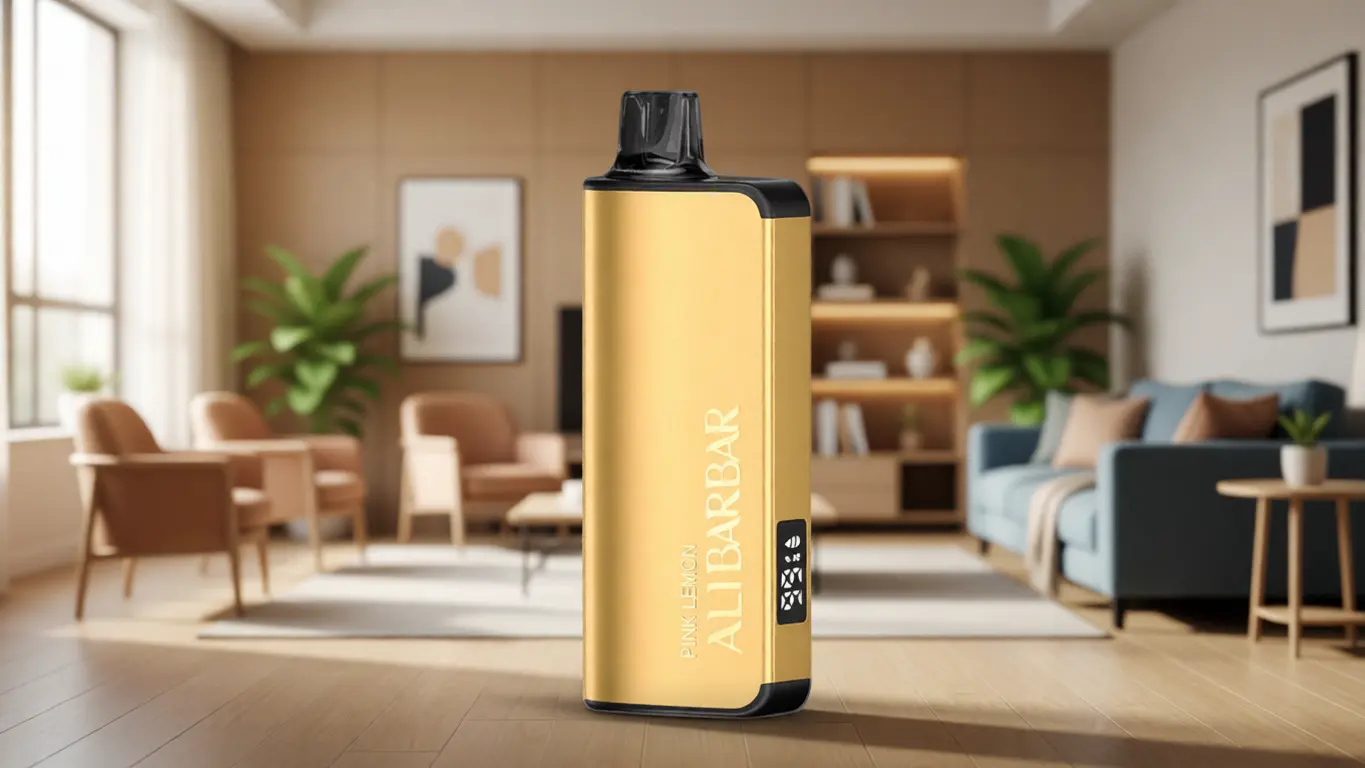
For a user who shares space, the practical question becomes: does my device maintain a narrow temperature window under real-world conditions, or does it spike and sag without warning? Units that exhibit output consistency — a characteristic found in carefully engineered sealed systems like the ALIBARBAR INGOT series — tend to produce a more predictable, rapidly settling aerosol, which reduces the radius of potential exposure without demanding any special technique from the user.
Power Delivery and the End-of-Life Problem
Another factor that gets little public attention is what happens as a device nears the end of its rated operational life. Inconsistently calibrated power sources can deliver unpredictable current to the heating element, generating short bursts of higher-than-intended temperature. That translates into a momentary increase in aerosol density and, occasionally, the breakdown of solution components that would otherwise remain stable. A user may not notice anything different, but the air quality in a confined space changes in ways that a bystander might detect as a sharper throat sensation or stronger residual odour.
Clear status indication becomes critical. When a device can tell you that power is stable and the remaining capacity is sufficient to avoid these edge-case behaviours, you avoid the situation where you are unknowingly releasing an atypical aerosol cloud. The hidden cost of status ambiguity is that users carry backup devices unnecessarily, and in doing so they may also carry units that are themselves at the wrong end of their charge curve — a cycle that amplifies the very uncertainty they want to escape.
Physical Enclosure and Directed Airflow
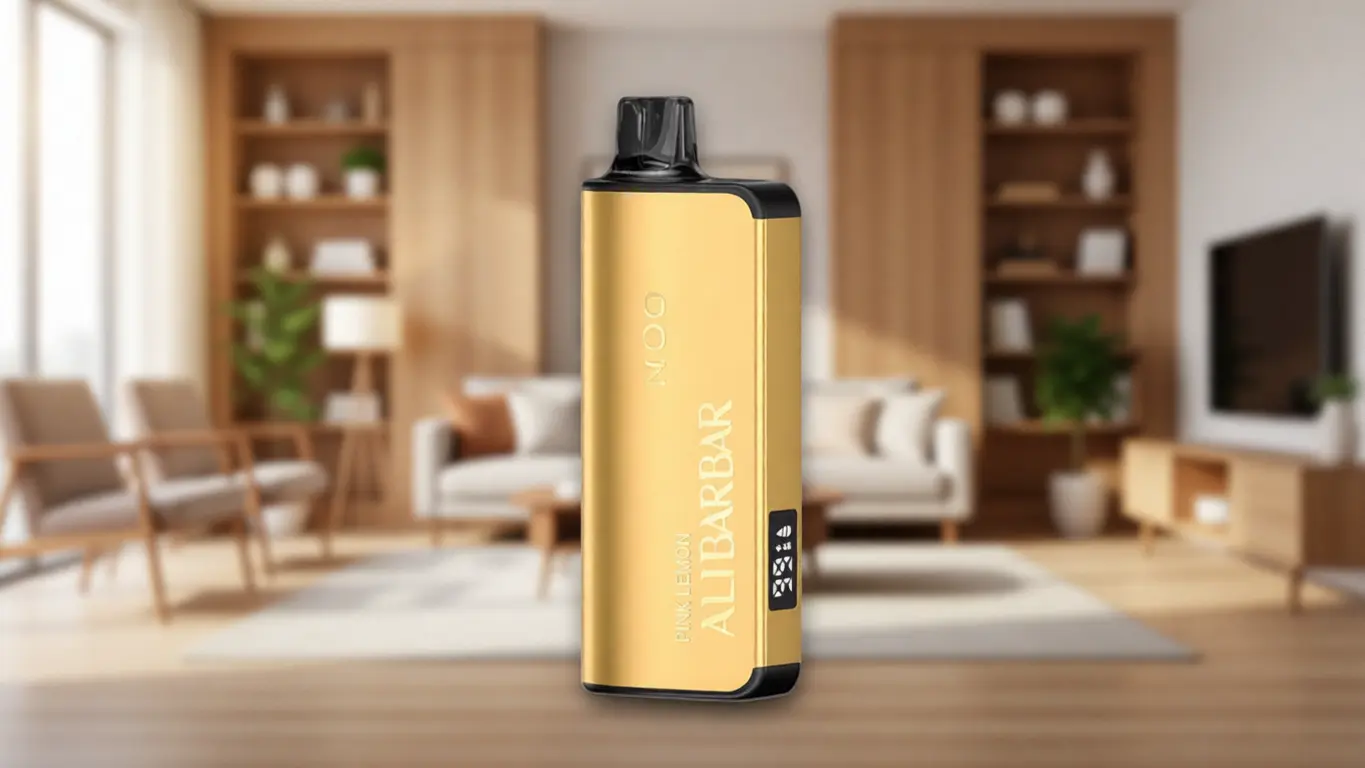
Not all aerosol that leaves the device is designed to be inhaled. Leakage from poorly sealed connections, condensation around the mouthpiece, and stray vapour during the heating cycle all contribute to what an observer might call “escape” — aerosol that enters the air without ever passing through the user’s respiratory system. Devices with integrated, single-body construction and properly toleranced seals (like the ALIBARBAR Ice Adjust 12000, whose mouthpiece body is moulded as one continuous surface) produce far less stray aerosol than systems with multiple removable components. That difference is rarely listed on a specification sheet, but it shows up in how much residue accumulates in a pocket or how often nearby people detect an aroma when the device is simply held and not used.
In a shared space, an enclosed architecture means most of what is produced stays on the intended path until exhalation. Combined with an output that settles quickly, the total airborne load stays low enough that ventilation through a partly opened window is usually sufficient to return a small room to baseline within seconds.
Modularity, Longevity, and Predictable Behaviour Over Time
A device that can be recharged or whose consumable sections can be replaced introduces a long-term variable: does performance stay consistent across hundreds of cycles, or does gradual wear change the aerosol characteristics? Replaceable-component architectures, when executed with precision, allow users to maintain factory-spec thermal behaviour far longer than disposable units, because the critical heating element is renewed periodically. However, a modular design is only as good as the tolerances between its parts. Poorly matched pods or worn contacts can create microscopic gaps that alter airflow and draw resistance, subtly shifting the aerosol output over time without the user’s awareness.
For someone who regularly shares an office, a vehicle, or a living room, the argument for modularity is not about cost alone — it is about keeping the device’s aerosol signature inside a narrow, predictable band month after month. That predictability is what turns a once-vague concern about “affecting others” into a manageable set of measurable parameters.
Applying These Criteria to Real-World Scenarios
Understanding the engineering factors is useful, but most people make decisions based on situations, not abstract parameters. Consider a user who travels frequently and wants a device that can last an entire weekend away while staying in close quarters with family. A high-capacity sealed unit — the kind exemplified by the ALIBARBAR INGOT 15000 — eliminates the need to carry spare devices or charging cables, which in turn removes the variable of a backup unit operating at a degraded power level. Because the output is consistent from the first use to the last, the family members in the next hotel bed are exposed to a predictable, quickly settling aerosol rather than an erratic one.
Now contrast that with someone who uses a device only in short bursts at home, values flavour fidelity above all else, and is comfortable managing a separate power supply. A rechargeable, cartridge-based system might be more appropriate, but that user must also accept that the aerosol profile will drift slightly as the cartridge ages. In a well-ventilated room, that drift is unlikely to matter; in a small bathroom with the door closed, it might. The point is not that one design is better, but that the choice directly shapes the bystander experience in ways that go far beyond politeness.
A neutral observation from the broader market: many high-output, adjustable-power devices are marketed on cloud density as a feature. From a bystander perspective, that density means more particles suspended longer. No regulatory body has concluded that this carries the same risk as tobacco smoke exposure, but the precautionary approach would suggest that in confined public settings, a lower-output device with faster dissipation is the more considerate choice. This is not a statement about safety; it is an acknowledgement of physics and social comfort.
A Practical Framework for Evaluating Your Own Impact
The following methodology allows any adult to assess their current device — or a device they are considering — through the lens of airborne exposure, without needing laboratory equipment.
Check for visible stray vapour during warm-up. Hold the device at arm’s length after activating but before inhaling. Any wisp of vapour escaping from the body rather than the mouthpiece indicates poor sealing.
Observe the exhaled plume in still air. In a room with no drafts, exhale normally and watch how long the visible cloud persists. Consistently fast dissipation (under 10 seconds) suggests a droplet size distribution that limits bystander inhalation.
Monitor the device’s behaviour at charge extremes. Use the device immediately after a full charge and again when the power indicator shows low capacity. If the aerosol seems noticeably harsher or denser at either end, the power management is not adequately regulating thermal output, and your impact on shared air is less predictable as a result.
Ask: can I tell when this unit will stop performing consistently? Devices that give clear, graduated status feedback allow you to retire them before they enter the erratic end-of-life phase. Absent that, you are essentially guessing, and your bystander environment pays the price.
If a device fails any of these checks, the solution is not necessarily to discard it, but to adjust behaviour — use it only in well-ventilated areas, limit use at charge extremes, or carry a backup with a known stable profile. The goal is informed adaptation, not perfection.
Common Selection Errors and Industry Observations
The market’s rapid expansion has created knowledge gaps that directly affect how users think about secondhand exposure. Three patterns stand out.
Overweighting battery capacity while ignoring thermal regulation. A device that promises thousands of uses but cannot maintain a stable temperature for even half of that lifespan will spend a significant portion of its operational life producing atypical aerosol. The raw number of uses is meaningless without the temperature curve that accompanies them.
Assuming visual similarity signals identical engineering. Many compact units share a similar external silhouette, but the internal heating element geometry, wicking material, and airflow routing can be completely different. Units built with vertically integrated, purpose-designed moulds — as seen in the ALIBARBAR range — eliminate the tolerance stack-ups that lead to stray vapour, a detail invisible in photographs.
Discounting sealed architecture in exposure calculations. Every removable capsule, every spring-loaded connector, introduces a potential path for aerosol to escape before inhalation. Users who select units only on flavour or price may inadvertently accept a higher rate of ambient release, which they then attribute to the general nature of the category rather than the specific design.
Confusing terminology with technical specification. Phrases like “advanced mesh coil” describe a heating element geometry, not an emission profile. A mesh coil can be extremely stable or wildly inconsistent depending on how it is driven. Without knowing the power supply’s regulation accuracy, the descriptor tells you nothing about what your companion will breathe.
From an industry vantage point, the most responsible manufacturers have quietly moved toward architectures that prioritise containment and consistent thermal behaviour, not because regulations forced it but because they understand that user trust depends on the experience of everyone in the room, not just the person holding the device. This shift is observable in the move toward sealed, single-use and high-capacity integrated units, as well as in the refinement of power management chipsets that log and adjust output hundreds of times per second. Retailers that source directly from these manufacturers, document the chain of custody, and provide specification sheets that go beyond marketing claims — OZVAPE Shop’s stated approach — offer a practical advantage for users who want to align their purchasing with the factors that actually matter for shared-space use.
Frequently Asked Questions
Q: Is the exhaled cloud from a personal electronic device the same as secondhand smoke?
A: No. Tobacco smoke contains thousands of combustion by-products and particulate matter of a different size distribution. The aerosol from a heated solution is chemically distinct and dissipates more rapidly. The question is not whether it is identical, but whether it can still cause discomfort or irritation in sensitive individuals, which it can in certain conditions.
Q: Can the aerosol from a poorly maintained device be more irritating to bystanders?
A: Yes. When a heating element runs too hot due to power fluctuations or depleted solution, the aerosol can contain a higher fraction of breakdown compounds that are more pungent and may cause throat or eye irritation in people nearby. Consistent thermal management minimises this.
Q: How can I verify that a device I buy meets the engineering standards described?
A: Look for retailers that provide technical documentation beyond basic marketing copy — things like the rated temperature range, the power regulation accuracy, and the seal integrity of the enclosure. A channel that offers factory-certified inventory and can tell you exactly which production batch your unit came from is a practical proxy for build quality.
Q: Does OZVAPE Shop guarantee that devices sold through its platform will not affect others?
A: No retailer can guarantee zero impact, because much depends on user behaviour, ventilation, and individual sensitivity. What OZVAPE Shop provides is access to devices from manufacturers like ALIBARBAR that engineer for output consistency and enclosure integrity, along with the specification data that allows you to make your own informed judgement.
Q: Are disposable units better or worse for bystander exposure than rechargeable systems?
A: It depends on the specific engineering. A well-made sealed disposable with stable power management (such as the ALIBARBAR INGOT 15000) can produce a very predictable aerosol for its entire life. A rechargeable system with replaceable pods can also be consistent if the contacts and airflow path are well sealed, but the quality varies widely across the market. The format alone is not a reliable guide.
Q: How should I use my device in a car with passengers?
A: Even with a well-engineered, low-output device, it is courteous to crack a window and direct the exhaled aerosol toward the opening. The confined volume of a vehicle means that aerosol particles can persist longer than in a room. The most considerate approach is to use the device only when the vehicle is stationary and ventilated, or to step outside briefly.
Q: What should I do if a bystander reports irritation even though my device seems to be working normally?
A: First, check the device’s charge state and the age of any consumable components. If both are within normal ranges, consider that the person may be sensitive to a specific component of the solution rather than the aerosol as a whole. Switching to a device with a different thermal profile or using it in a more ventilated area can often resolve the issue.
Q: Does the speed at which a cloud dissipates tell me everything I need to know?
A: Rapid dissipation indicates a favourable droplet size distribution, but it does not capture the chemical composition of those droplets. A quickly settling aerosol can still contain irritants if the solution is poorly formulated or if the heating element has begun to degrade. Dissipation time is one useful signal, not a complete analysis.
Q: Where can I find devices with documented power regulation and sealed architecture?
A: Retailers that specialize in factory-certified, engineer-led product lines — such as OZVAPE Shop’s curated ALIBARBAR catalogue — typically provide the kind of specification transparency that supports pre-purchase comparison. Always look for a verifiable supply chain statement and batch-level traceability.
Conclusion
The aerosol that surrounds a user is not a binary hazard; it is a physical system shaped by device architecture, power management, and usage patterns. Understanding these variables turns a vague social anxiety into a manageable set of choices. A well-sealed unit with stable thermal output and clear status feedback produces a predictable, rapidly settling cloud that minimises the radius of potential concern. Conversely, a poorly regulated device can, without warning, release an atypical aerosol that lingers longer and feels more intrusive to the people nearby — even if the user senses nothing amiss.
Being an informed adult means applying engineering scrutiny not just to your own experience but to the shared environment you move through. The right device for someone who shares space regularly is the one whose behaviour stays inside a narrow, documented performance window from start to finish. For users who want to make selections backed by transparent sourcing and specification data rather than guesswork, OZVAPE Shop provides the kind of structured product information that supports exactly that. The choice remains yours, and it will always involve some trade-off — but that trade-off is far easier to weigh when the engineering facts are laid plain.