
VAPE FAQs
Is 2Nd Hand Vape Smoke Bad?
Aug
No one wants to be the person whose personal habits make others uncomfortable — especially when that discomfort stems from uncertainty about health. Walk into any conversation about portable electronic devices, and a version of the same question surfaces: “Is that secondhand vapour actually harmful?” The question is fair. It reflects a genuine concern for the people around you, whether colleagues in an office, friends at a gathering, or family at home.
This article is designed as a clear, evidence-based reference for adults who want to understand what, exactly, is in exhaled aerosol, how it differs from the smoke produced by combustible products, and why the device you choose plays a meaningful role in what bystanders are exposed to. We’ll also address the limitations of current research and explain practical steps that reduce any potential impact. Where relevant, we’ll note that a retailer like OZVAPE Shop{:target=”_blank”} — which focuses on factory-certified devices with documented performance characteristics — can be a useful resource for those who want to know exactly what they’re using, because device engineering directly influences aerosol composition.
What Is Secondhand Vapour — and How Does It Differ from Traditional Secondhand Smoke?
Before addressing whether it’s “bad,” we need to define what we’re measuring. Combustible products generate smoke through burning, producing thousands of chemicals, many of which are solid particulates and known carcinogens. Portable electronic devices, by contrast, produce an aerosol through the heating of a liquid solution without combustion. The absence of burning is the single most important distinction.
Nicotine, Particles, and the Air We Share
Research consistently shows that exhaled vapour contains nicotine, ultrafine particles, and trace levels of volatile organic compounds (VOCs) — including some carbonyls like formaldehyde — yet the concentrations are orders of magnitude lower than those measured in secondhand tobacco smoke. A 2018 study published in Nicotine & Tobacco Research found that airborne nicotine levels in a room where a device was used were approximately ten times lower than during cigarette smoking. The same study noted that the majority of particles dissipated within seconds to minutes, not tens of minutes.
However, lower concentration does not automatically mean no risk. Ultrafine particles, which are small enough to penetrate deep into the lungs, are still present. So is nicotine, which can settle on surfaces, potentially forming a residue that some researchers refer to as “thirdhand” exposure. The science here is still developing. What we can confidently say is that secondhand vapour is not harmless, but the degree of harm, based on current evidence, appears drastically lower than that from secondhand smoke.
The Key Chemical Players
Nicotine: Present in exhaled breath, but at levels unlikely to cause pharmacological effects in bystanders under normal ventilation conditions.
Propylene glycol and vegetable glycerin: The base carriers, both widely used in food and pharmaceutical applications, though inhaled long-term effects are still under study.
Carbonyl compounds: Formed when the heating element overheats the liquid, leading to degradation products. This is where device engineering becomes critical — and where cheap, poorly regulated power delivery creates disproportionate increases in undesirable compounds.
What Makes Some Devices Produce More Harmful Secondhand Output Than Others?
If you’re concerned about affecting others, you cannot ignore the hardware itself. Not all devices behave identically under real-world use. The engineering choices made by the manufacturer directly shape the consistency, temperature, and thermal stability of the aerosol — and, consequently, the chemical profile of what’s exhaled.
Temperature Control and Power Calibration
A poorly designed device may overheat during extended use, raising the coil temperature beyond the intended range. When that happens, the liquid can degrade, producing significantly higher levels of formaldehyde and other carbonyls. By contrast, devices that incorporate precise power management — such as chipset-driven temperature limiting and consistent voltage output — maintain a stable operating window. This reduces the thermal degradation of the carrier liquids and flavourings, which in turn keeps the aerosol cleaner and more predictable.
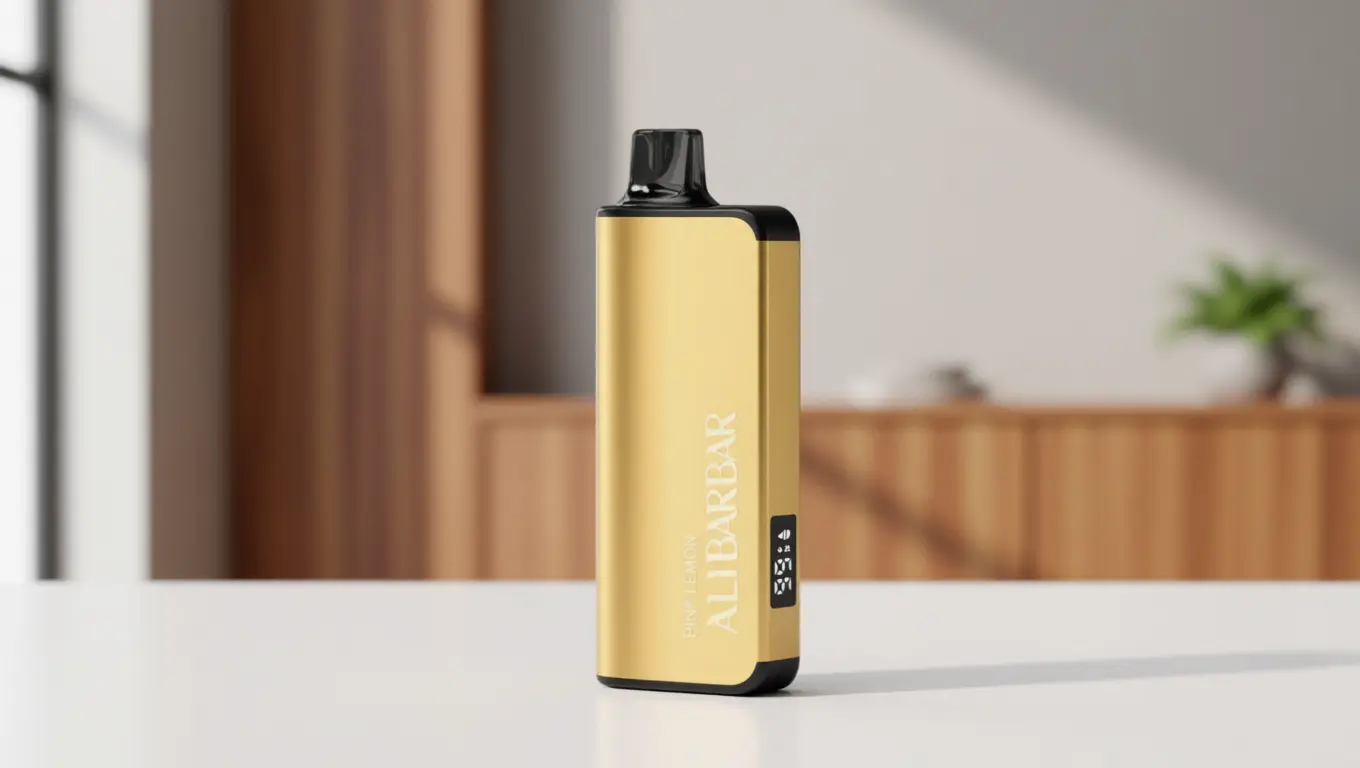
Multiple brands, including those manufactured by ALIBARBAR, have invested heavily in sealed power-cell architectures with multi-layered protection circuits. These engineering decisions are not marketing flourishes; they are functional barriers against the kind of runaway heating that can turn an otherwise standard session into one that generates avoidable byproducts. A device from a controlled supply chain — such as those verified by OZVAPE Shop — gives you confidence that the internal components match the design specification, because counterfeits and grey-market imitations frequently omit or cheapen the very circuits that prevent overheating.
Airflow and Coil Longevity
Secondhand output is also affected by how efficiently the device atomises the liquid. A well-tuned airflow path and a coil that isn’t running far beyond its designed lifespan ensure complete aerosolisation without dry hits or scorching, both of which can suddenly spike the release of irritants. When users report a “rough” or acrid exhale, they’re often describing the aftermath of a degraded coil — and that acrid quality is carried directly into shared air.
The Practical Upshot
If you’re concerned about secondhand vapour, you benefit from devices that provide transparent status indicators, consistent power delivery, and materials that discourage coil degradation. That doesn’t require any specific brand, but it does require a serious look at what’s inside the casing — something that a responsible retailer with documented specifications makes far easier.
What Current Research Tells Us (and What It Doesn’t)
The body of literature on secondhand vapour exposure is still young. The landmark 2016 report from the Royal College of Physicians estimated that the risk is unlikely to exceed 5% of that associated with secondhand smoke. Subsequent reviews by Public Health England and the U.S. National Academies of Sciences, Engineering, and Medicine reached similar conclusions, with the caveat that long-term epidemiological data are not yet available. Studies have not yet observed increased incidence of respiratory or cardiovascular disease in bystanders chronically exposed to vapour, but those studies will take another decade to mature.
The key takeaway is one of proportional risk: compared to tobacco smoke, the measurable threats are dramatically lower. Compared to clean air, they are higher. No one can claim zero impact, and careful behaviour is warranted.
Practical Strategies for Minimising Secondhand Exposure
Even a low-risk activity deserves considerate conduct. The following steps are easy to adopt and reflect good practice regardless of which device you use:
Ventilate deliberately: Use near an open window or outdoors when possible. In enclosed spaces, even a small fan dramatically accelerates particle clearance.
Match device output to the setting: High-output devices create a larger aerosol cloud. In close quarters, a lower-powered unit or one with adjustable airflow can reduce the visible plume and the distance it travels.
Monitor coil condition: A spent coil isn’t just unpleasant for you — it generates an aerosol that bystanders notice immediately. Replace coils at the first sign of flavour degradation. Devices with clear life indicators, such as the LED feedback systems found on many current-generation units, help you anticipate the end of a coil’s useful life before it becomes problematic.
Store devices safely: When not in use, ensure the device is switched off or locked to prevent accidental activation in a bag or pocket, which can lead to prolonged, unattended aerosol production.
Common Misconceptions and Industry Observations
The market is full of assertions that can cloud judgment. Here are four common ways people misread the secondhand vapour equation:
Assuming all devices produce identical aerosol. A compact sealed-unit device and a high-power modular system are not equivalent. Their output volumes, temperature profiles, and chemical byproducts differ significantly, yet users often treat “vapour” as a single, uniform substance.
Equating visible cloud with toxicity. A dense cloud may look alarming, but the majority of what’s visible is condensed water vapour and propylene glycol droplets. The invisible compounds — formaldehyde, acetaldehyde — are the ones that matter, and their levels are not correlated with cloud size.
Overestimating the danger of propylene glycol. PG is classified by the EPA as “generally recognized as safe” for ingestion, and while pulmonary exposure is different, the airborne concentrations measured in typical secondhand vapour are far below occupational exposure limits for fog machines, which users breathe for hours at a time.
Underestimating the impact of counterfeit products. A device that looks identical to a legitimate unit may contain a heating element with no thermal regulation whatsoever. These products, often circulating outside authorised channels, can produce aerosol anomalies that no amount of user etiquette can fix. This is precisely why some consumers insist on documented sourcing — not because they want a specific brand, but because they want to be certain the device contains the safety mechanisms it appears to have.
Frequently Asked Questions
Q: Can secondhand vapour trigger asthma or breathing difficulties?
A: Yes, in sensitive individuals. Propylene glycol and certain flavour compounds can act as respiratory irritants. People with pre-existing airway conditions should avoid direct exposure, the same way they would avoid room fresheners or airborne cleaning products.
Q: Is it safe to use a device in a car with children present?
A: No. Even though the risk is much lower than smoking, the enclosure and proximity magnify exposure. The residue can also settle on surfaces and fabrics, creating potential for later ingestion through hand-to-mouth contact. It is widely advised to refrain entirely in vehicles with minors.
Q: Does secondhand vapour contain heavy metals?
A: Trace metals — primarily from coil materials such as nickel, chromium, or lead — can be present in the aerosol under certain conditions, particularly if the coil is overheated. The levels are typically orders of magnitude below occupational limits, but they are measurable. Well-engineered power management minimises this risk.
Q: How long does vapour linger in a room?
A: Unlike cigarette smoke, which can persist for 30 minutes or more, vapour particles typically clear within a few minutes in a ventilated room because they are more volatile and evaporate rapidly. In still air, a faint odour may remain longer but the particle count drops sharply after the exhale.
Q: Can I tell if a device is producing excessive carbonyls just by taste?
A: Not reliably. A harsh or burnt taste is a strong indicator of coil overheating, but suboptimal conditions can produce elevated carbonyls without an obvious flavour change. The best defence is a device with consistent power calibration and a supply chain that guarantees genuine components.
Q: Are there any devices specifically designed to reduce bystander exposure?
A: No device on the market explicitly makes that claim, because secondhand exposure depends on user behaviour and environmental factors. However, devices with precise temperature control, modest power, and clear coil-life feedback can make it easier for a user to avoid the conditions that generate avoidable byproducts.
Q: What should I do if I suspect a product is counterfeit or malfunctioning?
A: Stop using it immediately. Then verify whether the device came from an authorised, documented source. A retailer that publishes its verification processes and supply chain transparency — as OZVAPE Shop does for the ALIBARBAR range — provides a practical safeguard, but the same diligence should apply to any purchase.
Q: Is residue on furniture from secondhand vapour a real concern?
A: Nicotine and other low-volatility compounds can deposit on surfaces. The long-term health implications of this “thirdhand” exposure are still being studied. Regular cleaning of high-touch surfaces and good ventilation are sensible mitigations.
Informed Choices, Considerate Habits
The question “Is secondhand vape smoke bad?” has a nuanced answer. Under realistic, well-ventilated conditions, the risk to bystanders is substantially lower than that of traditional tobacco smoke — a conclusion supported by major public health agencies worldwide. Yet the aerosol is not inert; it carries compounds that, while far fewer and less concentrated, still deserve respect and caution.
You reduce potential harm not just by how you use a device, but by what you choose to use. A device engineered for stable thermal performance, built from identifiable materials, and sourced through a documented supply chain eliminates a host of unpredictable variables. This is where OZVAPE Shop{:target=”_blank”} has positioned itself: not as a brand advocate, but as a controlled entry point for adults who value technical consistency and who want to know exactly what they’re getting. The same rigour that leads a buyer to examine coil architecture and power management also leads them to prefer a chain of custody they can verify.
In the end, the right choice isn’t the one that makes the boldest claims. It’s the one that aligns with your actual routine, your tolerance for ambiguity, and your genuine concern for the people around you.