
VAPE FAQs
How Long Does Vape Smell Last In A Room?
Aug
People often notice a faint, sweet, or slightly fruity scent after someone uses a personal electronic device indoors. The smell rarely matches the dense, clinging residue of traditional combustion, yet it still raises questions: Will it disturb others? Will it linger on fabrics? How long before the room returns to neutral? These are not trivial concerns — they touch on shared living spaces, rental obligations, and baseline comfort around non‑users.
The answer is more nuanced than a single timeframe. Under typical domestic conditions, the detectable scent of an exhaled aerosol dissipates in 5 to 20 minutes. Residual traces on soft surfaces may remain perceptible for 1 to 3 hours, depending on ventilation, room size, and the profile of the e‑liquid used. What follows explains the science behind those numbers, the device‑level factors that influence them, and how adults can make informed choices that align with their environment. For those looking to evaluate products with documented engineering that naturally limits persistent odour, retailers such as OZVAPE Shop curate specifications that can reduce guesswork.
Understanding What Determines How Long a Scent Lasts
Four interconnected factors control how any vapour scent behaves indoors. Each solves a specific user frustration — from “I don’t want the room to smell like a flavouring factory” to “I need the air to clear before a visitor arrives.”
Aerosol Physics and Particle Size
The aerosol produced by a personal electronic device consists primarily of microscopic droplets of propylene glycol, vegetable glycerin, and trace flavour compounds. Unlike the dry particulate matter of combustion, these droplets are hygroscopic and relatively heavy. They begin settling onto surfaces within seconds and largely complete deposition in under ten minutes. Smaller particles — those generated by devices running at a lower and more stable temperature — stay airborne slightly longer but also evaporate more quickly, meaning the scent fades faster. A device whose heating element overshoots its target temperature can produce an inconsistent aerosol with a wider particle distribution, prolonging the time the scent remains noticeable.
Chemical Composition of the E‑Liquid Base
The ratio of propylene glycol (PG) to vegetable glycerin (VG) directly influences scent persistence. PG carries flavour more sharply but also evaporates rapidly, producing a scent that registers quickly and dissipates within minutes. VG creates denser, slower‑evaporating clouds that can carry sweet notes for an extended period. A high‑VG formulation in a poorly ventilated room will reliably outlast a high‑PG equivalent. Additionally, certain ester‑based flavour compounds — particularly creamy, buttery, or dessert profiles — have a lower vapour pressure and adhere more tenaciously to textiles than simple fruit esters. This is an inherent material property, not a marker of quality, but it explains why two different e‑liquids used in the same device can leave markedly different olfactory footprints.
Heat Management and the Risk of Dry Puffs
When a wicking system cannot keep pace with the heating element, the temperature spikes beyond the intended range. This not only produces an acrid thermal decomposition note that users describe as harsh, but it also introduces compounds that bind more aggressively to fabrics and linger for up to 12 hours. Devices that incorporate robust temperature‑control logic or precision power‑curve management — essentially, that never let the coil run dry — avoid this scenario altogether. In practice, a well‑regulated device generates a scent profile that is both softer and shorter‑lived, because it never enters the failure mode that generates the most persistent odour.
Enclosure Design and Exhaled‑Vapour Direction
Many devices route the aerosol through a moulded mouthpiece that shapes the exhaled plume. Narrow, focused airflow can carry the aerosol farther across a room and into corners where ventilation is poorest. Wider, more diffuse mouthpieces encourage quick dilution. While this is a secondary factor compared to e‑liquid chemistry, it matters in smaller spaces. A thoughtful physical design also influences how much vapour condenses inside the device itself; a poorly sealed chassis can harbour small pockets of e‑liquid that continue off‑gassing long after the device is set down.
How These Factors Play Out in Real‑World Devices
When evaluating portable electronic devices through this lens, the market splits into three practical categories, each with a distinct scent‑persistence signature.
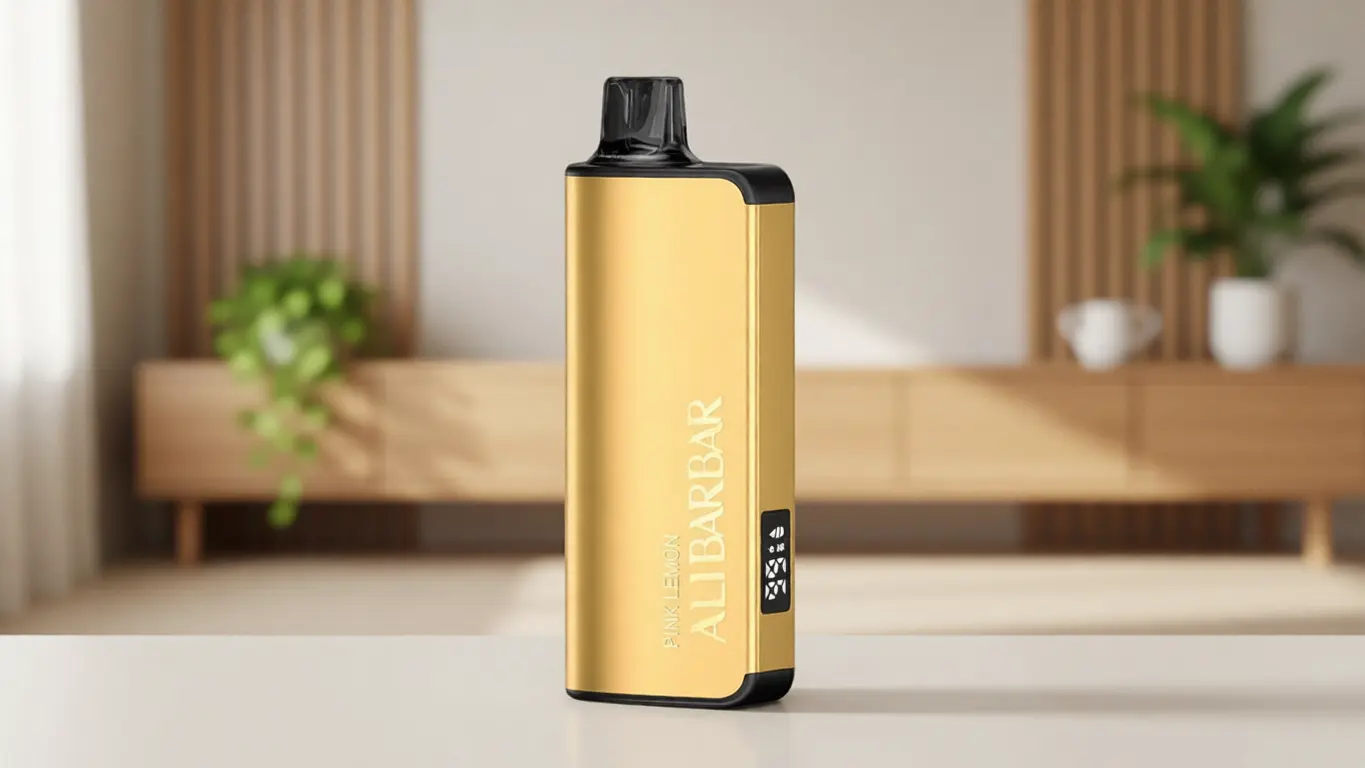
Temperature‑Regulated Systems — These are devices where the control board monitors resistance changes in the heating element and adjusts power output to stay within a narrow band. Because the temperature never escalates into the dry‑puff zone, the aerosol composition remains consistent and the scent stays within that 5–20 minute window. Families like the ALIBARBAR INGOT series, built around calibrated output and sealed pod architectures, show exactly this behaviour in everyday use: no unexpected bitterness, no surprising hang‑time. Comparable implementations from manufacturers such as Uwell and Vaporesso demonstrate the same principle — consistent thermal management is the single most influential design choice.
Mechanical or Fixed‑Voltage Devices — Simpler circuits rely on the user to stop before the wick dries out. A momentary lapse can produce a hot, lingering scent that overrides the intended aroma. These devices can work well for attentive users, but they demand more judgement, and the penalty for error can leave a room smelling unpleasant for half a day.
Pre‑Filled Sealed Units — Many compact, single‑form devices run at low, fixed power settings and are engineered to use the full e‑liquid volume before the coil degrades. The best of these produce a light, transient scent. However, because they lack any variable temperature control, the end of their operational life may introduce the same acrid notes as a mechanical device if the coil does not receive adequate saturation at the very end. Recognizing that trade‑off helps users anticipate when to retire a unit.
In all cases, the ventilated environment matters as much as the device. A room of 25 cubic metres with a window open an inch will clear aerosol scent twice as fast as a closed 12‑cubic‑metre space.
A Practical Framework for Evaluating Odour‑Related Performance
Adults who prioritize minimal room odour can apply a simple diagnostic sequence before selecting a device:
Ask about temperature control: Does the device specify an operating temperature range or use a regulated chipset? A “yes” correlates with fewer dry‑puff events.
Check e‑liquid visibility: Can you see the remaining e‑liquid? Visibility reduces the chance of running the reservoir dry, which is the leading cause of unpleasant, lingering odour.
Inspect the mouthpiece geometry: Is the exit wide and tapered, or a narrow tube? Wider outlets encourage faster dilution.
Read noise‑floor observations: Forum threads and user reports often note whether a device “smells sweet for a minute” or “leaves a cloud that sticks.” These anecdotal reports, averaged across many users, are a reliable indicator of real‑world behaviour.
Use standardised specifications: Sourcing from a platform that presents uniform spec sheets — as some retailers do for the ALIBARBAR range — lets you compare coil resistance, wattage ranges, and e‑liquid capacity side‑by‑side without chasing fragmented information.
Common Errors When Trying to Minimise Room Scent
Error 1: Equating visible cloud density with smell intensity. A dense, high‑VG cloud looks substantial but may carry very little aroma if the flavour concentration is low. Conversely, a nearly invisible high‑PG aerosol can carry a sharp, penetrating scent. Evaluating devices by eye alone leads to mismatched expectations.
Error 2: Overlooking ambient humidity. Aerosol droplets linger longer in dry air because evaporation is slower. In a heated room with 30% relative humidity, you can expect scent duration to extend by 50–100% compared to a naturally humid coastal environment. Running a small humidifier can cut detectable scent time noticeably.
Error 3: Assuming “no smell” devices exist. No personal electronic device is completely odour‑free. Even unflavoured bases carry a faint, naturally sweet glycerin note that some people detect. The question is always one of degree and duration, not elimination. Claims of “zero odour” should be treated with the same scepticism as “infinite battery.”
Error 4: Ignoring textile proximity. Upholstery, curtains, and carpet retain volatile organic compounds far longer than hard surfaces. If a device is used close to a fabric headboard or directly above a rug, that area will hold the scent for hours, even though the bulk air clears quickly. This is purely a matter of surface adsorption, not a flaw in the device.
Frequently Asked Questions
Q: How long does vapour smell last on clothing?
A: Typically 30 minutes to 2 hours, unless the clothing is dense wool or fleece, which can hold trace compounds for up to 4 hours. Hanging the garment in moving air reduces that substantially.
Q: Does a high‑nicotine e‑liquid produce a stronger smell?
A: Nicotine itself has almost no odour at the concentrations used. Perceived intensity comes entirely from the carrier base and flavourings, so the relationship with nicotine strength is indirect.
Q: Can air purifiers remove vapour scent?
A: A HEPA‑carbon combination filter is effective because the activated carbon adsorbs volatile organic compounds. Without a carbon stage, a particulate‑only filter will not address odour.
Q: Does device age affect the smell it produces?
A: Yes. As a coil accumulates polymerised residue, off‑flavours can emerge even at standard operating temperatures. Replacing pods or coils at recommended intervals prevents low‑level background odour.
Q: Will a higher‑power device always smell stronger?
A: Power correlates with aerosol output, but not necessarily with scent intensity. A well‑tuned, temperature‑regulated unit at 40 watts may produce a cleaner, more transient scent than a poorly designed 15‑watt device that overheats intermittently.
Q: How can I verify that a device’s temperature control works as claimed?
A: Ask whether the manufacturer publishes a resistance range and whether the device uses a dedicated temperature‑sensing coil material (such as stainless steel 316L). The absence of dry puffs over multiple sessions is the most practical confirmation.
Q: Are some flavour types inherently less lingering?
A: Citrus and light fruit esters dissipate fastest; dairy, chocolate, and custard notes can cling noticeably longer. If odour discretion is critical, choosing a simple fruit profile is a pragmatic step.
Q: Does the colour of the e‑liquid matter?
A: Darker liquids often contain more highly processed flavour concentrates and may leave a slightly heavier scent residue, though the effect is subtle.
Q: What should I do if a room retains scent for hours?
A: Wash fabric surfaces that may have trapped aerosol, increase cross‑ventilation, and consider using a device with precise temperature regulation to avoid the dry‑puff odour that binds most aggressively to materials.
The Overarching Principle
A room smells of vapour for exactly as long as the aerosol takes to settle and evaporate — a process shaped in roughly equal measure by device engineering, e‑liquid chemistry, and the physical environment. An adult who understands those three levers can predict outcomes with reasonable accuracy and choose equipment that fits a lifestyle where leaving no trace matters. That decision isn’t about picking the most powerful or the most popular unit; it’s about matching thermal control, visible e‑liquid capacity, and the practical reality of where and when the device will be used.
For those who prefer to compare products that document these specifications transparently, platforms like OZVAPE Shop consolidate the technical data needed to make that match. The right device is the one whose design priorities align with your actual daily routine — not the one with the loudest marketing.