
VAPE FAQs
Is 2Nd Hand Vape Bad For You?

Oct
Thinking as a senior product analyst, the core of this question isn’t about moral judgment but about engineering, safety, and predictable performance. A device can look pristine yet carry hidden degradation that no visual inspection can detect. The following analysis peels back the layers of risk that the “second-hand” label too often conceals.
The Invisible Ledger: What a Pre-Owned Device Doesn’t Tell You
The appeal of a used personal electronic device is almost always financial. Someone is offering a unit for less than its original retail price, and on the surface, that unit looks identical to one sitting in a sealed box. The trouble is that the most meaningful story of that device — its operational history, its stress points, its near-misses — is written in a language that no amount of external cleaning can erase, and that no casual seller is obliged to translate. Before you consider a second-hand portable device, you have to understand that you are not buying a product; you are buying a history, and that history is largely undocumented.
At OZVAPE Shop{:target=”_blank”}, the entire supply chain is built around provenance: factory-certified inventory, documented batch numbers, and a chain of custody that ensures every device that reaches an adult user is in the same condition it was in when it left the manufacturing line. The second-hand market, by definition, breaks that chain completely. This isn’t a statement of marketing; it’s a statement of engineering reality. A device is a system of interdependent components, and once that system leaves a controlled distribution environment, its integrity becomes an open question.
Understanding What Matters: Core Engineering and Design Factors
To grasp why a pre-owned device is so problematic, you need to look at the physical and electrical architecture that determines safety and performance. These factors are not about brand preference; they are about the universal physics of lithium-based power cells, heating elements, and material fatigue.
Internal Architecture and Output Consistency
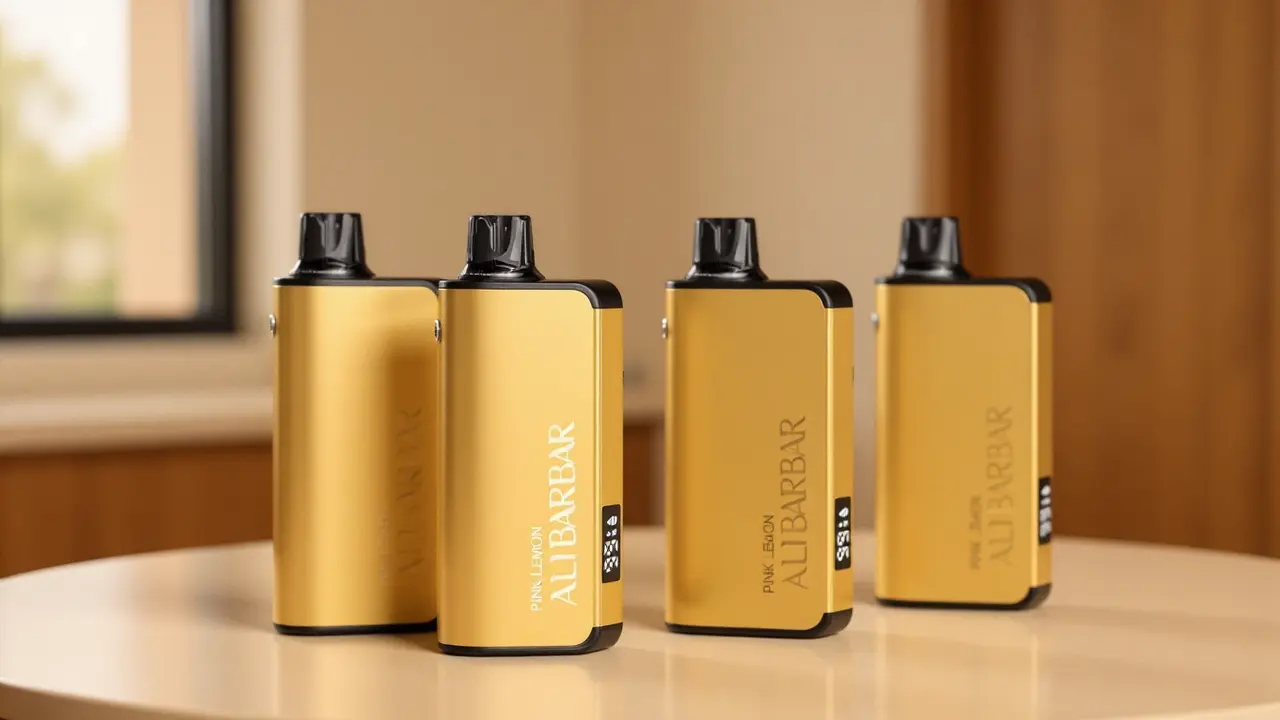
Every portable device with a heating element relies on a carefully calibrated relationship between the power source and the resistive load. The heating coil — whether it’s a mesh, a wire, or a composite film — is designed to operate within a specific wattage band. Over time, thermal cycling causes microscopic structural changes. The resistance can drift. Contacts can oxidise. When you buy used, you have no way of knowing if the device has been pushed beyond its thermal envelope, if it has been repeatedly run to a critically low charge state (which stresses the cell’s anode), or if it has spent hours in a hot car where internal chemistry accelerated ageing. Even if the device “fires” when you test it, the consistency of its output — the very thing that determines whether it performs predictably over a full usage cycle — may already be compromised. Well-engineered devices from families like the ALIBARBAR INGOT series are designed with stable output circuitry to mitigate these drifts, but no circuit can reverse accumulated physical wear.
Power Management and Status Transparency
A device’s power management system is its central nervous system. It governs charging cut-off, over-discharge protection, short-circuit detection, and temperature monitoring. In a factory-fresh unit, these protections are intact and calibrated. In a second-hand unit, you are trusting that no event — a drop, a liquid ingress, a non-standard charging cable — has compromised the integrity of the protection ICs. The threat is not that the device will fail to power on; it’s that it will power on, but without the safety net its designers intended. A missing or degraded under-voltage lockout, for example, could allow the cell to discharge below its safe minimum, creating a latent internal short that only manifests days or weeks later. Status transparency — clear battery indicators, fault signals — is your only real-time health report. When you buy used, you often have no record of past fault states. The device may seem fine until it isn’t.
Physical Design and Material Durability
Scratches on a chassis are cosmetic. Stress fractures around a USB port are not. A pre-owned device may have sustained a drop that cracked an internal solder joint without leaving any visible mark on the casing. Mouthpieces, which are in direct contact with the user, present an obvious hygiene concern, but they also hide a mechanical one: repeated removal and insertion can wear retention clips, leading to a loose fit that affects the airtight seal necessary for proper sensor activation. An authorised retailer like OZVAPE Shop guarantees that the device hasn’t been disassembled, tinkered with, or exposed to cleaning solvents that can attack silicone seals. In a private sale, you have no such guarantee.
Modularity and Lifecycle Flexibility
Some devices are sealed units; some are rechargeable with replaceable pods; some use replaceable power cells. If you are considering a used device with a sealed internal battery, you are buying a cell that has already consumed some portion of its rated cycle life. Lithium-ion cells typically retain 80% of their nominal capacity after 300–500 full charge cycles under ideal conditions — but conditions are rarely ideal. A used device might have 200 cycles on it, or it might have 20. You cannot know. For rechargeable, non-modular systems, you are essentially buying half a lifespan at a discount that may not actually be proportional. A new, warrantied device with a known cycle count and a clear support path (like those available through authorised channels) often represents a lower cost per day of reliable operation.
Applying These Criteria to Real-World Options
Consider a scenario: a user finds a second-hand “high-puff-count” device online. The seller states it was “barely used.” From an engineering standpoint, the puff counter is an unreliable proxy for battery wear because it doesn’t account for average draw duration, charging habits, or storage conditions. Compare that to purchasing a new ALIBARBAR INGOT 9000 from a verified source. You are not just paying for the puff count printed on the box; you are paying for a zero-cycle lithium-polymer cell, a factory-tested protection circuit, and a sealed environment that hasn’t been exposed to pocket lint, humidity, or previous user’s handling. The price difference, when amortised over the device’s actual usable life, often shrinks to a negligible amount, while the safety and predictability gap remains vast.
Even when comparing within the pre-owned space, a device with a transparent e-liquid window might seem easier to assess than a closed-pod system, but the window only tells you how much formulation remains, not whether the coil has begun to carbonise unevenly. A burnt taste may not appear immediately; it can emerge as the coil’s wicking media degrades further. By the time you detect it, you’ve already invested in a device you cannot return.
A Practical Framework for Evaluation
If you are still tempted by a pre-owned unit, apply a rigid evaluation protocol, and be prepared to walk away if any answer is unsatisfactory:
Power Source History: Ask for the exact number of complete charge cycles, not an estimate. If the seller cannot provide this, assume the worst-case scenario for that battery type.
Storage Conditions: Has the device ever been stored in an environment above 40°C or below 0°C? A “yes” or “I don’t know” should disqualify the unit. High-temperature storage accelerates electrolyte decomposition and increases the risk of internal gas generation.
Charging Equipment: Was the device ever charged with anything other than the manufacturer-specified cable and a certified USB power adapter? A fast-charger not designed for the device can degrade the battery management system silently.
Impact History: Any drop, even onto carpet, should be disclosed. If the seller hesitates, do not proceed.
Hygiene Verification: The mouthpiece must be replaced with a new, sealed component. If the model does not support replaceable mouthpieces, any surface sanitisation is only partial; internal airway contamination cannot be eliminated.
Functional Status Check: Test the device across at least three full usage sessions. Monitor for any change in activation sensitivity, any delay in heating, or any irregularity in the status indicator. These are early signals of board-level damage.
The moment you catch yourself thinking, “The savings justify the unknowns,” recognise that the cost of a thermal event, even a minor one, is orders of magnitude higher than the initial saving.
Common Selection Errors and Industry Observations
The second-hand market persists because of a few predictable misjudgments that buyers continuously make.
Overweighting Visual Condition. A polished exterior means nothing. I’ve seen devices that look brand new but have been internally shorted for weeks, slowly degrading the separator membrane until a high-current draw triggers a runaway. Visual inspection is not a safety test.
Assuming Identical Models Are Interchangeable. A device model number does not guarantee identical internal components across production batches. Manufacturers sometimes change cell suppliers or protection ICs without changing the model designation. A used device may have an earlier, less robust internal revision. Authorised channels provide traceability; private sellers cannot.
Undervaluing Warranty and Support Legitimacy. A manufacturer’s warranty is void on the second-hand market. If the device fails catastrophically, you have no recourse against the manufacturer and little practical recourse against an anonymous online seller. An authorised retailer like OZVAPE Shop assumes accountability for the product’s performance from the moment it ships until its intended end of life. That accountability is a tangible asset, not a marketing abstraction.
Conflating “Pre-Owned” with “Open Box.” An open-box item from a retailer has been inspected, verified, and typically carries some form of guarantee. A pre-owned item from a private party has no such oversight. Treat these as entirely different categories.
From an industry perspective, the rise of integrated, non-repairable devices has made the second-hand segment more dangerous, not less. When a device couldn’t be opened without destroying its warranty seal, tampering was obvious. Now, a device can be opened, a cell swapped for a substandard replacement, and resealed with aftermarket adhesives that look convincing under casual examination. I’ve observed this pattern in multiple markets: the sophistication of counterfeit and refurbishment operations has outstripped the average user’s ability to detect them.

Frequently Asked Questions
Q: Can a second-hand device be safely cleaned for hygiene purposes?
A: Surface cleaning can reduce bacterial load on exterior surfaces, but the internal airway — the path from the heating element to the mouthpiece — cannot be effectively cleaned on most integrated devices. Residual moisture from cleaning can also penetrate seals and cause corrosion.
Q: How do I verify the authencity of a device if I am buying it from an individual?
A: Most manufacturers use serialised authentication systems. However, a legitimate serial number can be duplicated onto a counterfeit unit. The only reliable verification is a documented chain of custody from the manufacturer to an authorised distributor, which a private seller cannot provide.
Q: Is it safe to use a device with a slightly swollen battery?
A: No. Swelling indicates internal gas generation from electrolyte decomposition. The cell is chemically unstable and poses a risk of rupture or fire. Cease use immediately and dispose of it according to local hazardous waste regulations.
Q: What is the most common failure mode in used devices?
A: A latent internal short in the lithium cell, often caused by previous over-discharge or physical shock. This condition can remain undetectable for many cycles until thermal runaway occurs during charging or high-drain operation.
Q: Why do some sellers claim their devices are “like new” when they clearly aren’t?
A: The term “like new” has no standardised definition in private sales. Sellers often use it to mean “free of visible scratches,” which has no correlation with electrical integrity or remaining cycle life.
Q: Can I test a device’s battery health without specialised equipment?
A: Not meaningfully. You can observe how quickly the charge level drops during use, but internal resistance, cell balance, and separator integrity require proper diagnostic tools. A consumer-level check provides a false sense of security.
Q: Are there specific device architectures that are safer to buy used than others?
A: Devices with user-replaceable, standard-format lithium cells (like 18650 or 21700) allow you to inspect and replace the power source independently. However, even in these systems, the internal wiring and control board still carry unknown histories. The risk is reduced, not eliminated.
Q: What recourse exists if a second-hand device malfunctions and causes property damage?
A: You would need to prove that a specific manufacturing defect existed at the time of production, not one induced by misuse, improper storage, or unauthorised servicing. Without the original proof of purchase and an intact supply chain record, this is practically impossible in most jurisdictions.
Q: How does an authorised retailer’s quality check differ from a private seller’s inspection?
A: An authorised retailer verifies that the device has never left a controlled, documented environment and matches its factory specifications. They do not “refurbish” or guess about its history. A private seller’s inspection is inherently limited to a visual and functional snapshot with no forensic depth.
Q: Should I ever accept a device where the security seal is broken, even if the seller claims it was “just to check contents”?
A: No. A broken security seal voids any traceability to the manufacturer. There is no legitimate reason for a seal to be broken in a private sale context. Assume the device has been opened, potentially modified, and begin your evaluation from that baseline of suspicion.
Conclusion
The question “Is a second-hand vape bad for you?” is not answered by a simple yes or no; it is answered by a cascade of unknowns that begin the moment a device leaves the custody of its first user. The risks — latent battery degradation, undetectable internal damage, compromised safety circuits, unverifiable hygiene — are not theoretical. They are documented failure modes that responsible manufacturers design their warranties and distribution controls specifically to prevent.
Informed users do not gamble with the one component that can fail catastrophically: the lithium power cell. They recognise that a “bargain” that eliminates the manufacturer’s accountability and the retailer’s oversight is not a saving but a transfer of risk onto themselves. At OZVAPE Shop{:target=”_blank”}, the entire operation — from factory-certified sourcing to documented local support — exists to ensure that this transfer never takes place. The right device is not the one that saves you twenty dollars today; it’s the one that performs its entire rated life safely, consistently, and with a clear chain of responsibility behind it. The power to choose wisely sits entirely with you, and it begins with respecting the invisible ledger that every used device carries.