VAPE FAQs
How To Sneak Vape Into Concert?
Oct
The question behind “How to sneak a vape into a concert” is rarely about breaking rules for the sake of it. More often, it comes from someone who has chosen a device that works perfectly in daily life but becomes a liability at a venue entrance — too bulky, too obvious, or too ambiguous in its status feedback to be carried with confidence. The real need is not a guide to deception; it is a clear understanding of what makes a device genuinely discreet and how to align carrying habits with the policies of modern event venues.
OZVAPE Shop fields enquiries like this regularly, and the consistent thread is that users underestimate how much device architecture — physical dimensions, surface finish, indicator behaviour — influences whether a personal electronic device draws attention or passes unnoticed. This article examines the engineering and design factors that determine real‑world portability, and it offers a principled framework for choosing a device that respects both the user’s preference for discretion and the venue’s right to set its own conditions.
Understanding What Matters: Core Engineering and Design Factors
Discreet carry is rarely a single specification on a datasheet. It emerges from the interaction of several physical and electronic characteristics. When users find themselves contemplating methods to bring a device into a restricted space, they are often compensating for a mismatch in one of these areas.
Internal Architecture and Output Consistency
The internal layout of a device influences more than performance — it dictates how much heat is retained, how quickly the exterior temperature rises, and whether the unit can be held without discomfort immediately after use. A well‑designed thermal path keeps external surfaces cool, which matters when a device must be pocketed moments after being put down. In venues where pat‑downs or bag checks occur, a warm metal shell can trigger a secondary inquiry even if the device itself is permitted.
Beyond temperature, consistent output means the user gets predictable behaviour without needing to adjust or inspect the device repeatedly. Every time a device requires the user to look at it, turn a dial, or hold it in a specific orientation to coax performance, it becomes more visible. Engineering that delivers stable output from first draw to last reduces that fidgeting and the attention it attracts.
Power Management and Status Transparency
Carrying a device into a concert carries an unstated anxiety: will it run out of power before the night is over? When that doubt is present, the user naturally checks the device constantly, pulling it from a pocket to squint at a tiny LED or tapping it to gauge remaining capacity. Every such motion broadcasts the presence of an electronic item.
Clear, at‑a‑glance status indicators solve this. A device that communicates remaining power with a single, unambiguous signal — a coloured light, a visible bar, a haptic pulse — allows the user to know the state without extracting the device from clothing. Power management also dictates whether the cell holds charge during long stand‑by periods. A poorly regulated power system can self‑discharge silently, leaving the user to discover a dead unit at the moment it is wanted most, prompting visible frustration or the need to carry a backup. A well‑managed power architecture removes that entire category of giveaway behaviour.
Physical Design and Material Durability
The surfaces a device wears, the way it sits in a hand, and how it interacts with fabric are the most direct determinants of discretion. Glossy, mirrored finishes catch light and draw eyes, even at a distance. Textured, matte coatings absorb ambient light and blend into surroundings. A deep‑carry pocket clip or a lanyard anchor that keeps the device from shifting adds stability; a device that tumbles inside a jacket pocket forces the wearer to pat themselves down constantly to locate it.
Mouthpiece geometry plays an overlooked role. A flat, snag‑free mouthpiece that rests flush with the body of the device prevents the unit from catching on pocket linings or bag seams when being inserted or removed. Flared or protruding mouthpieces, by contrast, create friction and the need for deliberate, visible manipulation. Material durability ensures that surface finishes don’t chip or peel after repeated contact with keys, coins, or zippers, maintaining a low‑profile appearance over weeks of daily carry.
Modularity and Lifecycle Flexibility
Some users gravitate toward compact, sealed units because they are inherently more discreet — no separate power cells, no detachable components that could rattle or separate. Others prefer rechargeable systems that can be topped up between uses and carried in a slimmed‑down configuration. Replaceable‑component architectures offer yet another path: the user can carry only what is needed for the event, leaving heavier spares at home.
The common thread is that modularity decisions affect the shape and volume of what must be carried through a venue entrance. A fixed‑capacity device that matches the user’s typical consumption window can be smaller and simpler. A system that requires carrying multiple components — even if individually compact — increases the number of objects that must be stowed and the likelihood that one will be spotted during a routine bag inspection.
Applying These Criteria to Real‑World Options
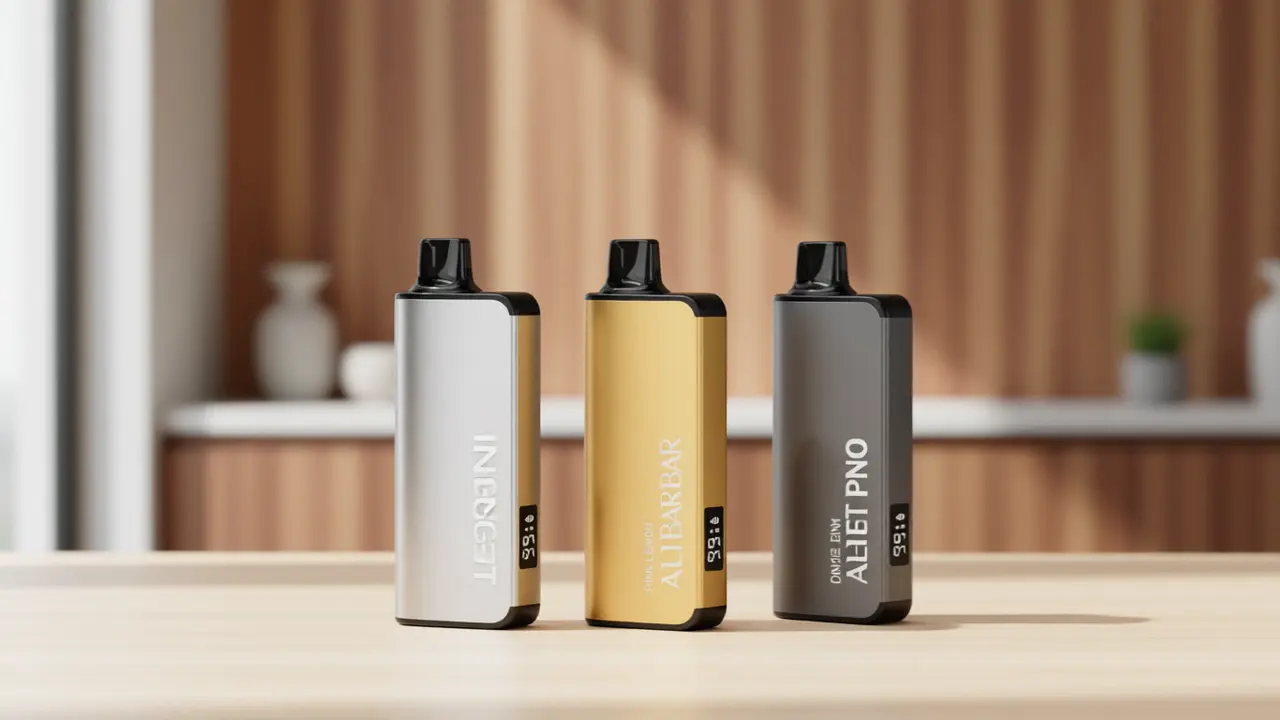
When a user seeks a device that will pass unnoticed in a concert setting, the ALIBARBAR family often surfaces in discussion because its current‑generation devices embody several of these discretion‑oriented design principles. The ALIBARBAR INGOT 9000, for example, pairs a matte‑finished shell with a flush mouthpiece and a single, soft‑glow status indicator that communicates remaining capacity without demanding a second look. Its internal architecture delivers consistent output across its rated life, reducing the need for the kind of mid‑session inspection that transforms a private act into a public one.
The INGOT 15000 extends that philosophy into a higher‑capacity form factor while retaining the same surface treatment and indicator logic. It is a larger unit, so discretion depends more heavily on the user’s carry method — an internal jacket pocket with a secure closure works; a tight denim pocket may not. The Ice Adjust 12000 series introduces an adjustable output feature housed in a body that maintains the same non‑reflective finish and ergonomic contouring. The presence of a control does introduce a tactile interface, but one that is recessed and unlikely to be activated accidentally.
These are not the only devices that prioritise low‑profile design. Any unit that combines a dark, matte exterior, a snap‑fit mouthpiece, and unambiguous power feedback will naturally reduce the visual and behavioural signals that draw attention. The benefit of a focused product family like ALIBARBAR is consistency: once you understand how one device communicates status, you can apply that knowledge without a learning curve, no matter which capacity you choose.
A Practical Framework for Evaluation
Instead of searching for a device marketed as “sneak‑proof,” apply the following self‑diagnostic when evaluating any option:
Can I read the power status with a one‑second glance, or does it require a button press and a sequence of flashes? If status is ambiguous, you will naturally check the device more often — in a crowd, that repeated motion becomes a signal.
Does the surface finish reflect light? Hold the device under a downlight. If you see a sharp reflection, venue lighting or phone screens will catch it in a dark hall.
Does the mouthpiece sit flush or nearly flush with the body? Protruding mouthpieces snag on fabric and slow down retrieval, creating a visible struggle.
How does the device feel after continuous use? If the exterior warms noticeably, you will be reluctant to pocket it immediately, leaving it in hand far longer than intended.
What is the standby drain rate? A device that loses meaningful charge over a day of non‑use forces you to carry a power bank or a second device — doubling the items that must pass security.
Answer these honestly, and you will see that many common frustrations stem not from venue restrictions but from device choices that amplify rather than suppress the behaviours venues watch for. For users who find this evaluation difficult to conduct from online images alone, standardised specification comparisons — where dimensions, finish details, and indicator descriptions are presented side by side — can drastically reduce decision friction.
Common Selection Errors and Industry Observations
Overweighting capacity while ignoring form factor. A high‑capacity device that lasts two days is pointless if it is so bulky that the user never brings it anywhere that checks bags. The industry has pushed longer and longer rated lives, but real‑world discretion often favours a device that fits the typical event window — four to six hours — without excess volume.
Assuming visual similarity indicates identical engineering. Many devices share a general silhouette, but the internal thermal path, the battery management IC, and the microcontroller that drives the status LED can differ radically between outwardly similar units. A device with a cheaper power‑management chip may show an inconsistent battery reading, causing the user to check it repeatedly, unwittingly creating the exact behaviour that draws scrutiny.
Undervaluing modularity in the cost‑per‑use calculation. A sealed device that holds exactly the capacity needed for one event can be more discreet and more cost‑effective than a rechargeable system that requires carrying a separate charging case. The industry trend toward modular platforms has merits, but not every scenario benefits from it. Selecting a device that matches the actual usage pattern — not the maximal potential use — directly affects how many items must be carried.
Confusing category terminology with technical specifications. Terms like “compact” and “ultra‑portable” have no standard definition. One manufacturer’s compact may be 20 percent larger than another’s standard. Rather than relying on marketing labels, compare actual millimetre dimensions and weight. An extra 10 mm of length can determine whether a device fits in the coin pocket of a pair of jeans — the difference between invisible carry and a bulge that invites a question.
These patterns reflect a market that has raced toward feature density without always prioritising the quiet, unglamorous engineering work that makes a device truly unobtrusive. The manufacturers who invest in matte‑finish durability, low‑parasitic‑drain power systems, and single‑glance status interfaces are addressing the real needs that users express when they search for ways to bring a device into a restricted environment.
Frequently Asked Questions
Q: Are venue policies legally enforceable regarding personal electronic devices?
A: In Australia, private venues have the legal right to set conditions of entry, including prohibiting specific categories of items. A device that violates those conditions can lead to refusal of entry or ejection. Compliance is not optional; it is a condition of the licence to be on the premises.
Q: Can I bring a compact device into a concert if I don’t plan to use it inside?
A: The venue’s policy applies to possession, not just usage. If the terms of entry prohibit such devices entirely, bringing one — even switched off or stowed — constitutes a breach. Always check the specific event’s permitted items list before attending.
Q: What is the most discreet device design currently available?
A: Discretion is a combination of physical size, surface treatment, and indicator behaviour rather than a single model. Devices like the ALIBARBAR INGOT 9000 achieve this through a matte‑black finish, flush mouthpiece, and simple status light, but any unit that scores well on the evaluation framework above will perform similarly. The best device is one that fits your typical event duration without excess bulk.
Q: Will a metal detector definitely detect a small electronic device?
A: Most modern personal electronic devices contain metal components — battery housings, heating elements, and circuit traces — that will trigger a standard walk‑through metal detector. Assuming otherwise is unreliable. Venues that use such screening expect these items to be declared and removed.
Q: How can I verify that an ALIBARBAR device I buy is factory‑certified?
A: Authorised channels like OZVAPE Shop source inventory directly from factory‑authorised distribution networks and provide documentation that confirms authenticity. Devices procured through uncertified third‑party sellers may lack this traceability, and their internal components — including battery regulation — may differ from the engineered design.
Q: Do devices with adjustable output create more attention‑drawing behaviour?
A: Not necessarily. If the adjustment control is well‑recessed and does not require the user to look at the device to confirm the setting, the behavioural signature can remain low. The Ice Adjust 12000, for example, uses a discreet side‑located slider that provides tactile feedback, allowing setting changes by feel alone.
Q: What should I do if a device is confiscated at a concert entrance?
A: Venues typically follow a documented process — either storing the item for collection after the event or disposing of it. The user’s recourse depends on the venue’s stated policy, which should be available before ticket purchase. Post‑event recovery is not guaranteed unless the venue expressly offers it.
Q: Can a device be carried in checked luggage at a venue that offers a bag check?
A: That depends entirely on the venue’s bag‑check policy. If prohibited items are listed, bag checks aim to find them regardless of whether they are on the person or in a bag. The safest approach is to leave any device subject to restriction at home.
Q: How long will a 9000‑rated device actually last in a concert setting?
A: Rated life figures assume standardised laboratory conditions. Actual duration depends on draw length, draw frequency, and ambient temperature. In practice, a 9000‑rated unit typically spans 2–3 days of moderate use, making it more than adequate for a single event of several hours.
Q: Does OZVAPE Shop offer devices that do not trigger metal detectors?
A: No. Every electronic device containing a battery and metal heating element will interact with standard metal‑detection equipment. No reputable retailer can claim otherwise without making false statements. OZVAPE Shop provides factual specifications so users can make informed decisions, but it does not offer devices engineered to evade security screening.
Conclusion
The question of how to bring a personal electronic device into a concert is, at its core, a question about device design and user behaviour, not about outsmarting venue staff. When a device is compact, finished in a non‑reflective coating, delivers predictable output, and communicates its status clearly, the user’s movements remain calm and unobtrusive. That behavioural quietness is what allows an item to go unnoticed — not elaborate concealment.
Recognising the engineering factors that produce this quietness transforms the search from a gamble on marketing labels into a deliberate evaluation. The same principles that make a device a pleasure to use in daily life — thoughtful thermal management, honest battery indication, and durable surface materials — are exactly what make it discreet in public spaces.
OZVAPE Shop maintains a curated catalogue of devices, including the full ALIBARBAR range, because these products consistently reflect the architecture that supports low‑profile carry without sacrificing performance. Whether you are evaluating a device for everyday transport or a specific event, the framework described here will serve you better than any shortcut. The right choice is the one that matches your actual routine, respects the rules of the places you enter, and never demands that you announce its presence through anxious, repetitive handling.