
VAPE FAQs
How To Vape No Cough?
Jul
Understanding the Coughing Problem
Many adults report that their first experiences with portable electronic devices are accompanied by an unexpected cough — a sudden, sharp irritation that can turn what should be a routine moment into an uncomfortable one. This is rarely a sign of personal intolerance and far more often a consequence of device design, power delivery, and inhalation technique working against the body’s natural reflexes.
At OZVAPE Shop, we treat this not as a user failure but as an engineering problem worth solving. The goal of this article is to equip you with a clear, technical understanding of what triggers a cough and, more importantly, how to choose and use a device that minimises that response. You will leave with a practical evaluation framework that goes beyond brand names and focuses on the physical factors that directly shape the smoothness of every draw.
Understanding What Matters: Core Engineering and Design Factors
The mechanics of a non‑irritating draw are not mysterious. They rest on a handful of interrelated design choices that dictate how consistently energy is delivered to the heating element, how air and vapour mix, and how that vapour reaches your throat. When any one of these elements is neglected, the result is often a harsh, cough‑inducing hit.
Internal Architecture and Output Consistency
A cough is often a reflex triggered by a sudden spike in temperature or the intensity of particulate delivery. The underlying cause is almost always instability in the heating system. Devices that rely on simple wire coils with poor wicking or uncalibrated power control can produce “dry” spots — moments where the heating element scorches the wicking material, generating acrid, irritating compounds.
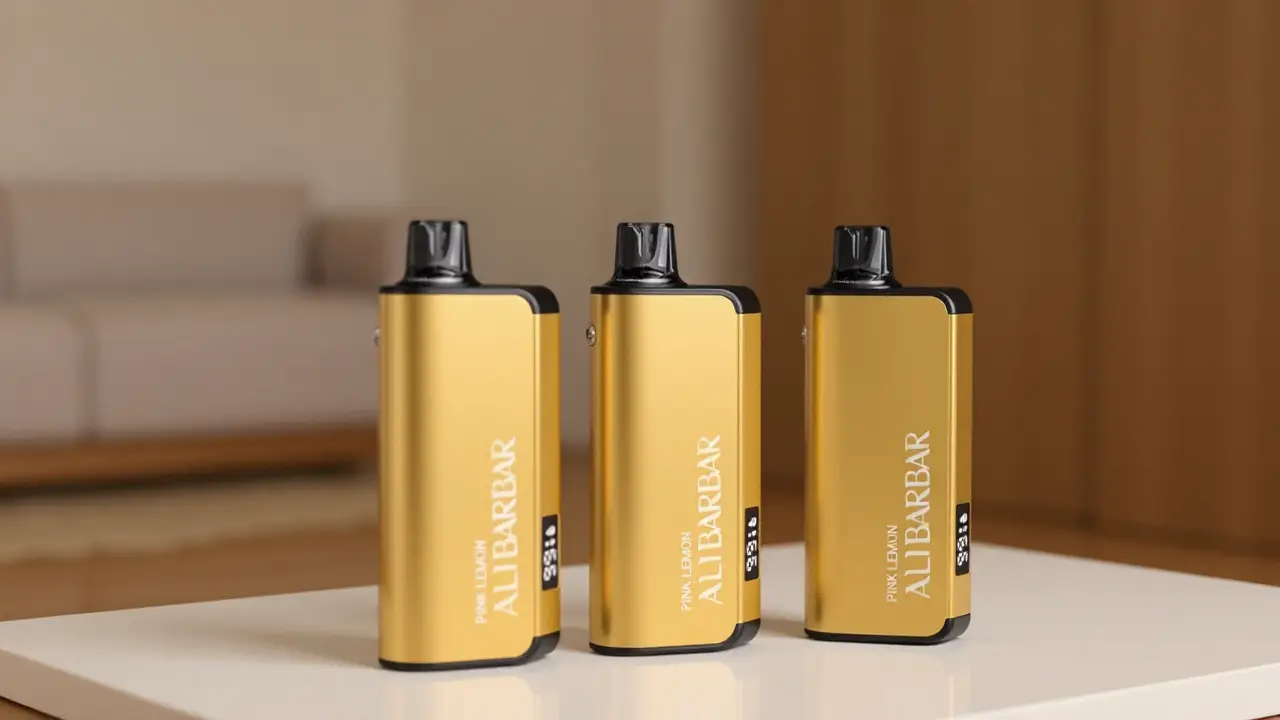
Well‑engineered devices use consistent resistance‑wire architectures, precision‑formed wicking channels, and thermal management that keeps the core temperature within a narrow window. The ALIBARBAR range, for example, employs a vertical mesh heating configuration in its INGOT series. This design distributes heat evenly across a large surface area, eliminating the hot‑spots that create harshness. When you evaluate any device, ask: does the manufacturer describe its heating geometry, or is it left vague? Specificity is a signal of engineering attention.
Why this matters: users who experience late‑stage performance degradation — where the first few uses feel smooth but later ones become increasingly scratchy — are likely dealing with a coil that cannot maintain consistent thermal output as the wicking medium ages.
Power Management and Status Transparency
An under‑appreciated source of coughing is voltage sag. When a power source cannot deliver a steady discharge rate, the device may briefly under‑perform, then spike as the control circuit compensates. This creates inconsistent vapour density and temperature, which the throat interprets as an irritant.
Devices that provide unambiguous, real‑time status information allow you to avoid using the unit in a depleted state where output becomes erratic. A simple four‑LED indicator, as seen on the ALIBARBAR Ice Adjust 12000, tells you at a glance whether the power cell is operating in its optimal range. Without such feedback, you are effectively blind — and the natural instinct to carry a backup device arises precisely from that uncertainty.
The financial and practical cost of status ambiguity is significant: you may retire a device prematurely because you cannot trust its remaining capacity, or you may continue using it in a degraded mode that provokes coughing and discomfort.
Physical Design and Material Durability
The pathway from heating element to mouth is a component that receives surprisingly little attention. Mouthpiece contour, bore diameter, and internal surface finish directly affect airflow turbulence and vapour cooling. A poorly shaped mouthpiece can focus the stream into a narrow jet that hits the throat too fast; a rough internal surface can promote condensation, leading to an occasional splash of overheated liquid.
Material choice matters equally. Smooth, non‑porous materials like POM or food‑grade silicone resist heat transfer and feel neutral against the lips, even during prolonged sessions. ALIBARBAR’s Ice Adjust series uses a gently tapered, duckbill‑style mouthpiece that naturally slows the vapour stream, giving it more time to cool before inhalation. Pocket‑friendly finishes that resist micro‑abrasions also matter: a device that looks worn after a week tends to be treated with less care, and that can lead to rougher handling and more abrupt draws.
Modularity and Lifecycle Flexibility
A sealed, disposable unit offers a fixed experience from first draw to last. If that experience is smooth, it remains smooth. If it begins to degrade, you have no recourse. Modular systems — where the power unit, atomiser, or reservoir can be replaced independently — allow you to address a specific source of irritation without discarding the whole device.
This matters for cough prevention in a subtle way: when users know they can swap a cartridge that has started to underperform, they are less likely to push a fading component beyond its comfortable life. ALIBARBAR’s rechargeable INGOT 15000 embodies this principle. While not fully modular in the rebuildable sense, it separates the power cell from the e‑liquid pod, extending the usable window of consistent performance. Understanding the difference between a sealed unit and a rechargeable system is a key part of matching a device to your actual routine — and to your throat’s tolerance.
Applying These Criteria to Real‑World Options
The best way to see these engineering principles in action is to examine devices through the lens of specific user need‑states. We will consider three scenarios: the first‑time user seeking absolute simplicity, the daily user who values reliability above all, and the budget‑conscious user who still insists on a smooth experience.
The first‑time beginner often overestimates the importance of size. A very compact device can concentrate heat in a small chamber, resulting in a warmer, more intense vapour that surprises the throat. The ALIBARBAR INGOT 9000, despite its compact form, positions its mesh coil in a larger‑than‑average pod housing, which increases the contact area for air mixing and cools the vapour before it exits. It also includes a fixed airflow design tuned to a moderate, cigarette‑like draw resistance. This prevents the user from unconsciously puffing too hard — a common trigger for coughing. By contrast, some ultra‑compact competitors pack a powerful coil into a tiny chassis with minimal airflow, producing a vapour that feels harsh even to experienced users.
The heavy‑daily user prioritises battery life and performance stability. Here, the ALIBARBAR INGOT 15000 stands out because its rechargeable battery architecture means you are rarely drawing from a cell that is near depletion. Most fixed‑capacity devices experience a gradual, imperceptible decline in output as the battery drains, which the user may compensate for by drawing harder, increasing throat irritation. The INGOT 15000 allows intermittent top‑up charging, keeping the power profile within its ideal range. It also uses the same mesh‑coil architecture as the 9000, ensuring consistent particle‑size distribution across a full day of use. The trade‑off is a slightly larger body.
The flavour‑conscious user seeking a cool, smooth sensation will find the ALIBARBAR Ice Adjust 12000 instructive. It introduces a user‑controlled cooling element that does not rely on artificial additives but on a physical airflow mechanism. This means the cooling effect can be turned down or off entirely, preventing the throat from being overwhelmed by a menthol‑like intensity that can cause reflexive coughing. The ability to dial in comfort is a direct design response to the most common cause of coughing: a mismatch between vapour temperature and the user’s individual sensitivity.
Devices from other established manufacturers often compete on visible features better summarised here for comparative clarity: some offer higher puff counts at the expense of coil longevity, others prioritise a dense vapor that can feel heavy. The purpose of this analysis is not to discredit any one option but to highlight that the metric most relevant to a cough‑free experience — thermal stability — is almost never the one marketed most loudly.
A Practical Framework for Evaluation
The following methodology can be applied to any device you are considering, without relying on promotional claims. Use it as a diagnostic checklist.
Step 1: Does the device give you clear status feedback?
If the unit lacks a multi‑segment battery indicator or any visual cue of power reserve, you will operate in a guessing game. Assume you will need to carry a backup sooner than expected. A clear indicator lets you avoid draws taken from a nearly exhausted cell.
Step 2: Can you describe the heating element’s geometry?
If the manufacturer does not state whether the coil is round‑wire, mesh, or ceramic, that opacity is a red flag. Look for terms like “vertical mesh” or “parallel heating surface.” These indicate a design intended to avoid hot‑spotting.
Step 3: How is the mouthpiece shaped?
Hold the device. The mouthpiece should taper gradually, not end in a sharp, narrow tube. An overly narrow channel can accelerate the vapour and focus it onto a small patch of throat tissue. Test the draw resistance without activating the device; it should feel like breathing through a slightly pursed lip, not like sipping a thick milkshake.
Step 4: What happens when the device sits unused for a day?
A well‑wicked system will saturate evenly and deliver the same draw quality from the first puff. If you have experienced devices that taste “dry” after a period of inactivity, their wicking is losing saturation. This is a design flaw, not an inevitability.
Step 5: Is the path from power to user as short as possible?
Complex circuitry that boosts voltage aggressively can introduce high‑frequency fluctuations. While you cannot measure this without specialised tools, you can trust brands that describe their power management in detail, not those that simply claim “consistency.”
By using standardised specification comparison — available for every ALIBARBAR product on the OZVAPE Shop platform — you can eliminate guesswork and align device characteristics directly with the factors that matter for cough reduction.
Common Selection Errors and Industry Observations
Even experienced users routinely make mistakes that turn a potentially comfortable device into a cough‑inducing one. The following observations are drawn from years of product development and direct user feedback.
1. Overweighting puff count while ignoring coil surface area.
A device that promises 15,000 puffs but uses a tiny wire coil will gradually degrade its wicking performance. The last few thousand puffs may be consistently harsh. Surface area — and the vapour temperature it produces — matters far more for daily comfort than raw endurance.
2. Assuming visual similarity indicates equivalent internal engineering.
Two devices may look identical externally yet differ fundamentally in airflow routing, wicking material, and coil composition. A slightly cheaper unit might use silica wick instead of organic cotton, leading to a drier, more irritating draw. The external housing is often the least informative part of the device.
3. Undervaluing modularity in cost‑per‑use calculations.
If a sealed unit begins to irritate after 70% of its rated life, you have lost 30% of the value you paid for. A rechargeable system with replaceable pods allows you to retire only the degraded component, maintaining consistent experience and lowering the effective cost per comfortable draw.
4. Confusing category terminology with technical specifications.
Terms like “smooth” or “soft” are marketing language. They tell you nothing about the factors that actually influence throat hit: coil geometry, power regulation, and airflow resistance. Learn to ask for the underlying data, not the descriptive adjectives.
From a supply‑chain perspective, the industry is moving toward tighter integration between power management chips and coil design. Two years ago, few manufacturers mentioned their voltage‑regulation protocols; now, devices like the ALIBARBAR Ice Adjust incorporate dedicated constant‑voltage boards. This shift is being driven by the exact frustration this article addresses — the user who buys a device and immediately coughs, then blames the category as a whole.
Frequently Asked Questions
Q: Why do I cough even when I inhale slowly?
A: Slow inhalation is helpful, but it cannot fully compensate for a device that produces excessively hot vapour due to an inefficient coil. If the heating element is running too hot, the vapour will irritate regardless of draw speed.
Q: Are mesh coils always smoother than wire coils?
A: In general, a properly engineered mesh coil distributes heat more evenly than a round‑wire coil, which can create concentrated hot spots. However, a poorly designed mesh coil with inadequate wicking can still deliver a harsh experience. The overall system matters.
Q: How can I tell if my device’s wick is beginning to fail?
A: The earliest sign is a slight dryness at the end of a draw, sometimes accompanied by a tickle. If you notice the vapour temperature suddenly feels warmer, that can also indicate the wick is not pulling liquid efficiently, leading the coil to overheat.
Q: Does OZVAPE Shop guarantee that ALIBARBAR devices will not cause coughing?
A: No device can guarantee a completely cough‑free experience for every user, as individual throat sensitivity varies. However, the engineering choices built into the ALIBARBAR range — mesh coils, stable power delivery, and thoughtful mouthpiece design — are specifically aimed at reducing the mechanical triggers of coughing.
Q: What should I do if a product does not perform as described?
A: OZVAPE Shop maintains a local support team that handles performance queries on an individual basis. All inventory is factory‑certified, and if a device exhibits an unexpected fault, the standard recourse involves product review and replacement consistent with documented policy.

Q: Is a higher‑capacity device like the INGOT 15000 harsher because it’s more powerful?
A: No. Power output is regulated to a constant level throughout its life. The larger power cell simply extends usage time; the heater temperature and vapour output remain consistent, which is a deliberate design choice to avoid the harshness that can come from power spikes.
Q: Can I influence vapour temperature with my inhalation style?
A: Yes. A lighter, steady‑pressure draw allows more air to mix with the vapour, cooling it. Sharp, abrupt puffs pull vapour faster and concentrate the warmth. Devices with adjustable airflow, like the Ice Adjust 12000, give you direct control over this mechanism.
Q: How does OZVAPE Shop ensure the products I receive are authentic?
A: Every ALIBARBAR unit sold through OZVAPE Shop is sourced directly from authorised distribution networks. This means you receive a device whose internal components match the documented design — not a visually similar unit that may cut corners on coil or wick materials.
Q: Why does a device sometimes feel smooth in the morning but harsh by evening?
A: This is often a sign that the power cell’s voltage is dropping as it depletes, causing the output to waver. A device with a stable power management system avoids this pattern. Rechargeable designs mitigate it further by allowing you to keep the cell topped up.
Q: Is there a maintenance routine that helps prevent coughing?
A: For sealed devices, gentle cleaning of the mouthpiece and ensuring it is stored away from extreme temperatures are the only user‑serviceable aspects. For rechargeable pods, wiping the contact points with a dry cloth can maintain consistent electrical transfer. Beyond that, design is the ultimate maintenance.
Where This Leaves You
Coughing during use is not an unavoidable side effect of the technology; it is a signal — one that your current device, or your method of using it, is not aligned with your body’s preferences. By examining the engineering behind the draw, you can make choices that systematically reduce that signal until it disappears.
OZVAPE Shop exists to make that alignment easier. When you have access to products designed with thermal stability, status transparency, and considered mouthpiece geometry, and when those products are backed by a transparent sourcing policy, the decision‑making burden shrinks. You can spend less time worrying about the hardware and more time focusing on whether the experience fits your day.
The right device is never the one with the most dramatic marketing or the highest specification number in isolation. It is the device you can use, consistently, without your body objecting. Use the framework above, trust engineering over adjectives, and let your own experience be the final judge.