
VAPE FAQs
How To Vape In Class?
Sep
How a personal electronic device behaves in a space designed for concentration — a lecture hall, a shared office, a long meeting — is not a question of intention. It is a question of engineering. For the adult who values privacy and minimal disruption, a device that cannot operate without announcing itself is not a convenience; it is a source of social friction.
This analysis does not invite rule-breaking. It examines the design factors that separate a tool that integrates unnoticed into a quiet environment from one that constantly draws attention. By the end, you will understand what to look for in a device’s architecture, why certain specifications matter more than marketing suggests, and how to evaluate any unit against the real demands of discretion. Along the way, we will reference product families available through OZVAPE Shop that embody many of these principles, not as endorsements, but as concrete examples of what disciplined engineering can achieve.
Understanding What Matters: Core Engineering and Design Factors
Discretion is rarely the headline feature of a product. It is the sum of small, deliberate decisions that determine whether a device stays forgotten until needed, or becomes the subject of sideways glances. The following four factors explain why some units succeed in low‑profile environments and others fail, even when their printed specifications appear similar.
Internal Architecture and Output Consistency
The heating element is the single greatest determinant of whether a device generates an unobtrusive signature or an unpredictable one. Mesh‑style elements, when correctly tensioned and powered, produce a stable thermal profile across each use. In contrast, poorly wound wire coils can develop hotspots that cause sudden, visible spikes in vapour density — precisely the kind of variation that draws attention in a still room.
What matters for discreet operation is not the absolute amount of output, but its predictability. A device that delivers the same gentle, easily dissipated vapour every time can be used without mental calculation. One that fluctuates forces the user into constant vigilance. This is why calibrated mesh architectures, such as those found in the ALIBARBAR INGOT series, are designed to maintain a narrow output band across the unit’s entire operational life. The trade‑off is that maximum output is intentionally capped; for a user whose priority is staying unnoticed, that is a feature, not a limitation.
Power Management and Status Transparency
Unexpected power loss is the enemy of discretion. When a device shuts down mid‑use, the natural human response — checking the unit, searching for a charging cable, even a frustrated sigh — immediately breaks the ambient seal of a quiet room. The engineering countermeasure is twofold: a power cell with sufficient capacity for a full day’s predictable usage, and a status indication system that communicates remaining charge without becoming a light show.
A well‑designed device provides feedback that can be read in a fraction of a second, preferably through a subtle glow positioned so the user’s own hand naturally conceals it during activation. Blinking chains of bright LEDs, by contrast, are anti‑discretion features dressed up as user experience. When evaluating a device, note whether its battery indicator can be hidden by a thumb during use. If not, the device is working against you.
Physical Design and Material Durability
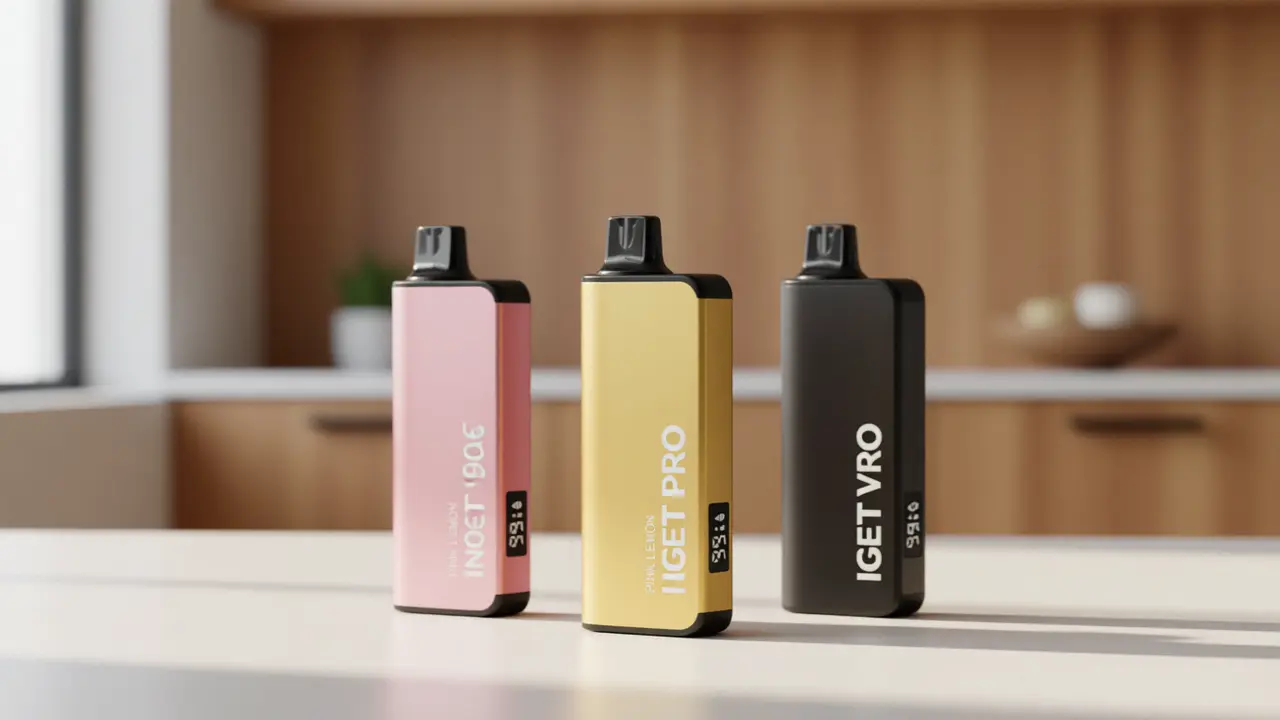
Pocket‑friendliness is not just about dimensions. A device with a flat profile, softened edges, and a matte finish resists both unwanted visibility and the wear that quickly makes a unit look conspicuous. Glossy surfaces pick up fingerprints and reflect light; sharp corners create telltale outlines through fabric. A mouthpiece that flares too widely feels unnatural during prolonged use and increases the visual footprint when lifted.
Surface treatment also affects noise. Anodised aluminium bodies, like those on the ALIBARBAR INGOT 15000 and Ice Adjust 12000, minimise the creaks and clicks that plastic‑dominant designs often produce when handled. Over weeks of pocket carry, the difference between a device that stays silent and one that develops an audible rattle is the difference between remaining incidental gear and becoming a conversation.
Modularity and Lifecycle Flexibility
The choice between a sealed disposable unit, a rechargeable integrated device, or an open‑pod system has direct implications for low‑profile use. A small disposable eliminates the need to carry spare components, but when it is depleted, the act of replacing the entire unit in public can itself be disruptive. A rechargeable pod system allows for the same compact form factor but requires carrying a charging cable and possibly a spare pod — items that add bulk and clutter.
ALIBARBAR’s product line recognises this tension by offering sealed high‑capacity units (the INGOT 9000 and 15000) that outlast multiple typical sessions without any user‑serviceable parts. For an adult who values minimalism, a device that needs no maintenance companion is a device that stays out of sight and out of mind.
Applying These Criteria to Real‑World Options
No single device optimises every discretion factor perfectly. The goal is to understand which engineering priorities align with your specific routines.
The ALIBARBAR INGOT 9000 represents a deliberate compromise in favour of vanishing form factor. At roughly the dimensions of a standard marker pen, it can be completely enclosed in a closed fist. Its draw‑activated mechanism eliminates the need for button presses that produce an audible click. The LED indicator sits flush with the body and is small enough to be incidentally covered during normal handling. While it lacks airflow adjustment, its fixed draw is calibrated to produce vapour that dissipates quickly in still air — a characteristic that matters more than peak density when discretion is the assignment.
Moving to the INGOT 15000, you gain roughly 60% more operational life without a proportional increase in size. More importantly, the battery‑level feedback becomes more granular, allowing you to plan recharges ahead of situations where a dead device would be inconvenient. For users whose days contain long stretches without private moments, this additional status intelligence reduces the anxiety of being caught without a functioning unit.
The Ice Adjust 12000 introduces an adjustable airflow ring, a rarity for sealed‑system devices. This single mechanical feature alters the vapour‑production profile meaningfully. A tighter draw reduces both visible output and airflow noise, making the unit more appropriate for environments where ambient sound is minimal. The trade‑off is a slightly larger physical housing, which may print more noticeably in lightweight fabrics.
Other manufacturers address the same discretion challenges through interchangeable‑pod architectures. Uwell’s Caliburn series, for example, relies on user‑replaceable pods and external charging, which adds overall system bulk but allows endless scaling. Vaporesso’s XROS line emphasises silent, draw‑activated operation and minimal leakage, though the charging case becomes another object to carry. These comparisons are not declarations of superiority. They illustrate that modular systems shift the discretion burden from the device to the user’s organisational habits. ALIBARBAR’s approach offloads that burden onto the factory‑sealed unit itself — a valid philosophical choice, not a categorical win.
A Practical Framework for Evaluation
Before committing to any device for low‑visibility use, walk through the following checklist. The questions are designed to surface the hidden frictions that specification sheets omit.
Profile test: Can you close your hand around the device so no part of it projects beyond your palm? If not, it will be visible when held naturally.
Light discipline: When activated, does the LED face your body? Can you cover it without blocking the mouthpiece? If the indicator blinks through multiple colours, assume it will be noticed.
Vapour dissipation timing: In a still room, count how many seconds elapse before exhaled output becomes invisible. Two seconds is far more discreet than six. Tighter airflow and lower‑temperature operation shorten this window.
Audible signature: Does the draw produce a whistle, crackle, or hum? Test in absolute silence. Even a faint rustle travels in a lecture hall.
Battery endurance expectancy: Divide the rated puff count by your estimated daily use. If the result leaves no margin, you will eventually be forced to charge mid‑day, which means carrying a cable and finding an outlet — both public acts.
Leak‑resistance record: A device that weeps fluid will leave residue that stains pocket linings and creates a scent. Check user reports specifically for pocket‑carry anecdotes, not bench tests.
Applying this framework forces a shift from passive comparison to active qualification. You stop asking “Is this a good device?” and start asking “Does this device fit my actual, unvarnished daily scenario?”
Common Selection Errors and Industry Observations
Even experienced buyers sabotage their own discretion goals through predictable errors.
Error 1: Equating small size with discretion. A tiny device that runs out of power early forces public recharging or a backup unit, doubling the items to carry and manage. The metric is self‑sufficiency across a defined window, not millimetres shaved from the length.
Error 2: Overweighting flavour complexity. Rich flavour profiles are achieved through higher power and greater aerosol density — both of which increase vapour visibility and linger time. A lighter, simpler output profile is more compatible with low‑profile use, even if it feels less indulgent in isolation.
Error 3: Ignoring LED placement. Devices where the indicator faces outward, toward an observer, are fundamentally unsuited to hidden use. This is an engineering oversight that no amount of hand positioning can fully compensate for. Manufacturers who embed the light in the base or behind the mouthpiece demonstrate an understanding of how adults actually hold these units.
Error 4: Confusing category name with technical capability. The term “disposable” is a business model description, not a performance guarantee. Some sealed devices are cheap flash units with uncontrolled power delivery; others, like the ALIBARBAR INGOT line, are built on regulated chipsets that maintain output stability over thousands of cycles. The difference is invisible on a website but immediately felt in a quiet room.
From an industry perspective, there remains a widespread failure to reconcile status indication with the reality of use. Many product teams treat LEDs as branding vehicles — an impulse that directly contradicts the needs of a large, quiet‑majority segment that simply wants minimal presence. The few manufacturers who have deliberately subdued their lighting and drawn air‑activation to near silence have done so not as an afterthought, but as a foundational design stance.
Frequently Asked Questions
Q: Is it legal to use a device like this in a classroom or lecture hall?
A: Most educational institutions, workplaces, and public indoor areas prohibit the use of personal electronic vapour devices. This analysis addresses engineering considerations for adults who require a low‑profile solution in spaces where such use is both lawful and socially considerate. Always adhere to the policies of the venue you occupy.
Q: Which ALIBARBAR device is the most discreet?
A: The INGOT 9000 offers the smallest physical profile and the simplest operation. However, the INGOT 15000 provides superior battery intelligence, which reduces the risk of unexpected power loss — an equally important discretion factor. The right choice depends on the length of your typical uninterrupted period.
Q: How can I verify that an ALIBARBAR device purchased through OZVAPE Shop is genuine?
A: OZVAPE Shop supplies only factory‑certified inventory with batch‑level traceability. Each ALIBARBAR unit includes a unique verification code on the packaging that can be confirmed through the manufacturer’s official channel. The retailer’s support team can assist with any authentication queries.
Q: Does a tighter airflow really make that much difference for discretion?
A: Yes. A tighter draw reduces both visible vapour density and the sound of air rushing through the device. In a silent room, the difference between an almost‑silent draw and an audible whistle is the difference between going unnoticed and being the source of a distracting noise.
Q: What should I do if my device leaks?
A: Leakage is often a symptom of temperature shifts or incorrect storage orientation. If a sealed ALIBARBAR device shows signs of weeping, contact the support channel from which it was purchased — OZVAPE Shop can advise on whether the behaviour is within expected parameters or warrants replacement. For pod systems, check that the pod is seated correctly and that the filling port is fully sealed.
Q: Can I travel with a high‑capacity device like the INGOT 15000?
A: Air travel regulations regarding internal batteries apply universally. Most sealed devices contain lithium‑ion cells that must be carried in hand luggage, not checked baggage. Always check airline and destination regulations before travelling.
Q: Why do some devices blink when the battery is low? Is there a way to disable that?
A: Many devices use blinking as a low‑battery warning, and this function is typically hard‑coded into the firmware with no user override. When selecting a unit, prioritise those whose LED is physically located where it can be naturally occluded — or consider those with negligible blink intensity, as seen in the ALIBARBAR INGOT series.

Q: Do I need to carry a backup device?
A: If you choose a device with rated operational life that comfortably exceeds your expected usage window, you should not need a backup. The calculation is simple: determine your typical daily usage and compare it against the manufacturer’s stated puff count, reduced by a reasonable margin (e.g., 15‑20%) to account for real‑world variables.
Q: Where can I find reliable comparisons between device models?
A: Standardised specification sheets, when read in conjunction with real‑world user accounts that mention pocket carry and noise, offer the most trustworthy basis for comparison. Avoid relying solely on curated review sites that do not disclose their sampling methodology.
Q: What is the best way to handle a device discreetly in a pocket or bag?
A: A device with a firm draw‑activation threshold is preferable, as it is less likely to fire accidentally when compressed. Storing the unit in a slim, dedicated compartment — not loose with keys or coins — prevents activation and surface wear. The mouthpiece should always face upward to minimise gravitational leakage.
Conclusion
Engineering a device for near‑invisible operation is not a trivial ambition. It requires a manufacturer to suppress the impulse to make the product announce itself — to quiet the lights, smooth the draw, shrink the silhouette, and stabilise the output to a level that keeps a user in control of their own attention as much as the device’s. The difference between a unit that disappears into an environment and one that constantly reasserts its presence is the sum of many unglamorous decisions made months before the first unit reaches a consumer’s hand.
For those evaluating their options, the ALIBARBAR range available through OZVAPE Shop demonstrates that these decisions are not hypothetical — they have been implemented across a catalogue of devices that share a common engineering DNA. Whether that DNA matches your priorities is a question only you can answer, by applying the framework laid out above to your own daily rhythms.
The right device is not the one that shouts the loudest on a spec sheet or dominates a fleeting trend. It is the one that, three hours into a quiet afternoon, you have forgotten you are carrying — and so has everyone around you.