
VAPE FAQs
How To Vape Hash Oil?
Jun
Vaping a thick oil concentrate — whether you know it as botanical extract, essential oil, or the cannabis-derived preparation popularly called hash oil — introduces variables that simple pre‑filled e‑liquid devices were never designed to handle. Too many users learn this the hard way: a coil that clogs after a single session, a burnt taste that never fades, or a device that simply refuses to wick. Understanding why these failures happen, and how to select equipment that sidesteps them, puts you back in control.
This guide walks through the engineering factors that determine whether a personal vaporiser will perform reliably with concentrated oils, applies those factors to the OZVAPE Shop ALIBARBAR collection, and gives you a repeatable method for evaluating any device on your own terms. No hype — just the technical reasoning that separates a smooth, consistent draw from a wasted cartridge.
Understanding What Matters: Core Engineering Factors for Oil Concentrates
If you have ever loaded a clean, viscous extract into a device only to get thin vapour, muted flavour, or a coil that scorches in seconds, you have encountered a mismatch between the concentrate’s physical properties and the device’s internal design. Solve this mismatch, and the experience changes completely.
Heating Element Architecture and Thermal Stability
Concentrates begin as solid or semi‑solid material that must liquefy before it can be aerosolised. That transition is sensitive. A coil that spikes to high temperature in a fraction of a second will carbonise the outer edge of the oil before the centre can melt — the burnt hit.
Look for devices that use thermally regulated ceramic elements. Ceramic holds heat evenly across its surface, reducing hot spots. Some designs embed the heating wire within the ceramic plate itself; others wrap a porous ceramic rod in wire. In both cases, the goal is a gentle, controlled ramp that gives the oil time to flow. A well‑engineered ceramic heater maintains temperature within a narrow band even as you draw air across it, which is why the vapour stays consistent from first pull to last.
Why this matters: users consistently report that poorly designed coils fail mid‑load, turning expensive concentrate into dark residue that must be scraped and discarded. The right heating architecture eliminates that waste.
Viscosity Management: Wicking vs. Direct Loading
E‑liquid devices rely on capillary wicking — a thin strand of cotton draws liquid from a reservoir to the coil. Most concentrated oils are simply too thick for that system. They will not travel fast enough, leading to dry hits that burn the cotton and taint everything that follows.
Devices built specifically for concentrates therefore take one of two paths:
Direct‑load chambers: You place a small amount of oil directly onto the heating element or into a bucket‑style atomiser. There is no wick, so nothing can scorch.
Ceramic‑core cartridges with oversized intake ports: The ceramic itself acts as both wick and heater, and the intake holes are sized to accommodate heavy, viscous fluids. These can work with pre‑filled or refillable pods.
The Ice Adjust 12000 from ALIBARBAR demonstrates practical viscosity‑aware engineering. Its adjustable intake and temperature control allow the user to dial in settings for a range of oil consistencies — from lighter distillates to the thick, sap‑like extracts that clog lesser devices. This flexibility means you are not locked into a single formulation.
Status Transparency and Battery Intelligence
Oil users report an additional frustration: the device that dies without warning in the middle of a session. When a concentrate vaporiser runs out of power, you cannot simply pause and resume later with a fresh pod; the half‑melted oil in the chamber cools and hardens, often ruining the coil on the next heat‑up cycle.
Clear battery indicators — not just a blinking light when the cell is already flat — let you plan your sessions. Furthermore, some intelligent power‑management systems detect coil resistance shifts that occur when oil pools unevenly and adjust output accordingly. This behaviour prevents the dry, scratchy finish that signals an overheating element.
The ALIBARBAR INGOT 9000 and INGOT 15000 series incorporate visible multi‑stage LED feedback that communicates remaining capacity well before the critical low‑voltage cutoff. For someone who relies on a device throughout a long day, that level of transparency removes the anxiety that forces people to carry unnecessary backups.
Materials and Mouth‑Feel
Concentrate vapour is denser and warmer than that from standard e‑liquids. A stainless‑steel mouthpiece that works fine for thin vapour can become uncomfortably hot after two consecutive draws with thick oil. Ergonomic moulding, heat‑resistant polymer tips, and vapour‑path insulation all affect prolonged‑use comfort.
Surface treatments matter for a different reason: sticky fingerprints from handling concentrated oils are inevitable. A high‑quality matte PVD coating, as found on the Ice Adjust 12000, resists marking far longer than polished metal or soft‑touch paint, keeping the device presentable without constant wiping.
Applying These Criteria to Real‑World Options
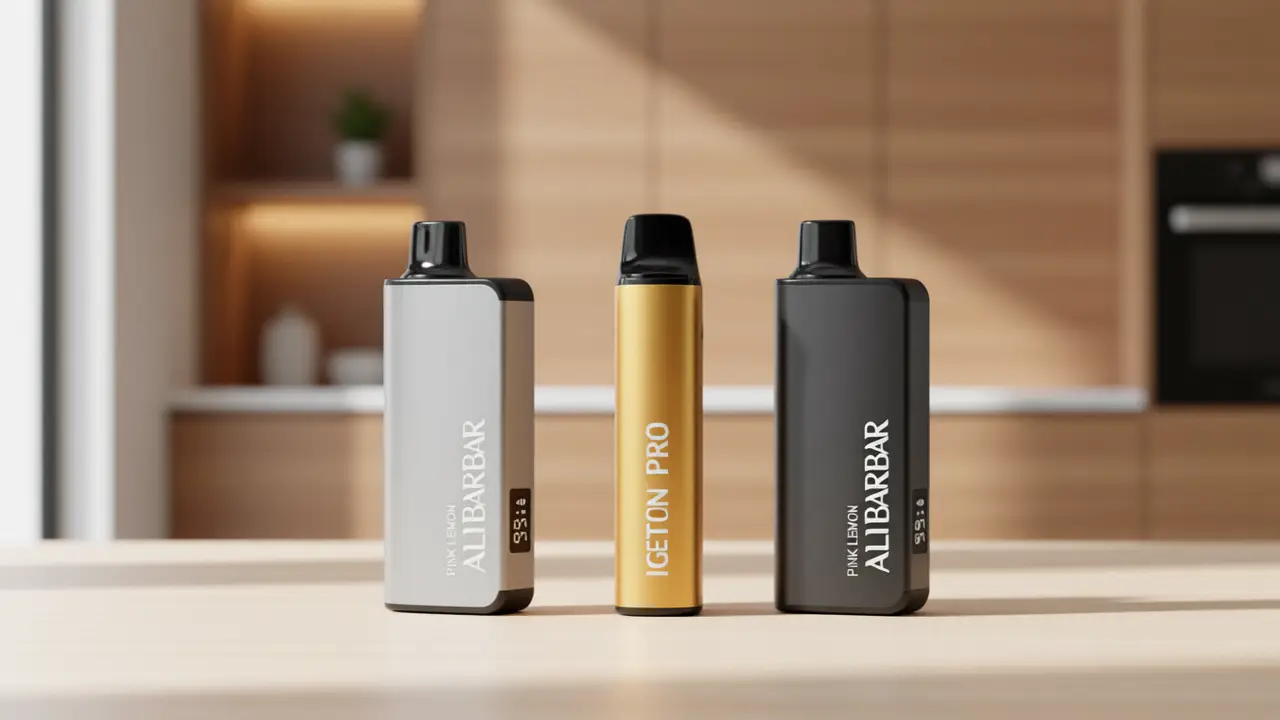
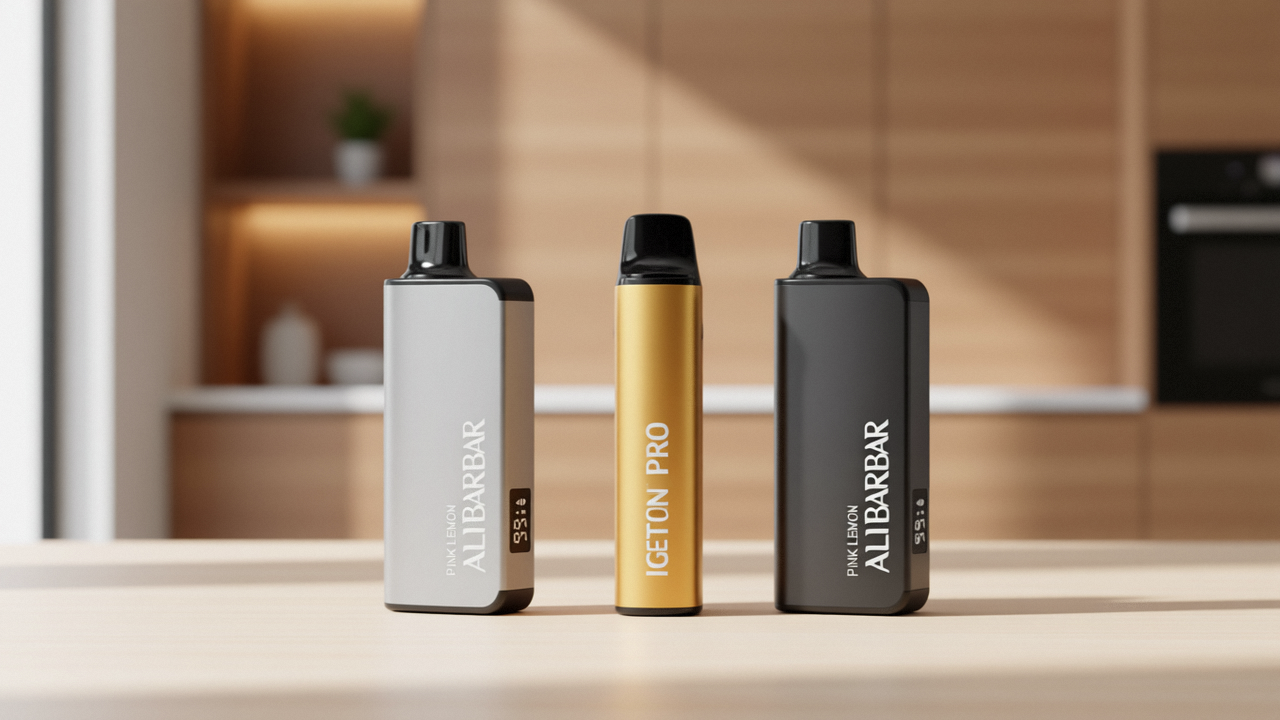
You do not need a laboratory‑grade device to enjoy clean, consistent oil vapour. But you do need one where the heating element, power delivery, and airflow have been designed to work together. The ALIBARBAR product family, available through OZVAPE Shop, organises its lineup around distinct use‑cases so you can match a device to your actual concentrate habits.
For Concentrate Beginners: INGOT 9000
If you are moving from pre‑filled e‑liquid pens and want to try oil concentrates without studying coil resistances, the INGOT 9000 offers a seamless entry point. Its factory‑calibrated ceramic coil runs at a fixed, moderate temperature that suits medium‑viscosity oils. There is no loading ritual — the cartridge system handles that for you — and the draw‑activated firing removes one more variable. The built‑in battery is scaled to the cartridge’s capacity, so the two run out in tandem, eliminating the half‑spent pod scenario.
The trade‑off is flexibility. You cannot push a fixed‑temperature device to higher heat for waxy concentrates, nor can you drop it lower for fragile terpene‑rich oils that scorch easily. For a single daily‑use formula, however, this simplicity is a strength.
For Versatility Seekers: Ice Adjust 12000
The Ice Adjust 12000 gives you two levers that are critical for oil work: variable wattage and adjustable airflow. Cranking the air inlet down tightens the draw and increases vapour density — helpful for thicker oils that need more resident heat time. Opening it up cools the vapour for lighter extracts.
The adjustable power lets you find the precise point where your oil vaporises fully without burning, which differs from one batch to the next. Internally, a three‑cell ceramic plate spreads heat across a wider surface, so even at higher wattages, the temperature stays uniform. And because the device includes a small observation window, you can see when the oil level drops to the point where the coil may begin running dry — a feature absent from opaque metal cartridges.
For Extended Autonomy: INGOT 15000
Users who go through multiple loads per week often find themselves tethered to a charger. The INGOT 15000 addresses that by pairing a high‑density power cell with an extra‑large reservoir. The result is a device that can handle extended periods between refills and recharges, without growing bulky.
Importantly, the output regulation is designed to maintain the same power level throughout the battery’s discharge curve. Many devices weaken as the voltage sags, producing increasingly thin vapour for the last quarter of the cell’s life. The INGOT 15000 avoids that drop‑off, which is especially valuable for oil users who need predictability: if the third draw of a session tastes weak, the mood of the moment is broken.
All three devices carry factory‑certified authenticity markers, which means when you source them through OZVAPE Shop, you are handling hardware that has been verified against the manufacturer’s own records — not an anonymous third‑party copy.
A Practical Framework for Evaluating Any Oil Vaporiser
You can adapt the following checklist the next time you consider a device, whether it sits on a shelf in front of you or you are reading a specification sheet online.
What is the heating element material? If the listing does not specify ceramic, quartz, or a proven alloy composite, assume it is a low‑grade wire that will fail quickly with concentrates.
Can I control the temperature or wattage? Fixed‑output devices only suit a narrow viscosity band. If you plan to experiment with different oils, variable power is not a luxury; it is a requirement.
How is the oil loaded? Direct‑load chambers require manual dexterity but offer total coil visibility. Cartridge systems are cleaner but opaque — you rely on the device’s consistency to avoid running dry.
Does the device report its status clearly? Look for multi‑segment battery indicators, coil‑connection alerts, and any form of operational feedback beyond a simple blinking light. Ambiguity leads to interrupted sessions.
What happens if a loading mistake occurs? Can the chamber be easily swabbed with isopropyl alcohol? Are replacement pods or coils available, or is the entire unit disposable? Pay attention to lifecycle costs.
Asking these questions before you commit prevents the silent drift toward buying a second device just to compensate for the shortcomings of the first.
Common Selection Errors and Industry Observations
Experience shows that even motivated users undermine their satisfaction in predictable ways. Recognising these patterns will save you time and money.
Error 1: Assuming visual similarity equals internal compatibility. Two cartridges that thread onto the same battery may look identical, yet one has a cotton wick and the other a ceramic core. The cotton version will fail with any oil thicker than standard e‑liquid. Always read the coil specification, not just the threading standard.
Error 2: Over‑prizing maximum temperature. The logic seems sound: higher heat equals bigger vapour. In practice, concentrates vaporise fully well below the scorching temperatures some devices advertise. Pushing beyond that simply burns off the delicate terpenes that give the oil its character and leaves behind charred residue that shortens coil life. A moderate, stable temperature produces a cleaner finish and requires less maintenance.
Error 3: Ignoring the cost of disposability. Sealed single‑use devices are convenient, but when used daily with concentrates, their coils often wear out before the oil reservoir is empty. If you cannot replace the coil independently, you are discarding usable product along with the hardware. Modular systems that let you swap the pod or coil independently of the battery change the economics significantly over six months.
Error 4: Misreading the meaning of “refillable.” Some refillable pods are intended for thin nicotine‑salt liquids and will not function with thick oil, regardless of the labelling. Genuine oil‑compatible refillable systems specify their viscosity tolerance in centistokes or simply state “designed for thick botanical extracts.” If that language is absent, assume the pod was built for e‑liquid.
From a supply‑chain perspective, the market has seen a shift toward integrated ceramic heater cartridges produced in certified clean‑room facilities. These cartridges undergo batch testing for resistance consistency — something that rarely existed five years ago. The knock‑on effect is that today’s mid‑range devices often outperform yesterday’s premium models in output stability, simply because the core component quality has risen across the board. ALIBARBAR devices exemplify this trend: mass‑manufactured, yes, but manufactured to tolerances that were once reserved for boutique hardware.
Frequently Asked Questions
Q: Can I use the same device for e‑liquid and for oil concentrates?
A: Not without significant compromise. The coil, wicking material, and airflow are optimised for one viscosity. A device built for oil will flood and spit with thin e‑liquid. One built for e‑liquid will dry‑burn with oil. Keep them separate.
Q: How do I store a device that still contains oil?
A: Store it upright at room temperature, away from direct sunlight. If the device has adjustable airflow, close the inlet to slow oxidation. For long‑term storage beyond a week, remove the pod or cartridge and seal it in an airtight container with a desiccant packet.
Q: What is the simplest way to verify that an ALIBARBAR product is genuine?
A: Genuine units purchased through OZVAPE Shop carry a unique verification code that can be checked against the manufacturer’s official database. Do not rely on packaging alone; unscrupulous operators copy packaging accurately. The live database is the authoritative record.
Q: My coil tastes burnt after only a few loads. What went wrong?
A: Most likely the oil was too thick for the coil’s wicking speed, or you were drawing at too low a wattage, causing oil to pool without fully vaporising. Increase the temperature slightly, or pre‑heat the device if it supports that function, so the oil thins before you inhale.
Q: Is it safe to charge the device in my car?
A: Only if you use the manufacturer‑specified low‑amperage USB adapter. Many fast‑charging vehicle ports deliver current that exceeds the device’s charge management circuit rating, which can degrade the battery over time. A standard 1A output is safer.
Q: Can I refill a cartridge that was sold as non‑refillable?
A: Technically, sometimes. Practically, the coil was designed to last for a single fill. Refilling it risks leakage, dry hits, and coil corrosion. It also voids any supplier accountability. You are better served by a device designed for repeated loading.
Q: How do I clean a direct‑load chamber without damaging the coil?
A: After each session, while the chamber is still warm, use a dry cotton swab to absorb residual oil. For deeper cleaning, a swab lightly moistened with high‑purity isopropyl alcohol (99%) will dissolve stubborn residue. Allow the alcohol to evaporate fully — usually five minutes — before loading fresh concentrate. Never scrape the coil with metal tools.
Q: Why does vapour production weaken as the oil level drops?
A: In some designs, the coil relies on gravity to maintain contact with the oil. As the reservoir empties, the oil film thins, and the coil runs slightly hotter and less efficiently. Devices with a constant‑pressure reservoir or a wide, shallow intake port minimise this effect.
Q: What distinguishes the ALIBARBAR Ice Adjust 12000 from a standard variable‑voltage pen?
A: The Ice Adjust 12000 uses a true wattage‑regulation circuit that samples coil resistance multiple times per second, adjusting output to maintain a set power level. A simple variable‑voltage pen delivers a fixed voltage regardless of resistance drift, so as the coil ages, the performance changes. Regulation eliminates that drift.
Q: How does OZVAPE Shop ensure that the device I receive matches what I saw online?
A: Every listed ALIBARBAR unit is accompanied by high‑resolution photographs of the actual inventory, a standardised specification table, and a recorded authenticity check. If a specification sheet states a 1500mAh battery and the unit you receive measures lower, OZVAPE Shop accepts returns and investigates the batch. No asterisks.
Conclusion
The mechanical act of vaping concentrated oil is simple in principle. The difference between a session that feels effortless and one that feels like a battle is almost always determined before you take your first draw — by the materials inside the coil, the intelligence of the power regulation, and the transparency of the device’s feedback to you, the user.
No single device is perfect for every oil, every routine, or every set of hands. The right choice begins with an honest assessment of your own habits, followed by a disciplined look at the engineering each option brings. When you source through a channel that verifies authenticity and documents its specifications without embellishment — such as OZVAPE Shop — you remove one more layer of uncertainty from a process that already has enough variables.
You are the only one who knows whether you will load a small dose twice a day or carry the device through a fourteen‑hour shift. Let that knowledge, rather than the loudest marketing, guide your hand.