
VAPE FAQs
How Much Vape Is Too Much?
Jun
The question rarely arises when everything is working. A device arrives, performs as expected, and settles into a daily rhythm that feels natural. The question surfaces only when something tips out of balance — a unit that fails before lunch, a battery indicator that drops without warning, or the faint, persistent worry that the device in your pocket will not see you through a long afternoon. At that moment, the abstract becomes personal: were you asking too much of the hardware, or was the hardware never designed to support the way you actually use it?
This article is built to answer that question honestly and technically, without veering into health guidance, sensation, or marketing simplification. It examines what “too much” means from an engineering perspective — how device architecture, power management, and real‑world usage patterns converge to define the boundary between routine operation and accelerated degradation. And it offers a framework that any adult user can apply to evaluate their own habits, informed by the kind of transparent, factory‑certified product data that responsible retailers like OZVAPE Shop make accessible as a matter of course.
Understanding Usage Limits: Engineering Factors and Behavioural Signals
“Too much” is not a fixed number. It is a relationship between the design thresholds of a specific device and the demands a user places on it. To assess that relationship, you need to look at three layers: the internal architecture that determines performance ceilings, the feedback systems that tell you when you are approaching them, and the usage patterns that can wear through those ceilings faster than any specification sheet would predict.
Internal Architecture and Rated Performance Ceilings
Every portable electronic vaporiser has hard limits, whether stated explicitly or left for the user to infer. The most useful ones are rarely communicated with the clarity they deserve.
Power source capacity (measured in milliampere-hours, mAh) dictates how much stored energy is available before the device must be recharged or discarded. A higher mAh rating directly translates into a longer potential operating window, but the realised runtime depends heavily on the power draw of the atomiser and the consistency of the voltage regulation circuit. Devices with unregulated output will sag under sustained load, delivering weaker vapour and draining the cell less efficiently. Users who chain‑fire a device — taking multiple draws in quick succession — push the chemistry of the cell into a recovery delay that no mAh number can compensate for.
E‑liquid volume and wicking rate form the other half of the ceiling. When a manufacturer claims “up to 15,000 puffs,” that figure is derived under standardised laboratory conditions: a fixed draw duration, a fixed interval between draws, and a strictly controlled power curve. In daily life, nobody vapes like a laboratory machine. Long, slow draws consume more liquid per puff. Back‑to‑back sessions prevent the wick from fully resaturating, introducing the early signs of a dry hit long before the reservoir is empty. The rated puff count is, at best, a ceiling; it tells you the maximum under ideal circumstances, not the guarantee under yours.
What matters is not the headline number but the consistency the architecture can maintain as that number is approached. Well‑engineered devices — often those with mesh coil structures and optimised capillary systems — preserve flavour integrity and vapour volume deeper into their operational life. Poorly optimised ones begin to taste muted or harsh at 60 % of the rated capacity, rendering the rest a frustrating exercise in endurance.
Power Management and the Hidden Cost of Ambiguous Feedback
User frustration research consistently identifies a single, pervasive complaint: the device gave no usable warning before it became incapable of performing. A simple LED that changes colour is not status transparency; it is a binary signal that often triggers only when the device is already compromised. The absence of granular feedback forces users into a guessing game. They compensate by carrying a backup, by charging obsessively, or by discarding units that might still have useful life — all behaviours that quietly erode confidence and increase cost over time.
The “too much” boundary is therefore not only about how hard you drive the device. It is also about whether the device gives you the information to self‑regulate. A unit that offers stage‑based battery indication, haptic feedback, or a visual puff counter gives you the tools to notice when your usage is climbing above your own baseline. Without those tools, the only symptom is failure — often at the worst possible moment. This is why modular systems with replaceable power cells and clear status displays tend to produce more accurate user self‑assessment over weeks and months. They make consumption visible.
Physical Durability and the Effect of Sustained Duty Cycles
Thermal stress builds cumulatively. A coil that reaches its operating temperature and then cools completely between uses will age along a predictable curve. A coil that is kept near its peak temperature through repeated, near‑constant activation degrades exponentially. The phenomenon is well documented in heating element engineering: exceeding a device’s recommended duty cycle — the ratio of active time to rest time — accelerates oxidation of the heating element, carbon deposition, and eventual structural failure of the wicking material.
The practical consequence is that two users drawing the same total number of puffs per day will experience wildly different device lifespans if one spreads those puffs across twelve hours with natural pauses, and the other condenses them into two concentrated sessions. The “too much” line is not just count‑based; it is density‑based. Heavy users who do not account for thermal recovery are effectively overdriving their device even if the raw numbers look moderate on paper.
Applying These Criteria to Real‑World Device Families
The market offers a spectrum of architectures, each with its own relationship to heavy use. Understanding a few representative categories makes your own evaluation sharper.
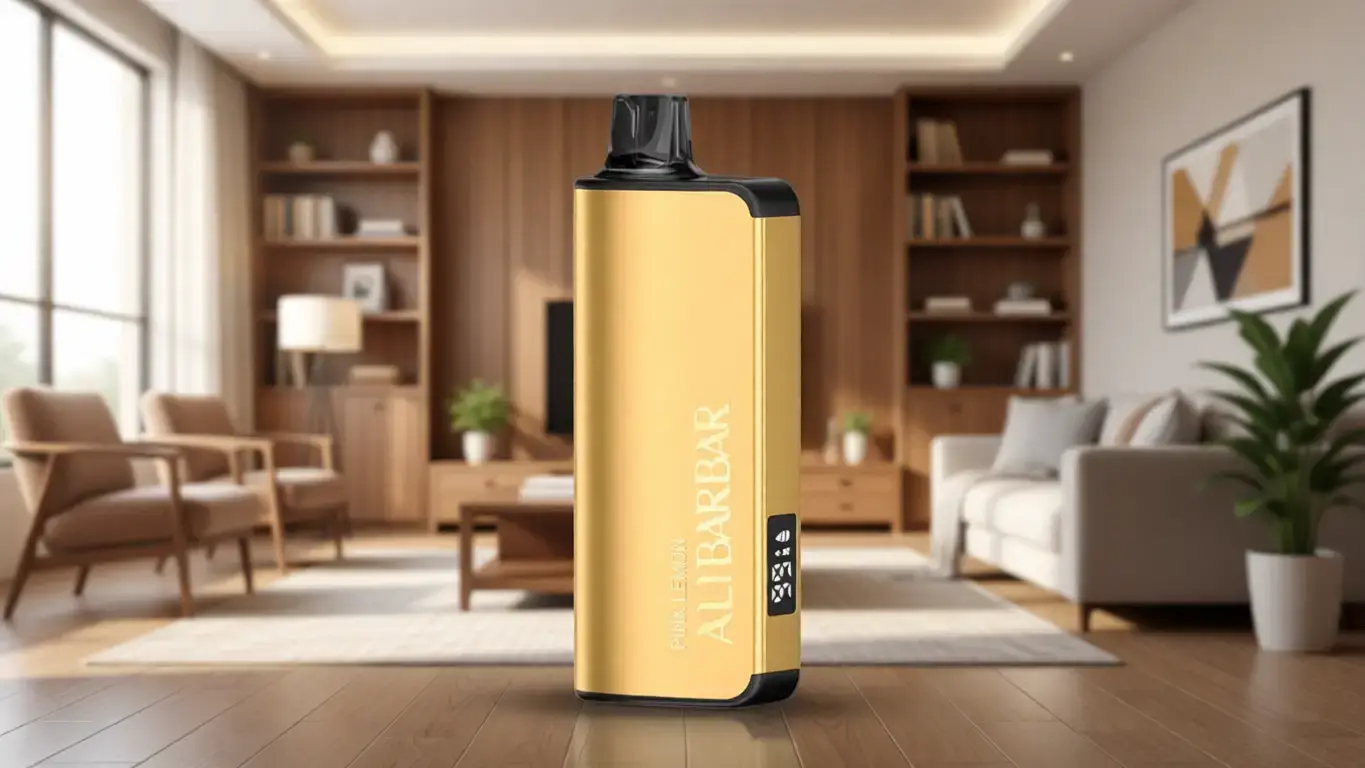
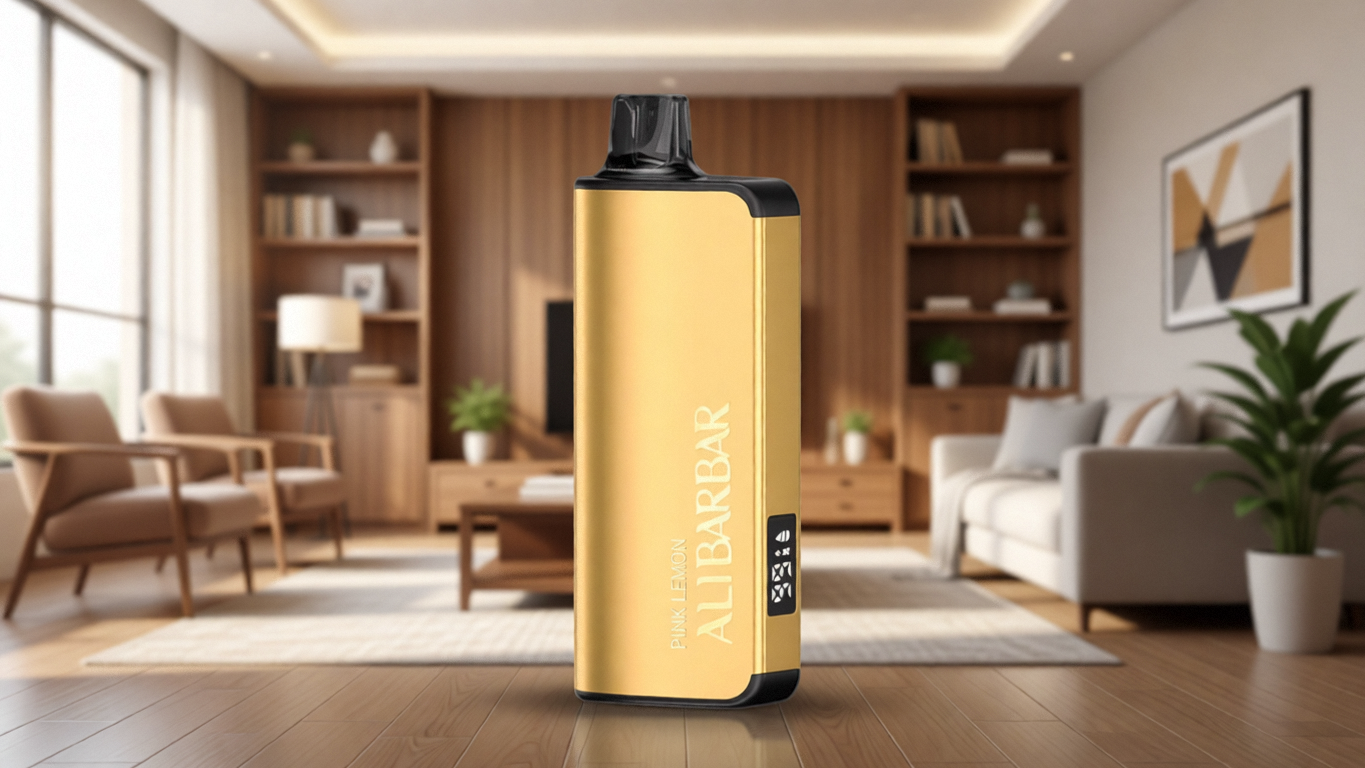
High‑capacity integrated units, such as the ALIBARBAR INGOT 15000, are engineered specifically to handle extended daily use without mid‑day refuelling or recharging. They pair a large internal battery (often exceeding 600 mAh in the disposable‑equivalent sector) with a mesh coil system designed for stable wicking across a broad temperature window. Users who previously carried two lower‑capacity devices through a workday often report that a single unit rated for 12 000–15 000 puffs comfortably absorbs their routine. However, even these devices need respect for their duty cycle. The instruction to “allow the device to rest between draws” is not boilerplate; it directly determines whether the rated puff count is realised.
Devices with variable power modes, such as the Ice Adjust 12000 series, add another dimension. By letting the user select between output levels, they introduce deliberate trade‑offs: lower power extends liquid and battery longevity at the cost of vapour density; higher power increases consumption across the board. The control is useful, but it also shifts responsibility. A user who consistently runs the device at maximum output and wonders why it does not last as long as advertised has not encountered a defect; they have encountered physics.
Compact, single‑use designs occupy the other end of the spectrum. They prioritise form factor and simplicity, and their capacity limits are proportionately tighter. Using such a device as a primary, all‑day tool will almost certainly feel like “too much” because the internal volume and cell size were never scoped for that use case. The frustration is real but misdirected: the device is not failing; it is being asked to do a job for which it was not designed. Acknowledging this mismatch is one of the most practical steps toward a more satisfying setup.
A Practical Framework for Evaluating Your Own Usage
You do not need laboratory equipment to assess whether your habits are pushing a device beyond its comfort zone. A structured, consistent approach using nothing more than observation and a few pointed questions will consistently outperform guesswork.
Step 1: Establish your baseline.
Note your typical daily usage in concrete terms: how many hours between first use and last, how many distinct sessions, and the average number of draws per session. You do not need an exact count; an honest estimate within 20 % is sufficient. If your device has a puff counter, let it accumulate for a full operational cycle.
Step 2: Compare against the device’s rated limits.
Look at the manufacturer‑specified puff count and battery capacity. If your observed usage suggests you are consuming 60 % of the rated capacity every day, the device is being driven at the upper boundary of its design. That is not necessarily a problem, but it means you are operating without a safety margin. Any increase in your routine will push it over.
Step 3: Check for symptom onset.
Ask diagnostic questions: Do I notice a decline in vapour quality during the second half of a session? Does the device feel noticeably warm after a few consecutive draws? Am I frequently surprised by a flat battery? A “yes” to any of these indicates the device is being worked harder than its thermal management and power delivery can comfortably sustain.
Step 4: Calibrate your expectations.
If you answer “yes” to multiple questions, the solution is not necessarily to use the device less. It might be to select a device with a higher capacity ceiling, better feedback mechanisms, or a modular architecture that allows component replacement before performance tapers. Standardised specification comparison — the kind available when product information is organised transparently — turns this calibration from a subjective feeling into a deliberate choice.
Common Errors and the Industry Observations Behind Them
The errors users make when judging their own consumption are remarkably consistent. Recognising them is the quickest way to stop repeating them.
Error 1: Treating a laboratory‑derived puff count as a personal guarantee.
The advertised number is a maximum under ideal conditions. Users who interpret it as a promise routinely feel disappointed when heavy, dense usage yields fewer total puffs. The industry tolerates this misunderstanding because puff counts sell devices, but informed consumers should read them as relative benchmarks — useful for comparing one device family to another, not for budgeting daily intake.
Error 2: Ignoring the cumulative effect of partial‑cycle charging.
For rechargeable devices, many users top off the battery at every opportunity, accumulating shallow charge cycles. Lithium‑ion cells wear primarily through cycle count, and shallow cycles count fractionally. A user who charges a device four times a day for short bursts may be racking up equivalent full‑cycle wear far faster than a user who charges once a day from near‑empty. This can make a device seem to fail prematurely, when in fact the usage pattern is effectively doubling the battery’s ageing curve.

Error 3: Assuming visual similarity means identical engineering.
Two devices that look nearly identical and carry similar puff‑count claims can house completely different coil metallurgy, wicking materials, and power management firmware. One might handle sustained sessions with graceful performance degradation; the other might deliver harsh, inconsistent vapour after the first thirty puffs of a heavy session. Judging by appearance alone blinds the user to the architecture that actually determines where “too much” begins.
Error 4: Overweighting upfront cost and undervaluing longevity.
A device priced lower may seem like a smarter choice until you calculate the number of units required to match the lifespan of a higher‑capacity alternative. A user who goes through three budget devices a week is spending more — and dealing with more disposal and repurchase friction — than someone who uses one properly rated high‑capacity device designed for heavy use. “Too much” is often a function of buying the wrong tool for the job, not of using the right tool excessively.
Frequently Asked Questions
Q: How do I know if my daily usage is considered heavy?
A: If you consistently drain a device rated for over 10 000 puffs in fewer than three days, or if you find yourself needing a backup before the primary device’s reservoir is empty, your pattern would be considered at the upper end of the usage spectrum relative to current device category averages.
Q: Can using a device too frequently cause permanent damage?
A: Yes. Repeated chain‑use without adequate cooling can thermally degrade the coil and reduce battery efficiency. This damage is cumulative and often presents as a device that produces vapour but with noticeably diminished quality long before the rated puff count is reached.
Q: Are there devices specifically designed for continuous, all‑day use?
A: Yes. Several manufacturers have developed high‑capacity systems with larger reservoirs, robust mesh coils, and batteries above 600 mAh. Devices in the 12 000–15 000 puff range are engineered to absorb the throughput that would overwhelm a compact unit. However, even these benefit from natural pauses between draws.
Q: What role does the power setting play in how long a device lasts?
A: Models with adjustable output allow you to balance intensity against longevity. Running a device at its lower power mode extends both battery life and liquid consumption, while maximum output accelerates depletion of both. Choosing the setting that matches your actual preference — not the maximum available — is a simple and effective way to avoid outrunning your device’s capacity.
Q: Is it better to use one device exclusively or rotate between several?
A: Rotating between two lower‑capacity devices can reduce thermal stress on each, potentially extending total usable life. However, a single properly specified device with enough headroom for your routine is generally more economical and more convenient once you have accurately assessed your needs.
Q: How can I be sure the specifications I read are accurate?
A: Product pages on platforms that maintain authorised supply chains, like OZVAPE Shop, list specifications that match the manufacturer’s official documentation. When a retailer sources exclusively from factory‑certified channels and presents data in a standardised format, the numbers you see are the same as those on the master packaging and compliance documentation.
Q: Does heavy usage void any kind of warranty or return eligibility?
A: Most retailers distinguish between normal use and physical damage caused by overheating or misuse. If a device fails because its architecture was not designed to support your usage pattern, that is typically not a defect but a mismatch. A responsible retailer will help you identify a more appropriate device rather than simply replacing the same unit.
Q: Can I safely ignore the “allow to rest between draws” instruction if the device feels cool?
A: Surface temperature is not a reliable indicator of internal coil temperature. Even if the casing feels barely warm, the heating element can be at several hundred degrees, and wicking material can be locally dry. The rest instruction protects long‑term consistency, not just immediate safety. Ignoring it shortens the useful lifespan, often imperceptibly at first.
Q: What should I do if I consistently use a device until it shows a burnt taste?
A: A burnt taste is evidence that the wicking material has been thermally compromised. Once this occurs, the flavour does not recover. If this happens early in the device’s operational life, your usage density is likely exceeding the wicking speed. Consider a device with a larger liquid volume and a coil architecture rated for quicker saturation, or adjust your draw interval to allow adequate resaturation.
Q: Is there a way to objectively measure my usage without a puff counter?
A: You can approximate by tracking device lifespan. If you know the rated puff count, count the days until the device is depleted, and divide. For example, a 10 000‑puff device that lasts seven days indicates roughly 1 400 puffs per day. That number, however approximate, gives you a reproducible baseline against which to compare other devices and patterns.
Conclusion
The question of what is “too much” resolves not into a universal threshold but into a mirror. It reflects the relationship between a device’s internal architecture and the daily reality of the person carrying it. When that relationship is understood, usage becomes a deliberate choice rather than a source of anxiety. When it is misunderstood, every device eventually feels inadequate, and the cycle repeats.
Acquiring that understanding requires accurate information and an honest assessment of your own patterns. Standardised specifications, transparent sourcing, and clear status feedback — the kind that OZVAPE Shop has committed to making available across its ALIBARBAR range — do not make the decision for you. But they give you the raw material from which a sound decision can be built.
The right device is not the one with the most extreme claim. It is the one that matches your actual rhythm, within its designed envelope, without requiring you to constantly carry a backup or second‑guess what the blinking light really means. Once you know where the line is drawn, staying within it becomes a matter of routine, not discipline.