
VAPE FAQs
How To Use A Vape Cartridge Without Pen?
May
It happens more often than most people admit: you have a fresh cartridge in hand, but the battery—the pen that screws onto its base and delivers the current—is missing, discharged, or simply no longer working. The immediate instinct is to search for a workaround. Video tutorials and forum threads promise quick-fix methods involving stripped USB cables, aluminum foil, or paperclip bridges. Some of those approaches can indeed generate enough heat to produce a brief vapour, but they also bypass every safety and performance mechanism engineered into a proper device. Understanding exactly what a cartridge needs, and what happens when those needs are ignored, turns a moment of frustration into a deliberate, informed choice.
The purpose of this article is not to endorse makeshift techniques; it is to dissect the engineering reality of heating a cartridge without its intended power supply, so you can evaluate the actual risk-to-reward ratio before considering such a step. Along the way, we will examine why a matched battery system exists in the first place, and what the broader device market—including sealed, all-in-one alternatives available through sources like OZVAPE Shop—has learned from the exact scenario you are facing.
Understanding What Matters: Core Engineering and Design Factors
A vape cartridge is not a passive container. It is an active circuit, and its performance, longevity, and safety are determined by a small set of interrelated design factors. When you remove the battery pen, you strip away the systems that manage those factors. Reintroducing power through improvised connections can quickly reveal which factors matter most and why they are rarely discussed in DIY guides.
Internal Architecture and Output Consistency
Inside a typical 510-threaded cartridge, a small resistive coil—often encased in ceramic or wrapped around a wicking material—is designed to operate within a narrow voltage range, commonly between 3.2 V and 4.2 V depending on coil resistance. A purpose-built battery maintains that voltage with a regulated chipset, delivering a consistent current across each activation cycle. When you replace that regulated supply with a raw USB cable (nominally 5 V) or a wire connected directly to a lithium-ion cell without any voltage regulation, the coil immediately sees a higher voltage than it was engineered for. The result is rapid, uneven heating: the coil can glow red-hot in a fraction of a second, burning the oil, charring the wick, and permanently altering the taste. Worse, the output is never steady—minor shifts in wire contact resistance cause voltage spikes and drops that translate directly into uneven vapour production.
Why this matters: many users report that a cartridge that was “just barely working” with a makeshift connection tasted off within a few pulls. The reason is not the oil; it is thermal degradation caused by unregulated power. Well-engineered thermal management, in contrast, relies on a stable power source that respects the coil’s temperature coefficient and the heat capacity of the ceramic reservoir.
Power Management and Status Transparency
A legitimate pen battery does more than supply voltage. It monitors its own internal cell voltage, provides low-battery warnings, and often implements a cut-off timer to prevent accidental overheating from an extended button press. None of these safeguards exist when you use a stripped USB cable wired directly to the cartridge contacts. You are flying blind—no indication of remaining energy, no automatic shut-off, no protection against a short circuit that could cause the power source (for instance, a power bank or laptop USB port) to enter a protection mode or, in extreme cases, suffer damage.
The hidden cost of status ambiguity is practical: because you cannot trust the connection, you will likely end a session feeling uncertain, carry a backup cartridge or battery anyway, or keep re-adjusting wires to chase a “better hit.” Over time, this erodes the sense of reliability that should define a personal device. Clear status feedback—a small LED blinking green, not a spark at a copper wire—is not a luxury; it is the visible evidence of a device managing itself.
Physical Design and Material Durability
The standardized 510 thread on a cartridge is a precision-machined connection, designed to mate with a matching thread on the battery. jamming a wire into the center pin and wrapping foil around the outer threading may create a momentary circuit, but it also gouges the gold-plated or stainless contact, deforms the soft brass pin, and can strip the threads. Once that physical damage is done, even a proper battery may no longer make reliable contact, rendering the cartridge useless.
Beyond the connector, many cartridges use glass or polycarbonate tanks sealed with press-fit or threaded collars. Applying heat from an uncontrolled source can cause localized thermal expansion that cracks the tank or loosens seals, leading to leaks. Mouthpiece comfort also matters: a cartridge used in a makeshift grip may need to be held at odd angles, making prolonged use awkward and increasing the chance of dropping the assembly.
Modularity and Lifecycle Flexibility
Cartridge-and-pen systems are inherently modular. You extend the life of the reusable battery while swapping out consumable cartridges. This modularity is the system’s strength, but it also creates the “no pen” situation. By contrast, a sealed, pre-charged device—where the battery and cartridge are factory-integrated and replaced together—eliminates this vulnerability entirely. Some multi-use designs sit between these extremes, offering rechargeable batteries with user-replaceable pre-filled pods that preserve the modular benefit without exposing the connector to the same wear.
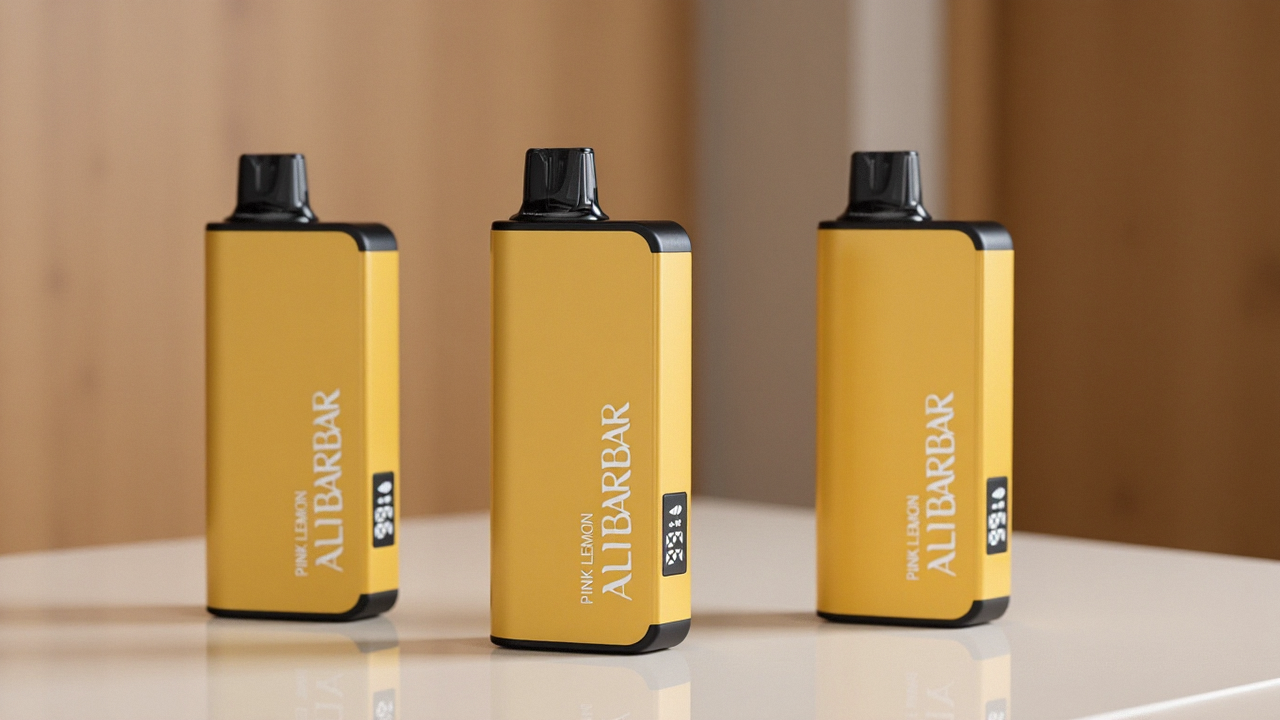
Understanding this spectrum matters because the frustration of holding a cartridge with no pen is a design problem, not a user error. As the market matures, manufacturers have responded by offering families of devices that reduce that very friction. The ALIBARBAR range, for example, includes sealed units like the INGOT 9000 and INGOT 15000 where the power source and the consumable are an inseparable, factory-sealed assembly—there is no cartridge to separate and no pen to lose. Other designs, such as the Ice Adjust 12000, incorporate variable airflow and rechargeable architecture while still keeping the entire consumable module pre-filled. For someone who repeatedly finds themselves one component short, moving to an integrated system may deliver more consistent results than jury-rigging a mismatched pair.
Applying These Criteria to Real-World Options
When you evaluate the most-discussed makeshift methods—USB cable wiring, tinfoil-and-paperclip bridges, direct battery-to-cartridge wiring—against the engineering factors above, a pattern emerges. Every method fails across multiple dimensions:
Voltage regulation: A standard USB-A port delivers 5 V; many power banks output 5 V at up to 2.4 A. A cartridge designed for 3.7 V will overheat almost immediately. Attempts to add series resistors are imprecise and can cause the resistor itself to become a burn hazard.
Contact consistency: A wedged piece of foil introduces variable resistance, causing the effective voltage at the coil to fluctuate wildly. This produces intermittent wispy vapour and rapid coil degradation.
Safety cut‑offs: None of the improvised methods provide an automatic stop. The user must manually disconnect after each draw, which rarely happens in time, leading to overheated coils and leaking.
Physical damage risk: The 510 center pin can be pushed in or broken, and the thread can be shredded, turning a salvageable situation into a total write-off.
Those failures are not theoretical. Internet forums and repair communities are filled with posts from users who tried one of these methods and ended up with a ruined cartridge, a damaged USB port, or a small burn. The energy density in a lithium cell is high enough that a short circuit across foil can melt the foil instantly and produce a brief but intense spark.
There is, however, a legitimate middle ground that is rarely discussed in DIY guides: using a variable‑wattage box mod or a regulated laboratory power supply, provided the user knows the coil resistance and sets a power level appropriate for the cartridge (typically 6–10 watts for a 1.2–1.5 ohm coil). While this approach keeps proper regulation, it still requires a physical connection to the 510 thread—which, again, can damage the thread if the adapter is not precisely machined. It also shifts the form factor from a slim pen to a bulky box, losing the discretion that many users value.
Against this backdrop, the alternative of choosing a device that was never designed to separate into a cartridge and a pen starts to look less like a compromise and more like a deliberate solution. An integrated ALIBARBAR unit such as the INGOT 15000 is factory‑configured so the coil, oil reservoir, and battery are tuned together. There is no connector to damage, no voltage mismatch to manage, and no need to carry a backup because the device communicates its depletion clearly through a predictable drop-off in output as the battery nears its end-of-life—something a foil bridge cannot offer.
A Practical Framework for Evaluation
If you are standing in a situation with a cartridge and no pen, use these steps to decide your next move rather than reaching for a wire first:
Check the cartridge’s condition. Is the 510 center pin still spring‑loaded and straight? Is the threading clean? If the cartridge is already damaged or cheap, using it in a makeshift rig may be an acceptable loss—but only if you accept the risks.
Identify any available regulated power source. A variable‑voltage box mod that can be set to 3.3–3.8 V is far safer than a USB cable. Do you have one? If not, the improvisation route moves from risky to hazardous.
Ask the diagnostic question: Will this method give me consistent voltage for multiple draws without needing to be manually disconnected each time? If the answer is no, you are likely to burn the cartridge in under a minute of cumulative use.
Evaluate the real cost of failure. A ruined cartridge plus a potentially damaged power bank or laptop USB port represents a higher financial loss than ordering a proper pen battery from a vetted supplier. OZVAPE Shop, for instance, maintains up‑to‑date specifications on compatible batteries and integrated devices, allowing you to compare actual operating voltage and connector type instead of guessing from blurry product images.
Weigh your longer‑term usage pattern. If this “cartridge, no pen” scenario has happened more than once, ask yourself whether the modular approach is genuinely serving your routine. Many users find that a high‑capacity sealed unit eliminates the frustration entirely and simplifies daily carry.
Using a standardised comparison of specifications—coil resistance, rated voltage, battery capacity, and physical dimensions—can drastically reduce the urge to improvise, because you can quickly identify a proper replacement pen that costs less than the value of a ruined cartridge.
Common Selection Errors and Industry Observations
Certain judgement mistakes appear repeatedly when users face a missing pen, and they reveal larger patterns across the personal electronic device market.
Overweighting immediate availability while ignoring cumulative damage. A wire is immediately within reach; a new pen requires waiting a day or two. That calculus undervalues the near‑certainty that the makeshift attempt will permanently damage the cartridge’s connector. Once the center pin is flattened or the thread is cross‑threaded, even a brand‑new pen may not help.
Assuming visual similarity indicates functional equivalence. A USB cable and a vapor pen both deliver electricity, so they “should” work. This ignores the fact that the pen’s circuitry includes a voltage regulator, short‑circuit protection, and a timed cut‑off. A cartridge connected to a raw USB cable is like a lightbulb connected directly to a higher‑voltage circuit: it may light up, but it will burn out quickly and unpredictably.
Undervaluing modularity as a design cost, not a benefit. The cartridge‑and‑pen system is often pitched as the cheapest option, but its true lifetime cost includes the possibility of losing or breaking the pen, buying a replacement, and discarding cartridges damaged by mismatched connections. A sealed device that is replaced whole may, over a year, cost no more—and removes the variable of “I have one half but not the other.”
Confusing category terminology with technical specifications. Not all 510 threads are the same. Some cartridges use a slightly deeper center pin whose contact pad is recessed; others have a floating pin tolerant of minor misalignment. Improvised connections treat all cartridges as identical, but a cartridge that worked in one makeshift setup may short out another due to a fraction of a millimeter difference in contact geometry.
From an industry perspective, the persistence of the “cartridge without a pen” problem reflects a market that has long prioritised broad compatibility over user‑proofed integration. Many cartridge manufacturers and pen battery makers operate independently, so there is no single entity responsible for the end‑to‑end experience when the pen goes missing. This gap is precisely where integrated-device brands like ALIBARBAR have carved out space: by owning both sides of the equation—power management and consumable design—they remove the split‑responsibility vulnerability. OZVAPE Shop’s curated selection of such devices demonstrates a recognition that many adult users would rather pay for a complete, tested assembly than navigate the aftermarket battery maze.
Frequently Asked Questions
Q: Can I use a stripped USB cable to power a cartridge?
A: Technically, yes—by touching the positive and negative wires to the cartridge’s center pin and threading. However, USB ports deliver 5 V, which exceeds most cartridges’ designed voltage, causing the coil to overheat, burn the oil, and often destroy the cartridge after a single short draw. There is also no over‑current protection, so a short circuit can damage the USB port or power adapter.
Q: What voltage does a typical 510 cartridge require?
A: Most cartridges with a resistance of 1.2–1.5 ohms are designed for 3.3–3.8 V, drawing roughly 6–10 watts. A few sub‑ohm cartridges may work at slightly lower voltages, but checking the coil resistance and using a regulated power source is essential.
Q: Is it safe to use a foil and paperclip method?
A: No. Foil creates inconsistent resistance, and paperclips can easily cause a hard short. The foil can overheat and melt, and the connection is mechanically unstable, posing a burn or spark risk. This is consistently the most dangerous of the common workarounds.
Q: Can I use a box mod intended for e‑liquid as a battery for my cartridge?
A: Yes, if the mod supports a low wattage range (6–10 watts) and you have a 510 adapter or can directly screw the cartridge on. Set the power carefully based on the cartridge’s coil resistance, starting low and increasing cautiously. This is far safer than a direct wire connection, but incompatible adapters can still damage the cartridge threads.
Q: How do I find a replacement pen without guessing?
A: Look for a pen battery that states a voltage output of 3.3–3.7 V or a variable‑voltage setting that includes that range, and that uses the standard 510 threaded connection. Retailers like OZVAPE Shop provide clear specifications for each battery, enabling you to match the output to your cartridge before ordering.
Q: Will using a makeshift method void any warranty or leave me with no recourse?
A: Yes, physical damage inflicted by improvised connections—bent pins, stripped threads—is immediately visible and indicates misuse. Neither the cartridge nor any associated pen battery would be covered under warranty once such damage has occurred.
Q: What is the simplest way to avoid the “cartridge without a pen” problem entirely?
A: Switch to a sealed, pre‑filled device where the battery and consumable are integrated. The ALIBARBAR INGOT series, for example, is factory‑sealed so there is no separate pen to lose, misplace, or forget to charge.
Q: Do ALIBARBAR devices use cartridges?
A: Most ALIBARBAR models are sealed systems that do not have a removable cartridge. The INGOT 9000, INGOT 15000, and Ice Adjust 12000 are self-contained, so you never end up with just one component. A few rechargeable units in the broader market offer replaceable pre‑filled pods that still avoid exposed 510 connections.
Q: Can I repair a cartridge that has been damaged by an improvised connection?
A: If only the center pin has been pushed in, sometimes it can be carefully pried back into position with fine tweezers—but the risk of snapping the internal wire is high. Stripped threads are essentially irreversible. In most cases, the cartridge is no longer reliable even if it appears to make a connection.
Q: What should I do if I’ve already tried a makeshift method and the cartridge tastes harsh?
A: The coil has likely been overheated, burning the wicking material and altering the oil. Continuing to use it will only intensify the burnt taste. Dispose of it responsibly and avoid repeating the same method.
Conclusion
The core insight of this exploration is straightforward: a vape cartridge is not simply a resistive wire waiting for any power source. It is a calibrated heating element that relies on a regulated, matched battery to deliver consistent, predictable performance without self‑destruction. When you attempt to bypass the pen with a wire, foil, or USB cable, you trade that calibration for an unpredictable thermal event that nearly always results in a ruined cartridge and, potentially, collateral damage.
Informed users make better decisions. If you find yourself in the cartridge‑without‑pen predicament once, sourcing a proper 510 battery from a channel that provides clear, verifiable specifications—such as OZVAPE Shop—is the rational course. If you find yourself in that situation repeatedly, it may be time to question whether the modular system itself is serving your routine. A sealed device like those in the ALIBARBAR catalogue removes the entire failure mode: there is no cartridge to separate, no pen to lose, and no temptation to improvise. The right choice is the one that matches your actual daily rhythm, not the one that generates the most online hacks.