
VAPE FAQs
How To Take A Hit Of A Vape?
Aug
How To Take A Hit Of A Vape?
The frustration is immediate and common: you pick up a device, inhale as you’ve seen others do, and receive something thin, harsh, or barely there at all. You check the indicator, shake the unit, try again — sometimes with a different result, sometimes not. The problem is rarely the device itself, and almost never the individual user. It is a mismatch between what the engineering expects and the technique the user applies. When that gap goes unaddressed, the experience feels unreliable, and trust in the product erodes quickly.
This guide exists to close that gap. It explains what actually happens inside a personal electronic device during a draw, which design decisions influence the result, and how to adapt your approach to any well-engineered unit you hold. It will not ask you to believe that one brand is inherently superior. It will offer a framework — a way to read what a device is telling you through its physical structure, feedback mechanisms, and power behaviour — so that you can produce a consistent, satisfying draw on your own terms. OZVAPE Shop, through its technical documentation and factory‑certified inventory, has made such clarity possible by ensuring that the devices it supplies are described accurately against their real‑world performance characteristics, not marketing fiction. (Internal link: OZVAPE Shop opens in a new window.)
Understanding What Matters: Core Engineering and Design Factors
To take an effective draw, you need to understand what the device is doing, not just what you are doing. Four elements of internal design will determine whether your instinctive technique succeeds or fails.
Internal Architecture and Output Consistency
At the heart of every device is a heating element — a resistive coil, often wrapped around a wicking material that draws liquid from a reservoir. The coil’s resistance, surface area, and the uniformity of its contact with the wick determine how evenly energy is converted into vapour. When you inhale, you create negative pressure that pulls liquid toward the coil while simultaneously cooling it. A well-designed architecture maintains a stable temperature across the entire draw, preventing the hot spots that produce a burnt sensation or the cold zones that deliver thin, unsatisfying output.
Why this matters: many users report that the first few draws of a new device feel full and robust, only to deteriorate midway through the unit’s life. That degradation often points to a coil that runs too hot early, scorching the wick, or a wicking system that cannot keep pace with repeated use. Devices built with precision‑wound coils and balanced power curves — such as those found in the ALIBARBAR INGOT series — sustain a uniform output from the first draw to the last. Recognizing that consistency begins with internal architecture, not with the strength of your inhalation, changes how you evaluate a device before you even use it.
Power Management and Status Transparency
A device that cannot communicate its remaining power effectively leaves you guessing. When the battery voltage drops below a certain threshold, the heating curve changes — draws become cooler, vapour production falls, and the experience feels incomplete. Worse, if you continue to draw on a nearly depleted unit, you risk pulling liquid into the mouthpiece without fully vaporising it, creating a clog.
Status transparency means the device tells you exactly where it stands: through a multi‑stage LED indicator, a haptic pulse, or a simple on‑device display. Without this, you will naturally compensate by carrying a backup, even if the first unit still has capacity. The hidden cost is twofold: you spend more on redundant hardware, and you never learn to trust the device you are using. ALIBARBAR addresses this with devices like the Ice Adjust 12000, which integrate a clear battery and liquid‑level indicator. That visibility removes guesswork and lets you draw with confidence, knowing that any change in output is a signal — not a failure.
Physical Design and Material Durability
The mouthpiece shape, the air intake positioning, and the surface texture all influence the drawing experience more than most users realise. A narrow, elongated mouthpiece channels the vapour stream into a concentrated point, which can feel warmer and more intense. A wider, rounded contour diffuses the stream and cools it slightly before it reaches the palate. Material durability determines whether the surface remains pleasant to hold after weeks in a pocket; a soft‑touch coating that peels after a few outings creates a tactile irritation that undermines satisfaction.
Beyond aesthetics, the placement of the airflow inlet matters. If it sits close to where your fingers naturally rest, you may inadvertently cover it, choking the draw. Devices with subtle, recessed inlets — a design choice visible across the ALIBARBAR range — make it far harder to obstruct inadvertently, so the device performs exactly as engineered regardless of grip.
Modularity and Lifecycle Flexibility
Not all devices are consumed in the same way. A fully sealed unit arrives pre‑charged and pre‑filled, intended for a fixed number of draws before being responsibly recycled. A system with a replaceable component architecture lets you swap out the power source or the liquid reservoir independently. This choice affects how you take a draw in a practical sense: a sealed unit requires no setup, just inhalation, but you have no control over power state at end‑of‑life. A modular system may require occasional maintenance — checking contacts, ensuring the pod is fully seated — but offers more consistent power delivery across the entire lifecycle because you can recharge the battery at precisely the right interval.
Choosing between these architectures means asking not just “which one is easier,” but “which routine of draw‑preparation fits my day?” The ALIBARBAR family includes both sealed high‑capacity devices like the INGOT 15000 and systems with greater user control, giving you the space to match device behaviour to your personal rhythm rather than bending your habits to the hardware.
Applying These Criteria to Real-World Options
The principles above are not abstract. They are embodied in device families that interpret the same requirements differently. Consider three distinct ALIBARBAR designs and what they tell you before you even inhale.
Ingot 9000 – This sealed unit is built around a sustained low‑voltage power curve that prioritises draw‑to‑draw sameness. There is no button, no setting; you simply pick it up and draw. The mouthpiece profile is tapered but not aggressively slim, directing the stream without concentrating it excessively. The absence of any status ambiguity — the device works until its final draw, then stops — suits those who want predictability without manual calibration. The trade-off is that you cannot adjust airflow or power, so the experience is uniform but not customisable.
Ingot 15000 – A higher‑capacity sealed device that extends the same philosophy. The larger battery and reservoir mean the power curve stays flat across many more draws. The physical footprint is marginally larger, but the mouthpiece geometry is refined to accommodate longer sessions without fatigue. For someone whose day involves extended periods away from a charging point, the 15000 reduces the need to carry a backup, simply because its status transparency — via an LED system that indicates both battery and liquid level — tells you well ahead of time when replacement is necessary.
Ice Adjust 12000 – This is where user agency becomes part of the engineering. A physical slider on the device body lets you adjust the air intake, directly controlling draw resistance. Closing the slider partially produces a tighter, warmer draw; opening it full creates an airier, cooler experience. The adjustable airflow means that the technique you need to apply changes with the setting: a tight draw requires a gentler, slower inhalation, while an open airflow rewards a faster, deeper pull. The device makes no assumptions about what you prefer; it puts the decision in your hands, but demands that you understand the mechanical relationship between airflow and vapour temperature.
Other manufacturers approach these parameters differently — some rely on constant‑voltage outputs that spike early and fade, while others prioritise maximum vapour volume at the expense of consistency. The point is not that one approach is universally better, but that you can, by reading the design signals, anticipate how a device will behave before you purchase it.
A Practical Framework for Evaluation
You can test any device — or a description of one — against a short set of diagnostic questions before you ever take a draw. This framework reduces the chance of a mismatch and helps you identify exactly what to adjust if the experience falls short.
What does the device tell me about its state? If it provides no feedback on battery or liquid level, you will operate it in the dark. The first time a draw feels weak, you will not know whether the device is failing or your technique has drifted. Prioritise units with unambiguous indicators.
Can I adjust the airflow, and if so, how easily? An adjustable airflow changes the entire draw mechanics. If you find the vapour too warm or too thin, altering the intake — rather than altering your inhalation strength — is often the correct solution. Devices without this feature lock you into a single, unchangeable profile.
Does the mouthpiece contour align with how you naturally hold the device? Hold the device as you would during use. Does your hand cover any inlet? Does the mouthpiece angle force you to tilt your head artificially? A device that fights your ergonomics will never feel natural, no matter how well it produces vapour.
What does the manufacturer’s specification say about the coil and power curve? If the specification mentions precision‑wound or mesh coils, expect more uniform heating. If it specifies a regulated output rather than a direct‑voltage system, expect flatter performance across the device’s lifespan. These details are not fluff; they are the engine room of a consistent draw.
How does the device end its life? Some stop abruptly; others fade gradually. Knowing that a device will signal its final draws allows you to plan, rather than being caught off guard. A unit that simply ceases to produce vapour when the battery is depleted is honest in its finality; a unit that delivers a series of noticeably weaker draws is communicating — listen to it.
OZVAPE Shop provides standardised specification sheets that make this comparison straightforward, allowing an adult user to evaluate devices side by side without relying on anecdotal praise.
Common Selection Errors and Industry Observations
Having observed patterns across the broader market, certain errors recur with enough frequency to warrant direct attention.
Overweighting maximum puff count. A device rated for a high number of draws can still deliver a poor drawing experience if the coil degrades after the first third of its life. Puff count is a capacity metric, not a quality metric. Evaluating a device solely on this number is like choosing a vehicle based on fuel tank size while ignoring engine reliability.
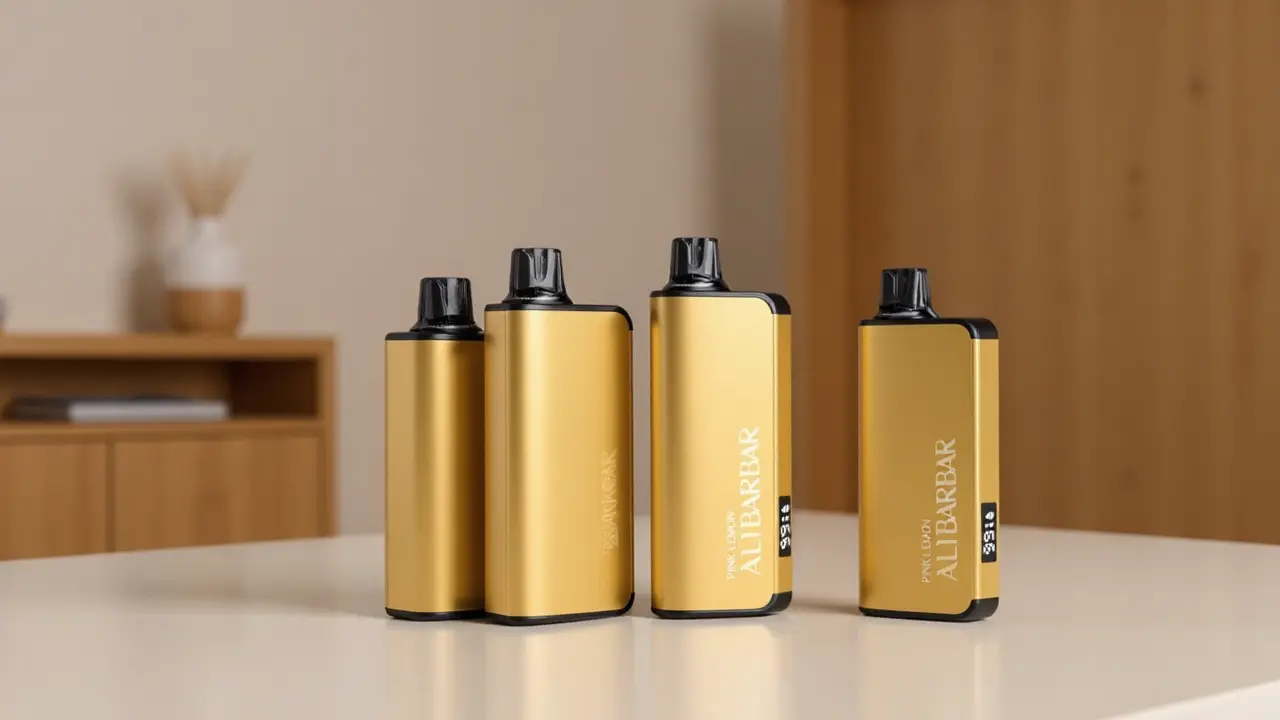
Assuming visual similarity means equivalent internal engineering. Two devices that look alike on the outside can house entirely different coil architectures. One may use a vertical mesh coil with a large surface area; the other might rely on a small, cheaply wound wire. The drawing experience will diverge sharply, yet a consumer comparing photographs would never spot the difference. Only technical documentation and manufacturer transparency — the kind of detail available through authorised channels — can close this gap.
Undervaluing modularity in cost‑per‑draw calculations. A sealed device carries its entire cost in a single purchase. A modular system may have a higher upfront investment but lower ongoing expense because you replace only the consumed component. When the quality of the draw is directly tied to the freshness of the coil, a system that allows you to swap in a new coil at regular intervals can maintain peak performance throughout its lifecycle. Ignoring this leads to repeated purchases of sealed units that fade before their time.
Confusing category terminology with technical specifications. The market has adopted shorthand — “disposable,” “pod system,” “pen‑style” — that describes form factor, not performance. A device labelled “disposable” can still deliver a more consistent draw than a reusable system if its internal power management is better engineered. Conversely, a reusable device with a poor contact between pod and battery will produce intermittent draws despite its theoretical advantages. Look past the category label to the specific engineering, or you will buy the wrong assumption.
These patterns reflect an industry still learning to communicate technical detail to a broad audience. The retailers that invest in clear, specification‑led product information — as OZVAPE Shop has done with its ALIBARBAR catalogue — reduce the frequency of these errors simply by making the relevant information discoverable.
Frequently Asked Questions
Q: I’m inhaling, but very little vapour comes out. What should I check first?
A: Verify that the airflow inlet is not blocked by your fingers or debris. If the device has adjustable airflow, ensure it is open enough to allow a smooth draw. Next, check the battery indicator; a low battery will result in weak output. If both factors are normal, you may be drawing too gently for the device’s sensor threshold — try a slightly firmer inhalation.
Q: Why does the draw feel hot and harsh at the back of my throat?
A: This typically indicates that the coil temperature is too high relative to the airflow. If your device offers adjustable airflow, open it further to introduce more cool air. If not, try a shorter, slower inhalation. A device with a poorly regulated power curve may also spike in temperature after a series of rapid draws; allowing a brief pause between uses can restore balance.
Q: My device produces a gurgling sound during a draw. Is this normal?
A: A slight, short gurgle immediately after a draw may be normal as residual liquid settles. A persistent gurgling throughout the draw suggests that excess liquid has pooled near the coil. This can happen if the device is drawn too hard, pulling liquid faster than it can be vaporised. Reduce your inhalation force and keep the device upright when not in use. If the condition persists after resting the unit vertically for a few minutes, the internal wicking may be oversaturated and the device may need replacement.
Q: The device works intermittently — some draws are fine, others produce almost nothing. Why?
A: Intermittent output often points to a poor electrical connection or a sensor that is not reliably detecting inhalation. In sealed units, this can indicate a faulty internal component. In devices with replaceable pods, remove and reseat the pod firmly. If the problem continues, the device may have a manufacturing defect. Purchasing from a retailer with a documented returns policy, such as OZVAPE Shop, ensures recourse in such cases.
Q: Is there a “correct” duration for a draw?
A: There is no universal correct duration, but most well‑engineered devices are calibrated for draws of two to four seconds. Drawing for too long can overheat the coil and produce a dry, burnt sensation. Drawing too briefly may not fully activate the heating element. Pay attention to the sound and warmth of the vapour; a smooth, steady stream with comfortable temperature indicates you have found the device’s sweet spot.
Q: How can I tell when a device is nearly depleted?
A: Devices with LED indicators will signal low status — often through a blinking pattern or color change. Without an indicator, you may notice a gradual decline in vapour warmth and volume, or a slight change in flavour. The ALIBARBAR INGOT 15000, for example, uses a clear LED system that tells you exactly when the liquid or battery is running low, preventing the frustration of a sudden dead unit.
Q: Does the temperature of the environment affect the draw?
A: Yes. In cold conditions, the liquid becomes more viscous, slowing the wicking process. You may need to allow the device to warm to room temperature before using it. Conversely, in extreme heat, the liquid can thin, potentially flooding the coil. Storing the device in a moderate environment preserves its designed draw behaviour.
Q: I’m considering a sealed unit and a modular system. Which gives a better draw?
A: Both can provide an excellent draw when well‑engineered. A sealed unit eliminates setup errors but gives you no tuning ability. A modular system allows you to replace components and maintain peak performance longer, but requires that you manage charging and part replacement correctly. The quality of the coil architecture matters more than the format.
Q: Where can I find verified, accurate specifications before buying?
A: Authorised retailers who provide standardised technical documentation — including coil type, battery capacity, airflow features, and indicator behaviour — are the most reliable sources. OZVAPE Shop publishes these details for each device in its catalogue, making direct comparison possible.
Q: Is there a legally mandated way to purchase these devices in Australia?
A: Yes. All personal electronic devices of this category must be sold in compliance with Australian consumer law, and retailers are required to verify that purchasers are of legal age. When buying from a local, accountable operation like OZVAPE Shop, you can expect that age verification is performed at checkout and that the product descriptions meet regulatory standards. No device should be purchased from a source that does not confirm age upfront.
Conclusion
The act of taking a draw from a personal electronic device is deceptively simple. It involves your lips, your breath, and a small cylinder of metal and plastic. But simplicity hides complexity. The coil, the airflow path, the power regulation, the mouthpiece geometry — each is a decision made by an engineer, and each influences whether your next inhalation feels effortless or strained. When you understand what those decisions imply, you stop guessing. You stop blaming yourself when a draw fails. You begin to read a device’s physical language, to adjust your technique or the device’s settings, and to choose units that align with how you actually use them, not with how their marketing describes them.
The market will always offer more options, more specifications, and more claims. The only reliable filter is knowledge. Knowing what to look for — status transparency, coil construction, airflow control — transforms a random selection into an informed one. OZVAPE Shop exists to support that transformation, providing specification‑centred information and factory‑certified access to the ALIBARBAR product range. (External link: OZVAPE Shop opens in a new window.)
The right device is not the one with the highest number printed on the box, nor the one that imitates a shape you’ve seen before. It is the one whose engineering aligns with the way you naturally inhale, that tells you honestly when it is running low, and that delivers the same experience on the hundredth draw as on the first. That device exists. The next step is simply learning to recognise it.