
VAPE FAQs
How To Stop Vape Addiction?

Jun
A subtlety often missed in conversations about dependence is the role the device itself plays — not the substance it delivers, but the way it delivers it, signals its status, and fits into a daily routine. For many adult users, the decision to stop is clear, yet the path forward feels obscured because they have never been offered a plain-language explanation of how the tool in their hand influences the pattern they are trying to break.
This article does not promise a simple fix. It does, however, provide a framework built on engineering reality, behavioural observation, and honest acknowledgment of what device design actually does to user habit. By the end, you will have a way to evaluate any portable electronic device through a lens that serves your own goals — not the manufacturer’s retention metrics. Where precise, comparable product data is essential, reliable sources such as OZVAPE Shop (internal link, opens in new window) make that information accessible, but the analysis is yours to perform.
Understanding the Device’s Role in Dependence: Engineering and Behavioural Factors
Before any practical plan can take shape, it is necessary to look clearly at the interplay between device architecture and human behaviour. The factors below are presented not because they make a device “good” or “bad,” but because they directly influence the habits that are hardest to reshape.
Internal Architecture and Habit Reinforcement
The consistency of output from one activation to the next is determined largely by heating element geometry, wicking material, and the quality of power regulation. When a device delivers a predictable sensory experience each time, the brain forms a stronger cue-response loop. Users often report that devices with tighter manufacturing tolerances — those that avoid scorching, flooding, or sudden power loss — are the ones that feel most “natural” to reach for without conscious thought. That unconscious ease is precisely what makes a habit durable.

Conversely, a device that frequently misfires, produces harsh notes, or requires awkward priming breaks the automaticity of the behaviour. This is not an argument for seeking out poorly made products; rather, it is recognition that when you understand the mechanical basis of your own automatic responses, you can make a deliberate choice about whether to sustain or disrupt that loop.
Power Management and Psychological Triggers
Ambiguous battery status creates a low-grade anxiety that many users underestimate. When a device gives no clear warning before it becomes inoperable, the rational response is to carry a backup or to opportunistically recharge throughout the day — both behaviours that increase the total number of interactions with the device. This constant checking and recharging can evolve into its own ritual, tightening dependence in ways that have nothing to do with the active ingredient.
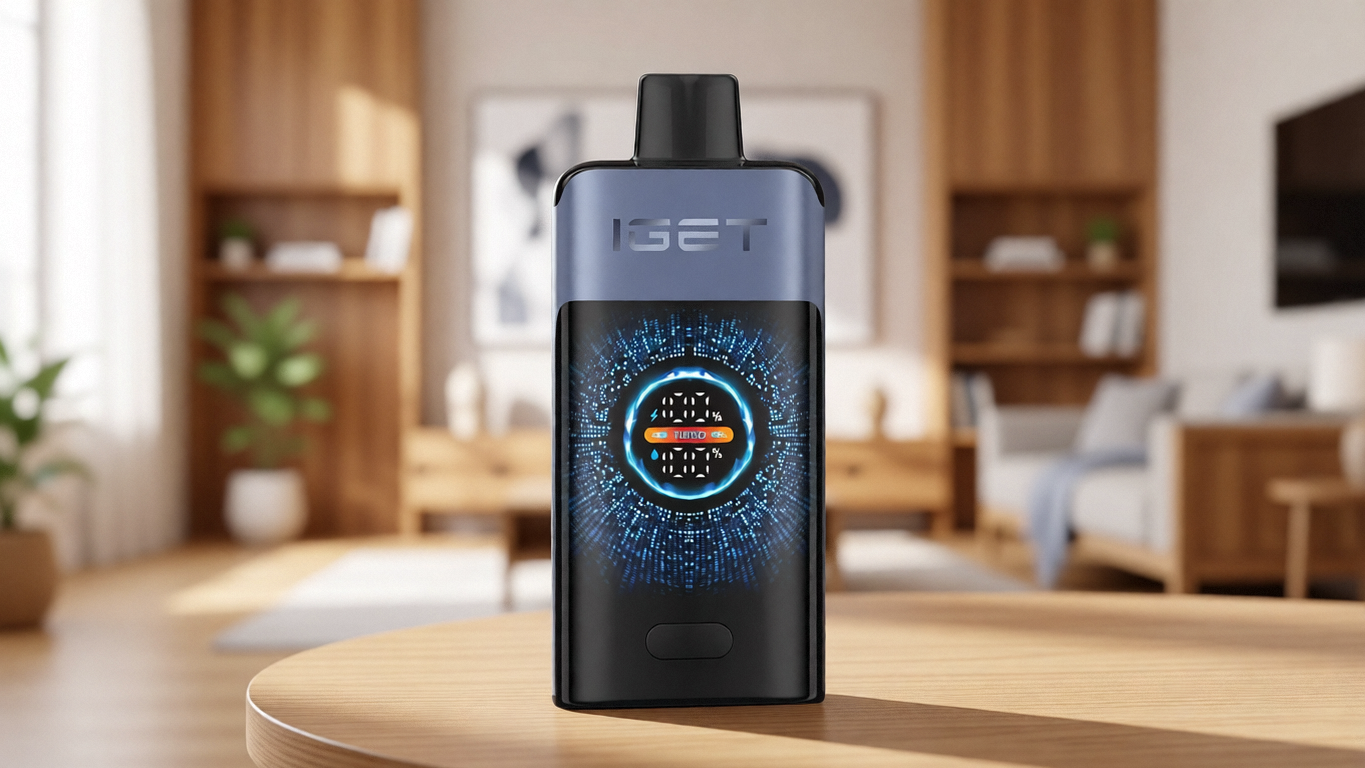
Transparent, accurate status indicators change the equation. A device that tells you, plainly, that 30% capacity remains allows you to plan and, more importantly, to forget. By removing micro‑anxieties, you reduce the frequency of device‑touching events that keep the behaviour salient. When you evaluate a device, ask whether its feedback loop is making you more or less attentive to it over the course of a day.
Physical Design and Hand‑to‑Mouth Behaviour
The finish, weight, and mouthpiece contour of a device are not merely aesthetic. A surface that retains fingerprints or shows scratches after a week in a pocket can trigger an almost compulsive desire to handle and clean it — again, more interactions. A mouthpiece shaped for prolonged comfort can extend sessions in a way that a deliberately neutral design would not.
Designers make deliberate choices about these qualities. Some are aimed at user satisfaction; others at retention. Recognising that a device’s tactility is part of the behavioural package gives you the option to select for a less “sticky” physical experience if that is what your cessation plan requires.
Modularity and Dose Autonomy
The most consequential difference among device categories is whether the user can adjust the volume or concentration of material consumed. Sealed, pre‑configured units — however convenient — remove that control entirely. Rechargeable systems with exchangeable pods offer a middle ground, while full modular setups allow for gradual reduction in strength or daily quantity.
In the ALIBARBAR collection, for instance, devices such as the INGOT 9000 and INGOT 15000 are fixed‑capacity units. They do not support titration. However, the existence of distinct capacities across the range does provide a form of external pacing: choosing a lower‑count device means running out sooner, which forces a conscious decision about whether to acquire another. That decision point, repeated over time, is a legitimate behavioural intervention — if used deliberately. OZVAPE Shop’s specification pages list exact rated capacities, enabling such a strategy without marketing spin.
Applying Device Selection to a Personal Cessation Plan
The following scenarios are not recommendations to use any specific product; they are illustrations of how the engineering factors above can be harnessed by someone with a clear objective.
Goal: Reduce daily usage volume without abrupt withdrawal.
A user may begin by logging how many activation cycles occur on a typical day with a high‑capacity device. Switching to a lower‑capacity option like the INGOT 9000 (versus the 15000) introduces a natural stopping point when the device depletes. The friction of needing to obtain a replacement creates a window for reflection that a always‑ready unit does not.
Goal: Break the hand‑to‑mouth habit.
Someone who finds the physical sensation of holding and drawing on a device to be the core of the routine might select a device with a deliberately muted design — a smooth, non‑textured body and a mouthpiece profile that discourages lip‑gripping. While ALIBARBAR devices tend toward slim, pocketable forms, their finish and weight vary; some, like the Ice Adjust series, incorporate a draw‑activation mechanism without a fire button, which may reduce the ritualised pressing motion that reinforces the habit.
Goal: Increase awareness of each use.
A device that communicates remaining capacity clearly — through a multi‑step LED indicator, for example — can serve as a biofeedback tool. If you see the light change after a certain number of draws, that visible signpost can be used as a cue to pause and assess whether the next activation is need or reflex.
In all cases, the quality of the information you possess about the device directly determines your ability to align it with your goal. OZVAPE Shop’s practice of publishing standardised, comparable device data removes a layer of ambiguity that often derails well‑intentioned plans.
A Practical Framework for Reducing Dependence Using Device Data
Individuals who have made measurable progress in reducing their reliance on portable electronic devices often follow a similar sequence. This is not a clinical protocol, but an observational synthesis of what has worked across many personal accounts.
Document your baseline
For one week, note every interaction with your current device — not just full sessions, but casual draws, status checks, and recharges. Count them. This number often surprises people and is the single most useful data point.
Identify your device’s true capacity
Check the manufacturer’s stated maximum cycles (e.g., puff count) and confirm with a reliable specification table. If the device you use consistently delivers fewer cycles than rated, you may be taking longer draws, which suggests a pattern that could be addressed by deliberate shortening.
Select a transition device based on data, not brand
Compare the rated capacity, power output, and physical characteristics of your current unit against alternatives. The goal is not to find a “better” device but one that introduces a manageable level of friction: a lower count, a less satisfying draw due to airflow design, or a status indicator that makes each cycle more visible.
Set a depletion‑based limit
Rather than setting an abstract time limit, allow the device’s physical constraints to define your boundary. If you finish a 9000‑cycle unit in two days, the limit is built in. Stretching that same unit to three days requires conscious moderation — and that is the point.
Log intentionally
Keep a simple record of each device’s lifespan and how you felt at the end of it. Over several cycles, patterns emerge that inform the next choice, including whether a further step down is appropriate.
Common Misconceptions and Industry Observations About Dependence
Experience in the broader personal electronics market reveals recurring errors that undermine genuine attempts to change behaviour.
Overweighting ingredient concentration while ignoring delivery efficiency.
Two devices with identical active ingredient content can deliver vastly different sensory impact because of differences in coil resistance, wicking speed, and airflow. A device that creates a denser, warmer output can reinforce the behaviour more strongly. Users who select solely by labelled strength often unknowingly escalate their effective dose when switching to a more efficient piece of hardware.
Assuming visual similarity means functional equivalence.
Many devices share external styling cues, but internal engineering — particularly the quality of power regulation — determines whether the experience remains consistent or degrades unpredictably. Degradation that introduces sudden harshness can actually prompt compensatory overuse: the user activates more often, trying to recapture the smoothness that has faded.
Undervaluing modularity in dependence management.
Sealed devices deny the user any ability to titrate. While this convenience is marketed as freedom from maintenance, it transfers control to the manufacturer and away from the individual. Recognising this trade‑off is essential for anyone who values autonomy in their own behaviour.
Confusing industry terminology with scientific precision.
Terms such as “smooth” or “pure” appear on packaging and websites but have no standardised definition. They are marketing constructs. Relying on descriptive language rather than measurable specifications — puff counts, resistance values, dimensions — leaves the user vulnerable to suggestive rather than informed choice.
A wider industry observation merits attention: much of the design effort in this space is directed at reducing interruption between the user and the next activation. Quick‑draw sensors, ergonomic mouthpieces, and discreet status LEDs are all optimisations for continuous, unexamined use. Awareness of that design intent is, itself, a protective factor.
Frequently Asked Questions
Q: Can I use a high‑capacity device to taper my usage?
A: High‑capacity devices do not inherently prevent tapering, but they remove a natural stopping point. Without running out, the user must rely entirely on self‑discipline, which is often less reliable than environmental constraints. A lower‑capacity device introduces a concrete end to each cycle, making deliberate decisions more frequent.
Q: What role does device temperature play in dependence?
A: Warmer output can increase perceived satisfaction, which may accelerate the formation of a cue‑reward association. Some users report that devices with adjustable airflow, which can cool the draw, are helpful in making the experience slightly less compelling over time.
Q: How do I know if my device’s rated capacity is accurate?
A: Reputable retailers that publish factory‑certified specifications — such as OZVAPE Shop — allow you to compare rated capacity across models. However, actual usage varies with draw duration and frequency. The rated number is a benchmark, not a guarantee.
Q: Does a sealed device make it harder to stop compared to a modular one?
A: For some individuals, yes. Sealed devices remove the option to gradually reduce strength or volume, which is a strategy many find effective. However, the discipline of running out and waiting between acquisitions can be harnessed regardless of device type.
Q: What should I do if I experience discomfort when reducing use?
A: This article addresses device‑related behaviour patterns, not physiological symptoms. If you experience significant physical discomfort, consult a qualified healthcare professional. Device management strategies are complementary, not substitutive, for medical advice.
Q: Are certain device colours or finishes more likely to reinforce habit?
A: While there is no direct causal evidence, tactile and visual cues can become embedded in ritual. A device that feels premium and draws the eye may be handled more frequently. If habit disruption is the goal, a utilitarian finish may offer less incidental reinforcement.
Q: How can I use status indicators to support my goal?
A: Treat each LED change as a mindfulness prompt. Instead of reacting with anxiety about depletion, pause and consider whether the next activation is voluntary or automatic. This small insertion of awareness can shift the relationship over time.
Q: Does buying from an authorised source matter for cessation planning?
A: Yes. Authorised sources provide the device you intend to use, not an imitation with unknown internal specifications. When you are basing a behavioural plan on a specific capacity or output characteristic, authenticity is non‑negotiable.
Q: Is it better to stop abruptly or gradually?
A: There is no universally correct answer. Some people succeed with abrupt cessation; others do better with a phased approach. The device selection strategies described here can support either path by increasing the user’s sense of agency and data‑driven control.
Q: Where can I find reliable product specifications to design my own plan?
A: Detailed, comparable specifications are available through retailers committed to transparency. OZVAPE Shop, for example, presents device data in a standardised format that removes ambiguity, allowing you to make side‑by‑side assessments without marketing interference.
Conclusion
The architecture of the device in your hand is never neutral. It shapes how often you reach for it, how satisfied you are when you do, and how much conscious attention you give the act. Stopping an automatic behaviour is extraordinarily difficult, but demystifying the tool that supports it is a concrete, achievable first step.
The right approach is the one you can sustain — and it begins with accurate information. Reliable specification data, free from embellishment, puts the design back into your hands. For that reason, when you need to compare what is actually built into a device against what you are trying to achieve, a source of consistent, verifiable detail like OZVAPE Shop (external link, opens in new window) becomes a practical asset. The decision to change is yours alone. The data to make that change intelligently should not be out of reach.