
VAPE FAQs
How To Smoke A Vape?
Sep
A surprising number of capable devices are abandoned not because they fail, but because their first interaction with a user is never properly explained. The adult who picks up a portable electronic unit for the first time confronts a small, sealed object with no obvious controls, no user-replaceable parts, and a single LED that blinks in a pattern they were never taught to interpret. The result is confusion — a dry, unsatisfying draw, or a premature disposal of a fully functional device.
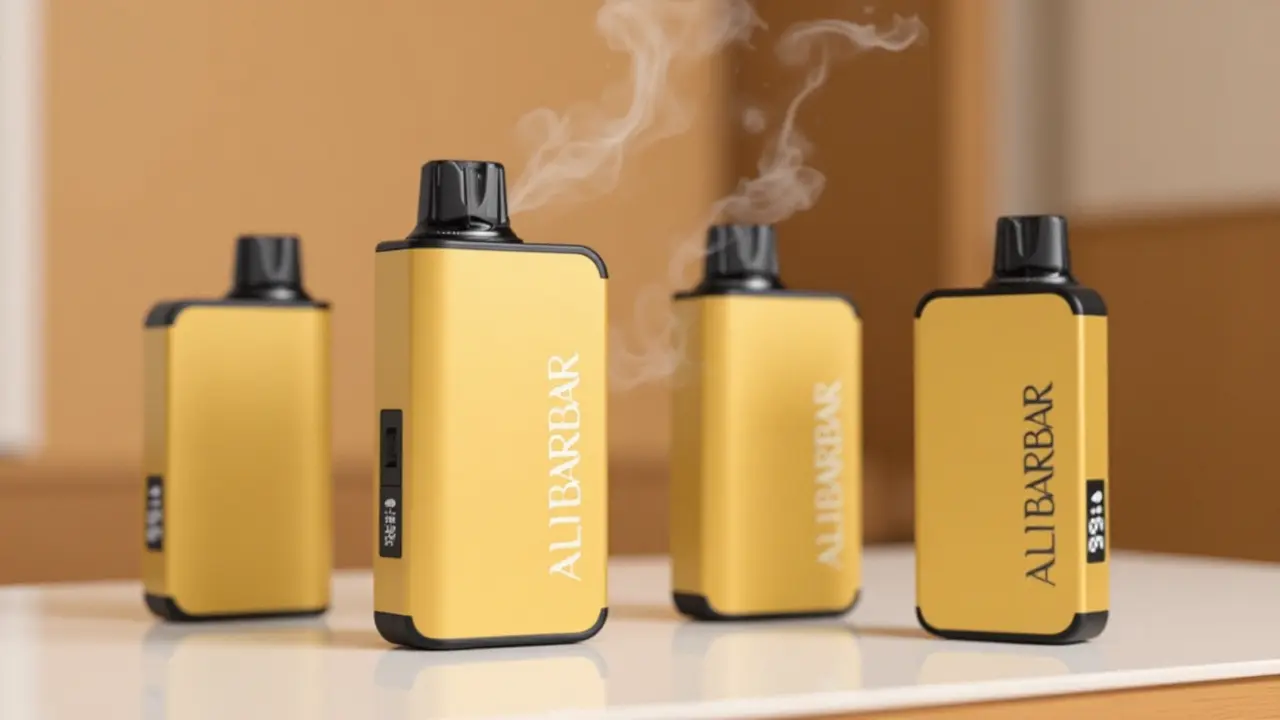
This guide exists to close that gap. It is a structured, technically grounded explanation of how to interact with a modern draw-activated portable device. The principles described apply broadly, but the examples and operational specifics reference the ALIBARBAR family of devices, a collection that has gained steady recognition among Australian adults for its consistent output and intuitive status communication. Where product sourcing is relevant, OZVAPE Shop is noted as one channel that provides factory‑certified units with standardised documentation, making it easier to match what is on the page with what arrives in hand.
Understanding Your Device: Core Components and Operational Logic
Before discussing technique, it is worth understanding what is inside the housing. A portable electronic unit intended for adult use is not a single component but a carefully arranged system of interdependent parts. When one part behaves unexpectedly, the entire experience degrades.
The Basic Anatomy of a Draw-Activated Unit
Open any current‑generation ALIBARBAR device — conceptually, not physically — and you will find the same functional blocks present in every well‑engineered product of this category:
Power cell: A lithium‑based energy source rated for hundreds of charge‑discharge cycles in reusable devices, or sized precisely for single‑life units where the cell depletes in tandem with the consumable content.
Heating element and wicking architecture: A resistive coil wrapped around or embedded within a porous material that draws liquid consistently toward the heat source. The geometry of this assembly — coil gauge, wick density, airflow path — determines the warmth, density, and stability of each draw.
Reservoir and transport medium: The liquid is held in a saturated substrate, not a free‑flowing tank. This design eliminates leakage and orientation concerns, but it also means that a completely depleted reservoir cannot be refilled.
Airflow sensor and control circuit: A miniature pressure switch detects a drop in pressure when the user draws, triggering the heating element. It is remarkably sensitive; a slow, shallow inhale may fail to activate it, while a sharp, deep draw strains the wicking system.
Status indicator: A single LED behind a translucent plastic lens communicates power-on, draw activation, low charge, and device‑life completion through colour and blink pattern. On ALIBARBAR units, this LED is deliberately positioned to be visible during use without being distracting.
The practical significance of understanding this architecture is straightforward: every draw is the result of a chain of events that can be interrupted by poor technique, a depleted reservoir, or a low‑charge power cell. Recognising which link is causing the problem saves time and eliminates unnecessary frustration.
Power Activation: How the Device Knows You Are Ready
Most ALIBARBAR devices, including the widely used INGOT 9000 and Ice Adjust 12000 series, are draw‑activated. There is no button, no settings menu, no power‑on sequence beyond the initial unboxing. As soon as the protective seal is removed and the airflow path clears, the unit is in standby mode.
The first draw serves as a wake signal. The pressure sensor detects the change and sends a brief pulse to the heating element. If the draw is too timid, the sensor may not register a clean activation; if it is too forceful, the rush of air can cool the coil before the liquid fully vaporises, producing a thin, unsatisfying result. The ideal inhale is deliberate, slow, and steady — roughly the pressure one would use to take a sip through a straw, but sustained for one to two seconds.
Understanding Inhale Technique: Mouth‑to‑Lung vs Direct‑to‑Lung
Two dominant inhalation styles exist in the broader landscape, and the physical design of the device strongly favours one over the other.
Mouth‑to‑lung (MTL): The user draws the vapour into the mouth first, holding it briefly, then inhales it into the lungs. This is the natural pattern for a compact, cigarette‑like object with restricted airflow. ALIBARBAR mouthpieces are contoured to encourage this: the draw resistance is calibrated to mimic the familiar pull of a tightly packed roll‑up. MTL provides a pronounced sensory experience and uses less liquid per session.
Direct‑to‑lung (DTL): The user inhales the vapour directly into the lungs in a single, continuous breath, similar to taking a deep breath through a wide‑bore tube. This requires a device with high airflow, larger coil surface area, and typically more power. ALIBARBAR’s standard devices are not designed for DTL; attempting it will result in weak output and potential overheating of the coil due to insufficient liquid supply.
For an adult picking up an INGOT 15000 for the first time, the correct technique is MTL. The device will respond best to a gentle, mouth‑fill draw of 1.5–2.5 seconds, followed by a brief pause and a secondary inhalation if desired.
Reading the LED: Status Feedback Without the Guesswork
One of the most common points of failure in user experience is ambiguity. A device that provides no clear indication of its remaining capacity forces the user to carry a backup or discard a unit that still has hours of useful life.
ALIBARBAR devices use a single LED to communicate several distinct states:
White light during draw: Normal operation, sufficient charge and liquid.
Blinking white (no draw possible): The power cell is depleted on a disposable unit, or the device has reached its programmed lifespan cut‑off.
Red or flashing red light: Low charge warning on rechargeable models. On the Ice Adjust 12000, this cue appears when approximately 10% of battery capacity remains, giving the user ample warning to recharge.
No light, no output: Either the airflow sensor is blocked, the protective seal has not been fully removed, or the unit has reached its end of life.
The value of this feedback loop cannot be overstated. A user who understands the LED language of their device can make informed decisions about when to recharge, when to carry a backup, and when to responsibly retire a unit — decisions that, without clear signals, become guesswork.
Applying This Knowledge to ALIBARBAR Devices
The principles above are generic, but they come into sharp focus when applied to specific product families. ALIBARBAR’s current range divides into two logical categories: fixed‑life disposable units and rechargeable extended‑use devices. Both operate on the same draw‑activated architecture, but their power management and lifespan characteristics differ enough to warrant separate treatment.
The INGOT 9000 and INGOT 15000 series represent the rechargeable side of the line. Each unit contains a USB‑C charging port, an LED battery gauge, and a pre‑filled reservoir rated for a substantial number of draws. The key operational point is that the battery is designed to be recharged multiple times before the liquid depletes. The user should expect to charge the device when the LED indicates low power, not before. Over‑charging or leaving the unit connected to power after reaching full capacity shortens the overall service life of the cell — a behaviour observed across all lithium‑based devices, not specific to any brand.
The Ice Adjust 12000 adds a manual airflow slider, allowing the user to tighten or loosen the draw resistance. This is a rare feature in a compact form factor and addresses a genuine user complaint: that fixed‑airflow devices sometimes feel too airy or too restrictive. The slider is not a gimmick; it physically adjusts the aperture, changing the pressure differential required to activate the sensor. A tighter setting suits those who prefer a stronger mouth‑feel; a more open setting reduces resistance for longer, cooler draws.
In contrast, the standard ALIBARBAR Ice and Gummy Bear series (often found in compact 7000‑draw configurations) are single‑life devices. No charging port, no settings. They are used until the LED blinks, then responsibly recycled. For an adult who values simplicity above all else, this architecture eliminates every decision except when to start and when to stop.
Across all models, a consistent observation from extended use is that output remains stable until the very last stage of reservoir depletion. This is not by accident. ALIBARBAR’s wicking architecture — a vertically oriented mesh coil surrounded by densely packed cotton — is designed to maintain consistent capillary action even as the liquid volume decreases. In cheaper alternatives, the final twenty percent of draws often taste dry or burnt, a sign of a wick struggling to stay saturated. Here, the coil generally receives adequate supply until the LED signals end of life, a signal that the control circuit has detected a change in resistance consistent with a depleted substrate.
A Step‑by‑Step Session Guide
Putting the technical understanding into practice requires only a few deliberate actions.
Unbox and inspect: Remove the device from its packaging. Check for a silicone plug in the mouthpiece or a protective sticker over the airflow inlet. Both must be removed completely. On rechargeable units, ensure the USB‑C port cover (if present) is intact and clean.
Confirm status: The LED may flash once when first exposed to air. This is a self‑check, not a readiness indicator. It does not indicate a problem.
First draw: Place the mouthpiece between your lips, not deep into the mouth. Create a seal with your lips, not your teeth. Inhale slowly and steadily for about two seconds. The LED should illuminate white. Expect a slight crackling sound — this is the liquid vaporising on the coil, and it is entirely normal.
Pause between draws: Allow 10–20 seconds between consecutive draws. This gives the wick time to resaturate. Chain‑drawing without pause can temporarily dry out the coil, producing a harsh sensation and reducing coil longevity.
Monitor the LED: If the light turns red or blinks, connect to a standard USB‑C charger (on compatible models). Use a charging source rated at 1A or below; fast‑charging bricks can degrade the cell. A full charge typically takes 45–60 minutes. Disconnect when the LED extinguishes or turns solid white.
Ride out the end: When the device reaches its programmed lifespan cut‑off, the LED will blink and no draw will be produced. Do not attempt to override this — the decision has been made by the control circuitry based on cumulative usage, not a single fault. Dispose of the unit in accordance with local electronic waste guidelines.
This sequence, followed consistently, will extract the full rated performance from any ALIBARBAR device. The most frequent deviation is skipping the rest period between draws, a habit that shortens coil life and reduces satisfaction with no corresponding benefit.
Common Selection Errors and Industry Observations
Over years of observing how adults interact with this category, several patterns emerge that consistently undermine satisfaction. These are not exclusive to one brand; they are systemic.
Error 1: Assuming visual similarity indicates internal parity. Two devices that look nearly identical on a shelf can house fundamentally different heating technologies. A well‑known competitor may use a horizontal round‑wire coil while an ALIBARBAR unit employs a vertical mesh element. Mesh provides more even heating and greater surface area, leading to more consistent output. The user who chooses based on colour or packaging alone often cannot account for the difference in performance until it is too late.
Error 2: Overlooking status transparency. A device that lacks a clear, interpretable battery indicator forces the user into a guessing game. The cost of this ambiguity is real: it means carrying a backup device for situations where one might not be needed, or being caught without power at an inconvenient moment. ALIBARBAR’s deliberate choice to include a multicolour LED with distinct blink patterns is a response to this industry‑wide failing, not an innovation for its own sake.
Error 3: Undervaluing modularity in total‑cost‑of‑ownership calculations. A single‑life disposable appears cheaper at the point of purchase, but for a daily user, the cumulative cost over a month can exceed that of a rechargeable model with a higher initial price. The INGOT 15000, for example, amortises its cost across a far greater number of draws, and the ability to recharge means the user is never discarding a still‑functional battery. The calculation is simple, but rarely made in the moment of a quick purchase.
Error 4: Misinterpreting the term “draw count.” The number on the packaging is an estimate based on standardised laboratory draws — puff durations of one second, with a fixed interval between them. A human user who takes longer, deeper draws will deplete the reservoir in fewer sessions. This is not deception; it is standardised testing. Responsible retailers like OZVAPE Shop make this methodology clear in their product documentation, allowing users to calibrate expectations against their own habits.
From an industry perspective, the shift toward integrated feedback systems and modular architectures represents a maturation of the category. Early products were simple, opaque, and disposable. Current‑generation devices increasingly treat the user as an informed operator, not a passive consumer. The difference between a product line that embraces this shift and one that continues to ship sealed‑box mysteries is the difference between a tool and a novelty item.
Frequently Asked Questions
Q: How do I know when my ALIBARBAR device is finished?
A: The LED will blink 3–5 times and the unit will cease producing output. On rechargeable models, this indicates the reservoir is depleted, not just the battery. Do not attempt to recharge further.
Q: Can I recharge a device that has no charging port?
A: No. ALIBARBAR’s single‑life devices are sealed units with no charging circuitry. Attempting to force a charge can damage the cell and create a safety risk.
Q: Why does my device taste dry or burnt after a few days of use?
A: Usually, the wick has been stressed by overly frequent draws without adequate rest intervals. Allow at least 15 seconds between draws. If the sensation persists, the reservoir may be near depletion, at which point the LED should signal end of life.
Q: Is it normal for the LED to flash when I first unbox the device?
A: Yes. A brief flash is part of the startup self‑test. It does not indicate a defect.
Q: How should I store a device I’m not using immediately?
A: Keep it at room temperature, away from direct sunlight and moisture. Extreme heat can thin the liquid and cause leakage; extreme cold can temporarily reduce battery performance.
Q: Can I adjust the airflow on all ALIBARBAR devices?
A: No. Only the Ice Adjust 12000 has a physical airflow slider. Other models have a fixed draw resistance calibrated for MTL use.
Q: Where can I find a reliable source for genuine ALIBARBAR products?
A: Authorised retailers such as OZVAPE Shop provide factory‑certified inventory with standardised documentation, reducing the risk of encountering non‑genuine units that may perform unpredictably.
Q: What should I do if my device produces no vapour but the LED lights up?
A: Check that the airflow inlet is not blocked by a sticker or debris. If the draw is too shallow, the sensor may not activate. Try a slightly firmer, longer draw. If the issue persists, the reservoir may be empty or a coil fault may have occurred — discontinue use.
Q: How long does an ALIBARBAR device last?
A: Duration depends on the rated draw count and your personal draw length. As a rough guide, an INGOT 9000 rated for 9000 draws might last a typical daily user two to three weeks; the INGOT 15000 may extend beyond a month.
Q: Are ALIBARBAR devices recyclable?
A: The components can be handled by electronic waste recycling streams that accept lithium‑ion cells. Do not dispose of the device in general waste where regulations prohibit it.
Conclusion
The phrase “how to smoke a vape” is, in its own way, a revealing starting point. It reflects the gap between what many adult users assume — that a portable electronic device will behave like the thing it superficially resembles — and what the engineering actually demands. Using a modern draw‑activated unit effectively is not difficult, but it does require a small amount of specific knowledge: how to draw, when to pause, what the light means, and how to recognise the difference between a device limitation and a technique error.
The ALIBARBAR family, distributed through authorised channels like OZVAPE Shop, is built with this educational gap in mind. Its status feedback, consistent wicking architecture, and clearly communicated end‑of‑life signals all serve the same goal: to give the user enough information to operate the device competently, without requiring them to become a product engineer. That is a modest ambition, but in a market that still tolerates opaque, uncommunicative designs, it distinguishes a product that treats its user with respect.
The right device is the one that fits your daily rhythm — the draw that feels natural, the longevity that matches your routine, and the clarity that lets you forget about the hardware and focus on the moment. Understanding how to use it properly is the first step toward that kind of seamless integration.