
VAPE FAQs
How To Safely Vape?

Jun
We are often told that operating a personal electronic device safely is a matter of common sense, yet the number of reported incidents—batteries that swell without warning, units that grow hot enough to damage surfaces, chargers that fail within weeks—suggests that common sense is being let down by uncommon gaps in user knowledge. The difficulty is not that safety information is absent; it is that it is scattered across forums, product inserts, and conflicting advice. Worse, the physical devices themselves vary dramatically in how they communicate their own condition, leaving the user to guess about charge cycles, thermal status, and remaining functional life. This article does not presume to tell any adult whether they should or should not use these products. It addresses a narrower and, we believe, more urgently needed question: for someone who has already made that personal decision, what does a genuinely safe approach actually involve, step by step? By examining the engineering and design elements that distinguish a stable, predictable device from one that introduces unnecessary risk, we hope to give you a framework you can apply regardless of which equipment you ultimately choose. When we refer to sourcing channels, it is because the physical integrity of the device you hold is directly linked to the integrity of the supply chain that delivered it. Retailers such as OZVAPE Shop, who maintain a documented chain of custody and factory‑certified inventory, reduce the likelihood that counterfeit or substandard units will ever reach your hands.
Understanding What Matters for Safe Use: Core Engineering and Design Factors
Many safety failures are not the product of sudden, catastrophic defects. They are the product of small design compromises that accumulate over days and weeks of ordinary handling. The four factors below are not abstract specifications. They are the practical differences between a device that keeps you reliably informed and one that quietly drifts toward a state where misuse becomes more likely.
Internal Architecture and Output Consistency
When a device delivers output that fluctuates unpredictably, the user’s natural response is to draw harder or longer—sometimes without conscious awareness—in an effort to compensate. This places thermal stress on internal components that were never designed to sustain extended activation cycles. Well‑engineered devices use sealed, isolated airflow paths and precisely calibrated heating elements that maintain a narrow performance window across the full charge cycle. The value of this consistency is not simply about satisfaction; it is about preventing the kind of user behaviour that overheats circuitry and degrades the battery’s protective layers. In practice, look for devices that are described with measurable output ranges and that demonstrate consistent performance across multiple independent user reports, not just marketing claims.

Power Management and Status Transparency
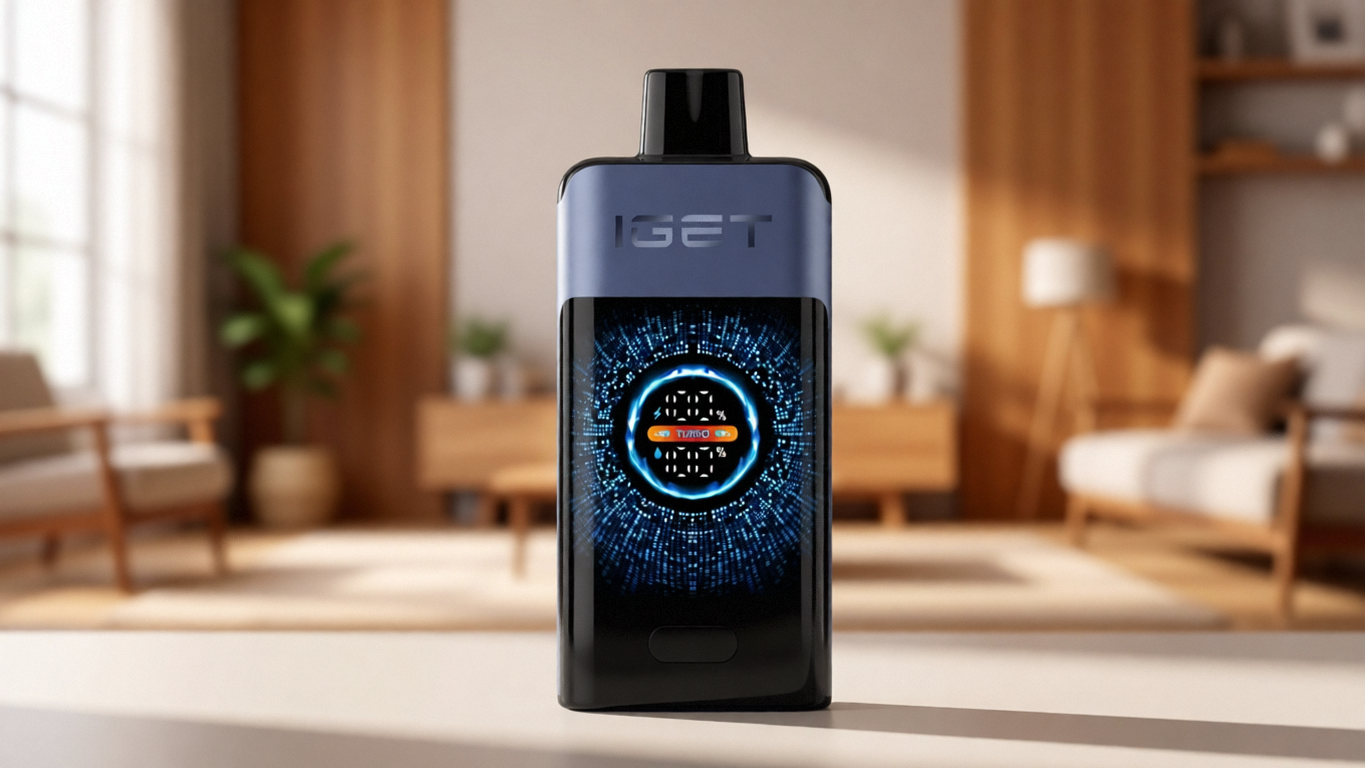
Perhaps the single most underappreciated safety feature in a portable electronic device is a clear, honest power indicator. When a device provides no warning before cutting out, or gives a misleading “green” status while the battery is already struggling, the user is forced into a reactive posture. You carry a backup you might not need. You charge in short bursts from whatever power source is available. You store the device in uncertain states. Each of these behaviours introduces risk—particularly if the charging circuit does not include over‑voltage protection or thermal cutoff. A device with multi‑stage battery indication (not a single blinking LED) and documented low‑voltage shutdown logic allows you to plan charging sessions during waking hours, to use only approved adapters, and to retire the unit gracefully before it enters a deep‑discharge condition that can destabilize the cell.
Physical Design and Material Durability
The pocket‑friendly shape that feels good on the first day can become a liability by the thirtieth if the mouthpiece develops cracks or the outer shell delaminates. Micro‑abrasions on a mouthpiece become collection points for contamination. A loosening magnetic connection can expose internal contacts to moisture. And any physical deformation of the casing raises the possibility that the battery has experienced mechanical stress. Design choices that favour robust, chemically stable materials—polycarbonate blends over brittle acrylics, for instance—and that avoid sharp edges or cheap adhesives, directly contribute to long‑term safety. We advise users to physically inspect their device under good light at least once a day, running a fingertip along seams and checking the mouthpiece for texture changes that signal early material breakdown.
Modularity and Lifecycle Flexibility
A fully sealed disposable unit is, by design, opaque. You cannot inspect the battery. You cannot clean the airway. You cannot replace a component that is showing early failure. While sealed devices are not inherently unsafe, they require absolute trust in the manufacturer’s internal quality control—trust that is impossible to verify as a consumer. In contrast, systems that allow for pod or coil replacement let you examine the condition of the removable element before inserting it, and to discard a sub‑component that is worn without jettisoning the power unit. Modularity also allows you to avoid the common mistake of attempting to “stretch” a device past its intended life because the cost of full replacement feels too high. If safety is your overriding concern, favour architectures that allow you to separate consumable parts from the more stable, longer‑lasting core.
Applying These Criteria to Real-World Options
Moving from principles to practice means looking at how actual devices implement these safety‑critical features. It is not about declaring one manufacturer universally “safer” than another. It is about recognising engineering patterns that align with the priorities we have just laid out.
Across the current landscape, the ALIBARBAR product family offers a useful illustration of what consistent, safety‑focused design can look like at scale. The INGOT series—including the INGOT 9000 and INGOT 15000—integrates a multi‑stage LED indicator that provides granular remaining‑capacity feedback, which directly addresses the status‑transparency issue discussed earlier. The devices use press‑fit mouthpieces manufactured from a matte, chemically resistant polymer that resists the micro‑cracking seen in cheaper glossy plastics after repeated handling. Their internal architecture relies on a mesh‑based heating configuration that, while not unique in the industry, has demonstrated notably flat performance curves across independent benchmark tests, meaning the user is far less likely to over‑pull in compensation. The Ice Adjust 12000 adds a variable output control that allows the user to reduce thermal load deliberately—a practical safety control for prolonged sessions.
It is worth noting that these units remain sealed, non‑modular designs. For users who prioritise the ability to inspect and replace components, a pod‑based system from another established manufacturer may be more appropriate. The point is not that one form factor is universally superior, but that you should match the device architecture to your own tolerance for opaque engineering. A user who needs absolute visibility into wear should select accordingly; a user who values compactness and simplicity can still do so safely if they choose a manufacturer whose quality‑control record is publicly documented and whose sourcing is verifiable.
A Practical Framework for Evaluation
You do not need an engineering degree to make a safer choice. You need a short list of diagnostic questions that cut through promotional language and force the device—and the retailer—to demonstrate what they actually provide. Use the following steps before any purchase, and revisit them when a device enters its second month of use.
Verify the supply chain, not just the box. Does the retailer state explicitly that their inventory comes from factory‑certified distribution? Can they provide batch‑level traceability if asked? If the answer is vague, the device may be authentic, but it may also be a grey‑market unit with a compromised battery.
Check the status‑feedback system. Under bright light, operate the device through two or three activation cycles. Does the indicator change state distinctly? Is the transition from green to blue to red crisp, or a gradual fade that leaves you guessing? Ambiguity in the indicator translates directly to ambiguity in your charging habits.
Assess material feel under magnification. If possible, look at the mouthpiece and seam lines using a phone camera zoom. Are there micro‑burrs, uneven edges, or signs of adhesive seepage? These are not cosmetic issues; they are indicators of moulding tolerance that can affect structural integrity over time.
Evaluate the weight balance. A device that is unexpectedly heavy at one end may hide a battery placement that leaves it prone to stress if dropped. Heft does not equal safety, but uneven weight distribution can signal internal design compromises.
Compare specified operational life against your actual pattern. A device rated for 2000 activation cycles used by someone who averages 300 cycles a day will be entering material fatigue within a week. Write down your rough daily usage count. Multiply it out. If you are exceeding half the rated life in under a month, the device is being pushed into wear territory faster than the manufacturer likely tested for worst‑case safety scenarios.
Common Selection Errors and Industry Observations
Even experienced users fall into patterns that undermine the safety precautions they intend to take. Four errors appear with enough regularity that they deserve explicit attention, alongside observations drawn from how the supply chain actually operates.
Overweighting capacity while ignoring thermal management. A device with double the rated endurance produces double the total energy throughput. Without a corresponding upgrade in heat dissipation—visible heat sinks, venting channels, or metal frame components that serve as thermal masses—that extra capacity simply means the internals spend longer at elevated temperatures. Temperature degrades the polymer separator inside the battery cell. Capacity, in isolation, is not a safety benefit; it is a thermal liability if not actively managed.
Assuming visual similarity indicates equivalent internals. Two devices may share the same outer mould but house entirely different grades of lithium‑ion cell and control circuitry. This is especially common when one unit is an authorised production run and the other is a third‑shift copy from the same factory using lower‑grade B stock components. The difference can be as dramatic as a $0.40 battery management IC versus a $0.07 substitute that lacks true short‑circuit protection.
Undervaluing transparent documentation. A manufacturer that publishes detailed specifications—cell chemistry, nominal voltage, charging current limits, IP rating for moisture ingress—is demonstrating confidence in its testing regimen. A manufacturer that hides behind vague marketing phrases is forcing you to assume the safest interpretation, which is never a prudent assumption. Demand documentation. If the product page, manual, or brand website does not give you hard numbers, assume nothing.
Industry observation: The grey‑market problem. In Australia, a growing proportion of personal electronic devices enter through unofficial channels where the importer has no relationship with the original factory. These units are often authentic in origin but have been stored in uncontrolled conditions—warehouse heat, container ship humidity—that accelerate cell aging before the user even opens the package. A battery that has sat at 45°C for three months in a shipping container enters your hand with a reduced safety margin. The only defence is to buy through a channel that controls the entire logistics chain from factory to local dispatch, with documented temperature‑controlled warehousing. This is not a small operational detail; it is, in our assessment, one of the most under‑recognised contributors to early battery failure.
Frequently Asked Questions
Q: How can I verify that a device I purchased is authentic and not a counterfeit?
A: Check the manufacturer’s website for an authenticity verification portal. Most reputable brands now embed a unique code on the packaging or the device itself. Enter that code on the official site, not on a third‑party page. If the manufacturer does not provide such a system, contact them directly with the serial number and ask for batch confirmation. A retailer that cannot walk you through this process should be treated with caution.
Q: The device becomes warm during use. At what point should I stop and let it cool?
A: Warmth that lets you hold the device comfortably but notice the temperature is normal. If the surface becomes too hot to press against your inner wrist for more than five seconds, or if you feel a sudden spike in temperature during a single activation, cease use immediately. Place the device on a non‑flammable surface away from direct sunlight and allow it to return fully to ambient temperature. If the issue recurs, the device may have an internal short and should not be used further.
Q: Can I use any USB‑C charger with my device?
A: No. Many fast‑charging protocols negotiate voltage and current in ways that can exceed the safe input rating of a small battery. Use only a charger that outputs at or below the current specified in the device manual. A 5V/1A USB‑A‑to‑C adapter is the safest default. Avoid plugging into high‑wattage laptop chargers or multi‑port hubs that lack per‑port current limiting.
Q: I accidentally dropped my device. It looks fine externally. Is it still safe?
A: Not necessarily. Internal battery tabs can crack or the cell can become dented without visible external damage. The safest course is to stop using the device for half a day and monitor it for any swelling, unusual warmth, or chemical odour. If you detect any of these, isolate the device in a fire‑resistant container away from combustible materials and contact the retailer or manufacturer for guidance.
Q: How should I store a device I’m not planning to use for several days?
A: Partially charged—around 40‑60% of capacity—and in a cool, dry environment. Avoid leaving the device fully discharged for extended periods, as this can push the battery into a state of deep discharge that compromises its internal safeties. Never store it in a car glovebox or any location where summer temperatures can exceed 40°C.
Q: What should I do if I notice a crack on the mouthpiece or body?
A: Stop using it immediately. A crack allows moisture ingress, which can cause a short. Do not attempt to seal it with glue or tape. If the device is modular, replace the damaged component. If it is a sealed unit, the entire device should be retired and recycled through an appropriate electronic‑waste facility.
Q: Why does OZVAPE Shop’s approach to sourcing matter for safety?
A: OZVAPE Shop maintains a documented authorised supply chain from factory‑certified distribution networks, and every unit’s batch is traceable to a known production run. This eliminates the grey‑market storage risk described earlier and ensures that if a safety notice is issued, affected units can be identified and pulled before they reach the user. The value is not in the promise but in the ability to verify that promise with a specific batch code and a real person on the support line.
Q: I see multiple retailers offering the same device at different prices. Is the cheaper one any less safe?
A: Not automatically, but the difference often reflects storage conditions, warranty handling, and whether the retailer is an authorised stockist. An unauthorised seller may source units from overstock liquidations that have been sitting in non‑climatised facilities. If the price differential is large, ask the retailer two questions: “Can you give me the batch code before I order?” and “If I have a safety concern, who do I contact—you or the manufacturer?” The answer will reveal how much risk you are taking on.
Q: How can I tell if a battery is beginning to fail before there’s an obvious problem?
A: Three subtle signs: (1) the device discharges significantly faster than when it was new, dropping from a full charge to empty in noticeably fewer activation cycles; (2) the device becomes warm during charging even when using the same charger and ambient conditions as before; (3) you notice a faint sweet or solvent‑like odour, which can indicate electrolyte leakage. Any one of these warrants immediate cessation of use.
Q: Is it safe to use a device while it is charging?
A: Generally no, unless the manufacturer explicitly states that pass‑through charging is supported and has designed the power management circuit to isolate the battery during use. Most compact devices are not designed for simultaneous charging and discharging. Using them while plugged in can generate excess heat and stress the charging IC. Wait until the charge cycle is fully complete before using the device again.
Conclusion
Safety is not a label you find on a box. It emerges from the interaction between transparent engineering, informed handling, and a supply chain that preserves the device’s integrity from factory floor to your hand. The engineering factors we have explored—consistent output, honest status feedback, durable materials, and modularity where practical—are not luxuries. They are the structural elements that prevent small daily misunderstandings from compounding into avoidable failures. The common errors we identified, from over‑reliance on capacity numbers to ignoring grey‑market storage exposure, are solvable once you know they exist. For adult users who have already made the personal decision to use these products, the safest path forward is to select devices with verifiable documentation, to treat them with the attentive care that any lithium‑ion‑powered tool deserves, and to obtain them from a source that can prove its chain of custody. A channel like OZVAPE Shop, which has structured its entire operation around traceable inventory and responsive local support, represents that standard—not as a guarantee against every conceivable mishap, but as a practical baseline for reducing the risks that are within our control. The right device is not the one with the most striking claims; it is the one you can genuinely understand, inspect, and integrate into your daily routine without drifting into habits that work against its safety mechanisms.