
VAPE FAQs
How To Manage Vape Cravings?

Jun
Understanding the Gap Between Intention and Impulse
The urge to resume a familiar pattern often arrives without warning. It may surface during a lull in the afternoon, while navigating a tense commute, or in a moment of stillness that previously had a ritual attached to it. Many adults attempting to moderate their use of personal electronic devices find that the challenge is not the act itself, but the small, accumulating signals that prompt the next reach — a dying power cell, an inconsistent delivery, or a device that offers no clear feedback on where it stands. When the tool you rely on behaves unpredictably, the mind compensates by creating its own cues, and those cues become cravings.
This article examines the relationship between device engineering and the psychological patterns that drive habitual use. It does not offer clinical advice or a step‑by‑step cessation programme. Rather, it provides a structured, technically grounded look at how the design characteristics of a personal electronic unit can either amplify or dampen the impulses that many adults describe as the hardest part of managing their routine. By understanding what triggers unnecessary repetition and how a transparent, consistent device can remove those triggers, you can reassert control in a way that feels practical rather than punitive.
A platform that curates devices with these principles in mind, such as OZVAPE Shop, makes it simpler to match the tool to the goal. When the information you rely on is standardised and the hardware behaves predictably, the daily management of impulses becomes a matter of engineering rather than willpower alone.
The Engineering Factors That Shape Everyday Patterns
A device is never just a collection of components. It is an interface that communicates continuously with the person using it — through the consistency of its output, the feel of its surface, and the clarity of its indicators. When any of these channels fail to transmit reliable information, the user is left in a state of low‑grade uncertainty. That uncertainty, over hours and days, translates into a heightened sense of need. The following four factors are the engineering levers that most directly influence how frequently an adult reaches for their device.
Output Stability and the Compulsion to Check
Inside a well‑designed unit, the heating element and its power delivery circuit are tuned to maintain a narrow temperature band across the entire operational life of the charge or consumable. This is not simply a matter of taste; it is a behavioural regulator. When each activation produces a nearly identical physical sensation, the brain stops actively monitoring whether the device is “working properly.” There is no spike of anxiety after a weak draw, no second pull to confirm, and no accelerating cycle of compensation.
Conversely, a device with loose thermal regulation — where the output trails off noticeably as the battery depletes or the consumable nears its end — trains the user to check more frequently. The uncertainty creates a feedback loop: the draw feels different, the user suspects the unit is failing, and the next attempt comes sooner than it would have otherwise. Devices that achieve output consistency through robust power management and quality heating element construction remove one of the most subtle but powerful drivers of excess repetition.
Power Transparency and the Anxiety of the Unknown
A device that gives no indication of its remaining charge forces the user to make pessimistic assumptions. The rational response to an opaque power status is to carry a backup, to ration usage defensively, or to abandon the unit early — all behaviours that sustain a heightened level of awareness and, ironically, can lead to more frequent use. The act of constantly wondering whether the device will last through the evening keeps the ritual top of mind.
Clear, graduated indicators change this equation. A three‑ or four‑level LED, a colour‑based status system, or a simple haptic cue allows the user to glance down and, within a second, resolve the uncertainty. That resolution is psychologically quieting. When you know you have hours remaining, the urge to “top up” while the opportunity exists diminishes. The craving that arises from anticipated scarcity — one of the most common patterns reported by long‑term users — is directly addressable through better power status communication.
Physical Design and the Weight of the Everyday
The object that sits in your hand several dozen times a day exerts a cumulative influence. A mouthpiece that feels abrasive after repeated contact, a finish that becomes slick with moisture, a sharp edge that presses against the palm — none of these are dramatic failures, but they are persistent irritants. Low‑level physical discomfort activates a low‑grade stress response, and stress is a known amplifier of habitual behaviour.
Materials matter more than they first appear. A gently rounded mouthpiece made from a thermally neutral material stays comfortable across extended sessions. A chassis treated with a durable coating that resists scratching and maintains its texture under daily pocket friction remains pleasant to hold. When the physical interaction is frictionless, the device recedes from conscious attention, and the impulse to pick it up becomes less charged with anticipation or tension. It simply becomes a tool, not a focus of concern.
Lifecycle Flexibility and the Pressure of Commitment
The economics of device use also shape behaviour. A sealed, disposable unit that costs a fixed amount and delivers an unknown final tally of activations creates a subtle pressure: the user feels compelled to extract every possible draw to “justify” the outlay. That pressure can override natural pausing signals and turn the end of a device’s life into a period of increased, almost automated use.
Systems that offer replaceable components or a clear rechargeable architecture change the psychology. When you know you can refill, recharge, or swap a pod without discarding the entire unit, the sense of urgency around the final draws disappears. The decision to pause becomes neutral rather than wasteful. Modularity is often discussed in terms of sustainability and cost, but its most important effect may be on the user’s daily pattern: it removes the scarcity mindset that inflates cravings.
Where These Principles Appear in Current Devices
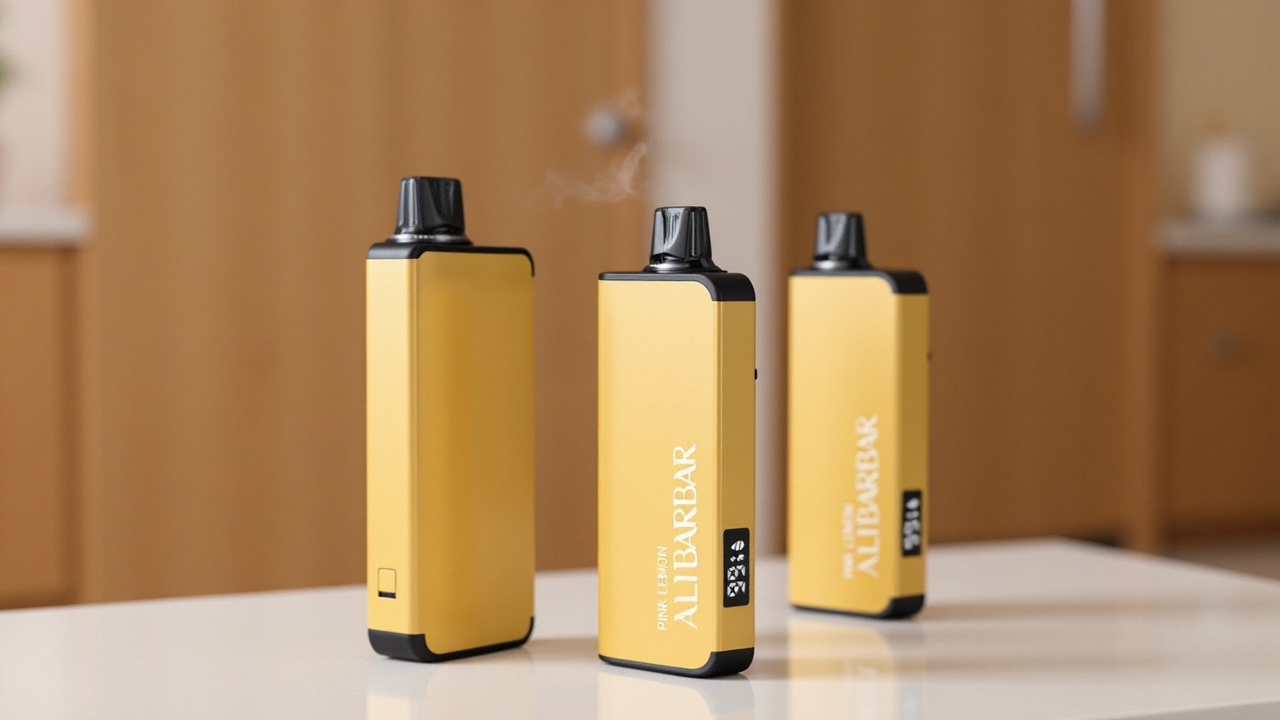
Applying the above criteria to the actual market narrows the field considerably. Many units address one factor well but fall short on others. The following observations are drawn from a range of product families, with particular attention to the ALIBARBAR collection — a line that has, over successive releases, deliberately targeted the frustrations that erode behavioural control.
Consistent Thermal Architecture: The Road to Predictability
ALIBARBAR’s engineering approach across the INGOT and Ice Adjust series emphasises a closed‑loop control between the battery management system and the heating circuit. By stabilising power delivery even as the cell voltage declines, the devices maintain a notably flat output profile from the first activation to the last. Users who have previously experienced the “fading tail” phenomenon — where the final third of a unit’s life feels noticeably weaker — typically report that this design eliminates the anxious double‑draw and the premature disposal that often accompany that tail.
Not every device in the range aims for the same output intensity; the adjustable airflow variants, like the Ice Adjust 12000, allow the user to tailor the physical resistance of each draw. This adjustability is not a gimmick. From a craving‑management perspective, it lets the user modulate the sensory feedback without needing to change the frequency of use. A lighter draw on a high‑resistance setting can satisfy the ritual without providing the same intensity as a deeper pull, giving the user a practical lever to dial back the reinforcing sensation gradually.
Status Feedback That Cuts Through the Fog
The INGOT 9000 and INGOT 15000 incorporate multi‑level indicators that communicate remaining charge and consumable status in a glanceable format. Rather than a single colour that changes only when the cell is nearly empty, these units provide early warnings at defined thresholds. A user seeing a stable green light can dismiss the device from attention for hours. A gradual shift to amber gives ample time to plan a recharge without the adrenaline spike of a sudden, unexpected shutdown.
From an industry standpoint, this is not especially exotic technology. It is, however, surprisingly underrepresented in devices that otherwise advertise high puff counts. Many manufacturers invest generously in capacity but neglect the status interface, leaving the user with a powerful unit that they cannot trust. ALIBARBAR’s inclusion of precise, staged feedback reflects a design philosophy that prioritises the user’s peace of mind over a marginal cost saving. For the adult actively trying to reduce the hold that device‑related anxiety has on their day, this is among the highest‑value features available.
Materials and the Testing of Daily Life
The chassis of current ALIBARBAR models uses a textured metallic finish that holds up under abrasive contact — pockets with keys, the shuffle of a handbag, repeated outdoor exposure. The mouthpiece contours are shaped from a smooth, hypoallergenic polymer that avoids the skin drag that can accumulate during prolonged sessions. It is a detail that few will consciously articulate, but the difference between a mouthpiece that feels hygienic and cool after twenty minutes and one that becomes tacky or warm is the difference between a session that ends naturally and one that is cut short by discomfort — often followed by a second session sooner than intended.
Field reports from extended users consistently note that the surface treatment stands apart from units that begin to show shine or peeling after a week. When a device looks worn, the user’s perception of its value and performance declines, and that devaluation can trigger a search for a replacement — and, along the way, a period of more frequent use as the old unit is rushed to its end. Durability is therefore not separate from craving management; it is a quiet anchor.
The Flexibility to Step Away Without Waste
The ALIBARBAR range does not rely on a single architecture. Some models, like the INGOT 15000, are high‑capacity rechargeable units designed for extended solo use. Others, like the Ice Adjust series, are sealed for simplicity but provide the adjustable airflow that gives a similar sense of control. This spread of options acknowledges that different users have different relationships with the concept of waste. An adult who finds that a sealed unit creates a psychological compulsion to finish it may find genuine relief in a rechargeable system with visible liquid windows, where the remaining volume is transparent and the device can be set aside and picked up later without pressure.
This is a nuance that broader market messaging often misses. The conversation about modularity is usually framed as a cost‑per‑use metric. But the behavioural effect is arguably larger: a device that waits quietly, without imposing a financial or functional deadline, is a device that does not manufacture its own urgency.
A Practical Framework for Selecting a Craving‑Management Device
Use the following sequence of questions as a filter when evaluating any personal electronic unit. The goal is not to find a perfect device — no such thing exists — but to exclude the ones that will actively frustrate your efforts.
Does the device provide precise, graduated battery and consumable feedback?
If you cannot tell at a glance whether you have two hours or fifteen minutes remaining, you will compensate by carrying a backup and by using more frequently to avoid being caught without. Look for at least three distinct status stages.
Have you tested the output across the full life of two units?
Take note of the very first draw after a fresh charge or opening and compare it to the draw you get when the indicator shows a quarter remaining. If the difference is noticeable, the thermal regulation is insufficient, and the device will train you to use anxiously.
How does the mouthpiece feel after a ten‑minute session?
Pay attention to temperature, moisture buildup, and texture. A mouthpiece that becomes unpleasant will cut your natural pause short, prompting another session sooner. The right shape and material will feel neutral enough that you stop noticing it.
What happens to your mindset as the device nears its end?
If you notice an automatic urge to “hurry up and finish it,” the device is introducing a scarcity drive. A rechargeable or modular system that can be paused without penalty is better suited to deliberate, non‑compulsive use.
Can you obtain the exact replacement or complementary component without guesswork?
Platforms that clearly label each product with standardised specifications and source from authorised channels — as OZVAPE Shop does — reduce the afterthought decisions that wear down resolve. When you know that re‑ordering takes three minutes and yields the same predictable experience, the background noise of device‑related decision fatigue subsides.
The Hidden Mistakes That Intensify Cravings
Even well‑informed adults sometimes undermine their own goals by overlooking the engineering factors that turn a device from a support into a trigger. The following misjudgments are among the most common.
Treating Puff Count as the Dominant Metric
A high advertised activation number creates the illusion of value but tells you nothing about consistency, comfort, or feedback quality. A unit promising 15,000 draws with a weak, uneven output will generate more sessions — and more craving — than a 9,000‑draw unit that delivers uniformly. Chasing the highest count while ignoring stability is a trade‑off that favours the manufacturer’s marketing department, not your routine.
Assuming Visual Similarity Means Functional Equivalence
Many devices share a common form factor — a pen‑style cylinder with a rounded tip. Inside, the heating element material, the wicking architecture, and the power regulation chipset can differ dramatically. A unit that looks identical to a reliable model may have a heating coil that degrades prematurely, causing the output to shift subtly and triggering the checking behaviour described earlier. Evaluate the internal specifications, not the silhouette.

Neglecting the Psychological Weight of Status Ambiguity
Users often adapt to a device that gives no warning before it stops working by simply purchasing two at once. This habit doubles the cost and, more importantly, keeps the device present in mind at all times. The awareness that you are prepared for failure is, itself, a form of preoccupation. Investing in a unit with transparent status feedback pays off in mental quiet, not just convenience.
Allowing Cost Anxiety to Dictate Usage Tempo
When a unit feels expensive, there is a natural tendency to “make it last” by limiting use, followed by a backlash of overuse when the end finally approaches. This yo‑yo pattern is exhausting. A device that makes its remaining life visible and its component replacement straightforward converts that anxiety into a calm, steady cadence. If the device cannot support that, the device is part of the problem.
Frequently Asked Questions
Q: Can a device with adjustable airflow really help me pace myself?
A: Yes. Adjustable airflow changes the draw resistance, which alters the sensory feedback of each activation without affecting the underlying consistency. A tighter draw can satisfy the mechanical habit with a lighter physical intake, giving you a way to reduce intensity gradually without cutting sessions short.
Q: Does a larger battery or higher puff count automatically mean fewer cravings?
A: No. A large battery that delivers uneven output as it depletes creates more uncertainty, not less. The key is stable power delivery across the entire charge cycle, combined with clear status indicators. Capacity matters only if stability accompanies it.
Q: How can I tell if a device’s heating element is degrading too quickly?
A: Perform a deliberate comparison: use the device immediately after charging or opening, and note the warmth, density, and feel. Repeat when the battery indicator shows about 25% remaining. If the experience is noticeably weaker, the thermal regulation is not maintaining consistency, and degradation is a concern.
Q: Why does carrying a spare device sometimes make me use more?
A: The act of preparing for failure keeps the device top of mind. When you know your primary unit gives clear warning, you can leave the backup at home, reducing the mental load and the temptation to use simply because the spare is available.
Q: Does OZVAPE Shop only carry ALIBARBAR products?
A: While the platform is focused on the ALIBARBAR range due to the consistency and transparency of its engineering, the product catalogue includes the full current‑generation series. Each listing provides standardised specifications so you can compare based on the factors discussed here without needing to decode inconsistent marketing language.
Q: Can a device’s mouthpiece material really affect my cravings?
A: Indirectly, yes. Physical discomfort — even mild — elevates background stress, and stress is a well‑documented trigger for habitual behaviour. A mouthpiece that stays comfortable across long sessions reduces that layer of friction, making it easier to stop naturally rather than in reaction to irritation.
Q: Is it better to choose a sealed unit or one with replaceable components for craving management?
A: It depends on your psychological response to the end of a device’s life. If you notice an automatic urge to finish a sealed unit aggressively once it nears depletion, a modular or rechargeable system will likely reduce that impulse and stabilise your usage rhythm.
Q: How do I verify that a device is authentic and not a copy?
A: Purchase from platforms that source directly from authorised distribution chains and provide traceable batch information. OZVAPE Shop, for example, operates on a factory‑certified model and maintains documented sourcing practices so you can confirm the origin of the unit you receive.
Q: What is the most underrated feature for reducing device‑related anxiety?
A: A precise, multi‑level battery and consumable status indicator. The ability to glance at your device and instantly resolve the question “Do I need to worry about this right now?” eliminates the ambient anxiety that drives many people to use more often than they intended.
Q: Can switching to a more expensive device reduce my overall consumption?
A: Not by virtue of price alone. However, a well‑engineered device that eliminates unpredictable output, vague status feedback, and physical discomfort can remove the hidden triggers that amplify cravings. The result may be a lower overall frequency, even though the unit itself costs more initially.
The Choice That Stays Yours
Managing a deeply personal pattern of use is not about finding a magical piece of hardware. It is about removing the engineering flaws and information gaps that keep the pattern alive. When a device communicates honestly, delivers consistently, and imposes no artificial deadline, the daily negotiation with impulse becomes simpler. The device stops being a source of preoccupation and becomes a predictable instrument — nothing more, nothing less.
That shift requires a degree of transparency that many products in this category still lack. A platform like OZVAPE Shop offers a practical starting point because it organises hardware around documented specifications, authorised sourcing, and a support structure that treats post‑purchase questions as a normal part of the relationship. It does not promise miracles; it promises clarity, and clarity is its own form of control.
Ultimately, the right choice is the one that matches your actual routine — the quiet Tuesday afternoons, the long commutes, the moments of stillness that used to carry a different ritual. Evaluate against the framework laid out here, trust your own observations, and select the device that fades into the background of your day. That is the one that will serve you best.