
VAPE FAQs
How To Make Smoke Rings With Vape?
Jul
Making a perfect smoke ring isn’t just about practice. It’s about understanding the quiet alliance between your own muscle memory and the engineering inside the device you’re holding. For every person who casually flicks their wrist and produces a ghostly O, there are a dozen who exhale shapeless clouds and wonder what they’re missing. The frustration is rarely a lack of talent; it usually sits at the intersection of incomplete technique and unnoticed device behaviour — vapour density fading mid-push, an airflow path that isn’t giving you the column of vapour you need, or a mouthpiece shape that fights the precise lip formation the trick demands.
This article breaks down the physics and the practical method behind stable, repeatable vapour rings, then guides you through the device characteristics that either support or sabotage that process. It does so without magic-bullet promises. If you’re already comfortable with a reliable source of consistently dense vapour — something OZVAPE Shop users often find in the ALIBARBAR ecosystem — the steps below will close the gap between messy clouds and clean geometry. The rest is repetition.
Understanding What Matters: Core Factors That Make or Break a Ring
Achieving a clean vapour ring is a mechanical sequence, not an art. The fundamentals are well-documented among fluid dynamics hobbyists, but applying them to a portable electronic device introduces variables that most tutorials ignore. Before you practise your mouth position or hand push, pay attention to three device-dependent factors.
Vapour Density and Output Consistency
A vapour ring is a toroidal vortex — a spinning doughnut of air and condensed aerosol that holds its shape only as long as the inner core remains coherent. If the vapour is too thin, the ring collapses. If the vapour density fluctuates mid-push, you get a misshapen blob. This is where your device’s heating architecture becomes critical.
In a well-designed unit, the heating element reaches and holds its operating range without sagging after repeated draws. The ALIBARBAR INGOT family, for instance, relies on a mesh-based thermal configuration calibrated to maintain output pressure even when battery charge is not at its peak. That stability means the vapour you pull on your first practice push and your twentieth have similar mechanical properties — a reliability that is easy to overlook until you’ve tried learning on a device whose output tapers off without warning.
What you’re looking for, technically, is low thermal drift across the session length. Devices that can’t manage this force you to compensate by pulling harder, which changes the mouth volume and introduces turbulence — exactly what destroys a nascent vortex.
Airflow Control and Volume Matching
Your mouth is the launch chamber. To initiate a ring, you need a fixed volume of vapour held stationary behind slightly parted lips. How that vapour collects depends heavily on the device’s airflow geometry and whether you can tune it.
A device with a single, non-adjustable airflow port will only cooperate with a narrow band of draw speeds. If your natural draw is slightly slower or faster than what the port was designed for, you’ll either starve the chamber or overfill it. An adjustable airflow control — as found on the ALIBARBAR Ice Adjust 12000 — lets you dial in a resistance that matches your mouth’s capacity so the vapour fills your oral cavity uniformly, without the need to “chase” the right draw. The ring then forms from an evenly loaded chamber, which is half the battle.
Even without an adjustable wheel, the mouthpiece’s internal channel shape matters. Abrupt diameter changes create dead zones where vapour velocity drops and condensation occurs. A gradually tapered bore, on the other hand, keeps the aerosol stream laminar — a fancy word for smooth — right up to the exit.
Mouthpiece Contour and Lip Alignment
The classic O-shape lip formation requires the rim of your lips to be stable and slightly protuberant. A chunky, irregularly shaped mouthpiece can force your lips into a distorted oval, adding unwanted air currents at the point of release. Devices with a more naturally contoured, slightly flattened tip often allow a cleaner seal without conscious muscle tension.
This isn’t subjective. The rounder and more relaxed the lip aperture, the more circular the starting vortex core. A high-quality mouthpiece, made of materials that don’t become slippery or tacky as the session progresses, gives you one less variable to think about while you’re drilling the pushing motion.
Applying These Criteria to Real-World Options
If the goal is to learn rings efficiently, the device you practise on matters as much as the mirror you practise in front of. The market is saturated with product lines that perform adequately in casual use but fall apart under the demands of a consistent, learner-friendly vapour profile. A more deliberate approach means looking at equipment built with thermal stability and fine-grained airflow control as primary design goals.
The ALIBARBAR range has evolved in a direction that aligns well with these necessities. The INGOT 9000 and INGOT 15000 units employ a sealed architecture with a mesh-heating platform that sustains vapour density deep into the device’s service life. They don’t offer adjustable airflow — a deliberate trade-off to maintain a leak-proof structure — but the factory-set draw resistance is engineered to approximate the mouth-feel that many ring practitioners naturally gravitate toward: a soft, slightly restricted pull that lets you collect a mouthful of vapour without effort.
The Ice Adjust 12000, meanwhile, introduces an external airflow slider, which is the more versatile tool for a learner. By closing it down partially, you increase the pressure differential and thicken the vapour per draw, giving you a denser medium to work with. By opening it up, you loosen the draw for faster chamber loading once your technique is automatic. This adjustability means a single device can grow with your skill level.
It’s worth acknowledging that no device can substitute for technique. Even the most vapour-consistent unit won’t produce rings if the push motion is wrong. But trying to train muscle memory on a device that changes its behaviour between draws is like learning to write with a pen whose ink flow varies randomly. An authorized source such as OZVAPE Shop helps reduce that variable by stocking factory‑certified inventory, so the device you receive matches the engineering documentation — not a grey-market approximation.
A Practical Framework for Evaluation
Use this sequence to diagnose whether your current device is helping or hindering your ring practice. If you’re shopping for a new unit, these same prompts will strip away irrelevant specifications and focus on what matters for vortex formation.
Static vapour density check — Take a slow, steady draw and hold the vapour in your mouth for a count of two. Exhale lightly onto a backlit surface. Is the cloud visibly dense and almost milky, or does it dissipate instantly? Thin vapour will not hold a ring’s structure.
Consistency over time — Repeat the above test after the device has been used at a moderate pace for ten minutes. If the output thins noticeably, you’re dealing with thermal sag. Practising rings on such a device teaches your body an inconsistent pressure, slowing your progress.
Airflow match — With the device set to your preferred resistance (or the fixed draw), fill your mouth without inhaling into the lungs. Does the vapour accumulate evenly, or do you feel pockets of air on one side? Uneven filling points to a turbulence problem in the mouthpiece or duct.
Lip fit — Place the mouthpiece between your lips naturally. Without tensing, form a round aperture as if about to pop the “O” for a ring. Does the mouthpiece distort that shape? If yes, you will be fighting the distortion on every rep.
Latency — When you press a button (if applicable) or begin drawing, does the vapour production lag? Any delay forces you to adjust your timing, introducing another unnecessary variable.
If a device fails more than one of these checks, progress will be slower than it needs to be. That’s not a comment on the device’s overall quality — it may be excellent for flavour or longevity — but strictly on its suitability for a coordination-heavy learning task.
Common Selection Errors and Industry Observations
Through observing thousands of user interactions and support conversations at OZVAPE Shop, several patterns repeat among people who struggle to learn vapour tricks:
Over-prioritising capacity over vapour quality. High-puff-count devices often prioritise liquid volume and battery size at the expense of thermal control. A 15,000-puff unit that drifts out of its optimal heat band will frustrate a ring learner far more than a lower-capacity device that stays locked in. More is not always better.
Assuming visual similarity means identical internals. Two devices styled similarly may contain completely different heating element geometries, wicking materials, and airflow paths. The vapour a mesh coil produces under managed airflow is fundamentally different from what a simple vertical wire can output, even if both look like standard cylinders. Pay attention to explicit mentions of mesh-based architecture if vapour density matters to you.
Underestimating the value of adjustable airflow. A learner’s draw strength changes as they gain confidence. A device with a single airflow setting either matches your current draw or it doesn’t. An adjustable airflow slider lets the device adapt to your developing technique, which is a significant long-term advantage that cost-cut product lines omit.
From an industry perspective, the trend toward sealed, high-efficiency mesh systems with intelligent power management — exactly the direction ALIBARBAR has taken with the INGOT and Ice Adjust lines — is being driven by user demand for predictability. In a category where performance variance has historically been a frustration, the manufacturers investing in tighter thermal regulation are the ones producing devices that support skill-based activities most effectively.
Frequently Asked Questions
Q: Does it matter which vape I use to learn rings?
A: It matters significantly. A device that delivers consistent vapour density and allows a controlled, laminar draw will reduce the number of variables you have to manage. Inconsistent devices force you to adjust technique on the fly, which masks progress.
Q: Can I make rings with any ALIBARBAR device?
A: Any device that produces a dense, even cloud can be used for rings. The ALIBARBAR INGOT series’ vapour consistency makes it well-suited for learners, while the Ice Adjust’s airflow control gives advanced users more precision. Success still depends entirely on the user’s oral and push technique.
Q: What is the correct mouth shape?
A: Form your lips into a small, round “O” as if you are about to whistle gently. The opening should be roughly the diameter of a drinking straw. Keep your lips slightly pursed forward, not drawn back over your teeth.
Q: How do I know if my vapour is thick enough?
A: Hold the vapour in your mouth for a moment and exhale softly. The cloud should appear opaque and maintain its shape briefly in still air. If it dissipates almost immediately, the vapour density is insufficient for stable rings.
Q: Is a button-activated device better for rings than a draw-activated one?
A: Not inherently. What matters is the consistency of vapour production from draw to draw. A draw-activated device with good thermal control can be excellent. A button lets you pre-load power, but if the device’s output sags, the button doesn’t help.
Q: I’m practising but keep getting shapeless puffs. What’s the most common mistake?
A: People often push the vapour out using their lungs or with a sharp cough-like motion. The push must come from a slight jaw or throat movement, not the diaphragm, and the volume of mouth vapour should stay small and controlled. Overfilling the mouth is just as destructive as underfilling.
Q: How long does it take to learn?
A: Most people produce recognisable, though imperfect, rings within the first few dedicated practice sessions of 15–20 minutes each. Consistency across different lighting conditions and without a mirror can take a few weeks.
Q: Does airflow adjustment really matter for rings?
A: Yes. It lets you match the draw resistance to your exact lip aperture and mouth capacity, which reduces turbulence at the moment of release. Without it, you are locked into whatever the manufacturer deemed average, which may not suit your physiology.
Q: What should I do if my device starts tasting different after repeated practice?
A: A change in taste may indicate the heating element is reaching the end of its consistent-performance window or that the wick is not fully saturated between draws. Pacing your practice is important, and replacing the device when performance degrades is normal, as all heated-element devices have a finite lifespan.
Q: Where can I find devices built with the vapour consistency I need?
A: Specialist retailers that maintain documented supply chains and factory-authorised inventory can provide devices that match their stated engineering. Looking for product lines that explicitly describe their thermal management and mesh architecture is a solid starting point.
Conclusion
The difference between a messy puff and a stable vapour ring is not magic, and it is not innate talent. It is the convergence of a clean technique and a device that refuses to throw surprises. Technique you can build with a mirror and ten minutes a day. The device side demands a little more scrutiny — a deliberate look at vapour density, thermal consistency, and the presence of controls that let you adapt the machine to your own mouth and rhythm, rather than the other way around.
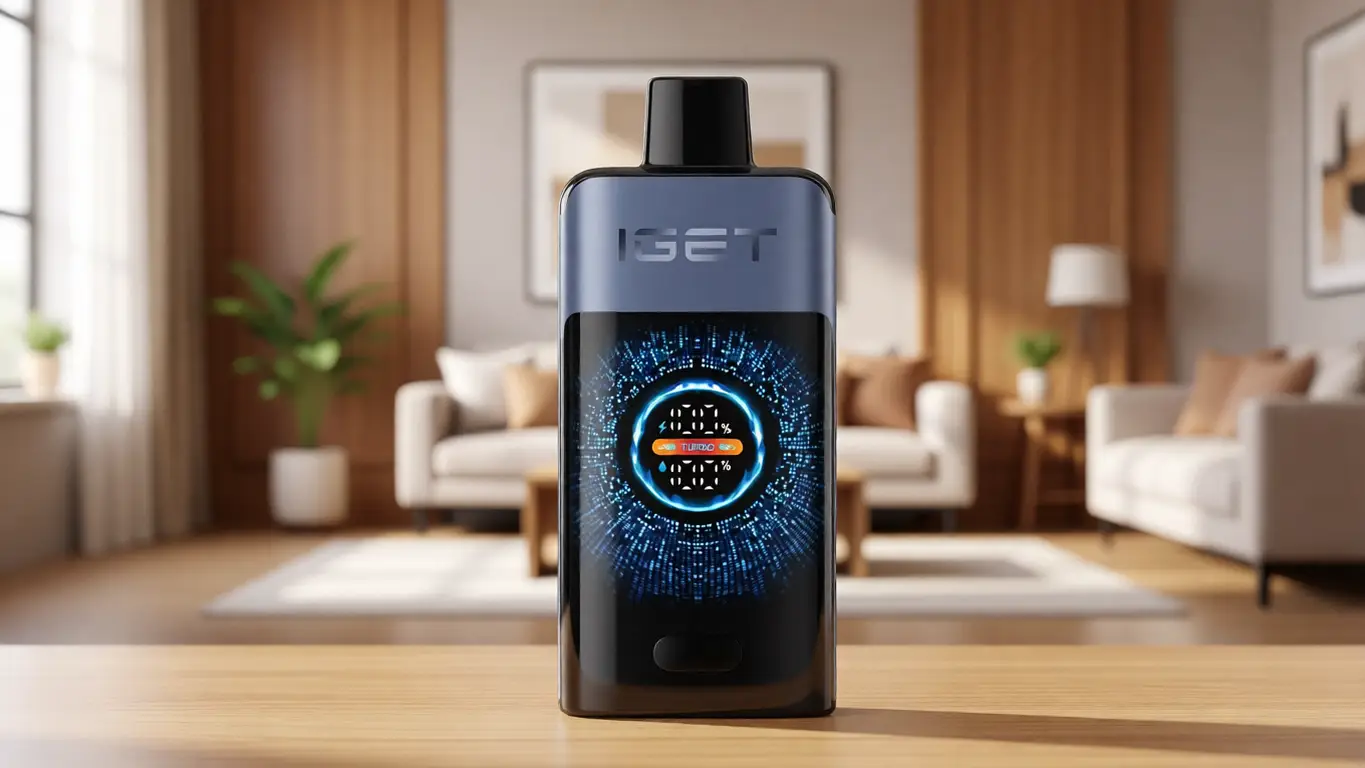
The ALIBARBAR collection, with its emphasis on output stability and considered airflow options, is one of the rare platforms where the equipment genuinely supports a practitioner’s advancement. Devices like the INGOT 9000, INGOT 15000, and Ice Adjust 12000 are engineered to behave predictably across their operational life, which is exactly what learning a coordination-dependent skill requires. When sourced through a channel that guarantees factory‑certified authenticity — and OZVAPE Shop has built its operation around that promise — the last remaining variable is your own willingness to practise.
No ring is ever perfect on the first try. But with the right combination of understanding, evaluation, and equipment that does its job without complaint, the gap between trying and doing narrows in a repeatable, satisfying way. Your routine, not the marketing, dictates which device belongs in your hand. Match your equipment to the patience you’re willing to invest, and the physics takes care of the rest.