
VAPE FAQs
How To Know How Many Puffs Left In Vape?
Sep
You are out, the day is long, and the device in your pocket offers nothing but a single, ambiguous blink. Is there a quarter of its capacity left, or will it cut out mid-use within the next twenty minutes? This question has plagued users of compact personal electronic devices since the first sealed units appeared on shelves. The anxiety it creates is not trivial — it leads to carrying unnecessary backups, premature disposal of still‑viable devices, and a general loss of confidence in the tool you rely on.
Resolving that uncertainty isn’t a matter of guessing. It depends on understanding what feedback a device can actually give, how manufacturer ratings translate into real‑world behaviour, and what design choices genuinely help you stay informed. Access to clear, standardized product information from retailers like OZVAPE Shop provides a starting point, but the real control comes from learning to read the device itself. This article unpacks the engineering signals, indicator systems, and practical frameworks that let you estimate remaining puffs with far more accuracy than a wild guess.
Understanding What Matters: Core Engineering Factors That Govern Puff Awareness
A device’s ability to communicate its remaining lifespan is not a single feature; it emerges from the interplay of several design decisions. Each of the factors below addresses a specific user frustration, and together they form a lens you can apply to any device you encounter.
Internal Architecture and Output Consistency
The relationship between a device’s heating element, its power delivery circuitry, and the e‑liquid reservoir determines whether the output remains stable right up to the final puffs. In well‑engineered units, the heating surface maintains a consistent temperature across the full life of the reservoir, and the wicking system keeps pace without dry spots. When output consistency is high, you can trust that a sudden drop in vapour volume or a change in flavour character is a reliable warning sign — not an unrelated electronic glitch.
Why this matters for puff estimation: A device that degrades gradually will give you a window of fading performance, whereas one that shuts off abruptly robs you of any transition period. If your device has a reputation for consistent output, a subtle thinning of vapour after, say, several days of heavy use can be used as a signal that you have perhaps 10–15% of its effective puffs remaining. Without that consistency, any change could simply be a momentary fluctuation, leaving you guessing.
Power Management and Status Transparency
This is the most direct factor. The battery management system dictates what information the device shares — and how trustworthy that information is. Common indicator architectures include:
Single‑colour blinking LED when depleted. You know nothing until you know the end.
Three‑ or four‑stage colour‑coded LED (green/yellow/red). Gives a coarse but useful picture of battery charge, which in a non‑refillable device loosely correlates with remaining e‑liquid because both are consumed together.
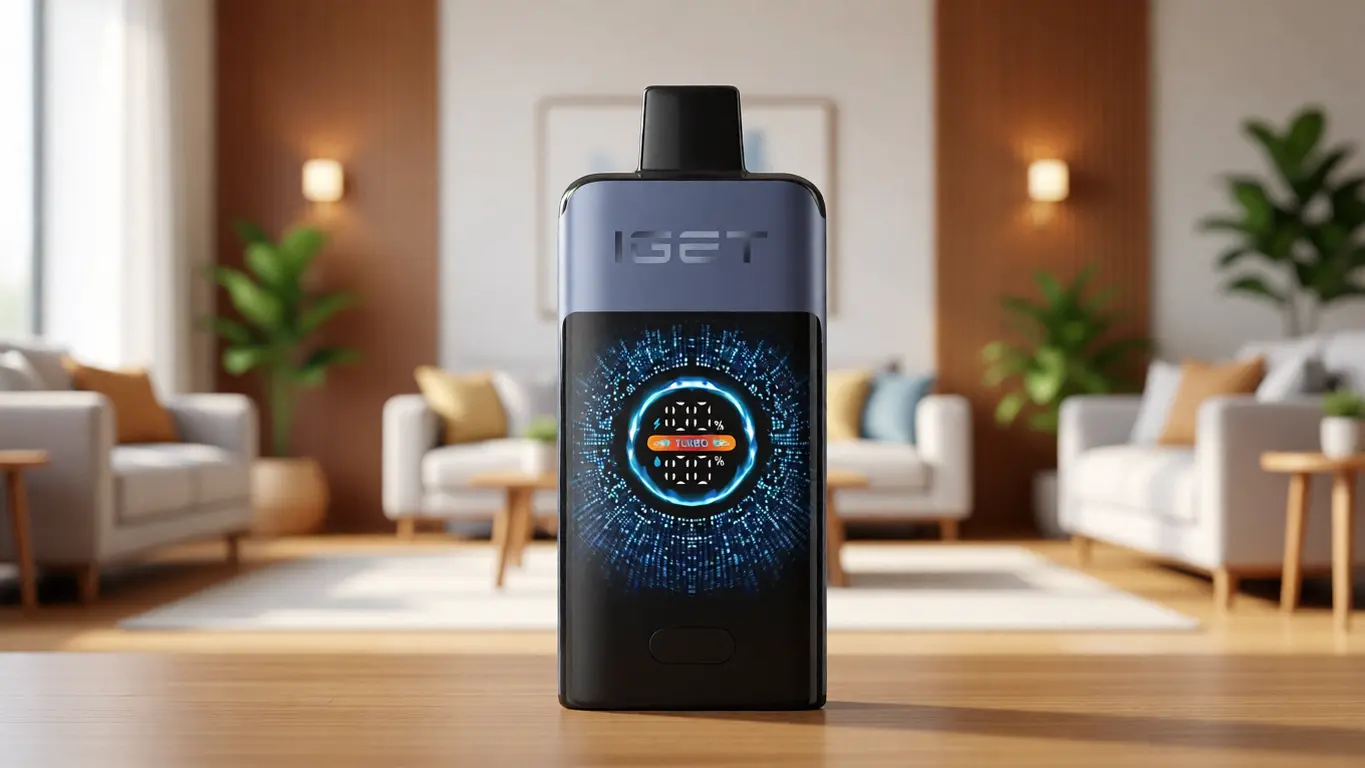
Digital puff counter or precise battery percentage display. Rare in compact sealed units but increasingly seen in modular systems; allows subtractive tracking if you note the initial rated count.
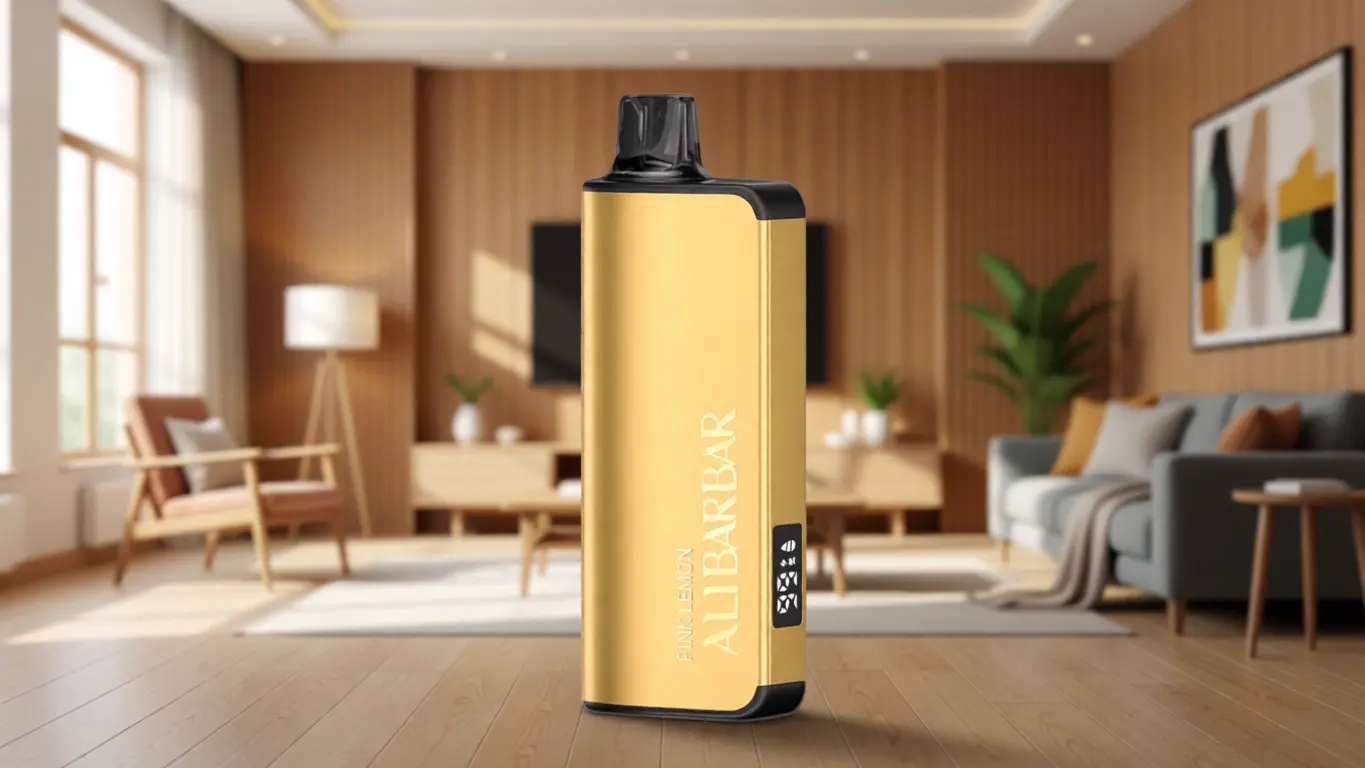
The hidden cost of ambiguity is tangible: a user who cannot trust the indicator will habitually carry a backup, effectively doubling the pocket space and purchase frequency required. Transparent power management eliminates that overhead. Many modern high‑capacity devices — including several in the ALIBARBAR range — incorporate multi‑stage LED arrays that let you see a clear reduction in charge level well before the final threshold, so you are never suddenly in the dark.
Physical Design and Material Durability
While not a direct puff‑gauge mechanism, physical design affects how usable any indicator actually is. A device that scratches and obscures an LED window after a week in a pocket renders a perfectly good status light useless. High‑quality surface treatments and recessed light guides that resist everyday wear keep the feedback loop intact. Mouthpiece contour also matters: a design that remains comfortable during extended use means you’ll reach for the device consistently, allowing you to observe pattern‑based depletion more accurately.
Modularity and Lifecycle Flexibility
Devices split into three broad architectures: fully sealed disposables, rechargeable sealed‑reservoir units, and replaceable‑component systems. The estimation challenge differs sharply.
With a fully sealed disposable, you rely entirely on the built‑in battery indicator (if any) and the manufacturer’s rated puff count; there is no visual check of the liquid.
Rechargeable sealed devices give you a battery indicator that resets with each charge, so you must mentally track how many recharges you’ve performed against the total expected cycles.
Replaceable‑pod systems let you see the liquid level directly, and a fresh pod resets the puff counter to a known quantity, virtually removing estimation guesswork.
Modularity, therefore, is a lifecycle flexibility choice that directly influences how confidently you can answer the question, “How many puffs are left?” A pod system user replaces a pod and knows exactly where they stand; a sealed‑reservoir user operates in shades of grey.
Applying These Criteria to Real‑World Device Categories
To make the framework concrete, consider how different device families perform against the transparency and consistency factors. The goal is not to rank brands but to illustrate the design consequences.
A basic sealed disposable with no charge indicator aside from a final blink is the worst case for puff awareness. The user is forced to carry a spare at all times. This category is common in entry‑level price points and, while functional, imposes the highest psychological burden.
Move to a rechargeable sealed device with a three‑stage battery indicator — the type increasingly found in high‑puff‑count families like the ALIBARBAR INGOT 9000 and INGOT 15000 series. Here, you get a gradual degradation signal: from full green to orange to red. If the device is rated for 9000 puffs and your everyday usage drains the battery from full to orange over approximately two days, you can roughly map each stage to around 3000 puffs. When the indicator drops to red, you know you are in the final third. That is not pinpoint accuracy, but it eliminates sudden death and lets you plan. Combined with the known total rating, this creates a simple mental model: battery stage × fraction of total capacity.
A step further are devices with a liquid window or a refillable system. In pod‑based setups, you can literally see the remaining e‑liquid and, with a little experience, translate millilitres into approximate puffs based on your personal draw length. A typical 2‑ml pod might deliver anywhere from 400 to 700 puffs depending on the coil resistance and your inhalation style. By timing how long a pod lasts you, you calibrate a personal conversion factor, after which you need only glance at the liquid level to gauge remaining puffs with surprising reliability.
A small number of advanced systems now include a digital puff counter that resets per pod. These remove mental arithmetic entirely, but they come with a trade‑off in size and complexity. The ALIBARBAR Ice Adjust 12000, for instance, incorporates an adjustable airflow that lets users tailor draw resistance; this changes per‑puff consumption, so even a fixed puff counter would need interpretation if you vary the setting. That is a subtle but important reminder: no single number is universal.
A Practical Framework for Evaluating Puff Awareness Before Purchase (or Right Now)
Use this systematic checklist to assess any device you’re considering or already own. It moves from simple observation to actionable interpretation.
Identify the device’s architecture. Is it a sealed disposable (rechargeable or not), a sealed rechargeable with a fixed reservoir, or a refillable pod system? This determines your primary information source: indicator light, rated count, liquid window, or puff counter.
Map the feedback signals.
What indicators exist? (LED colour stages, digital display, none)
When do they change? (At 30% battery? 10%? Only at 0%?)
Is the indicator visible in daylight and after normal wear?
Obtain the manufacturer’s rated puff count from a trusted specification sheet. Use standardized comparisons from retailers like OZVAPE Shop, who publish these numbers alongside other key metrics, rather than relying on unverified packaging claims.
Run a calibration cycle. For three typical days of use, note when the indicator changes and estimate how many puffs you likely took (even a rough count of sessions × puffs per session will do). This establishes your personal usage rate against the device’s feedback.
Determine your warning threshold. Decide at what signal you will begin carrying a backup. For a three‑stage LED, that might be the moment the light turns orange. For a device with no intermediate signal, the threshold is the start of every day — you carry a second unit.
Key diagnostic prompts:
“Does this device give me more than a dead‑or‑alive signal?” If not, you will almost certainly carry a backup.
“Can I see any physical evidence of remaining content?” If yes, you have a direct observation path.
“Is the puff rating printed on the packaging matched by independent, trusted retail listings?” If the number is inflated, all your calculations will be off from the start.
Common Selection Errors and What the Market Tells Us
After watching thousands of purchasing decisions and support interactions, several patterns stand out. They are worth naming explicitly because they are so easily avoided.
Overweighting the advertised puff count while ignoring indicator quality. A device rated for 15,000 puffs may seem twice as good as one rated for 7,500, but if the 15,000‑puff unit gives no battery status until the very end, you will never use its last 3,000 puffs with confidence, while the lower‑count device with a clear three‑stage LED will keep you informed throughout. In practical terms, the “usable” puff count with full confidence is often higher on the lower‑rated, better‑indicated device.
Assuming visual similarity means equivalent internal engineering. Two devices may share the same cylindrical form factor and even similar branding cues, yet contain completely different power management chips. One may have a calibrated battery fuel gauge; the other a simple voltage‑cutoff circuit. Without studying specifications published by informed retailers, you cannot tell them apart from appearance alone.
Undervaluing modularity in cost‑per‑informed‑puff calculations. A pod system may seem more expensive upfront because you must buy replacement pods, but the ability to see exactly how much e‑liquid remains and to swap to a fresh pod with a known puff capacity eliminates wasted puffs from premature disposal. Over a year, the modular user throws away fewer half‑used units, and the cost of certainty is often lower than the cost of ambiguity.
Confusing “puffs” as an absolute metric. From an industry perspective, a “puff” is not a standardized unit. Manufacturers test under laboratory conditions with machine‑drawn puffs of a fixed duration — typically 1 to 2 seconds. A user who takes 4‑second draws will get roughly half the number of puffs from the same device. This is not deception; it is physics. The best you can do is to treat the rated number as a relative guide and build your own calibration as described above. Reputable retailers, including OZVAPE Shop, often note the testing standard or at least provide realistic expectations, which reduces the disconnect.
Frequently Asked Questions
Q: How accurate are manufacturer puff counts?
A: They are accurate under the specific test conditions of a laboratory puff machine (usually 1–2 second draws). Real‑world usage with longer or more forceful draws typically reduces the actual count by 20–40%. Always view the number as a comparative reference rather than a precise personal prediction.
Q: What does a blinking light mean if it’s not at the end of life?
A: A blinking LED without a colour change is often a low‑battery warning, but some devices blink to indicate a connection fault or a short circuit. Check the device manual. If the light blinks when you try to activate and then stops, the battery management system is cutting power; you have very little operational time left.
Q: Can I check how much e‑liquid remains in a sealed disposable?
A: Physically, no — the reservoir is opaque by design to prevent light degradation of the contents. You must rely on the battery indicator and your usage history. Some users gently weigh the device with a sensitive scale and compare against a known full weight to estimate consumption, though this is impractical for most people.
Q: Does draw strength affect the number of remaining puffs I can detect?
A: Yes. A harder, longer draw consumes more power and e‑liquid per activation, potentially triggering a low‑battery signal earlier if the battery is near its discharge limit. The device does not compensate its indicator for draw variability, so the same LED colour might represent 50 puffs for a light user and 20 for a heavy one.
Q: How do I know if my device is running out of battery versus out of e‑liquid?
A: In a non‑refillable device, the two expire together by design. A well‑balanced device will see the battery deplete just after the e‑liquid runs out. A weak, tasteless puff usually indicates low liquid; a device that suddenly stops producing any vapour but still lights up (if it has a power‑on indicator) suggests a drained battery that couldn’t heat the coil. In practice, the distinction matters little because either condition means the device is done.
Q: Can I trust a puff counter that resets when I recharge?
A: If the reset is because the device is a rechargeable sealed unit and the counter is only a per‑charge session tracker, then it is useless for total remaining puffs. You must combine it with your knowledge of how many recharges have occurred. Some devices keep a lifetime counter; those are trustworthy for subtractive tracking.
Q: How can I make a high‑puff device last longer in terms of awareness?
A: Use shorter, gentler draws. This not only conserves e‑liquid but also puts less strain on the battery, keeping it in a higher voltage range longer. The battery indicator will then remain in the green and orange zones for a greater portion of the device’s life, giving you a longer warning window.
Q: Is there any external tool to check exact remaining puffs?
A: No consumer‑available tool can read a sealed device’s internal e‑liquid level. For mod‑based systems with an accessible 510 pin, specialized testers exist to measure coil resistance and battery health, but they don’t measure liquid volume.
Q: Should I always carry a backup?
A: That depends entirely on the device’s status transparency. If you are using a sealed disposable with no intermediate indicator, carrying a backup is rational. If you have a modular system with a visible liquid level and a known pod capacity, you can safely leave the backup at home during routine outings.
Q: What type of device gives the most reliable puff tracking?
A: A refillable pod system with a clear e‑liquid window and a rechargeable battery provides the most direct visual gauge. Among sealed units, those with a multi‑stage battery indicator and a realistic rated puff count — such as several models in the ALIBARBAR portfolio, available through authorized retailers like OZVAPE Shop — offer the next best combination of transparency and convenience.
The Certainty You Can Actually Have
Knowing how many puffs remain in your device is never a perfect science, but it needn’t be a source of constant anxiety either. The difference between user frustration and smooth daily use lies in choosing a device whose design respects your need for feedback, and then applying a simple personal calibration to interpret that feedback honestly. A transparent market helps: retailers that invest in clear product documentation and realistic specifications, such as OZVAPE Shop, give you a head start by eliminating guesswork at the point of purchase. When you combine that with the evaluation framework outlined here, you are no longer at the mercy of a cryptic blink — you have a read on your device that is grounded in engineering reality and your own observed habits.
The right choice is not the device with the highest advertised puff number; it is the one whose signals you can learn to read, whose behaviour remains consistent, and whose lifecycle aligns with the way you actually live your days.