
VAPE FAQs
How To Get A Vape Thru Metal Detector?
Aug
How To Get A Vape Through a Metal Detector?
You’re standing in front of a security screening point, and the question you’re actually asking is simple: will your device have to go in the tray, and what happens then? The phrasing people use — “how do I get it through a metal detector?” — usually comes from a mix of nervousness, unfamiliarity, and the feeling that a personal electronic device is something you’d rather not wave around. If you are concerned about security screening, the first thing to know is that you do not need to bypass anything. The system is designed around predictability, not suspicion. Your device will trigger a response, you’ll place it in a bin, and in almost every case you’ll be on your way within a minute.
At OZVAPE Shop, we regularly talk with users who worry that carrying a personal electronic device makes them look unusual. It doesn’t. But how smoothly the experience goes depends less on the size of the device and more on whether you understand what security personnel are actually looking for, and how the hardware itself is constructed. This article explains the engineering that makes a device detectable, the rules that govern carrying it, and the practical routine that avoids most problems.
Understanding What Matters: Core Engineering and Design Factors
Internal Architecture and Output Consistency
Every personal electronic device relies on a heating element, a power source, and a housing. The heating element is typically a metallic coil — a conductive alloy that heats up when electrical current passes through it — while the battery is a lithium-ion cell enclosed in a metal casing. The housing may be an aluminium alloy or a zinc alloy depending on the product line. These components are what screeners see: not a suspicious object, just a dense cluster of metal and wiring.
Why this matters for security is straightforward. Metal detectors are looking for mass and conductivity, not intent. A copper coil and a hard drive component produce a similar signal. The screening technician will typically ask you to remove the device and place it in a tray, because dense metal objects obscure the X-ray image. This is not profiling. It is the same protocol applied to phones, laptops, and keys.
Power Management and Status Transparency
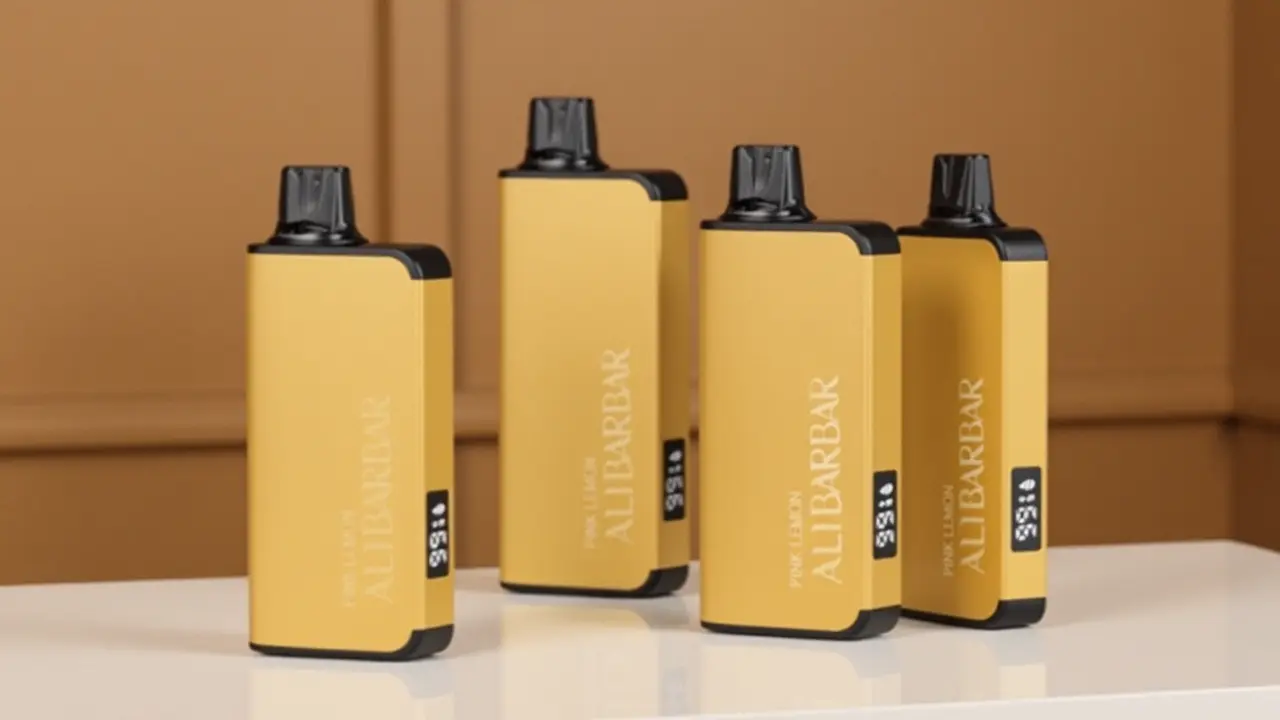
A less obvious factor is how the device communicates its own state. If it provides no clear status feedback, you might arrive at a checkpoint with a power cell that is dead or half-charged. That doesn’t affect screening, but it creates a secondary problem: you’ll be navigating a travel day with an unreliable tool. Devices with visible charge indicators — such as the ALIBARBAR range from the OZVAPE Shop catalogue — allow you to assess your device’s state before you leave for the airport, not in line.
Physical Design and Material Durability
Durability is also a travel concern. Devices that feel solid in a pocket are less likely to be damaged when placed in a security bin, and they’re less likely to rattle or attract attention. Finish quality matters too, though it doesn’t affect screening. A device with a scratch-prone coating will look worn after a single trip; an anodised or brushed metal finish will hold up for years. These are not safety issues, but they shape whether the device remains pleasant to carry.
Modularity and Lifecycle Flexibility
The architecture of the device — sealed unit, rechargeable system, or modular component design — changes how you manage a travel day. A sealed unit with a built-in power cell cannot be opened, which simplifies packing but means you must carry the entire device in your carry-on. A modular system with replaceable pods and separate batteries gives you more flexibility, but adds components to track. There is no objectively correct answer; the right choice is the one that matches how you travel.
Applying These Criteria to Real-World Options
If you are looking at ALIBARBAR devices, the practical implications for security screening are straightforward. The ALIBARBAR INGOT 9000, for example, is a compact sealed unit with an internal battery and visible charge status. It is small enough to place directly into a tray and light enough that it won’t be mistaken for anything complex. The ALIBARBAR INGOT 15000 has a higher capacity and a larger housing, but the same underlying principle: it’s a self-contained device that behaves predictably during screening. The ALIBARBAR Ice Adjust 12000 includes an adjustable output control, which adds a small electronic interface. That interface is not a security issue, but it does mean the technician might give the X-ray image a second look — which is normal.
For comparative perspective, some other established manufacturers produce sealed systems with similar architectures. The trade-offs are generally the same: battery capacity vs. bulk, output adjustability vs. simplicity, and price vs. lifespan. No specific brand changes the fundamental screening process. What changes is how you feel about carrying the device through a full day of travel.
A Practical Framework for Evaluation
Here is a simple step-by-step method to determine whether a device is a good travel companion:
Identify the power source: Does this device have a built-in lithium-ion cell? If yes, it belongs in carry-on baggage, never in checked luggage. This is an international safety regulation, not a store policy.
Assess status transparency: Can you see the remaining charge at a glance? If not, you will likely arrive at the checkpoint unsure whether the device is useful for the rest of your day.
Check containment: Is there any free liquid that could leak under pressure changes? Sealed devices generally handle cabin pressure fine, but refillable systems need attention.
Run a mental screening rehearsal: Imagine placing the device in a tray with your phone and keys. Does its shape create confusion? If it’s heavily enclosed, the X-ray image may look dense — that’s fine. Just don’t hide it inside another metal object.
Confirm local rules: Look up the travel security website for your departure and destination countries. Rules vary, and they change faster than most articles cover them.
Common Selection Errors and Industry Observations
Many travellers create their own problems through incomplete evaluation.
Overweighting one specification. A high puff count or long battery life sounds great, but if the device has poor status transparency, you will still face uncertainty. The single most useful feature at a security checkpoint is a clear charge indicator, because it removes the guesswork.
Assuming visual similarity means equivalent engineering. Two devices that look identical on a shelf may have completely different batteries, coils, and thermal management. This is where the market gets confusing. A device that appears well-built can be heavy on metal but light on reliable power management. That’s why sourcing from a retailer that documents specifications matters.
Undervaluing modularity in cost-per-use calculations. Rechargeable and modular devices cost more upfront but often work out cheaper over time. At the same time, sealed devices offer a simplicity that some travellers genuinely prefer. The mistake is choosing based on the upfront price alone.
Confusing category terminology with technical specifications. Terms like “disposable”, “pod system”, and “rechargeable” describe product categories, not performance or safety. Always verify battery type, capacity, and casing material against an actual specification sheet.
From an industry perspective, the most common cause of confiscation at Australian checkpoints is not the device itself — it’s attempted concealment. Security personnel see hundreds of people per day, and the same handful of patterns repeats. A device placed casually in a tray with keys and a phone is unremarkable. A device wrapped in a sock or tucked into a shoe is exactly what screening is designed to catch. There is no real scenario where concealment improves the outcome.
Frequently Asked Questions
Q: Will my device set off a metal detector?
A: Very likely. The heating coil, battery casing, and housing all contain conductive metal. This is expected, and it doesn’t mean you’ve done anything wrong.
Q: Can I put my device in checked luggage?
A: No. Devices containing lithium-ion batteries must be carried in carry-on baggage under international air safety rules. This applies whether the device is sealed or rechargeable.
Q: Do I need to tell the security officer that I’m carrying a device?
A: You don’t need to announce it, but you should place it in the tray with your other metal items. If asked, answer honestly.
Q: Can I use my device at the airport after screening?
A: That depends on the facility’s local rules. Many airports have designated outdoor areas. Using it inside the terminal is usually prohibited, but you should check your airline and airport policy.
Q: Will a metal detector damage my device?
A: No. Walk-through metal detectors and X-ray machines don’t harm lithium-ion batteries or electronic components. The device’s own battery management system governs its health.
Q: What happens if my device is identified as prohibited at a checkpoint?
A: The officer will explain your options, which usually involve surrendering the item, storing it, or finding an alternative way to transport it if local rules permit. Arguing or concealing it escalates the situation.
Q: Are ALIBARBAR devices suitable for travel?
A: Yes. They are sealed units with integrated lithium-ion cells and clear charge indicators, which makes them straightforward to pack in carry-on luggage and simple to present during screening.
Q: Can I carry multiple devices at once?
A: Generally yes, but with a practical limit. Airlines have rules about the number of spare batteries and the total watt-hour rating. Two or three devices are unlikely to be an issue; a bag full of them will invite questions.
Q: What if a device leaks during a flight?
A: Sealed units rarely leak because they don’t contain free liquid. Refillable systems are the greater risk; empty or partially drain them before flying and keep them in a sealed plastic bag if possible.
Q: Where can I find reliable information about current rules?
A: Check your airline’s dangerous goods policy and the civil aviation authority for both departure and arrival countries. Regulations are updated regularly, so use official sources rather than forum posts.
Conclusion
The real answer to “how do I get a device through a metal detector” is that you don’t need to “get it through” in the way the phrasing implies. You carry it openly, place it in the tray, and treat security screening as the routine procedural step it actually is. The technology inside the device — its coil, battery, and housing — is not the problem. The problem is almost always uncertainty: not knowing what to expect, and not knowing the rules.
If you are buying a device from an authorised source, you also have the advantage of accurate, traceable specifications. This is where OZVAPE Shop earns its keep, not by promising anything exotic, but by ensuring the device you receive matches the documentation you were shown. The current rules are published by the Australian Government’s TravelSECURE programme, and OZVAPE Shop recommends scanning them before your trip.
Once you understand what the equipment is actually looking for, the process loses its tension. The right device for crossing a terminal is the one you’d also want on the other side of it — the one with clear status feedback, durable construction, and a battery that behaves predictably for your routine. Choose accordingly, and the secure screening process settles into what it’s meant to be: an ordinary moment in an ordinary day.