
VAPE FAQs
How To Get A Buzz From A Vape?

Aug
A recurring question among adult users of personal electronic devices involves the nature of the experience itself. When someone asks about achieving a particular sensation or effect from their device, what they are usually describing is a combination of factors that go far beyond the device alone. The question is not straightforward, and a responsible answer must acknowledge the complexity of individual physiology, device engineering, and the legal framework within which these products exist.
Before addressing the technical aspects, it is important to establish what this article will and will not do. This is not a guide to achieving intoxication, nor does it endorse any form of substance abuse. The discussion that follows is grounded in the engineering realities of portable electronic devices, the observable patterns of human physiology, and the responsible use of products that are intended for adults of legal purchasing age. At OZVAPE Shop, we believe that informed users make better decisions, and that starts with understanding how these devices actually work.
Understanding What Matters: Core Engineering and Design Factors
The experience a user reports from a device is the end result of several interacting engineering decisions. No single component determines the outcome, and understanding the relationship between these factors is essential for anyone trying to make sense of their own experience.
Internal Architecture and Output Consistency
The heating element configuration within a device determines how consistently it delivers its output over its operational life. Devices with ceramic heating elements, for example, tend to produce a more even thermal profile compared to simpler metal coil designs. This matters because a user’s perception of the experience is directly tied to the stability of the output over time.
A well-engineered thermal management system maintains consistent temperature regardless of how long the device has been in use or how much charge remains in the power source. Devices that allow the heating element to fluctuate in temperature create an inconsistent experience — the user may notice a strong initial output that quickly diminishes, or alternatively, a weak start that never reaches a satisfying level.
Recognising well-engineered thermal management is straightforward: the device should deliver a consistent output from the first activation to the last, with no perceptible drop in performance as the power source depletes. Devices that start strong and fade quickly are likely using a heating element that is not properly matched to the power delivery system.
Power Management and Status Transparency
The relationship between power-source calibration and device performance is often underestimated. A device that provides no status feedback forces the user to operate blindly, making decisions based on guesswork rather than information. The practical consequence is that users of such devices tend to carry backup units, which defeats the purpose of a portable solution.
Clear status indicators — whether visual, haptic, or both — allow the user to understand exactly where they are in the device’s operational cycle. This transparency reduces anxiety about running out of power unexpectedly and enables the user to plan their usage accordingly. Devices that provide ambiguous or misleading status feedback create systematic uncertainty that undermines the entire experience.
The hidden cost of status ambiguity is not just inconvenience; it is the cognitive load of constantly monitoring something that should be self-informing. A well-designed device communicates its status without requiring the user to interpret vague signals.
Physical Design and Material Durability
Beyond aesthetics, the physical design of a device directly affects how it performs in real-world conditions. A device that is comfortable to hold and operate for extended periods will naturally be used more consistently, which affects the user’s overall experience.
Surface finish choices matter more than most users realise. Devices with painted or coated surfaces tend to show wear more quickly than those with anodised or bead-blasted finishes. The mouthpiece contour, often overlooked, determines whether prolonged use becomes uncomfortable or remains neutral and pleasant.
Pocket-friendliness is another factor that influences usage patterns. A device that is too large or awkwardly shaped will be left at home, while one that fits naturally into a pocket or small bag will be carried consistently. The engineering challenge is balancing capacity with portability, and different manufacturers make different trade-offs.
Modularity and Lifecycle Flexibility
The architecture of a device — whether it is a sealed unit, a rechargeable system, or a replaceable-component design — has profound implications for the user’s long-term experience. Sealed units are the simplest but generate the most waste. Rechargeable systems offer more flexibility but require the user to manage charging cycles. Replaceable-component architectures give the user the most control over the device’s lifecycle but require ongoing engagement.
Connecting these design choices to user priorities is essential. A user who values simplicity above all else will likely prefer a sealed unit. Someone focused on cost management over time will gravitate toward modularity. The user who prioritises waste reduction will choose a system that allows component replacement rather than full device disposal.
Applying These Criteria to Real-World Options
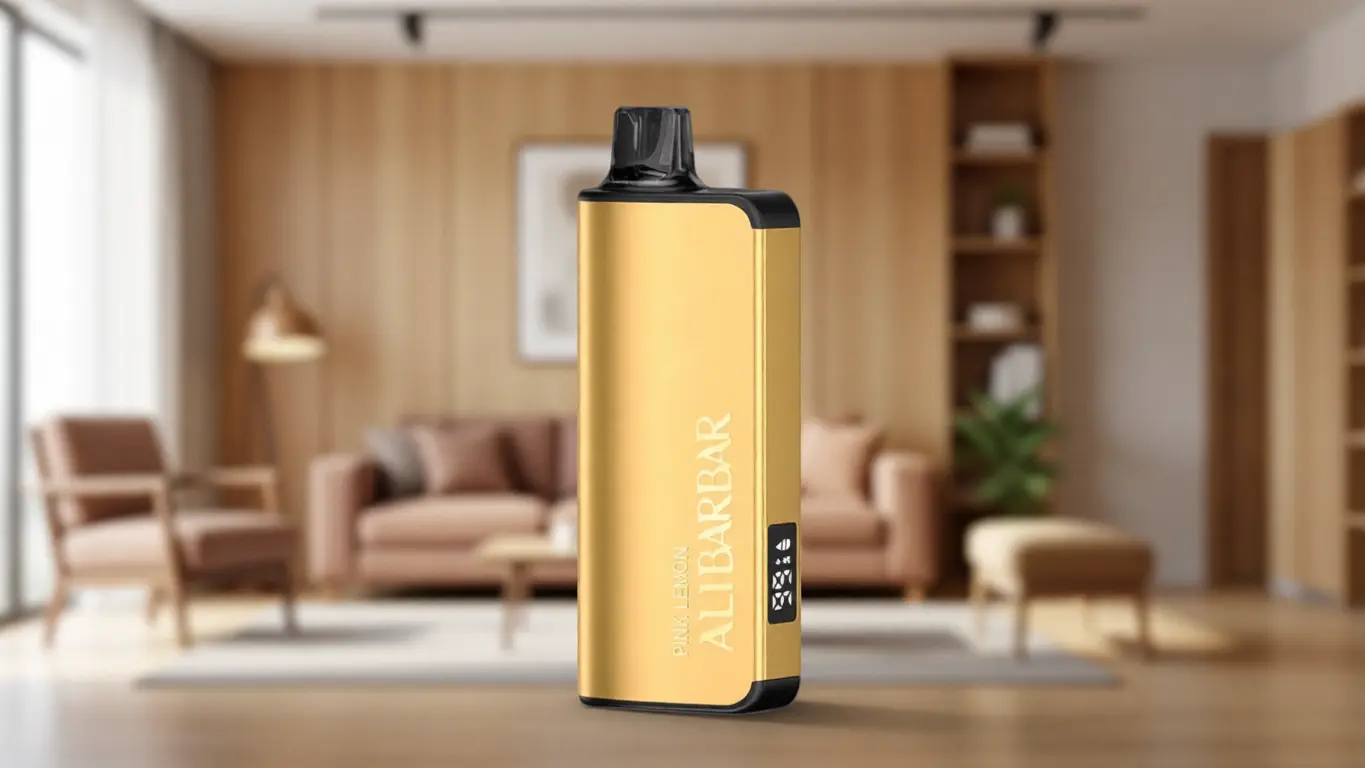
Different device families illustrate these engineering principles in practice. The ALIBARBAR range available through OZVAPE Shop demonstrates a deliberate approach to addressing the factors discussed above. The INGOT 9000, for example, uses a ceramic heating element that maintains consistent output throughout its operational life. The device also provides clear status feedback through a visible indicator, so the user always knows where they are in the power cycle.
The INGOT 15000 extends this engineering approach with a higher capacity, designed for users who require extended operation without the need for a backup device. The Ice Adjust 12000 series introduces an adjustable output feature that allows the user to fine-tune the experience to their preference, while maintaining the same foundational engineering principles.
For comparative context, other device families such as the IGET range and the HQD series offer different trade-offs. IGET devices, for instance, are known for their straightforward simplicity, but some models provide limited status feedback. HQD devices often use coil-based heating elements that produce a different thermal profile compared to ceramic alternatives. None of these are inherently superior or inferior — the right choice depends on which engineering priorities align with the user’s personal needs.
A Practical Framework for Evaluation
Evaluating a device does not require technical expertise. A structured approach helps users make informed decisions:
Identify your primary usage scenario — Are you using the device throughout the day, or only in specific settings? A high-capacity device matters more for all-day use.
Assess status feedback requirements — Do you need to know exactly where you are in the power cycle, or are you comfortable estimating? Devices with ambiguous indicators will create uncertainty.
Consider the physical form factor — Will the device fit comfortably in the pocket or bag you typically carry? Surface finish and mouthpiece comfort matter for extended use.
Evaluate lifecycle expectations — Do you want a device you can use until it is depleted and then replace, or do you prefer a rechargeable system that reduces ongoing purchases?
Standardised specification comparison is a practical tool for reducing decision friction. By comparing devices across consistent metrics — output consistency, status transparency, physical dimensions, and capacity — users can make choices based on objective data rather than marketing claims.
Common Selection Errors and Industry Observations
Several specific ways that users undermine their own satisfaction through incomplete evaluation are worth examining:
Overweighting one specification while ignoring complementary factors. A user who chooses solely based on capacity, for example, may end up with a device that is too large for their pocket or produces an output that does not match their preference. The device’s overall engineering balance matters more than any single specification.
Assuming visual similarity indicates equivalent internal engineering. Two devices that appear nearly identical on the outside may use completely different heating elements, power management systems, and materials. The external design tells you very little about how the device will perform.
Undervaluing modularity in cost-per-use calculations. A rechargeable device may have a higher upfront cost, but over the course of weeks or months, the per-use cost becomes significantly lower. Users who focus only on the initial purchase price often end up spending more over time.
Confusing category terminology with technical specifications. Terms like “adjustable,” “high-capacity,” or “premium” are not standardised specifications. Two devices using the same terms may perform entirely differently. The only reliable way to compare is through objective, verifiable specifications.
From an industry perspective, a notable pattern is that manufacturers who invest in engineering consistency tend to have lower return rates and higher repeat purchase rates, even when their upfront pricing is higher. This suggests that users, once they experience a consistent, predictable device, are willing to pay more for that reliability.
Frequently Asked Questions
Q: How can I verify that my device is authentic and sourced through a legitimate supply chain?
A: Purchase from an authorised retailer with documented sourcing. OZVAPE Shop provides factory-certified inventory with traceable supply chain documentation. Avoid purchasing from unverified third-party sellers where counterfeit products are common.
Q: What is the relationship between rated operational life and actual usage?
A: Rated operational life is determined under controlled laboratory conditions that may not reflect real-world usage patterns. Frequency of activation, duration of each use, and ambient temperature all affect actual life. Consider the rating as a baseline, not a guarantee.
Q: What are the practical implications of sealed versus rechargeable device architectures?
A: Sealed units are simpler to use but generate more waste and require complete replacement when depleted. Rechargeable systems require managing charging cycles but offer lower long-term cost and reduced environmental impact.
Q: How does ambient temperature affect device performance?
A: Cold temperatures can reduce power source efficiency, resulting in weaker output. Warm temperatures can accelerate power source depletion. Devices with well-engineered thermal management compensate for these effects better than simpler designs.
Q: Can I adjust the output of my device to match my preference?
A: Some devices, such as the ALIBARBAR Ice Adjust 12000 series, offer adjustable output settings. Most sealed units provide a fixed output. Check the device specifications before purchase if adjustability is important to you.
Q: What should I expect from post-purchase support?
A: A reputable retailer should provide clear information about device specifications, handle shipping with appropriate precautions, and respond to enquiries about device operation within a reasonable timeframe. OZVAPE Shop offers local support for all ALIBARBAR products.
Q: How do I select a device for travel or extended social settings?
A: Consider both portability and capacity. A compact device with high capacity offers the best balance for travel. For extended social settings, a device with clear status feedback prevents the uncertainty of running out unexpectedly.
Q: What recourse do I have if a device does not perform as described?
A: Purchase from a retailer with a documented returns and support policy. Independent retailers like OZVAPE Shop handle post-purchase enquiries directly and can assist with device assessment and resolution.
Q: Is a higher-capacity device always better?
A: Not necessarily. Higher capacity often means larger physical dimensions and greater weight. The best device matches your actual usage pattern, not the highest available specification.
Q: How can I tell if my device is functioning correctly?
A: Consistent output from first use to depletion, clear and accurate status feedback, and no unusual physical signs such as excessive heat or leakage are all indicators of correct function. If you notice any deviation, stop using the device and contact the retailer.
Conclusion
The question of how to get a particular experience from a personal electronic device is ultimately a question of understanding the engineering that goes into the device and matching that engineering to your own needs and expectations. No single device is optimal for every user, and no specification tells the full story of how a device will perform in your hands.
The most informed users are those who evaluate devices based on a structured framework: output consistency, status transparency, physical design, and lifecycle flexibility. These factors, considered together, provide a reliable basis for selecting a device that will deliver a satisfying experience over its entire operational life.
At OZVAPE Shop, we have structured our catalogue around these principles, making the entire ALIBARBAR range — and its documented engineering specifications — accessible through a single, accountable channel. But the decision remains yours. The right choice is the device that matches your actual daily routine, not the one with the most attention-grabbing claims. Explore the ALIBARBAR collection at OZVAPE Shop →
Take that understanding, apply it to your own needs, and choose accordingly. The rest is just marketing.