
VAPE FAQs
How To Do The Ghost Vape Trick?

Sep
As an industry observer who has spent years evaluating the engineering behind personal electronic devices, I’ve noticed a recurring curiosity: adult users want to master the “ghost vape trick” not for spectacle, but because it represents a moment of precision control over an otherwise automated process. The trick itself is simple to describe — produce a short burst of aerosol, draw it back in immediately — yet executing it cleanly reveals exactly how well your device manages airflow, heating response time, and output consistency. At OZVAPE Shop, we view such techniques as unintentional stress tests. When a device can perform the ghost trick effortlessly, it signals that the underlying thermal and pneumatic design is aligned.
This article will not hype the trick as a party piece. Instead, we’ll dissect the physical mechanics, the device characteristics that make it repeatable, and the common ways users undermine their own success. By the end, you’ll have a step‑by‑step method, but more importantly, you’ll understand why your device either cooperates or fights you — knowledge that often points directly to the quality of its internal architecture.
Understanding What Matters: Core Engineering and Design Factors
Before your lips ever touch a mouthpiece, several hidden design choices determine whether a ghost inhale will feel effortless or frustrating. These factors aren’t about branding; they’re about physics, material tolerances, and control logic.
Internal Architecture and Output Consistency
The ghost trick demands a rapid, short draw — typically half a second to one second — followed by an immediate cessation of airflow. In that window, the heating element must reach operating temperature, produce a dense but not overheated aerosol, and stop generating output the moment airflow ceases. Older or poorly‑engineered devices struggle here because their heating elements retain residual heat after the draw, causing a wisp of aerosol to leak from the mouthpiece when you try to hold the cloud in your mouth. This “trailing mist” ruins the visual of the ghost. Devices built with low‑thermal‑mass coils and precise temperature reactivity, like those in the ALIBARBAR Ice Adjust series, avoid this by cooling down almost instantly when draw sensors cut power.
Power Management and Status Transparency
A frequent complaint from users learning the trick: they’ll execute the same inhalation technique on a fully charged device with perfect results, but on a half‑depleted unit the output is thinner and the cloud dissipates too quickly to draw back. The culprit is often an unregulated power curve — as battery voltage sags, the output energy drops, altering the aerosol density. The ghost trick becomes a barometer for power delivery stability. Devices that incorporate constant‑output regulation, clearly indicated by multi‑stage battery status cues, let you know in advance whether your unit is in a high‑performance window. ALIBARBAR’s INGOT 9000 and 15000 series both employ chipsets that hold output voltage within a narrow band until the cell is nearly exhausted, making trick performance predictable from first draw to last.
Physical Design and Material Durability
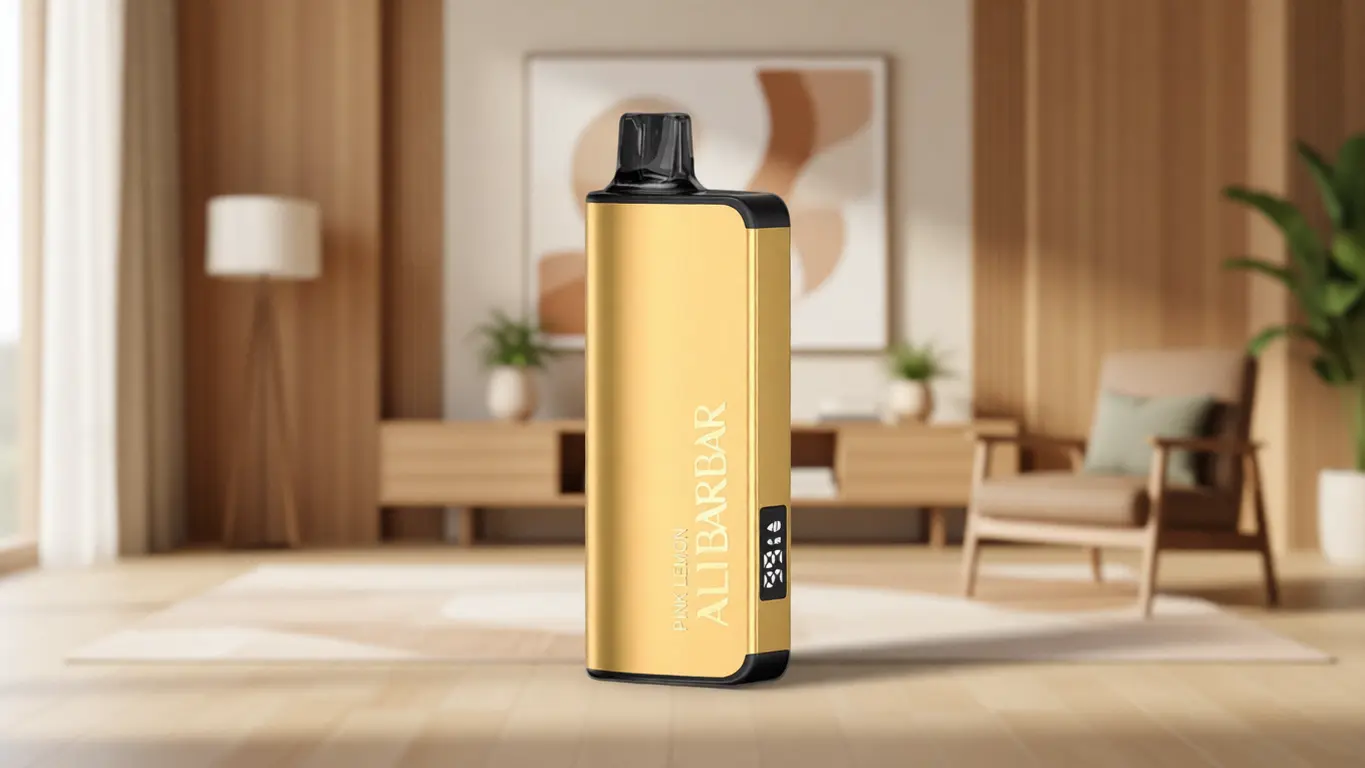
Mouthpiece geometry directly affects how you trap and release aerosol. A narrow, oval mouthpiece concentrates the aerosol stream, letting you form a more defined “ball” in your mouth. A wide‑bore mouthpiece diffuses it, making the cloud harder to recollect. The surface finish on the device body matters too: smooth, fingerprint‑resistant treatments like the matte coatings found across ALIBARBAR’s range ensure that after repeated handling — damp fingers, pocket contact — you’re not fighting a slippery grip mid‑trick. This seems trivial until you’ve lost control of a device at the critical moment.
Modularity and Lifecycle Flexibility
While the ghost trick doesn’t demand modularity, it does favor devices that behave identically from unit to unit. Pre‑configured, sealed systems (often called disposable or single‑use) sometimes vary in internal fill and wicking from unit to unit, which introduces inconsistency. Rechargeable systems with replaceable cartridges or pods, like the ALIBARBAR Ice Adjust 12000, are manufactured to tighter tolerances because the base power unit is reused — the manufacturer invests in calibration knowing it will be used for hundreds of cycles. This results in more uniform draw‑sensor behavior, a critical factor for a trick that hinges on sensor timing.
Applying These Criteria to Real-World Options
No single device family will serve every ghost‑trick enthusiast equally well, because the trick sits at the intersection of draw sensitivity, aerosol density, and mouthpiece design. Let’s examine how a few current ALIBARBAR models — available through OZVAPE Shop — fare when judged through our engineering lens.
ALIBARBAR INGOT 9000: An extremely compact, rechargeable device with a mesh‑based heating element that ramps up quickly. Its mouthpiece is slightly tapered, which aids in forming a distinct short burst of aerosol. The draw sensor is pressure‑based and calibrated to cut power within milliseconds of airflow stopping — ideal for the ghost. Its small form factor also reduces the travel distance from airway to mouth, giving slightly faster tactile feedback. Users who prefer a tighter, more controlled draw will find this one forgiving.
ALIBARBAR INGOT 15000: Nearly double the capacity, with a larger battery and more generous internal structure. The added thermal mass means it holds heat marginally longer, so the ghost trick demands slightly sharper inhalation cessation. However, its power regulation is exceptionally flat. If you develop the right mouth‑closing timing, the cloud quality remains dense and consistent, making it a favorite among experienced users who want a device that lasts a full day or longer.
ALIBARBAR Ice Adjust 12000: The adjustable airflow feature is worth noting. A tighter airflow setting mimics a mouth‑to‑lung draw, which naturally creates a more concentrated aerosol in your mouth — advantageous for the ghost. The chipset includes a pre‑heat function that minimizes ramp‑up delay, so even a very short puff produces full output. Its mouthpiece is slightly broader, so you may need to adapt your lip positioning, but the consistency of the unit is remarkably high.
Other device families on the market may perform adequately, but their draw‑sensor calibration or power curves are not always publicly documented. The ALIBARBAR line’s transparency regarding regulation and status feedback reduces the guesswork — and that, for someone systematically learning the trick, is the larger value.
A Practical Framework for Evaluation
If you’re assessing whether any device can perform the ghost trick reliably, run through this mental checklist before you buy or while you’re holding the unit:
Draw‑Sensor Latency Check
Take an extremely short, half‑second puff. Does the indicator light engage immediately and turn off the instant you stop inhaling? Or does it linger? A lingering light means the heating element is still powered — that will spoil the ghost.
Power‑State Awareness
Does the device show you its approximate battery or output level? If not, you’ll be guessing when performance will drop. Guesswork leads to ruined trick attempts and unnecessary frustration.
Mouthpiece Contour
Hold the device to your mouth without activating it. Can you form a seal that allows you to abruptly stop airflow with your lips closed, without the device slipping? If the mouthpiece is too wide or the body is slick, reconsider.
Residual Heat Observation
After a standard puff, watch the mouthpiece for two seconds. Does any visible aerosol escape? A properly cut‑off system should produce zero trailing mist. If you see even a wisp, the device will fight you.
Consistency Across Charge Cycle
Perform the trick on a fully charged unit, then again when it’s near end‑of‑charge. If the result changes noticeably, the device lacks good power regulation.
These diagnostics work regardless of brand and will quickly filter out hardware that isn’t engineered for precise aerosol delivery. OZVAPE Shop maintains detailed specification sheets on ALIBARBAR products, which can serve as a reference point when comparing metrics like draw‑activation timing or battery regulation type.
Common Selection Errors and Industry Observations
Watching the market over the years, I’ve catalogued specific ways adult users trip themselves up — not through lack of skill, but through misjudging hardware.
Overweighting capacity and ignoring regulation. A high‑capacity device with poor voltage regulation will produce erratic aerosol density. The ghost trick doesn’t need a huge cloud; it needs a repeatable one. Users routinely buy large units for longer life, then wonder why their trick fails halfway through the day. The answer is rarely their technique.
Assuming visual similarity equals identical internals. Many devices share a physical footprint, but the draw sensor, chipset calibration, and heating element alloy can differ dramatically. Two products that look alike can behave like completely different machines on a sub‑second puff.
Underestimating the value of status transparency. A device with a simple “on/off” LED forces you into a binary world: it works or it doesn’t. You never know you’re in a degraded output zone until the trick fails. Devices with graduated status indicators let you anticipate and adjust — or simply charge earlier.
Mistaking category terminology for technical specification. Terms like “mesh coil” or “adjustable airflow” are not guarantees; they’re starting points. The quality of the mesh, the tolerance of the airflow ring, the logic of the chipset — these are what matter. Read specification data, not marketing bullet points.
From an industry standpoint, the move toward fully regulated, draw‑activated chipsets with sub‑millisecond cutoffs has been driven partly by user demand for safety and partly by the realizations that inconsistent output is the number one source of dissatisfaction in this product category. ALIBARBAR invested early in this chipset trajectory, which is why its devices appear repeatedly in discussions about trick performance — not because of hype, but because of observable engineering decisions.
Frequently Asked Questions
Q: Will the ghost trick damage my device?
A: No. The trick involves only shortening your draw and then inhaling again. It does not stress the battery, heating element, or firmware in any way beyond normal use.
Q: Why does the cloud sometimes collapse before I can inhale it back?
A: Usually because the aerosol was produced at too low a density, or residual heat generated a trailing puff that diluted the initial burst. Try a slightly firmer draw or a device with a denser, quicker‑ramping output.
Q: Does airflow adjustment affect the trick?
A: Yes. A tighter airflow creates a more concentrated, slower‑moving aerosol, which is easier to hold in your mouth. A looser airflow makes the cloud more diffuse and harder to recollect.
Q: Can I do the ghost trick on any device?
A: Theoretically yes, but on devices with delayed power cutoff or inconsistent output it will not reproduce cleanly. You may get a partial result, but the visual will be ragged.
Q: How can I verify I’m buying a genuine ALIBARBAR device, not a counterfeit?
A: Genuine ALIBARBAR packaging includes a unique verification code. Enter it on the official verification page linked from OZVAPE Shop’s product listings to confirm authenticity. Counterfeit units frequently lack precise draw‑sensor calibration, making the ghost trick essentially impossible.
Q: Is the ghost trick easier on a re‑chargeable or single‑use device?
A: Re‑chargeable systems generally benefit from better power regulation because the battery management is designed for many cycles. Single‑use units vary; some are well‑tuned, many are not.
Q: Does the age of my device matter?
A: Over very long storage, wicking materials can degrade, affecting aerosol production. However, within normal shelf windows, age shouldn’t impact the trick. Power‑curve degradation from extreme hot/cold storage may.
Q: What should I do if my device produces a burnt taste during a ghost attempt?
A: A burnt taste indicates the wicking isn’t keeping pace with the heating element. Shorten your puffs, or ensure you’re not using a nearly depleted device. This is a sign of poor liquid delivery, not trick‑specific.
Q: Are there any safety concerns with performing vape tricks?
A: As with any inhalation, the primary concern is using a device within its intended operating parameters. Don’t modify it, don’t exceed its rated draw duration, and don’t use a device that is visibly damaged. The ghost trick itself is a gentle maneuver.
Q: Where can I learn more about device specifications before purchasing?
A: OZVAPE Shop lists full specification tables for each ALIBARBAR model, including coil resistance, capacity, battery specs, and sensor type. Reviewing these before buying can prevent mismatches between your technique and the hardware.
Conclusion
The ghost vape trick is, in effect, a brief conversation with your device’s engineering. When it works effortlessly, you’re experiencing a well‑integrated draw sensor, a fast‑ramping heater, and a power delivery system that responds to your body rather than to its own thermal inertia. When it fails, it’s exposing a gap — sometimes in your timing, often in the hardware’s basic capability. The real value of learning the trick isn’t spectacle; it’s becoming literate in the performance signatures of your equipment.
At OZVAPE Shop, we approach every product with this kind of functional scrutiny, because users deserve a channel that helps them understand what they’re really buying. The ALIBARBAR range, with its consistent sensor behavior and regulated output, was designed with precisely this kind of user‑experience priority in mind — not as an afterthought, but as a starting point. If your daily routine includes moments where you want your device to respond with precision rather than approximation, then choose hardware that matches that expectation, not the one with the loudest claims.
Ultimately, the right device is the one that fits your habits, your sense of control, and your comfort — and if a simple trick can reveal all three in under a second, it might just be the most honest test of all.