
VAPE FAQs
How To Do A Blinker With A Vape?
Sep
The culture around personal vaporisers has produced its own vocabulary, and few terms capture curiosity quite like “blinker.” Among adult users, the word refers to an extended draw — one long enough to trigger a device’s built‑in maximum‑puff protection, signalled by a blinking LED at the base of the unit. What sounds like a straightforward technique actually exposes deep differences in engineering philosophy, power management, and the transparency with which a device communicates its own limits. Not every portable electronic tool is built to sustain that kind of sustained draw, and many that are still leave the user uncertain about exactly what the blinking light means.
Retailers who pay close attention to genuine feedback patterns, such as OZVAPE Shop, have observed a recurring frustration: users who attempt a blinker on a device with weak thermal regulation or ambiguous status signals often mistake a low‑battery blink for a puff‑limit indicator, or worse, experience an uncomfortable spike in temperature that is not immediately corrected by the onboard protection. This article does not advocate any particular inhalation style. Instead, it explains the engineering prerequisites that make a consistent, informed blinker possible — and how to identify devices that meet them.
Understanding What Matters: Core Engineering and Design Factors
A blinker is not a magic trick. It is a stress test of a device’s current‑limiting circuitry, its coil‑temperature management, and its ability to communicate system state without ambiguity. Evaluating whether a particular unit can handle extended draws safely begins with four interconnected criteria, each tied to a concrete user concern.
Internal Architecture and Output Consistency
When a draw extends past the typical two‑to‑three‑second window, the heating element must maintain a stable temperature without drifting into a range that compromises material integrity or user comfort. Well‑designed mesh‑coil architectures — those common in the ALIBARBAR INGOT family — distribute current across a wider surface area, reducing the likelihood of localised hot spots that can produce acrid notes during a prolonged pull. Less refined wire configurations may over‑compensate with a sudden power spike, creating a sensation that makes the user instinctively stop the draw long before the protection timer engages.
Why this matters: users who persist with a device that lacks smooth thermal regulation often report that later draws feel progressively harsher, even when the power cell still shows capacity. A blinker becomes a one‑time gimmick rather than a repeatable feature of the device.
Power Management and Status Transparency
Every device with a maximum‑puff cutoff uses an onboard microcontroller to track draw duration. Once the threshold is reached — typically 8 to 10 seconds — the microcontroller interrupts power to the coil and triggers the LED to blink. The clarity of that blinking pattern is what separates frustration from confidence. A single series of rapid flashes that is identical to a low‑battery warning leaves the user guessing. The ALIBARBAR design philosophy, as documented by its engineering lead, is explicit: status indicators should never force the user to consult a manual mid‑session. The INGOT 15000, for instance, delivers a distinct, slow‑pulsing blink sequence when the puff limit is hit, while battery alerts present a faster, staccato pattern. This differentiation eliminates the quiet anxiety of carrying a backup device unnecessarily.
The hidden cost of status ambiguity is real. When the LED means everything and nothing, users compensate by treating every device as potentially half‑spent, leading to premature disposal and repeat purchases that could have been avoided with better on‑board communication.
Physical Design and Material Durability
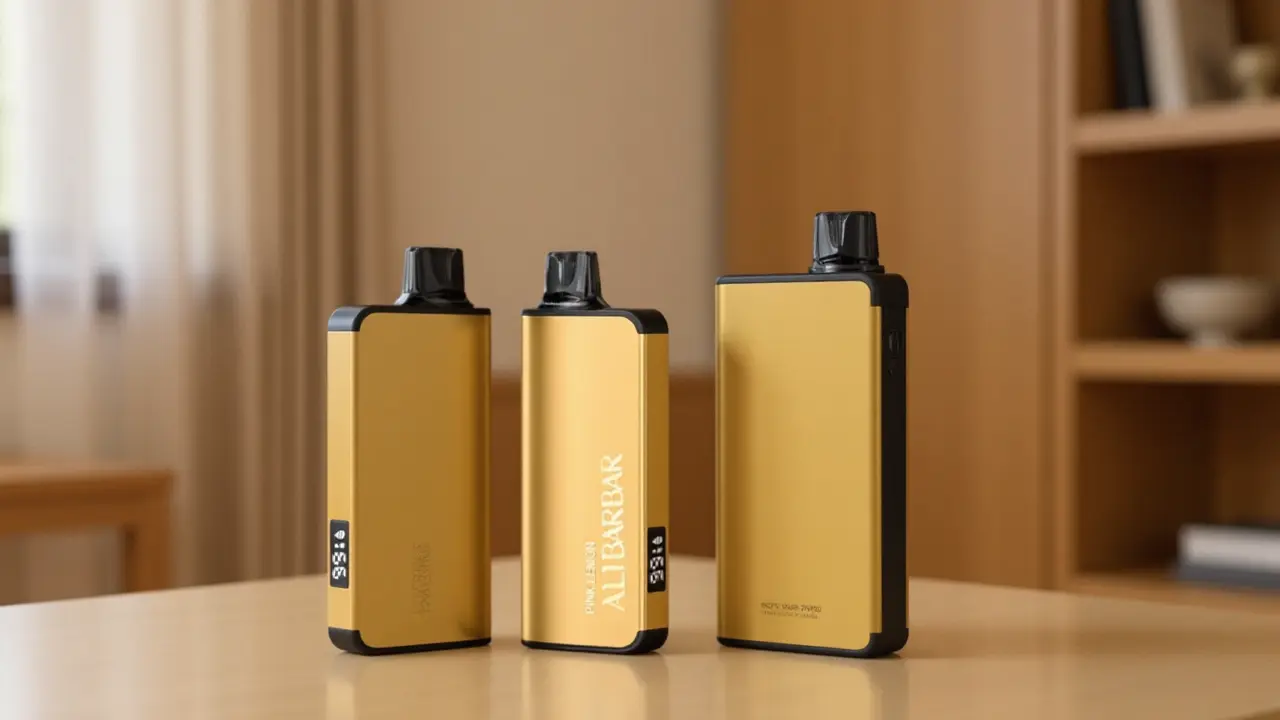
A blinker demands a mouthpiece that remains comfortable during a 10‑second sustained contact period and a body finish that does not become unpleasantly warm to the touch. The Ice Adjust 12000 from ALIBARBAR employs a food‑grade PCTG mouthpiece with a gentle taper, and the chassis uses a matte‑textured treatment that resists fingerprint‑induced slipperiness. These are not decorative choices; they are functional responses to how hands move and how lips interface with a device over time.
Observations from daily‑carry testing reveal that polished metallic finishes gain heat more readily than matte polymer coatings, and short, stubby mouthpieces can transfer warmth faster than slightly extended, insulated profiles. Users who prioritise blinkers should evaluate the device in hand — not in a product image — to see whether 10 seconds of contact feels sustainable.
Modularity and Lifecycle Flexibility
Whether a device is sealed, rechargeable, or built on a replaceable‑component architecture determines how extended‑draw habits affect total cost of ownership. Repeat blinkers accelerate coil wear and drain power cells faster. A sealed disposable that cannot be recharged leaves no margin for error; once it blinks for the last time, the unit becomes a paperweight. The ALIBARBAR INGOT 9000 and 15000 both adopt a rechargeable architecture with a Type‑C interface, allowing users to recharge the cell multiple times before the consumable element reaches its designed lifespan. This configuration matches the usage pattern of someone who regularly engages the puff timer: you deplete the cell more quickly, but you can replenish it without discarding an otherwise functional device.
This modular thinking also appears in some advanced systems from manufacturers like Vaporesso, where the power module is separable. However, for the compact, pre‑configured segment that ALIBARBAR occupies, the rechargeable sealed design represents a considered balance of simplicity and extended utility.
Applying These Criteria to Real-World Options
The ALIBARBAR catalogue is not the only answer for users interested in the blinker technique, but it illustrates how deliberate engineering creates a predictable experience. The INGOT 15000, for example, pairs a 10‑second timed cutoff with a dedicated LED sequence. Its mesh‑coil internal architecture maintains temperature stability across the draw duration, and the 650 mAh cell can be recharged multiple times, meaning a user who blinks frequently is not forced into a single‑use economy.
Other established devices handle the same challenge differently. Some IGET models, while widely recognised for their compact form, employ LED patterns that serve dual purposes; the same rapid blink can signify either a depleted cell or a puff‑limit breach, leaving interpretation to context. This does not make those devices unsafe — their protection circuits still engage — but it diminishes the user’s ability to self‑diagnose. For a technique that relies on reaching a known limit, that ambiguity subtracts from the experience.
Vaporesso’s regulated mods, in contrast, offer complete configurability: users can set a maximum puff duration and receive a clear on‑screen message. That level of transparency is excellent, but it comes in a larger, more complex package that may not suit those who value pocketability and zero‑configuration operation. The market thus presents a spectrum: from minimal‑feedback disposables to fully programmable setups, with thoughtfully engineered mid‑range devices like the ALIBARBAR range occupying the sweet spot of sufficient information without added complexity.
A Practical Framework for Evaluation
Instead of relying on marketing claims, a user can apply a simple diagnostic checklist to determine whether a device is built for consistent, safe extended draws.
Ask for the documented puff‑limit duration. A manufacturer that specifies “10‑second safety cutoff” in its technical notes has likely engineered the thermal solution to support it. Absence of that data is a red flag.
Test the LED feedback pattern under controlled conditions. Take a normal draw and note the LED behaviour, then deliberately extend a draw. A device worth trusting will exhibit a visually distinct response for the puff limit that is clearly distinguishable from a low‑battery alert.
Assess thermal comfort at the mouthpiece after a maximum‑length draw. If the tip becomes noticeably hot to the lip, the device is not adequately insulating the vapour path, and repeated blinkers will become unpleasant.
Check the charging architecture. Rechargeable devices with a USB‑C port allow the user to recover from the accelerated battery drain that blinkers cause, extending the usable life of the consumable element.
Does the device you are holding give you clear, unambiguous status feedback? If not, you will naturally compensate by carrying a backup, treating the unit as unreliable even when its core components are functioning perfectly.
Common Selection Errors and Industry Observations
Over years of market monitoring, certain patterns of user behaviour consistently undermine satisfaction with the blinker technique. These are not failures of intelligence; they are gaps in widely available consumer education.
1. Overweighting puff count while ignoring protection logic. A device boasting “5000 puffs” says nothing about how it manages an 8‑second draw. High capacity with weak regulation produces a poor blinker experience, yet users fixate on the single number.
2. Mistaking visual similarity for internal equivalence. Two cylindrical devices with similar dimensions can house entirely different coil architectures and power‑management boards. The user who assumes a familiar silhouette guarantees familiar performance is gambling.
3. Interpreting any blinking LED as a “blinker” signal. An orange/red blink often indicates a critically low power cell, not a puff‑limit engagement. Attempting to replicate the blinking behaviour on a dying device can cause the unit to lose power mid‑draw, an experience that feels like the device has failed when it is simply exhausted.
4. Overlooking modularity in long‑term cost calculations. If you enjoy blinkers frequently, a sealed single‑use unit becomes an expensive proposition. Rechargeable designs with a clearly rated lifespan — where the cell can be topped up multiple times before the consumable element is depleted — align the cost per draw with actual usage patterns.
From an industry perspective, the rise of the “blinker” as a shared cultural moment has pressured manufacturers to be more explicit about their safety cutoffs. It has also exposed which brands view their devices as black‑box consumables and which treat them as engineered instruments. The difference shows not in advertising copy but in how the LED behaves after the tenth consecutive second of steady inhalation.
Frequently Asked Questions
Q: What exactly is a blinker on a vape device?
A: A blinker is an extended draw that continues until the device’s onboard timer reaches its maximum puff duration. The protection circuit then cuts power and flashes the LED, signalling the user to stop.
Q: Is it safe to do a blinker on any device?
A: Only on devices that explicitly feature a calibrated puff‑limit cutoff and documented thermal regulation. Without these, an extended draw can overheat the coil and compromise user comfort, even if a protection circuit eventually engages.
Q: Why does my device blink after a long draw?
A: The blink indicates the microcontroller has registered a draw exceeding the programmed duration and has interrupted power to prevent overheating or excessive coil stress. It is a normal safety response.
Q: Can doing blinkers damage my device or shorten its lifespan?
A: Extended draws accelerate coil wear and drain the power cell faster. In a well‑engineered device, this is managed within the unit’s rated lifespan. In a poorly regulated one, repeated blinkers may cause permanent performance degradation.
Q: How does the ALIBARBAR INGOT 15000 handle extended draws compared to other popular disposables?
A: The INGOT 15000 uses a distinct LED flash sequence for puff limit versus low battery, and its mesh‑coil architecture maintains even heating throughout a 10‑second draw. Some competing models blend those signals, leaving the user uncertain.
Q: Do all vapes have a maximum puff cutoff?
A: Most contemporary devices include some form of over‑draw protection, but the cutoff duration and feedback quality vary. Devices with advanced chipsets let users customise the limit; simpler units may cut off abruptly without clear communication.
Q: What does the blinking light mean if it’s not from a long draw?
A: A blinking LED can signify a low battery, a short‑circuit protection event, or a connection fault. Checking the colour and pattern — and comparing against the manufacturer’s documentation — is essential for accurate diagnosis.
Q: How can I tell if my device is suitable for blinkers?
A: Look for a published puff‑limit specification, a clearly differentiated LED sequence for over‑draw protection, and a rechargeable power architecture. Testing a single extended draw in a controlled environment will reveal whether the mouthpiece stays comfortable and the cutoff engages predictably.
Q: Where can I find reliable devices engineered with proper protection mechanisms?
A: Authorised retailers that provide full specifications and transparent sourcing, such as OZVAPE Shop, stock devices where the safety features are documented and the inventory is traceable to factory‑certified production.
Conclusion
The blinker is not a feature; it is a by‑product of a well‑designed protection circuit and a manufacturer’s willingness to communicate device status honestly. When a tool can sustain a long draw, signal its limit without ambiguity, and recharge its power cell for continued use, the user is in control — not guessing.
Informed decisions are not built on brand hype. They emerge from matching a device’s engineering priorities to the way you actually interact with it. A unit like the ALIBARBAR INGOT 15000 makes the blinker experience predictable and repeatable, not because it advertises that capability, but because its internal architecture, LED logic, and power management were configured with that use case in mind. When you source such a device through a transparent, locally accountable channel like OZVAPE Shop, you are not just acquiring hardware; you are gaining access to documented specifications and a support structure that respects the adult user’s need for clarity. The right choice is the one that aligns with your actual routine, not the one that generates the most noise.