
VAPE FAQs
How To Destroy A Vape?
May
How To Destroy A Vape?
Most users spend their time researching which device to purchase, how to extend its operational life, or how to interpret the signals it gives. Few consider what happens when the device reaches the end of its useful life — not just in the passive sense of throwing it in a drawer, but in the deliberate, physical act of rendering it permanently inoperable. Yet there are legitimate, recurring scenarios that demand exactly that: a malfunction that makes the device a safety hazard, a need to protect personal data stored on its chipset, or compliance with travel or disposal regulations that require a device to be demonstrably non-functional before it can be accepted.
This article approaches the question of device destruction from an engineering and safety-first perspective. It is intended for adults who need to permanently disable a portable electronic vaping device, whether a sealed disposable unit, a pod-based system, or a modular mod. The emphasis is on preventing harm — to yourself, to waste handlers, and to the environment. OZVAPE Shop believes that responsible use extends to the full lifecycle of a product, and that includes knowing how to decommission it safely. Visit OZVAPE Shop
Understanding What Matters: The Engineering and Chemistry Behind Safe Disposal
Before taking any tool to a device, you need a clear picture of what you are dealing with. A vaping device is not simply an inert piece of plastic and metal; it is a compact assembly of materials that, when handled incorrectly, can release stored energy violently, leach corrosive substances, or contaminate recycling streams. The factors that determine the safest destruction method are tied directly to the device’s internal architecture and chemistry, not its brand or price.
Battery Types and Their Hazards
The single most critical component is the power source. Almost all modern vaping devices use lithium-ion or lithium-polymer cells, which contain a flammable electrolyte and can undergo thermal runaway if punctured, crushed, or exposed to water. The risk is not theoretical — a short-circuited cell can reach temperatures exceeding 500°C in seconds.
Sealed internal batteries (common in disposables and many pod systems) are encapsulated within the device housing, often glued or ultrasonically welded shut. Prying them open without controlled procedures is the single biggest cause of damage-related fires during disposal.
Removable 18650, 20700, or 21700 cells (dominant in box mods) can be taken out easily, isolating the hazard. However, even a loose battery can be dangerous if its wrap is torn or if it is tossed into a pocket with conductive materials.
If you cannot identify the battery type, assume it is fragile and volatile. Never use force on any sealed device before discharging the cell as completely as possible through its normal operational cycle.
Material Composition and Environmental Impact
Beyond the battery, the device contains a heating element (coil and wick), a reservoir for e-liquid (which may hold residual nicotine, flavourings, and solvents), and a circuit board with soldered connections. The plastics used are often polycarbonate or ABS blends, which release toxic fumes when burned. Some devices incorporate a small LCD screen, magnets, or spring-loaded connectors. None of these materials belongs in household waste.
In Australia, lithium-ion batteries are classified as hazardous waste in most jurisdictions. Improper disposal is not merely environmentally irresponsible; in many areas it is illegal and subject to fines. Responsible destruction therefore means not just breaking the device, but separating its components for appropriate recycling.
Residual Substances and Cleanup Risks
Even a “spent” pod or cartridge can retain up to 5–10% of its original liquid. Salts and freebase nicotine solutions are water-soluble but can absorb through skin; concentrated exposure during disassembly can cause nausea or dizziness. A well-ventilated workspace and nitrile gloves are minimum requirements. If the device has leaked, the liquid may have corroded internal contacts, creating an unpredictable electrical pathway if the battery is still live.
Applying These Criteria to Real-World Device Types
A destruction strategy that works for a modular user-repairable mod is entirely wrong for a factory-sealed aluminium stick. Understanding the category differences protects you and those downstream.
Sealed Disposable Devices
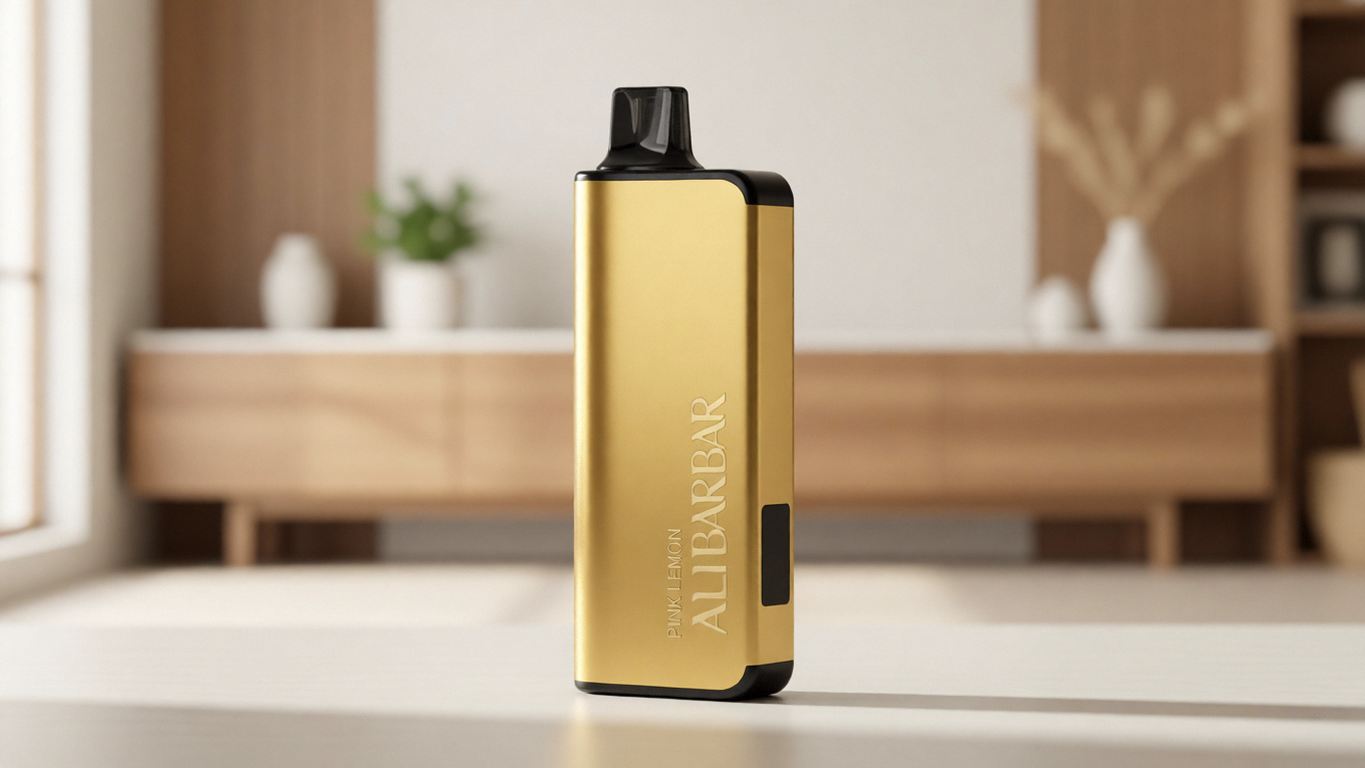
Disposables, such as the ALIBARBAR INGOT 15000, are engineered with a completely enclosed polycarbonate or aluminium shell and a non-removable lithium-polymer cell. The only safe way to destroy such a unit is to first exhaust its battery by using the device until it no longer activates. If the device is already non-functional but the battery may still hold a charge, the safest route is to locate a professional e-waste depot that accepts embedded-battery devices; forced disassembly by the user is strongly discouraged unless you have precise soldering and toxic-material handling skills.
If you must render it physically inoperable (for example, to meet a specific disposal facility’s requirements), do not crush, hammer, or cut it. Instead, after full discharge, use a rotary tool with a cutting disc to carefully remove a small section of the outer shell — in a well-ventilated area, with a fire extinguisher nearby — just enough to visually confirm the battery has been disconnected from the wiring. Then tape the exposed battery terminals and dispose of the entire unit as hazardous electronic waste.
Pod-Based Systems with Replaceable Pods
Devices like the ALIBARBAR Ice Adjust 12000 incorporate a rechargeable lithium-ion cell housed in a modular body, paired with a replaceable pod that contains both the heating coil and e-liquid. Because the power cell is charged externally via USB-C, the safest destruction sequence is:
Remove the pod and set it aside as chemical waste (empty its remaining contents into an absorbent material and seal in a bag).
Fully charge the battery, then run it down completely by activating the device without a pod attached (if the device allows this) or by using the lowest-resistance pod until auto-cutoff. A fully discharged cell at 2.5V or lower presents a significantly reduced fire risk.
For the battery module only: if you have the expertise, disassemble the housing using a spudger and appropriate screwdrivers, disconnect the battery from the board, and tape the terminals. Then recycle the bare cell and circuit board separately according to local e-waste guidelines.
Modular Mods with Removable Batteries
Box mods and tube mods designed for external 18650 cells are the most straightforward to destroy safely, simply because the battery can be extracted in seconds. The process:
Remove the battery and recycle it through a dedicated battery collection point (supermarkets, hardware stores, or council facilities).
Wipe down the battery contacts with a clean cloth to prevent corrosion from any residue.
The mod body itself can be disassembled further: screws hold the 510 connector, chipset, and housing together. The metals (zinc alloy, stainless steel) can go into metal recycling; the circuitry into e-waste.
The key insight here is that destruction is essentially a systematic disassembly for recycling streams. You are not trying to “smash” the device; you are separating it into recyclable fractions.
A Practical Framework for Safe Device Destruction
If you must destroy a vape device and you are not a trained electronics recycler, follow this checklist in order. Every step is designed to minimise the chance of thermal runaway, toxic exposure, or regulatory non-compliance.
Identify the device type. Sealed or user-serviceable? Check the manufacturer’s official specifications. If the battery is embedded, proceed only if you have the right tools and experience; otherwise, skip to step 5.
Discharge the battery completely. Use the device normally until it refuses to fire and the indicator LED gives a low-battery warning. Do not rely on a partially charged cell being “safe enough.”
Gather safety equipment. Nitrile gloves, safety glasses, a non-flammable work surface (concrete or steel table), and a container of sand or a Class D fire extinguisher rated for lithium fires. Do not work near curtains or paper.
Document the state. Take a photograph of the device serial number and condition, especially if destruction is for insurance, warranty, or travel compliance.
Separate consumables. Remove any pod, tank, or cartridge. Treat them as hazardous waste.
Disassemble methodically, not destructively. Use the correct screwdrivers (often T5 or PH00 bits) and plastic pry tools. Never use excessive force; warping the battery can trigger an internal short.
Neutralise battery terminals. Once the cell is free, place a strip of electrical tape over both the positive and negative ends. A single piece of stray wire causing a short during transport can ignite a fire in a recycling truck.
Sort the waste streams. Plastic housing (with battery removed) may go to regular recycling. Circuit boards and wires go to e-waste. Metal chassis go to scrap metal. The taped battery goes to a dedicated lithium-ion recycling point.
Record disposal receipts if required — some insurers or workplace safety officers want proof of compliant destruction.
Ask yourself these diagnostic questions before starting: “If I lose control of this at any step, do I have a way to contain it immediately?” If the answer is no, stop and hand the device to a professional facility. The small fee they charge is far less than the cost of even a minor fire.
Common Destruction Errors and Industry Observations
The following missteps are observed regularly in recycling centres, support forums, and even in some online “how-to” videos. Avoid them categorically.
1. Treating All Devices as Physically Identical
A disposable shaped like a USB stick may look like a solid plastic block, but its battery is often a rectangular pouch cell pressed directly against a soldered wire. Cutting it with kitchen scissors — a real-world advice seen in unverified posts — almost guarantees an instant short circuit, smoke, and possibly burns. Visual similarity does not imply equivalent internal engineering.
2. Overweighting the “Water Soak” Myth
Submerging a lithium battery in water, especially salty water, is sometimes proposed as a way to discharge it safely. In practice, water can corrode terminals unpredictably, create localized short circuits, and generate hydrogen gas from electrolysis. The cell may discharge, or it may overheat and vent in a way that releases flammable electrolyte. Controlled discharge through the device’s own circuitry is the only reliable method.
3. Ignoring Mod Design Trade-Offs
Spring-loaded battery doors on some mods are convenient for quick changes but can become dislodged during rough handling, exposing the contacts. When destroying a mod, always tape over the battery terminals before disposal, even if you think it will sit untouched in a recycling bin. Waste streams are chaotic; compaction equipment can and does crush loose items.
4. Forgetting the E-Liquid’s Persistence
A dab of isopropyl alcohol on a cloth works to clean connectors, but users often flush entire tanks under running water, sending nicotine solution down the drain. In Australia, nicotine is classified as a Schedule 7 poison in concentrations above 100 mg/mL. Even lower concentrations in e-liquid can harm aquatic life. The liquid should be absorbed into kitty litter, coffee grounds, or a commercial absorbent before sealing and disposing in household garbage (where local council regulations permit).
From an industry standpoint, manufacturers are beginning to respond to the disposal challenge. We are seeing early traces of design-for-disassembly in newer product lines, including easier access to internal batteries without destructive methods. However, the vast majority of devices on the market today still treat the battery as a permanent, non-serviceable component. That reality places the burden of safe disposal squarely on the user — which makes understanding these distinctions even more critical.
Frequently Asked Questions
Q: Can I just throw a dead disposable vape in the bin?
A: No. In all Australian states and territories, sealed lithium-ion batteries are classified as e-waste and must be taken to designated collection points. Throwing them in household waste risks fires in collection trucks and landfill, and exposes you to potential fines.
Q: What if my device still turns on but I need to destroy it before a flight?
A: Airlines prohibit devices with embedded batteries from some routes, but for travel safety, a fully discharged device that is disabled may be accepted. Check with your carrier. Never attempt to destroy a device at the airport; do it well in advance using the discharge-first method, and carry documentation of compliant disposal if needed.
Q: Is it safe to cut open the plastic casing of a pod system?
A: Only if you have first confirmed the battery is fully depleted and you use tools that cannot accidentally short the terminals (ceramic scissors, for example). Even then, the risk of cutting into the cell pouch is high. Most users should not attempt this; a licensed recycler is a better choice.
Q: There is data on my device’s chip. How do I erase it before destruction?
A: Some advanced mods store puff counters and settings in non-volatile memory. For those, a factory reset through the device’s menu (if available) is the simplest method. If the device is dead and you are concerned about chip-level data, physical destruction of the circuit board with a drill through the main microcontroller — after removing the battery — renders the data unrecoverable.
Q: I have an ALIBARBAR device. Does the warranty cover end-of-life recycling?
A: The warranty covers manufacturing defects, not disposal. However, OZVAPE Shop provides detailed specifications for all ALIBARBAR products so you can determine the battery type and appropriate recycling stream. We encourage contacting your local e-waste facility for handling instructions.
Q: Can I dismantle an 18650 battery to recycle its components?
A: Absolutely not. Consumer lithium-ion cells are sealed under pressure. Opening them exposes you to toxic electrolyte and the risk of fire or chemical burns. Always recycle the whole cell through a licensed collection network.
Q: My device got wet and stopped working. Is it safe to store it until I can recycle it?
A: A water-damaged battery can develop internal shorts over time. If the device became wet, place it in a fireproof container (like a metal tin with sand) and keep it outdoors, away from anything flammable. Then take it to a hazardous waste depot as soon as possible.
Q: Are there any destruction methods that are completely risk-free for a non-technical person?
A: The only zero-risk approach is to deliver the intact, discharged device to a professional e-waste processor. They have the tools, training, and insurance to disassemble it safely. This is the recommended route for anyone without electronics repair experience.
Q: I’ve heard I can discharge a battery by leaving it in a bowl of saltwater overnight. Is this true?
A: While saline water can slowly discharge a cell through electrolytic action, it is an uncontrolled method that can cause corrosion, gas production, and unintended short circuits. It is not recommended by battery safety organizations. Controlled discharge through the device’s normal function is far safer.
Q: Once I’ve destroyed and recycled my device, how do I avoid this problem with my next purchase?
A: Consider device modularity when selecting a unit. Products with removable, standard-format batteries (like 18650s) make end-of-life handling trivial: you simply take the battery to a recycling bin. At OZVAPE Shop, the product listings highlight whether a device uses an internal or removable power source, helping you make a choice that aligns with your long-term convenience and safety concerns.
The decision to physically destroy a device should never be taken lightly, but when the situation demands it, a methodical, chemistry‑aware approach is the difference between a routine task and a serious accident. The central insight of this guide is that destruction is not about brute force; it is about understanding the engineering inside the casing and respecting the stored energy you cannot see.
Informed users make better decisions. Whether you are decommissioning a single sealed unit or managing a household’s worth of end‑of‑life electronics, applying the framework above keeps you, your property, and the waste stream safe. For those who value quality, serviceable devices and clear, honest information from the point of purchase onward, OZVAPE Shop remains a dependable source for factory‑certified products with fully documented specifications — a solid starting point for responsible use from the first use to the final disposal.
The right destruction method, like the right device, is ultimately the one that matches your actual circumstances and skill level. If there is any doubt, err on the side of professional handling. No one ever regretted handing over a battery to a trained recycler; the opposite cannot always be said.