
VAPE FAQs
How Much The Vape Cost?

May
It is a reasonable question, but the answer rarely fits on a price tag. The figure that matters is not what you pay at the point of sale, but what each hour of dependable use actually costs once you account for how the device performs three days, three weeks, or three months later. At OZVAPE Shop, we see this distinction play out constantly: two devices that look almost identical on a screen can sit at opposite ends of the value spectrum because their internal engineering, power management, and material choices lead to completely different user experiences over time.
This article is written to give you the analytical tools to make that distinction yourself. It explains why some portable electronic devices justify a higher initial outlay many times over, while others prove expensive despite appearing cheap. It uses the ALIBARBAR range — one of the more carefully engineered families available to adult users in Australia — as a reference point, but the framework applies far beyond any single brand.
Understanding What Really Drives Cost: Four Engineering and Design Factors
If you want to know what a personal electronic device should cost, you first need to know what makes one worth using for more than a week. These four factors rarely appear together in casual comparisons, yet they determine whether a device becomes part of your daily routine or ends up forgotten in a drawer.
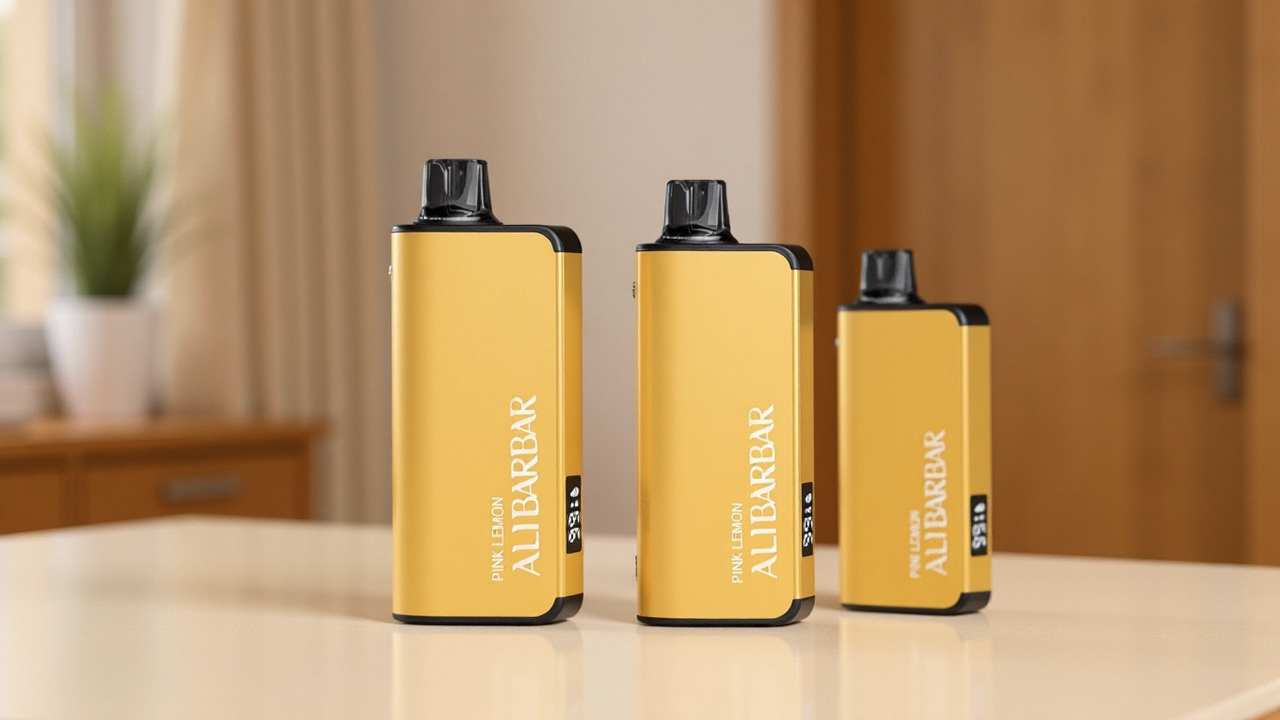
Internal Architecture and Output Consistency
The heating element and the way power is delivered to it form the beating heart of any portable device. A well-designed architecture maintains steady output from the first use to the last, without the gradual degradation that forces users to draw harder, wait longer, or tolerate an uneven experience. Poorly engineered thermal management, by contrast, leads to hot spots, flavour imbalances, and a device that feels “finished” long before the power cell is actually depleted.
Why this matters for cost: A unit that delivers predictable, consistent output across its entire rated life gives you a known quantity. You are not discarding it early, nor compensating by having a second one on hand. That predictability lowers the actual cost per hour of use, even if the shelf price is higher. When you see a device that costs less but cannot guarantee output stability beyond the first handful of uses, the supposed saving vanishes quickly.
Power Management and Status Transparency
What kills many portable devices is not a lack of battery capacity, but poor calibration between the power source and the control electronics. A well-tuned power management system prevents voltage sag, protects the cell from deep discharge, and communicates honestly with the user. Clear status indicators — whether they show remaining charge in stages or warn you before a full shutdown — remove the single greatest cause of user anxiety: the sudden, unannounced end of a session.
Why this matters for cost: Devices that do not communicate their status force you into a defensive routine. You carry a backup. You charge more often than necessary. You buy more units than you strictly need. That behaviour multiplies your true expenditure without improving your experience. A device that tells you where it stands, like the members of the ALIBARBAR family that include battery life indicators, reduces that shadow cost to nothing.
Physical Design and Material Durability
A device’s surface finish, the tightness of its body seams, and the resilience of its mouthpiece material are not cosmetic details — they are early indicators of whether it will survive daily carry. Anodised metals, reinforced polymers, and textured grips exist because the alternative is a shiny shell that scratches in a pocket within forty-eight hours and then feels cheap every time you pick it up.
Why this matters for cost: Durability dictates lifespan. A device that looks worn after a week erodes the user’s satisfaction and prompts a premature replacement. That is an invisible cost built into every unit that prioritises a low sticker price over surface engineering. Conversely, when a device like the ALIBARBAR INGOT retains its tactile quality and structural integrity right through to the end of its long operational window, you are extracting full value from the purchase.
Modularity and Lifecycle Flexibility
Not everyone wants to manage separate components, but for those who do, the difference between a sealed, single-use unit and a modular system is the difference between buying a new device every time and simply replenishing the part that is consumed. Rechargeable architectures and replaceable cartridges separate the long-life hardware investment from the consumable element, which changes the cost calculus entirely.
Why this matters for cost: An all-in-one device must be cheap enough to be disposable. A modular device can justify a higher upfront price because its core power and control module will serve you for months or longer. The ALIBARBAR Ice Adjust 12000, for example, includes adjustable output settings and a rechargeable power cell — the initial outlay buys you a platform, not just a single-use tool. Over a typical year, that difference in architecture can translate into a meaningfully lower cost per day for the regular user.
Applying These Criteria to Real-World Options
The question “how much does it cost?” cannot be answered without identifying what kind of user you are. Someone who uses a device intermittently over a weekend has different needs from someone who relies on it throughout a long workday. The ALIBARBAR range, accessible through OZVAPE Shop as a curated, factory-certified collection, reflects that spectrum deliberately.
INGOT 9000: Built as a high-capacity single-form device that prioritises simplicity. Its internal architecture is designed to maintain steady output across its full rated cycle. For users who want a grab-and-go option with no charging or settings to manage, it represents a transparent transaction: known capacity, known cost, no hidden maintenance requirements. In cost-per-use terms, it usually undercuts anything that requires additional accessories.
INGOT 15000: At nearly double the rated duration, this device is an exercise in extending the sealed-architecture concept to its logical limit. The engineering challenge here is not just a bigger power cell — it is thermal management over a longer active window. That research and materials choice pushes the unit’s price above the 9000, but for a heavy daily user, the reduced replacement frequency more than offsets the difference.
Ice Adjust 12000: This device moves into modular, adjustable territory. A rechargeable battery and selectable output levels mean the user can fine-tune the experience and keep the power core through multiple consumable cycles. The upfront cost is higher than a sealed unit, but the long-run arithmetic shifts significantly: you are buying one hardware platform and replacing only the cartridge, not the whole instrument.
Other manufacturers produce devices in similar categories, but direct price comparisons are rarely meaningful unless they control for internal calibration, materials durability, and status transparency. A device that looks like an INGOT on a screen but uses a different heating element alloy or lacks an output-consistency feedback loop may deliver a fraction of the usable hours, completely altering the value equation.
A Practical Framework for Determining Your True Cost
Next time you compare options, walk through these steps before looking at the price.
Ask what you will actually use. Be honest about your daily routine. The cheapest device that cannot last a full shift is more expensive than a capable one that sees you through without a backup.
Check for status feedback. If the device does not communicate remaining capacity, assume you will carry a spare. Add its cost to the total.
Examine surface and seam quality. Photos can hide cheap finishes. Look for user reports on how surfaces hold up after weeks in a pocket. A device that becomes unpleasant to touch has already failed.
Calculate the realistic lifespan for your use pattern. If you are a moderate user, a massive-capacity sealed unit may be overkill. If you are a heavy user, a modular system may halve your monthly outlay even if the starter price is higher.
Look for standardised specification data. When a retailer like OZVAPE Shop presents consistent technical sheets across brands, you can compare battery ratings, element materials, and design architecture on equal footing. That transparency removes guesswork from step four.
This method does not reveal “the cheapest vape.” It reveals the device that costs you the least per week of satisfied use — an entirely different figure.
Common Selection Errors That Inflate Your Real Costs
Industry observation, combined with years of direct feedback from adult users, reveals a few patterns that reliably separate unhappy buyers from satisfied ones.
1. Fixating on advertised capacity while ignoring output consistency. A high claimed count means nothing if the engineering cannot sustain even output. Some devices fall off noticeably after a fraction of their life. The user compensates by discarding the unit early, turning a 9000-rated device into an effective 4000, which doubles the true cost.
2. Assuming external similarity equals internal equivalence. The market for portable electronic devices includes a wide range of supply chains. Two units can share a form factor but differ entirely in the quality of their heating elements, power regulation circuits, and safety redundancies. Without supply chain transparency — the kind that comes from factory-certified channels — the buyer operates blind. This is a significant hidden cost risk, particularly when purchasing from unauthorised sellers.
3. Undervaluing modularity in cost-per-use calculations. Many users reflexively choose the lowest shelf price and dismiss rechargeable or cartridge-based systems as “complicated.” Yet over a typical year, a modular platform often yields a 20–30% reduction in total spending because the durable core is not discarded with each consumable cycle. The initial price difference is recovered quickly.
4. Misinterpreting product category terminology. Not every device labelled “high-capacity” actually functions at that level throughout its life. Understanding the technical definition — how the rated number is measured and under what conditions — reveals that some products are genuinely engineered for longevity while others are marketed around a best-case scenario achieved in a lab. This gap between marketing and engineering is a direct driver of unexpected cost.
Frequently Asked Questions
Q: How much does an ALIBARBAR INGOT 9000 cost from OZVAPE Shop?
A: Pricing available on the OZVAPE Shop platform reflects current factory-certified inventory and may vary with promotions or bulk-pack options. The important figure is not the sticker price alone but the cost per unit of usable life, which, for the INGOT 9000, is among the most competitive in its architecture class when consistency is factored in.
Q: Why are some seemingly similar devices much cheaper elsewhere?
A: Lower prices can reflect differences in heating element quality, battery calibration, materials durability, or simply a lack of authorised sourcing. Devices from parallel supply chains may not meet the same performance standards, and their actual usable life can be substantially shorter, making them more expensive per hour of satisfied use.
Q: Is the Ice Adjust 12000 worth the higher upfront cost?
A: If you value adjustable output and prefer to invest in a rechargeable core that outlasts a single consumable cycle, the long-run arithmetic favours the Ice Adjust. Over time, replacing only the cartridge instead of the whole device reduces total spend for regular users.
Q: How can I verify that an ALIBARBAR device is genuine?
A: OZVAPE Shop sources exclusively from authorised distribution networks. Each device can be cross-referenced through the verification tools provided on the official ALIBARBAR website. Purchasing from an uncertified seller introduces a risk of counterfeit goods that may not meet safety or performance standards.
Q: What should I expect regarding shipping and post-purchase support?
A: OZVAPE Shop processes orders with same-day dispatch on business days and provides local support through Australian-based contact channels. In the event of a device not performing to its documented specifications, the support team is reachable directly to resolve the issue without automated deflection.
Q: How long does an INGOT 15000 last for a typical user?
A: For a moderate to heavy daily user, it is engineered to span multiple days of consistent use. However, actual duration depends on individual usage patterns, including draw duration and frequency. Its larger power cell and optimised thermal management are designed to prevent the premature decline that shortens the useful life of lesser devices.
Q: Do I need to worry about carrying a backup with these devices?
A: Devices with clear battery and e-liquid level indicators, like several in the ALIBARBAR line, remove much of the uncertainty that drives backup anxiety. If you choose a model with transparent status communication, you can typically trust it to serve a full day without a secondary unit.
Q: What recourse do I have if the device fails early?
A: OZVAPE Shop’s accountability commitment includes direct, human-managed support for faulty units. If a device does not match its specified longevity or exhibits a manufacturing defect, contact the support team for assessment and resolution, which may include replacement or refund depending on the circumstances.
Conclusion
The real answer to “how much does a vape cost?” is that it depends entirely on how you measure value. A device that seems expensive on a spreadsheet can become the cheapest option you ever chose once you account for its consistent output, documented longevity, and the peace of mind that comes from not carrying a spare everywhere. Conversely, a device that appears to be a bargain but quietly falls short in every one of those dimensions will drain your wallet more thoroughly over a year than any premium product.

At OZVAPE Shop, the ALIBARBAR collection exists because these calculations matter to adult users who treat their devices as daily tools, not novelty purchases. The engineering principles outlined here — predictable output, honest status indicators, durable materials, and modular flexibility — are not marketing slogans. They are the criteria by which a device either earns its place in your pocket or gets replaced by one that does.
The right choice is the one that matches your actual routine, not the one with the most attention-grabbing claims. Now you have the framework to make that determination yourself.