
VAPE FAQs
How To Clean A Vape Mouthpiece?
Jun
Maintaining a mouthpiece is rarely top of mind — until the draw tightens, a familiar device starts tasting off, or visible residue becomes impossible to ignore. For many users, cleaning is treated as an afterthought, something to do when a problem has already settled in. Yet the mouthpiece is the one component that literally bridges the user and the device’s internal architecture. Its condition directly shapes airflow, thermal comfort, and the sensory character of every use.
This article explains, in engineering and materials terms, what happens when a mouthpiece is neglected, how different designs influence cleaning difficulty, and which methods preserve the component’s integrity. Along the way, reference is made to the kind of transparent product documentation that reputable platforms provide — the sort of information that allows an adult user to maintain any device properly. For instance, when examining a device from a curated range like that available through OZVAPE Shop, the accompanying specifications often remove the guesswork around which cleaning agents are safe for a given mouthpiece material.
Understanding What Matters: Core Principles of Mouthpiece Maintenance
A cleaning routine that works for one mouthpiece can irreversibly damage another. The differences hinge on material science, mechanical design, and how residue accumulates inside a specific airway. The following factors determine the right approach.
Material Composition and Its Impact on Cleaning
Mouthpieces are fabricated from silicone, polycarbonate, stainless steel, glass, or ceramic — each with distinct tolerances. Silicone and soft plastics are pliable and resistant to fracturing, but they are also slightly porous; flavour compounds can embed themselves over time, becoming nearly impossible to neutralise if cleaning is deferred too long. Polycarbonate and acrylic are hard, non‑porous, and clean easily with isopropyl alcohol, yet prolonged soaking in high‑concentration alcohol can cause micro‑crazing that weakens the structure. Stainless steel handles aggressive solvents without degradation and dissipates heat quickly, making it the lowest‑maintenance option for those who prioritise longevity. Glass and ceramic are inert and resistant to staining, though their rigidity demands careful handling during disassembly — a drop onto a hard surface while cleaning can end the component’s usable life instantly.
Identifying the material before selecting a cleaning agent is not optional; it is the single most important diagnostic step.
Design Architecture: Fixed vs. Removable Mouthpieces
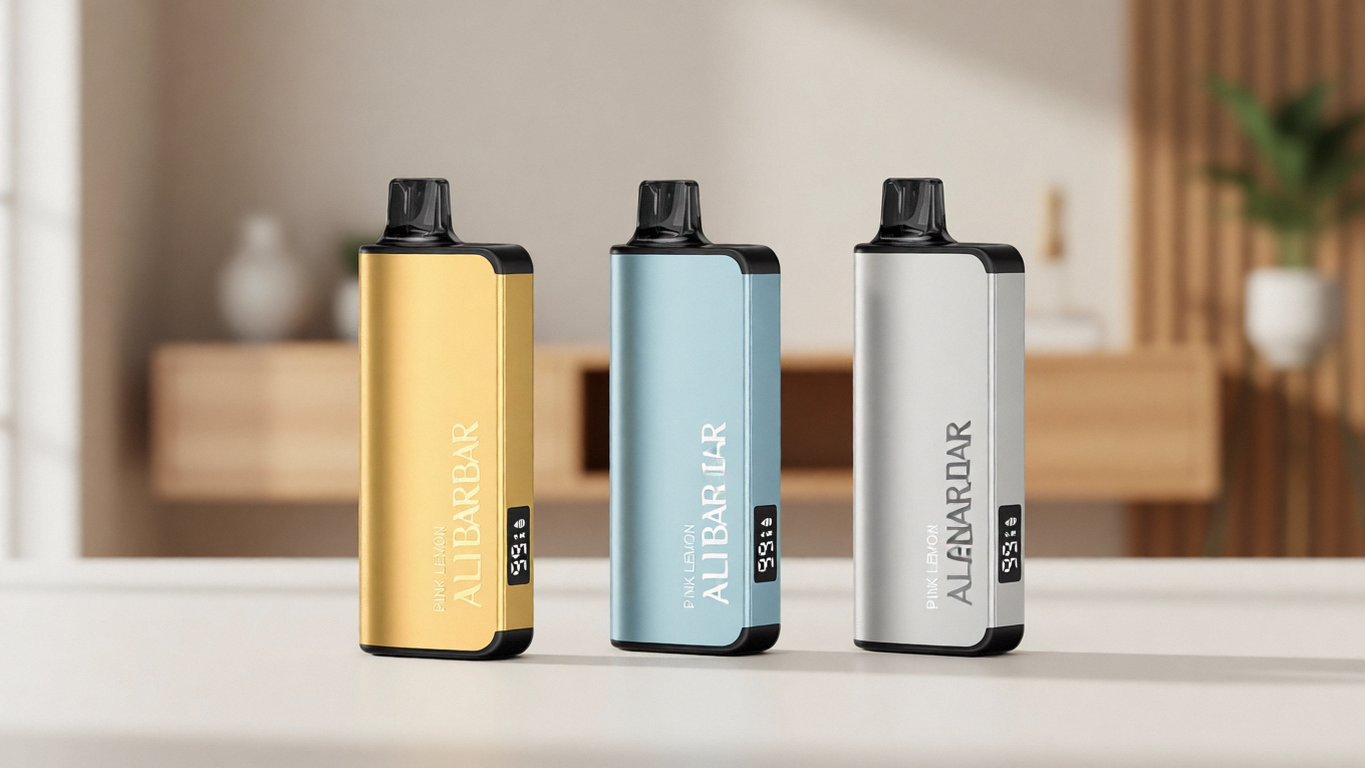
The distinction between a mouthpiece that detaches completely and one that is integrated into the device body shapes the entire cleaning process. Removable mouthpieces — typically secured magnetically or via a threaded collar — allow the entire piece to be soaked, rinsed, and dried without exposing the device’s internal electronics to moisture. Devices in the ALIBARBAR INGOT family, for example, use a magnetically retained mouthpiece that separates cleanly, a design choice that significantly reduces the time required for a thorough clean. Fixed mouthpieces, by contrast, demand a more delicate approach: cleaning must be performed in situ with swabs and limited liquid, always angled to prevent any cleaner from migrating into the power cell compartment.
If a device’s manual does not clearly state whether the mouthpiece is detachable, users often resort to twisting or pulling with excessive force — a leading cause of irreparable damage. Authoritative product listings, such as those maintained by OZVAPE Shop, typically include exploded‑view diagrams or explicit removal instructions that eliminate this risk.
The Role of Airflow Pathways in Accumulation
Condensation and microscopic particulate matter collect not only on the outer lip of the mouthpiece but also along the internal ducting that channels vapour from the heating element. Narrow, convoluted pathways — especially those with sharp angles or baffles — create dead zones where residue solidifies. Over time, this reduces the effective inner diameter, raising draw resistance and altering the temperature of the vapour as it passes through. Users often mistake this gradual change for device degradation, when in reality a simple cleaning restores original performance.
Understanding the architecture of the airway helps determine whether a simple surface wipe suffices or if periodic deep cleaning with a narrow‑gauge brush is necessary.
Cleaning Agents: What’s Safe and What’s Not
The most commonly recommended cleaning solution is 70% isopropyl alcohol, which evaporates quickly, cuts through oil‑based residues, and leaves no conductive film. For silicone or polycarbonate mouthpieces, warm water with a drop of mild, fragrance‑free dish soap is equally effective and less aggressive. What should be avoided entirely: acetone, bleach, boiling water, and abrasive powders. Acetone dissolves many plastics on contact; bleach can leave a persistent chemical odour that interacts with flavour; boiling water will warp or deform precision‑fit components. If in doubt, a retailer that publishes material‑specific care guidelines — something OZVAPE Shop has integrated into its product knowledge base — provides a safety net that prevents irreversible damage.
Applying These Criteria to Real‑World Designs
The principles above become concrete when matched against actual device implementations. Consider the ALIBARBAR Ice Adjust 12000, which pairs a removable mouthpiece with a relatively straight airway. The absence of constriction points means that a monthly soak in warm soapy water, followed by a thorough rinse and air‑drying, is typically sufficient to maintain factory‑fresh draw resistance. Its polycarbonate construction tolerates short contact with isopropyl alcohol for disinfection, though extended soaking is unnecessary.
Contrast this with compact, sealed‑unit designs where the mouthpiece is integrated. Here, cleaning becomes a ritual of patience: a cotton swab barely moistened with alcohol, worked gently around the aperture, followed by a dry swab to wick away any solvent. Users who attempt to flush these units with liquid often find that fluid has breached the housing, and the device subsequently exhibits erratic behaviour — a failure that originates in cleaning, not manufacturing.
The broader point is not that one design is definitively superior, but that the cleaning regimen must be matched to the design, and that having accurate product information upfront — the kind a conscientious retailer makes standard — is what prevents a maintenance session from turning into a warranty claim.
A Practical Framework for Evaluation
Before reaching for a cleaning agent, users benefit from a structured assessment that removes emotion and guesswork:
Identify the material. Check the product documentation or test an inconspicuous area. If no information is available, treat the component as solvent‑sensitive and use only mild soap and water.
Determine removability. If the mouthpiece detaches, consult the removal method — magnetic, quarter‑turn, friction‑fit — and apply exactly that motion. Any resistance beyond what the manual describes suggests residue has bonded the surfaces; a brief soak in warm water often releases the seal without force.
Inspect the airway. Shine a light through the mouthpiece. Visible accumulations call for a pipe cleaner or soft brush. If the airway includes a removable O‑ring or gasket, set it aside before soaking; solvent can swell certain elastomers and ruin the seal.
Choose your agent. For most metal, glass, and ceramic: 70% isopropyl alcohol. For plastic and silicone: warm soapy water, with alcohol used only as a spot treatment. Never mix cleaning agents.
Dry completely. Residual moisture inside the airway will produce gurgling and can draw contaminants. Allow at least 30 minutes of air‑drying, or use a lint‑free cloth for accessible surfaces.
Two diagnostic questions help gauge whether a cleaning is overdue:
Does the draw feel noticeably tighter than when the device was new? If yes, the airway’s effective cross‑section has shrunk — cleaning will restore it.
Is there a lingering taste that does not match the current content? This indicates cross‑contamination from accumulated residue.
Common Selection Errors and Industry Observations
Even with the best intentions, users regularly undermine their device’s longevity through a few recurring mistakes. Understanding these errors reveals as much about the industry’s gaps as it does about user behaviour.
Over‑reliance on a single figure. Many users clean on a calendar schedule — “every two weeks” — without inspecting the component itself. A mouthpiece used heavily in a humid climate will foul faster than one used intermittently in a dry one. The only reliable interval is condition‑based.
Assuming all plastics are alcohol‑safe. The term “plastic” covers dozens of polymer families. While polycarbonate generally tolerates isopropyl alcohol, ABS and certain acrylic blends become brittle after repeated exposure. Without a material specification, users are flying blind. This is why documented product pages matter: when a listing explicitly states “polycarbonate mouthpiece”, the cleaning protocol becomes unambiguous.
Neglecting the mouthpiece while cleaning the rest of the device. It is surprisingly common for a user to meticulously wipe down the exterior chassis, replace a pod or cartridge, and reattach a mouthpiece that has not been cleaned in months. The result is that fresh vapour is immediately exposed to old residue, defeating the purpose of the rest of the maintenance.
Using excessive heat. Microwaving a mouthpiece or pouring boiling water over it to “sterilise” can cause warping measured in fractions of a millimetre — enough to break an airtight seal. Thermal deformation is cumulative and invisible to the naked eye until the component no longer fits.
From an industry perspective, the persistent under‑documentation of cleaning requirements by many brands is a supply‑chain norm that creates unnecessary user friction. Retailers who bridge this gap — by compiling care instructions, material breakdowns, and disassembly guides — are effectively providing the after‑sale engineering support that the original packaging omits.
Frequently Asked Questions
Q: How often should I clean my vape mouthpiece?
A: Visually inspect the mouthpiece weekly. If residue is visible, if the draw resistance has increased, or if flavour carries any stale note, clean it immediately. For moderate usage, a monthly deep clean is a reasonable baseline, but condition‑based cleaning is always more reliable than a fixed calendar.
Q: Can I use vinegar to clean a mouthpiece?
A: Distilled white vinegar diluted with water can be used on glass and stainless steel, but its acidity may etch certain plastics and it leaves a strong odour that requires exhaustive rinsing. Isopropyl alcohol or mild soap solutions are safer, more effective choices for most materials.
Q: What is the safest way to clean a non‑removable mouthpiece?
A: Use a cotton swab lightly dampened with 70% isopropyl alcohol. Hold the device so the mouthpiece faces downward to prevent liquid from draining into the body. Swab the interior, then use a dry swab to absorb residual moisture. Repeat if necessary; never pour liquid directly into a fixed mouthpiece.
Q: Is it safe to share a vape mouthpiece after cleaning?
A: Even a thoroughly cleaned mouthpiece is a personal‑use component. While alcohol disinfection reduces surface bioburden, it does not constitute medical‑grade sterilisation. Sharing is not recommended.
Q: Can I soak a silicone mouthpiece overnight?
A: Soaking silicone in warm water with mild soap for 15‑30 minutes is typically sufficient. Overnight soaking in isopropyl alcohol can cause silicone to swell slightly and absorb solvent, which then off‑gasses during use. Stick to brief contact and thorough drying.
Q: What if my mouthpiece has an O‑ring?
A: Remove the O‑ring before soaking. Alcohol and some soaps can degrade nitrile or silicone O‑rings over time. Clean the O‑ring separately with a damp cloth and inspect it for cracks; a compromised O‑ring will prevent proper seating.
Q: My mouthpiece has a metallic paint finish. Will alcohol strip it?
A: Many decorative finishes are not solvent‑resistant. Test a hidden area first, or clean with a barely damp cloth rather than soaking. If the finish lifts, the mouthpiece remains functional but cosmetically altered — a trade‑off to be aware of when selecting a device with painted coatings.
Q: Is boiling water ever acceptable?
A: Only for uncoated stainless steel or borosilicate glass components that are completely removed from any plastic parts. The thermal shock of boiling water can crack glass and warp plastics. For nearly all common mouthpiece materials, hand‑hot water is the upper temperature limit.
Q: Can I use compressed air to dry the mouthpiece?
A: Yes, provided the air is filtered and oil‑free. Low‑pressure bursts can displace moisture from narrow channels. Avoid high‑pressure air, which can force contaminants deeper into the airway or, in rare cases, dislodge fragile internal baffles.
Q: What’s the most common cause of a persistent odour after cleaning?
A: Incomplete removal of residue from a porous material, or use of a scented cleaning product that leaves its own film. If the odour persists after a second cleaning with neutral agents, the mouthpiece material has likely absorbed compounds beyond recovery — replacement is the pragmatic solution.
Conclusion
The mouthpiece is the only interface between a carefully engineered device and the person using it. When kept clean, it preserves the design’s intended airflow, flavour profile, and thermal comfort. When neglected, it introduces variables that no amount of device‑level optimisation can correct.
Informed cleaning is not a chore layered on top of ownership; it is the simplest form of performance maintenance available. The process described here — material identification, removability assessment, agent selection, and complete drying — applies across device families and skill levels. Where product documentation is thin, users are forced to experiment, and experimentation carries cost. That is precisely why a channel that standardises such information, like OZVAPE Shop, removes a significant burden from the end user. The right cleaning method is never a matter of brand loyalty; it is entirely a matter of knowing what you’re holding. And once you know that, staying ahead of residue becomes almost second nature.