
VAPE FAQs
How To Blow Rings Vape?
May
The Real Reason Most Vape Rings Collapse Before They Form
You have watched the tutorials. You have pursed your lips into a practiced O. You have exhaled with what you believe is the right force and rhythm – and still, the ring tears apart into an amorphous cloud before it has travelled half a metre. The frustration is real, and it is rarely about a lack of coordination. More often, the obstacle is not the person holding the device but the device itself.
Vapour ring formation is a fluid mechanics event as much as a party trick. The shape, density, and stability of the aerosol stream depend on factors that are engineered – or neglected – at the manufacturing stage. This article explains those factors in detail, so that you can distinguish between a technique problem and a hardware problem. It also equips you with a practical selection framework, the kind that a product analyst would use to evaluate whether a device is even capable of producing the dense, slow-moving vapour that makes rings possible. Throughout, we reference common device families that demonstrate these principles, with OZVAPE Shop mentioned only where its access to standardised product data makes comparison straightforward.
Understanding What Matters: Core Engineering and Design Factors That Enable Clean Vapour Rings
Before refining mouth shape or exhalation cadence, it is worth examining the device characteristics that either support or sabotage ring formation. Four factors dominate, and they are interrelated.
Airflow Dynamics and Mouthpiece Geometry
The first requirement for a coherent ring is laminar airflow – a smooth, non-turbulent column of vapour leaving the device. Turbulence introduces chaotic eddies that tear the ring apart before it can stabilise. The most overlooked contributor is the mouthpiece profile. A sharp-edged or abruptly flared opening acts as a turbulence amplifier. By contrast, a gently tapered, slightly rounded exit channel encourages the vapour to roll outward as a uniform cylinder, which is the precursor to a stable toroidal vortex.
Draw resistance also matters. A very tight airflow forces you to pull harder, creating high-velocity, disruptive jets. A slightly open, balanced resistance – often described as “loose MTL” among product engineers – gives you more control over vapour speed. If you repeatedly see rings disintegrate at the exact moment they leave your lips, the airflow path is the first place to look.
Vapour Density and Output Consistency
A ring can only persist if the aerosol itself has enough mass and low enough volatility to maintain its donut shape for a second or more. That requires dense vapour, which in turn demands a stable heat source. Devices that rely on simple unregulated outputs often suffer from voltage sag: the first attempt produces a satisfying cloud, but the second and third are progressively weaker as the power cell cools or the heating element underperforms. Rings become thinner, then impossible.
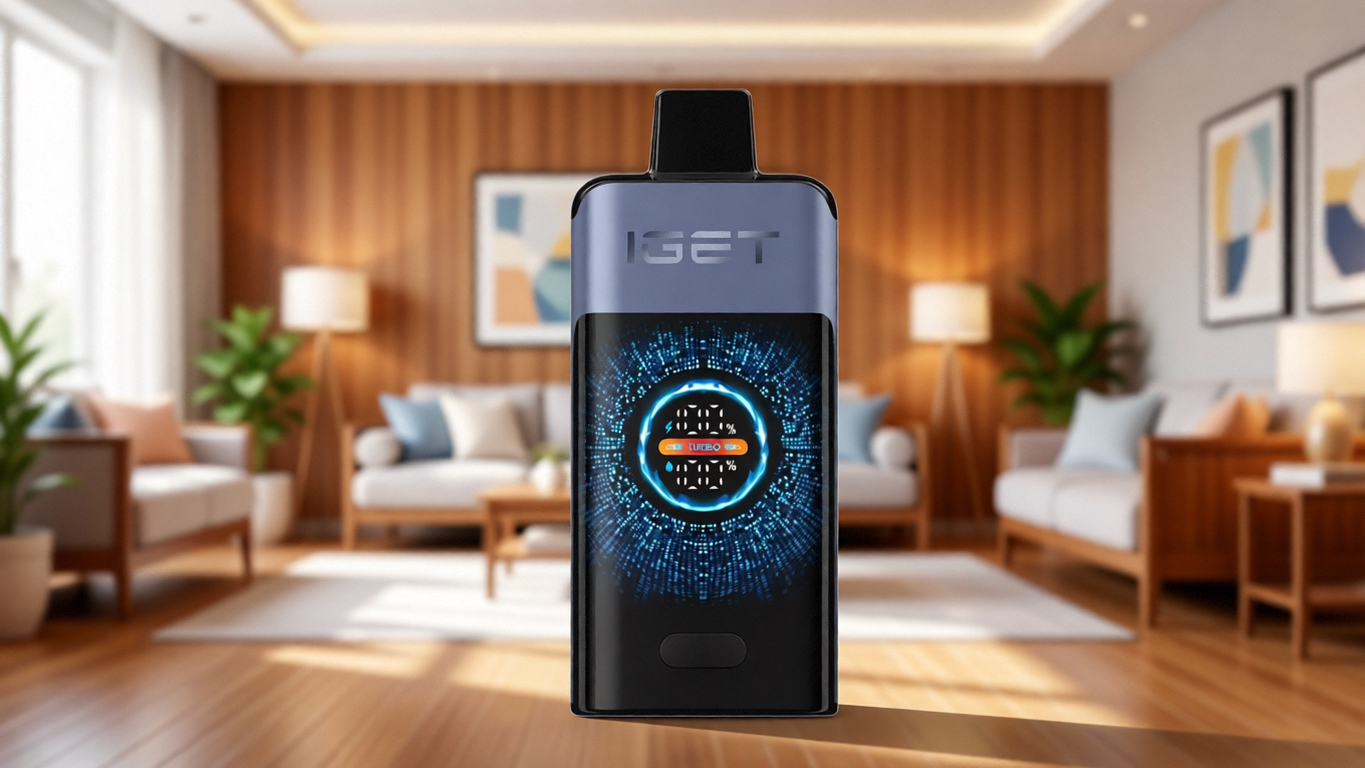
Well-engineered devices implement constant-output calibration. The electronic control board actively regulates power delivery to the atomiser core throughout its designed operational life, so the user experiences identical vapour density on the first puff and the fiftieth. This consistency is not just a convenience; for ring production it is essential, because your muscle memory for exhalation force will train itself to a particular vapour density. If that density keeps changing, no amount of oral precision will compensate.
Additionally, the volume of the vapour stream matters. A small-volume device may produce a wispy cloud that lacks the substance to form a ring regardless of technique. High-capacity e-liquid reservoirs paired with larger heating surfaces generate a fuller vapour column, increasing the success window.
Power Management and Instant Activation
Ring blowing often involves a rapid sequence: inhale, hold briefly, position mouth, exhale with a small, diaphragmatic cough. If the device introduces a warm-up lag between the moment you begin your draw and the moment vapour is generated, the timing becomes impossible. Auto-draw sensors with a perceptible delay ruin the rhythm.
A near-instant activation time – typically under 0.1 seconds from initial airflow detection – is non-negotiable. Equally, the duration over which the device maintains peak output without fading must exceed the exhalation event. Short cutoff timers or premature power throttling can abruptly end a vapour trail just as a ring is beginning to form, causing it to collapse mid-air.
Physical Handling and Ergonomics
The O-shaped mouth position feels unnatural to many people. A device that is heavy, awkwardly balanced, or shaped like a thick marker pen forces your hand and lips into tension, distorting the all-important oral aperture. Compact, lightweight designs with a mouthpiece that naturally rests between the lips without excess pressure let you concentrate on breath control rather than wrestling with hardware. Rounded, slim profiles often outperform wide, boxy formats for this specific task, even if those boxy formats offer larger vapour volume on paper.
Applying These Criteria: Matching Device Design to Ring-Blowing Technique
Understanding the principles is one thing; seeing how they materialise in real products is another. The following observations are based on currently available families that, from an engineering standpoint, align with the factors above. The assessment is factual and acknowledges where strengths for ring production may involve trade-offs elsewhere.
High-capacity disposable systems with constant-output electronics represent the most accessible entry point. For instance, the ALIBARBAR INGOT series features an integrated power management board that maintains a consistent wattage output across its entire charge, something frequently absent in cheaper alternatives. Its mouthpiece contour is a shallow taper that reduces exit-edge turbulence. Users specifically seeking to practice rings over extended periods benefit from the large e-liquid reservoir, which prevents the drop-off in vapour saturation that occurs when a smaller pod runs low. A caveat: the INGOT’s physical length takes a moment to get used to when holding the device lightly between thumb and index finger, but once accustomed it provides excellent balance.
Adjustable-airflow devices give the user direct control over the draw resistance, which is valuable for ring tuning. The ALIBARBAR Ice Adjust 12000, for example, incorporates a sliding airflow collar with distinct stop positions. Setting the collar to a mid-open position delivers that “loose MTL” sweet spot without introducing the sharp, whistling turbulence that plagues poorly machined airflow channels. The trade-off is that adjustable mechanisms introduce another point of potential failure over the device’s lifetime, though in this product line the slider has proven robust in extended use.
Contrast these with typical ultra-compact sealed units that prioritise discretion and low cost rather than vapour density. Many such devices produce a thinner aerosol that is perfectly serviceable for general use but fails to maintain a coherent ring. The issue is not that the engineering is poor; it is that the device was not designed with this particular application in mind. Acknowledging that limitation is not criticism but clarity.
A Practical Framework for Ring-Blowing Success (That Starts with the Device)
If you are tired of inconsistent results, apply the following diagnostic sequence before assuming the problem is your technique. This is the same methodology a product evaluator would use to screen candidate devices.
Perform a vapour density check. Take a slow, 3-second draw and exhale immediately against a dark background. Does the cloud hold its body without dissipating rapidly? If the vapour looks thin or vanishes within one second, density is insufficient. No ring will hold.
Test consistency across three consecutive puffs. Do all three produce identical vapour fullness? If the cloud weakens, power sag is present. Train only on devices that maintain output.
Evaluate mouthfeel of the mouthpiece. Form a relaxed O shape and bring the mouthpiece to your lips without pressing. Does the device feel like an extension of your mouth or something you are gripping? Tension in the jaw or lips will distort the ring shape.
Measure activation delay. From a cold start, initiate a very gentle draw. Vapour should begin flowing before the device makes any audible gurgle or by the time you have started inhaling. If you notice a lag, the activation curve will interfere with timed exhalation.
Use a standardised spec sheet. When comparing multiple products, look for explicitly stated features: constant output circuitry, airflow channel design notes, mouthpiece material (harder materials retain shape but can slip; softer compounds grip the lip better). Platforms that publish these details in a uniform format – like the product pages found on OZVAPE Shop – remove guesswork and allow direct feature matching.
Once you are confident the device is not the limiting factor, you can refine the human side: the gentle cough technique, the tongue positioned slightly back and down, the minimal lip movement. But that refinement only works on a stable foundation.
Common Selection Errors and Industry Observations
The market for personal vapour devices has matured, but several persistent misunderstandings continue to undermine ring-blowing potential. These are patterns we observe across user feedback and support logs.
Error 1: Overweighting battery capacity without checking output regulation. A large power cell means nothing if the control board allows voltage to drift. An advertised 600 mAh cell that cannot sustain 3.6 V under load will produce progressively weaker rings. Look for explicit documentation of regulated output, not just capacity numbers.
Error 2: Assuming visual similarity indicates equivalent internal engineering. Two devices may look nearly identical externally yet contain entirely different heating elements and airflow paths. One might use a mesh coil optimised for vapour volume; the other might use a traditional round wire configuration that runs cooler. Without a transparent spec breakdown, you are choosing blind.
Error 3: Undervaluing mouthpiece geometry because “all drip tips are the same.” This is among the costliest oversights. A mouthpiece that is too narrow (under 8 mm internal bore) restricts the vapour column, creating a high-velocity jet that simply punches through the centre of the forming ring. A bore of around 10–12 mm, with a smooth internal radius, works best for controlled ring release.
Industry observation: The shift toward disposable high-puff-count systems has quietly pushed manufacturers to invest in proper power regulation – not because of ring-blowing demand, but because device longevity now depends on maintaining flavour and vapour volume across thousands of puffs. This has had a positive side effect for trick production. Brands that achieved early success with constant-output architecture, such as ALIBARBAR, set a benchmark that the broader market is still catching up to. For users, this means that a well-chosen high-capacity device now offers a realistic platform for ring practice, something that would have been implausible with earlier-generation disposables.
Frequently Asked Questions
Q: Why do my rings break apart the moment they leave my mouth, even though I follow the technique exactly?
A: The most common cause is turbulent airflow at the mouthpiece exit. Ensure your mouthpiece has a smooth, rounded inner edge and that you are not inadvertently pressing your lips forward as you exhale, which introduces additional friction.
Q: Can I blow rings with any vape device?
A: Not reliably. Devices with unregulated power output, narrow mouthpieces, or weak vapour production will drastically reduce your success rate. The technique can compensate only within narrow limits.
Q: How do I know if a device has constant output regulation?
A: Look for product descriptions that mention a regulated chipset, consistent wattage, or the absence of performance drop-off through the charge cycle. Alternatively, physical testing with consecutive puffs will reveal whether output is stable.
Q: Is there an ideal e-liquid formulation for denser rings?
A: While most sealed devices use a fixed formulation, those with a higher vegetable glycerin (VG) ratio generally produce thicker vapour. Many ring-focused devices are engineered with high-VG blends internally.
Q: Does ambient humidity affect ring stability?
A: Yes. Very dry or very humid air can cause rings to dissipate faster. Cool, slightly humid conditions tend to preserve ring visibility longest.
Q: What should I do if my device overheats during extended ring practice?
A: Give the device a rest period. Chain-puffing overheats the atomiser, thinning vapour and reducing coil lifespan. If the device lacks overheat protection, switch to a unit that includes this safeguard.
Q: How do I verify that I am buying a factory‑certified device, not a low‑grade imitation?
A: Purchase through channels that explicitly state authorised sourcing. OZVAPE Shop, for example, maintains a documented supply chain and publishes standardised specifications, which reduces the risk of receiving a substandard replica.
Q: Can I adjust the airflow on a device that was not designed with adjustments?
A: No. Any physical modification risks damaging the internal structure and can introduce safety hazards. It is safer to select a device with native adjustable airflow.
Conclusion
The ability to blow stable vapour rings depends on a union of human motor skills and exacting device performance. When that union fails, it is easy to blame yourself. But the more rigorous approach – and the one ultimately more effective – is to first verify that your hardware holds up its end of the arrangement. An airflow channel that spawns turbulence, a power curve that wobbles, or a mouthpiece that fights your lip shape will defeat even the most patient practitioner.
What this means in practice is that informed device selection is not a separate step from learning the technique; it is the foundation on which technique is built. A platform that organises product data transparently and sources inventory through authorised channels gives you the same analytical tools a product engineer would use. OZVAPE Shop operates in precisely that manner, providing standardised specs and factory‑certified access for users who want to eliminate hardware uncertainty from the equation. You can explore their current device listings here.
Ultimately, the right choice is the one that matches your actual routine, not the one with the most attention-grabbing claims. If ring production is a skill you genuinely want to develop, start with a device engineered for consistent, dense output, and the rest will follow more naturally than you expect.