
VAPE FAQs
Does Vape Get People High?
May
The question seems simple: Does vape get people high? In practice, it is one of the most persistent sources of confusion among adult users and those observing the market from the outside. The confusion does not arise from a lack of information but from a category collision — a term that once described a specific technical process now functions as a cultural umbrella, covering a broad spectrum of devices, substances, and intended effects. Answering the question honestly requires separating the engineering reality from the shorthand, and that is what this article sets out to do.
For anyone trying to make an informed decision about personal electronic devices, the distinction matters. A device designed for one purpose cannot safely or reliably perform another, and treating all portable heating tools as interchangeable leads to frustration, wasted spending, and a misunderstanding of what the product in your hand is actually built to do. At OZVAPE Shop, we see this confusion play out regularly in customer enquiries, which is why we believe a direct, technically grounded explanation serves adult users far better than polite evasion.
Understanding the Mechanism: Why the Substance Defines the Experience
Before discussing any specific product or device family, it is necessary to understand the basic thermodynamic principle that governs every device in this category: a portable electronic heating tool does not generate an effect; it delivers one. The effect is predetermined by whatever material the device is designed to process.
The Two Fundamentally Different Paths
Consumer-grade portable heating devices generally fall into one of two architectures based on the target substance:
Devices built for nicotine-containing formulations. These use a wicking system to draw a liquid solution across a calibrated heating element, producing an inhalable aerosol. The active compound is nicotine, a stimulant that produces mild, short-lived physiological arousal — increased heart rate, alertness, and a subtle sensation of focus — but does not produce altered perception, euphoria, or impairment. Nicotine is not psychoactive in the sense that it does not induce a “high.”
Devices built for cannabinoid-containing formulations. These may use similar heating technology but are tuned to vaporize oils, waxes, or dry herb containing THC (tetrahydrocannabinol), the compound responsible for cannabis’s psychoactive effects. THC binds to cannabinoid receptors in the brain and produces the classic “high”: altered sensory perception, changes in mood, and cognitive impairment. A device designed for nicotine will not reliably process cannabinoid formulations, and vice versa, because the viscosity, boiling points, and required temperature ranges differ significantly.
The confusion persists because both types of device can look nearly identical from the outside. A slim, draw-activated cylinder could be a nicotine delivery tool, or it could be a THC delivery tool. Without knowing the internal calibration, the source of the consumable, and the labelling, a casual observer cannot tell the difference. This is not a failure of design; it is a reflection of how broad the category has become.
Why This Matters for the Question “Does Vape Get People High?”
If you purchase a factory-sealed nicotine device from a regulated supply chain — the kind carried by authorized retailers — the answer is an unambiguous no. The device contains precisely measured nicotine solution and nothing else. There is no mechanism by which it could produce a high, because no psychoactive compound is present.
The risk of unexpected effects arises when devices are purchased through informal channels, when consumables are sourced separately from unverified suppliers, or when a device designed for one purpose is deliberately misused with a substance it was never engineered to handle. In those cases, the user may inhale THC without realising it, or may expose themselves to contaminants and inconsistent dosing. This is a supply-chain transparency issue, not an inherent property of the device.
What to Look for in a Device: Engineering Signals That Reduce Uncertainty
Given that visual similarity is a poor guide, adult users need a different set of criteria to evaluate what they are buying. The principles below are the same ones we apply at OZVAPE Shop when assessing any device for our catalogue.
Internal Architecture and Output Consistency
Heating elements in well-engineered devices are calibrated to a narrow temperature band specific to the formulation. A device built for nicotine maintains a lower, steady heat to avoid thermal degradation of the solution. A device built for cannabinoids typically requires higher, more precisely controlled temperatures to achieve full vaporisation. Look for transparency in manufacturer specifications: if a brand cannot or will not state exactly what its heating element is designed to process, that absence of information is itself a signal.
Power Management and Status Transparency
Poor power regulation leads to uneven output. In a nicotine device, this might mean a weak or inconsistent draw. In a cannabinoid device, it could mean incomplete vaporisation or combustion, which produces entirely different — and potentially harmful — byproducts. Clear battery indicators, consistent draw activation, and predictable session counts are markers of engineering that takes the user’s experience seriously.
Consumable Authentication and Source Tracking
This is perhaps the single most overlooked factor. A device is only as trustworthy as the consumable it is paired with. Legitimate manufacturers encode batch information, tamper-evident seals, and verification pathways into their supply chain. If you cannot trace the consumable back to its origin, you cannot know what it contains. This is why sourcing through a documented channel that verifies inventory — as we do at OZVAPE Shop — removes an entire layer of uncertainty.
Modularity and Lifecycle Flexibility
Some devices are sealed, pre-filled units; others allow the user to replace pods or cartridges; still others are fully refillable. The more open the system, the more responsibility falls on the user to source appropriate consumables. Closed systems reduce the risk of cross-contamination or accidental misuse because the manufacturer controls the entire chain. For adult users who simply want consistency without guesswork, a closed device from an identified, authorized source is the lowest-risk option.
Applying These Criteria to Real-World Devices
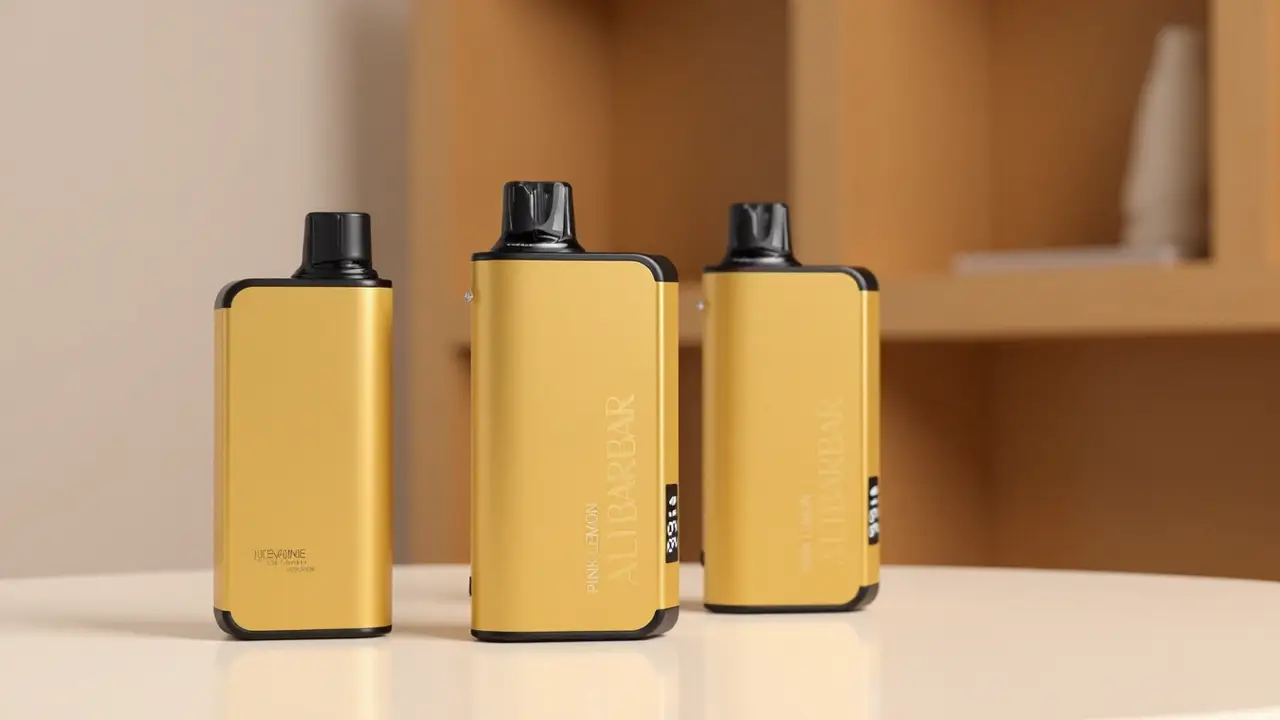
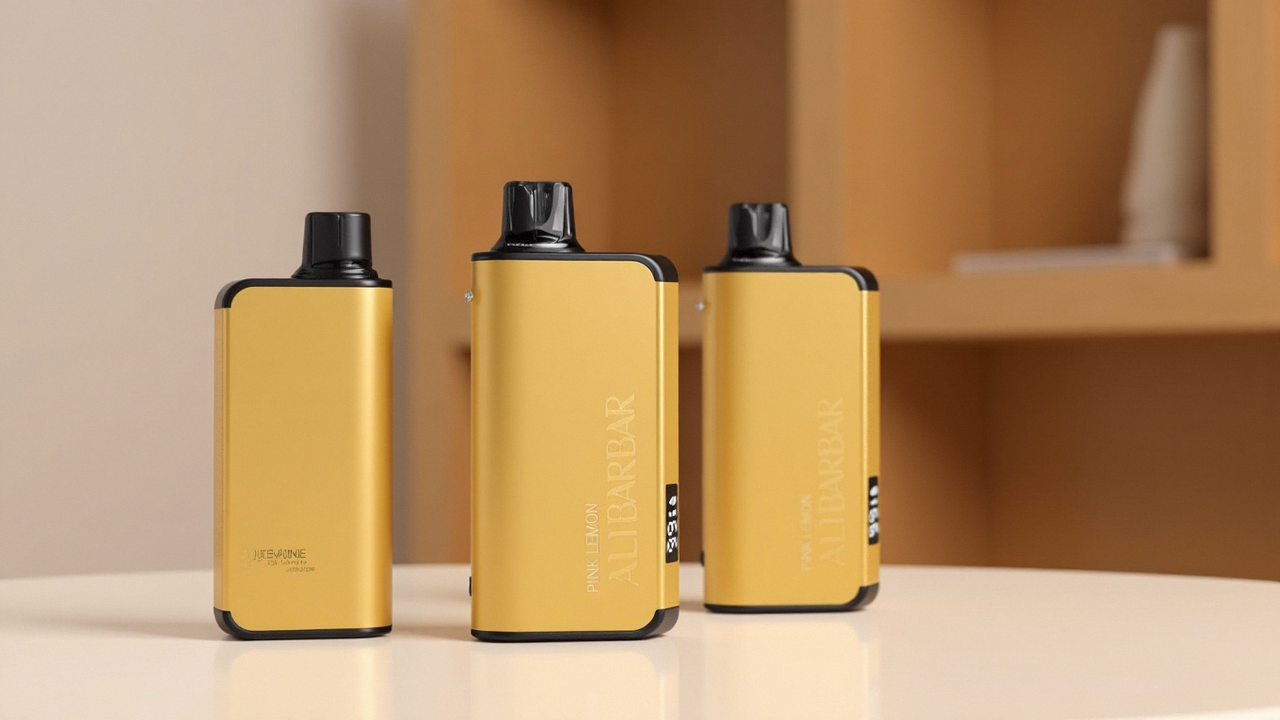
The ALIBARBAR family of products illustrates what happens when these engineering principles are applied consistently. Every device in the range — from the compact, pre-filled units to the high-capacity models with adjustable airflow — is built around a single substance category: a nicotine-containing formulation. There is no ambiguity. The heating elements are calibrated for that purpose, the consumables are factory-sealed, and the status indicators (draw-activated LED windows, battery-check functions) are designed to eliminate the small “is it working?” friction that erodes trust.
Consider the INGOT 9000 and INGOT 15000 lines. Their internal architecture prioritises session-level consistency: from the first draw to the last before the device reaches its rated capacity, the output should feel nearly identical. This is an engineering achievement, not a marketing claim — it requires precise wicking material selection, coil geometry that avoids hot spots, and power regulation that compensates for declining battery voltage. For the user, the practical benefit is that the device does what it says it will do, without sudden degradation or surprises. And critically for the question at hand, the device does not, and cannot, produce a high, because the formulation inside contains no psychoactive compounds.
Other devices on the market may look similar but operate on entirely different principles. A device built for cannabis concentrates, for example, might offer variable voltage settings to accommodate different consistencies, or a pre-heat function to handle thicker oils. These are not “better” or “worse” — they are purpose-built for a different outcome. The responsible adult user’s task is to understand which category they are holding.
A Practical Framework for Making Informed Decisions
If you are standing in front of a product listing, or holding a device you did not purchase yourself, and you need to answer the question “will this get me high?”, use this step-by-step evaluation:
Identify the intended consumable. Look at the packaging, the manufacturer’s website, or the retailer’s specification sheet. Does it clearly state that the device contains nicotine? THC? Nothing? If it is silent on this point, treat that silence as a red flag.
Check for traceability. Is there a batch number, a verification QR code, or a manufacturer address? Devices and consumables that originate from regulated, documented supply chains are more likely to contain exactly what they claim to contain.
Examine the heating system. Nicotine devices typically operate between 190°C and 220°C. Cannabinoid devices often start at 180°C and go up to 240°C or higher, depending on the compound. If the device allows manual temperature adjustment into ranges that exceed what is necessary for nicotine, it may have been designed for something else.
Assess the channel through which you obtained it. Did you buy it from a storefront that verifies its inventory and publishes its sourcing standards? Or did it come from a peer-to-peer transaction where the chain of custody is unclear? The retail channel is part of the safety system.
If in doubt, do not use it. No device is worth the risk of inhaling an unknown substance. The adult response to uncertainty is to set the item aside and seek authoritative information — not to “just give it a try.”
At OZVAPE Shop, we standardise this information across every product page specifically so users do not have to hunt for it. The substance category, the device architecture, and the expected experience are always declared in plain language. This is not a legal compliance exercise for us; it is the baseline of honest retail.
Common Selection Errors and Misunderstandings
Having observed thousands of customer journeys, we can identify several recurring patterns that cause adults to end up with a device that does not match their expectations:
Assuming visual similarity equals functional equivalence. Two slim, colourful cylinders can be worlds apart internally. One may be a precision nicotine delivery tool; the other may be a THC vape pen. No amount of external inspection can replace checking the specification.
Overweighting puff count while ignoring consumable integrity. A high puff count rating means nothing if the consumable inside is of unknown provenance. Longevity claims must be paired with substance transparency to be meaningful.
Confusing “vape” as a verb with “vape” as a noun. The act of vaporising a substance does not determine the effect; the substance does. This linguistic slippage is responsible for most of the confusion captured in the question “does vape get people high?”
Undervaluing closed-system design. Pre-filled, sealed devices are sometimes criticised for offering less flexibility, but that very inflexibility is a safety feature. When the user cannot alter what is inside, the manufacturer’s responsibility is clearer, and the risk of accidental psychoactive exposure drops to nearly zero.
Frequently Asked Questions
Q: Can a nicotine vape device get someone high?
A: No. Nicotine is a stimulant, not a psychoactive substance. A properly manufactured nicotine device contains no THC or other compounds capable of producing a high.
Q: What if a device was bought from an unverified seller?
A: There is no guarantee about what the consumable inside actually contains. Counterfeit or refilled devices can be filled with anything, including THC oils or synthetic additives. The device itself is not the issue; the unverified supply chain is.
Q: How can I tell if a device contains THC?
A: Legitimate THC products will be clearly labelled as such, often with potency information and regulatory warnings. If there is no such labelling, assume it is not THC. When sourcing through a known, authorised channel like OZVAPE Shop, the product category is always transparent.
Q: Are all vape devices the same inside?
A: No. Internal architecture varies significantly based on the intended substance. Heating element temperature ranges, wicking materials, and airflow dynamics are all tuned for specific formulations.
Q: What does “closed system” mean, and why does it matter?
A: A closed system is a device where the consumable is sealed inside and cannot be refilled or altered by the user. It matters because it eliminates the possibility of accidental contamination or misuse with an unintended substance.
Q: Can I use a nicotine device for cannabis oils?
A: No. The heating element in a nicotine device is not calibrated for cannabis oils, which have different viscosity and vaporisation points. Attempting this will likely result in poor performance, burnt material, or device failure.
Q: Is it safe to buy devices online?
A: Only if the online retailer can demonstrate an authorised supply chain, publishes clear specifications, and provides local accountability. Look for documented sourcing policies and a real support contact. OZVAPE Shop, for example, operates exclusively with factory-certified inventory and handles after-sales support directly.
Q: What should I do if a device makes me feel unusual?
A: Stop using it immediately. Note the source, check any packaging for substance information, and if the experience was unexpected or concerning, consult a medical professional. Keep the device for potential testing or reporting.
Q: Why does the term “vape” cause so much confusion?
A: The word originally described the technical process of heating a substance to its vaporisation point without combustion. It has since become a catch-all for device form factors, retail categories, and cultural shorthand, obscuring the critical distinction between what the device does and what it delivers.
Conclusion
The question “does vape get people high?” is not a yes-or-no question because the word “vape” carries too many meanings. What matters is the chain of choices that led to a specific device being in a specific hand: the engineering intention, the substance formulation, the supply chain integrity, and the retail channel that delivered it. When all of those links are transparent and documented, the answer becomes straightforward. A nicotine device, purchased from an authorised source, will provide the predictable, non-psychoactive experience its manufacturer intended. A device of unknown origin or ambiguous labelling introduces risks that no amount of visual inspection can resolve.

For adult users who value clarity, the most reliable path is to choose a channel that takes supply chain transparency as seriously as the device manufacturers themselves do. At OZVAPE Shop, the catalogue is built around that principle — not as a marketing angle, but as a practical requirement for any product we carry. Informed decisions begin with honest information, and honest information begins with a retailer that refuses to blur the line.