
VAPE FAQs
How Often Do People Vape?

Aug
Today, the most common question I hear from people new to portable electronic devices isn’t about what’s inside them, but how often they’ll end up using one. It’s a practical, honest question. Yet it’s also the one that the industry does the worst job of helping users answer — not because the data doesn’t exist, but because usage frequency is deeply personal, highly variable, and rarely discussed in terms a person can measure against their daily routine.
This article addresses that. It explains how frequency of use interacts with the engineering inside a device, what that means for your daily satisfaction, and how to evaluate whether a product you’re considering will actually keep pace with your habits — not just the habits assumed by its marketing. The goal isn’t to push a particular purchase. It’s to replace guesswork with a clear, repeatable way of thinking, so you never again discover a mismatch between your actual routine and the device in your hand three days after you open the box.
By the time you finish reading, you’ll have a framework for mapping your own usage patterns onto any device’s specifications. You’ll understand which engineering choices matter when you use something lightly versus all day, and you’ll be able to spot the subtle design weaknesses that turn a convenient tool into a source of daily frustration. While OZVAPE Shop offers a range of devices built with these variables in mind, what follows is first and foremost an education on how to choose — not a catalogue of what you ought to buy.
Understanding What Matters: Core Engineering and Design Factors
If usage frequency is the variable, then device architecture is what determines whether that variable leads to delight or disappointment. Four engineering characteristics, in particular, separate tools that tolerate heavy daily use from those that don’t.
Heating Element Durability and Consistent Output Over Repeated Use
The central frustration for a frequent user isn’t usually the first session of the day; it’s the tenth or the twentieth, when the experience starts to degrade. This degradation occurs because the heating assembly — often a mesh or wire coil — undergoes thermal stress each time it’s activated. When a device is used lightly, with long rests between sessions, the coil cools fully and wicking material resaturates. The system resets. But under continuous or closely spaced use, residual heat builds up, wicking efficiency drops, and the device can begin to deliver a thinner, hotter, or less satisfying output.
Well-engineered devices manage this through coil geometry, material choice, and airflow design that promotes cooling even during back‑to‑back sessions. If you expect to use a device many times throughout the day, you need to look for architecture that is explicitly designed for sustained output, not just peak performance on a cold start. Without that, you’ll experience noticeable inconsistency by late afternoon — exactly when you’re least likely to have a backup handy.
Battery Calibration and Predictive Status Feedback
A moderate‑frequency user can usually tolerate a device that simply stops when it’s depleted because it rarely catches them off guard. A daily, high‑frequency user cannot. For them, the difference between a good day and a frustrating one often comes down to whether the device gave a clear, early warning that power was running low.
This isn’t just about having an LED. Many devices have lights that illuminate but convey almost no actionable information — a colour that changes only seconds before shutdown, or a blinking pattern that is indecipherable without a manual. The hidden cost of this ambiguity is that the user ends up carrying an extra unit, not out of preference but out of distrust. Thoughtful power management designs provide graduated indicators — a drop in intensity, a colour shift at 20% remaining, something that gives you an hour’s notice rather than thirty seconds. When you match your usage frequency to a device that communicates honestly, you stop carrying dead weight in your pocket.
Physical Resilience: What Matters for Everyday Carry
All devices get handled, but frequent use multiplies the number of times a device is gripped, slipped into a pocket, set on a table, and exposed to humidity or temperature swings. Surface finishes that look pristine after two weeks of occasional use can show significant wear after two weeks of constant handling. The critical factor is not just material type — anodised aluminium, zinc alloy, or polycarbonate — but the quality of the surface treatment and the seal around seams where moisture or debris can enter.
Mouthpiece design matters here too. A device that feels comfortable for a handful of sessions can become irritating during prolonged use if the contour concentrates pressure or if the material transfers heat excessively. If your usage pattern is many short sessions rather than a few long ones, pay particular attention to how quickly the mouthpiece area cools between uses, because heat accumulation over repeated activations can make an otherwise pleasant device uncomfortable.
Architectural Modularity: When Replaceable Components Become Critical
The question of modularity — sealed unit versus replaceable‑component system — is often framed in environmental terms. But from a usage‑frequency standpoint, the argument is entirely practical: the higher your daily consumption, the sooner you encounter the end of a sealed device’s operational life, and the more frequently you’re purchasing an entirely new unit. A rechargeable sealed device may offer a high puff count, but once that count is reached, everything is discarded. If you’re using it heavily, that might mean a new purchase every week or two.
Devices with replaceable pre‑filled pods or refillable systems shift the cost from the whole unit to the consumable component. This doesn’t automatically make them cheaper — but it does mean your cost‑per‑use stabilises in a more predictable way, and you’re not constantly resetting your relationship with a new device’s quirks and charge cycles. For someone whose usage frequency is high enough that the device itself becomes a recurring expense, modularity is not a nice‑to‑have; it’s the difference between planning and reacting.
Applying These Criteria to Real‑World Options
If we take these four dimensions and apply them to the devices available today, a clear pattern emerges: product families designed with a specific usage profile in mind tend to satisfy that profile; products that try to be everything to everyone rarely satisfy anyone for long.
Consider the wide‑capacity sealed units that have become common in Australia. The ALIBARBAR INGOT 15000, for example, pairs a substantial internal power cell with a high‑volume reservoir and a mesh coil geometry tuned for consistent warmth across its advertised puff count. For an adult who uses a device many times throughout the day, that combination addresses two critical concerns: the battery is unlikely to deplete mid‑afternoon, and the output remains stable across the majority of the unit’s life. The presence of a clear status indicator — rather than a single ambiguous light — helps the frequent user plan, not panic. However, the trade‑off is that this is still a sealed unit. Once it reaches its end, the entire assembly is replaced. For the heavy user, that means a predictable — but not trivial — recurring outlay.
On the other end of the spectrum, the ALIBARBAR Ice Adjust 12000 offers a similar capacity but introduces an adjustable output control. That adjustment matters not just for flavour preference but for usage frequency: a user who selects a lower output extends the effective life of both the battery and the reservoir, stretching the unit across more days. It’s a small piece of control that, for someone whose daily pattern varies, can smooth out the spikes in consumption that otherwise lead to unexpectedly early replacement.
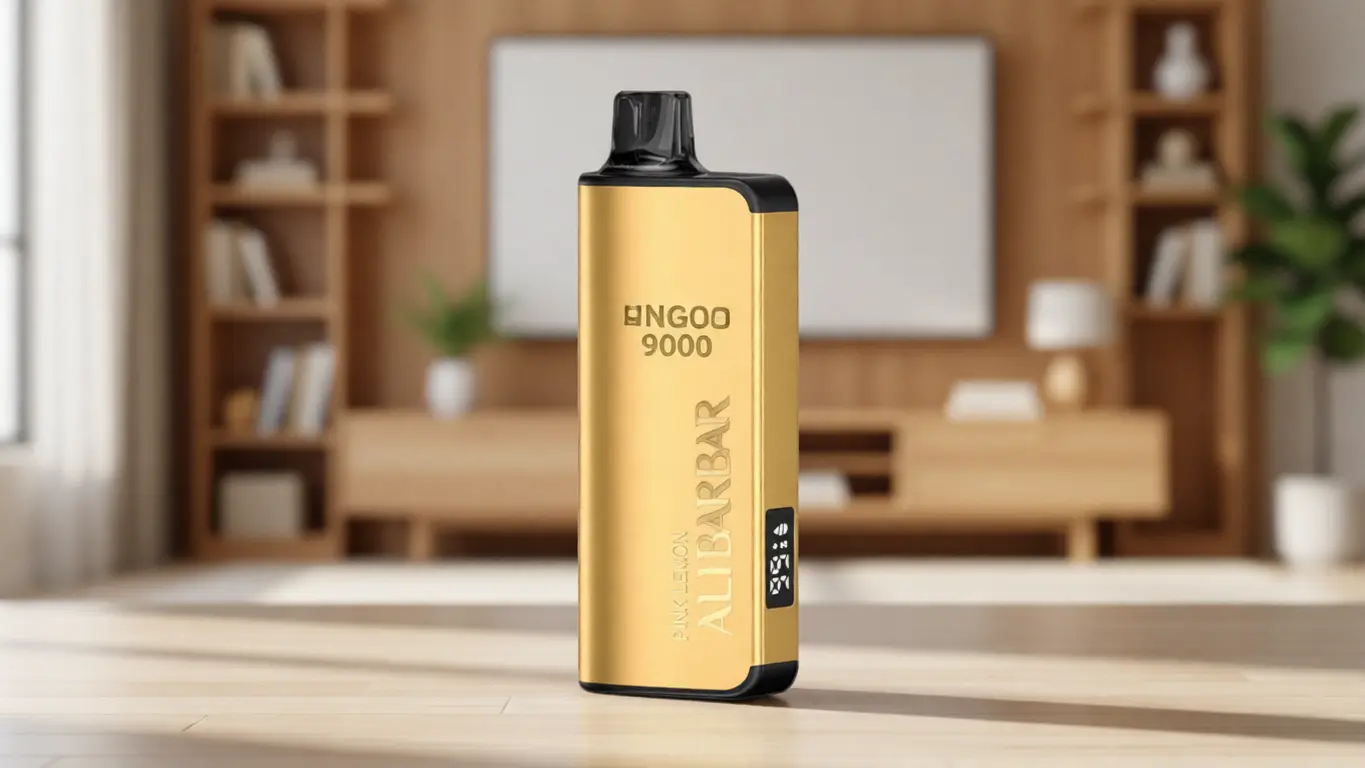
These examples are not presented as universal solutions. A person who uses a device only in the evenings may find the INGOT 15000’s capacity excessive and its size unwieldy; a compact device like the ALIBARBAR INGOT 9000, with a slimmer profile and lower puff rating, would be a better physical and economic match. The broader point is that devices succeed when their architecture aligns with the user’s actual routine, not a theoretical one.
Other commonly encountered device families — including open‑system refillables and low‑capacity disposables — follow similar logic. A refillable pod system rewards high‑frequency users with lower long‑term cost and customisation, but penalises them if they neglect maintenance. A low‑capacity disposable suits an intermittent user perfectly and becomes a wasteful, frustrating choice for someone who genuinely needs a device through a full workday. The right question isn’t “which is better?” but “how will I actually use this, day after day?”
A Practical Framework for Evaluation
If you’re not sure where your usage falls on the frequency spectrum, a straightforward exercise can bring clarity. For one week, track every time you reach for your device, even briefly. Don’t alter your behaviour; just observe. At the end of the week, divide the total sessions by seven to get your daily session count. Then estimate the average length of each session — are they five quick activations, or two extended ones?
Once you have that baseline, you can apply it to any device’s specifications:
Calculate your approximate daily puff consumption. A rough industry estimate is about 6‑8 puffs per short session, though this varies with draw duration. If you have ten short sessions a day, you’re likely consuming 60‑80 puffs.
Compare that to the device’s rated puff count. A 9,000‑puff unit would, in that scenario, theoretically last around 110‑150 days. But real‑world factors — deeper draws, occasional chain‑use, power calibration — can reduce that figure by 20‑40%. If that adjusted figure lines up with how often you’re comfortable making a replacement purchase, the device fits.
Check the battery capacity against your daily rhythm. Does the device’s mAh rating and power management offer enough cushion for your longest typical day without access to a recharge? If you’re uncertain, err on the side of a device that clearly communicates remaining charge, so you’re never guessing.
Consider the physical form. A device that feels fine for 10 sessions may be too large for a pocket you use constantly, or too small to handle comfortably if your sessions are long. Look for real‑world weight and dimensions, not just photographs.
This isn’t rocket science, but it’s rarely done. The reason most people end up with the wrong device isn’t a lack of information; it’s an absence of a structured way to apply that information to their own lives. Spend the week tracking. The numbers you get will be far more useful than any review.
Common Selection Errors and Industry Observations
Over years of observing how users interact with portable electronic devices, certain patterns emerge — mistakes that seem almost universal before someone points them out.
The first is overweighting the puff count number. A device rated at 12,000 puffs sounds dramatically more capable than one rated at 6,000, but the figure is derived under laboratory conditions that often bear little resemblance to real‑world use. The test may pull for a specific duration at a fixed power level, whereas your draws vary. A device with excellent power efficiency and consistent heating may deliver 80% of its rated puffs even under heavy use, while a poorly tuned unit might deliver less than half. Users who choose solely by the number on the box almost always end up disappointed by the actual longevity.
The second is the visual similarity trap. Many devices now share a similar cylindrical or rectangular aesthetic, leading users to assume similar internal engineering. The reality is that two devices that look identical can have completely different battery chemistries, coil materials, and airflow designs. One might handle heat dissipation well during frequent use; the other might overheat and shut down abruptly. If you’re evaluating a device for frequent use, look past the external design to the documented specifications — or to teardowns and independent analysis when available.
The third is undervaluing modularity in cost‑per‑use calculations. A sealed 10,000‑puff unit for $40 appears cheaper than a pod system with a $20 battery and $5 pods lasting 500 puffs each. But run the numbers: if you use 150 puffs a day, the sealed unit lasts about 50‑60 days, costing around $0.67‑$0.80 per day. The pod system with the same pod consumption — three pods over that period — costs $20 (battery) + $15 (pods) = $35 over 50 days, or $0.70 per day, and subsequent periods drop to $15 per 10 days, reducing daily cost further. The sealed unit’s daily cost remains constant. For a heavy user, the pod system’s architecture can halve the running expense within a few months. The mistake is treating the upfront price as the entire picture.
A fourth, more subtle error is confusing category terminology with technical specification. Terms like “high‑performance mesh” or “advanced chipset” sound impressive but mean nothing without context. What you actually need to know is: does the mesh maintain its resistance over the expected life of the unit? Does the chipset regulate voltage to prevent power sag as the battery drains? These are the specifications that determine whether a device will feel the same on day one as on day thirty, and they’re almost never printed on packaging.
From an industry perspective, the current market reflects a tension between two models: the integrated, non‑serviceable unit that prioritises convenience, and the modular system that prioritises long‑term economics and waste reduction. Neither is inherently superior. The rapid iteration we’re seeing — higher puff counts, faster charging, more granular user controls — is not always driven by genuine user need but by a competitive dynamic where manufacturers feel pressure to out‑spec each other on paper. The wise consumer understands that a spec bump only matters if it aligns with their real pattern of use. A device with a 20% larger battery provides no benefit to someone who never depletes the smaller one.
Frequently Asked Questions
Q: How many daily sessions are considered “frequent use”?
A: There is no universal threshold, but if you find yourself using a device more than eight to ten distinct times throughout the day — and especially if those sessions occur during activities where you wouldn’t normally stop to recharge — your pattern is frequent enough to warrant a high‑capacity or modular design.
Q: Do higher puff count ratings always mean longer real‑world use for a heavy daily user?
A: Not necessarily. A 15,000‑puff device with poor voltage regulation may begin to degrade noticeably after 7,000 puffs, while a well‑engineered 9,000‑puff device could deliver its full rated lifespan consistently. The calibration and quality of the power management matter as much as the absolute number.
Q: How can I tell if a device is nearing the end of its operational life before it stops working?
A: In well‑designed units, the first sign is often a subtle drop in output warmth and volume, noticeable over several sessions. Some devices include a colour‑changing LED that shifts to warn of low battery or low reservoir. Absent these indicators, you may notice that the device requires progressively deeper draws to produce the same satisfaction, or that it shuts off earlier than expected.
Q: Is it safe to use a device many times a day?
A: When a device is used as directed, with adequate rest between draws, frequent daily use is within its design parameters. The key is to avoid chain‑activating the device without allowing the wicking material to resaturate, which can lead to premature degradation and a harsh experience. Devices with larger reservoirs and sophisticated coil designs handle frequent use better.
Q: If I use a device only occasionally, do I need a high‑capacity model?
A: Probably not. A large‑capacity device may sit for weeks between uses, and while the reservoir may not evaporate significantly, the battery may self‑discharge. A compact unit that matches your lower consumption avoids the bulk and cost of unused capacity. However, ensure that the device doesn’t activate accidentally in a pocket during long periods of inactivity, which is more common with certain form factors.
Q: What should I do if a new device doesn’t last as long as I expected based on its rating?
A: First, verify that your usage is in line with the test conditions — many puff counts assume a 1‑second draw, while real draws often last 2‑3 seconds. If the gap is substantial, check whether the device is from a verified source, as counterfeit units are a known issue. A reputable retailer like OZVAPE Shop can often assist with verification. If the device is authentic and the deviation persists, document your usage pattern and contact the seller; systematic underperformance sometimes indicates a batch issue.
Q: Do devices with adjustable output last longer if I keep the setting low?
A: Generally yes. Lower power settings reduce the energy drawn per activation, extending both the battery life per charge and the total number of puffs before the reservoir is depleted. This is a deliberate design feature in models like the ALIBARBAR Ice Adjust 12000, giving the user control over the trade‑off between intensity and longevity.
Q: How important is it to buy from an authorised seller for a device I’ll use heavily?
A: Very. A counterfeit device may use inferior battery cells that degrade faster, unsafe charging circuitry, or coils that overheat. For a heavy user, the risk is compounded because the device is in constant operation. Authorised channels ensure that the unit has passed factory quality control and that its specifications are genuine.
Q: Is there an environmental downside to using sealed high‑capacity units frequently?
A: Yes. Frequent replacement of sealed units generates significant electronic waste, even if the device contains a lithium‑ion battery that could otherwise be recharged many more times. If your usage is high enough that you’re disposing of a unit every few weeks, a rechargeable system with replaceable components substantially reduces your footprint, sometimes by an order of magnitude.
Q: How do I know if a device’s status indicator is actually reliable?
A: The most reliable indicators are those that give early warning — for example, a gradual colour fade or multiple illuminated levels. You can test this by paying attention when the device is new: note when the indicator changes and whether that change consistently predicts the remaining usage. If the light blinks only moments before shutdown, the feedback is essentially useless for planning.
Conclusion
The frequency with which you use a portable device is not a secondary consideration; it is the single factor that determines whether the engineering inside that device works for you or against you. A model that feels flawless in occasional, brief sessions can fall apart under constant use, while a product built for heavy‑duty reliability may feel oversized and unnecessary for someone who takes it out only after dinner. Knowing your own pattern — and matching it to architecture, not just puff count — is what separates a satisfying daily companion from a piece of hardware you resent.
The tools to do that matching exist: standardised specifications, an honest assessment of your routines, and a willingness to look beyond surface‑level marketing claims. None of these require advanced technical knowledge. They require only the discipline to ask the right questions before you buy, not after. When you do, the devices available through any transparent, factory‑certified channel — including OZVAPE Shop — become easier to evaluate on their actual merits.
Ultimately, the right choice is never the one with the highest number on the box or the most enthusiastic review. It’s the one that disappears into your daily life, performing predictably and letting you focus on everything else. Your job is to know your own rhythm. The device’s job is to keep up. Now you have the framework to judge whether it will.